Quick Answer
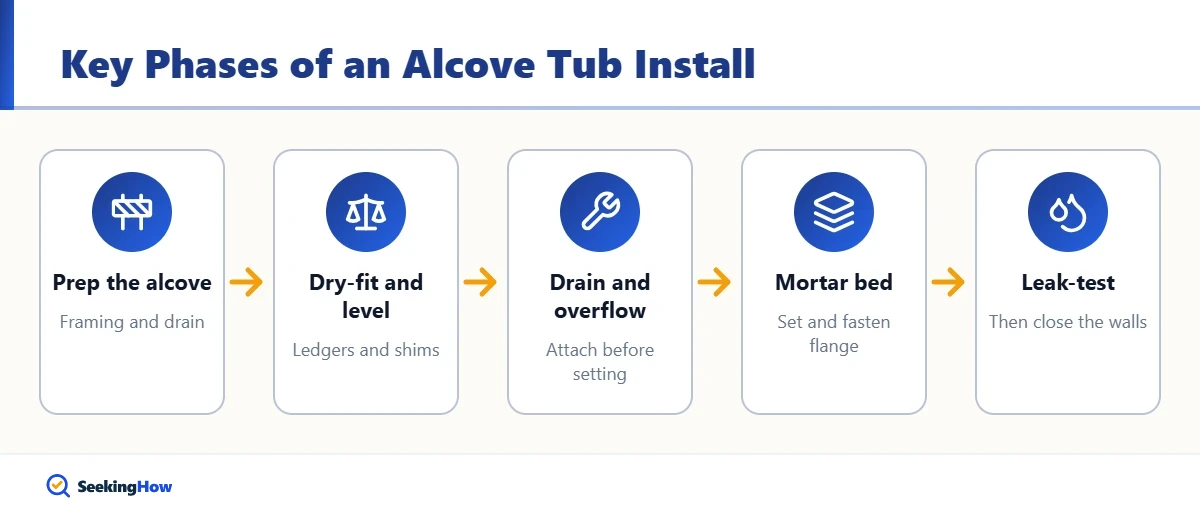
To install a fiberglass bathtub, prepare the alcove framing and drain opening, dry-fit and level the tub, attach the drain and overflow assembly, set the tub on a bed of mortar or setting compound, screw or nail the flange to the studs, connect the drain, and leak-test before closing walls. Plan on one to two days, including cure time.
Key Takeaways
- Measure the alcove (commonly 60 inches long) and confirm left- or right-hand drain before buying.
- A mortar or setting bed under the tub prevents flexing and cracking.
- Install the drain and overflow (waste and overflow kit) before setting the tub in place.
- Fasten through or above the nailing flange, not through the tub wall.
- Moving drain lines or supply pipes may require a licensed plumber and a permit.
Fiberglass tubs are lightweight, affordable and one of the easier tubs to install yourself. Most problems come from skipping the support bed or setting the tub out of level, which leads to cracks, squeaks and water pooling at the wrong end. This guide walks through a standard three-wall alcove installation.
What Do You Need to Install a Fiberglass Tub?
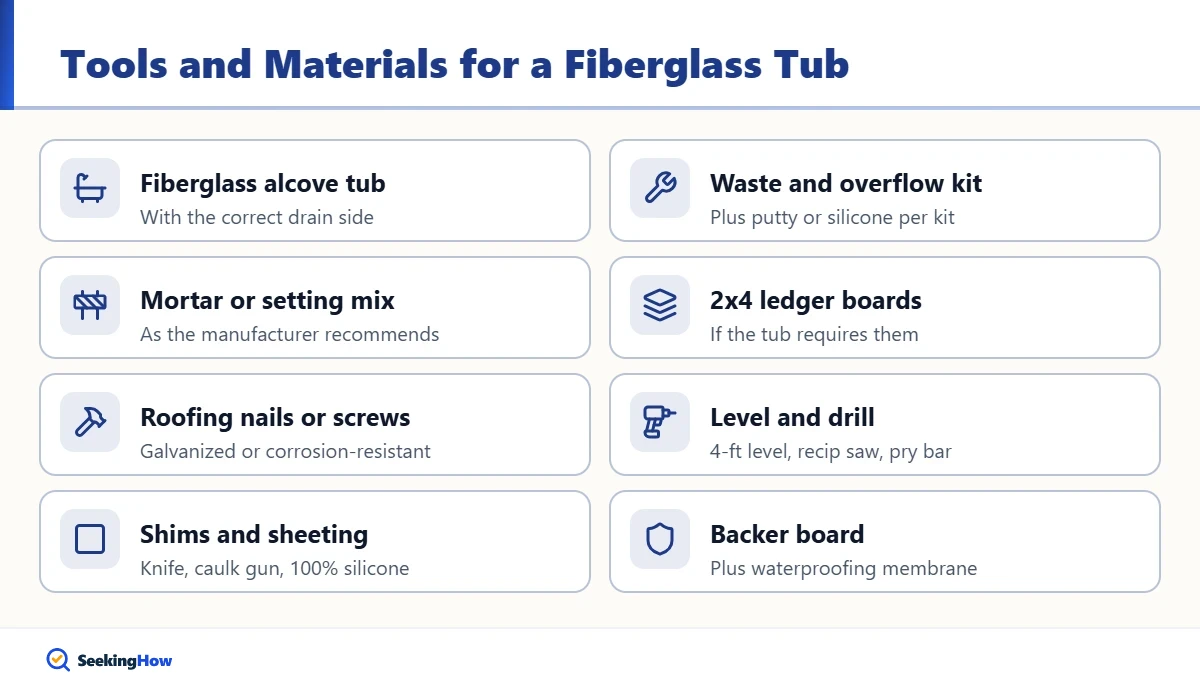
- Fiberglass alcove tub with the correct drain side (left or right hand)
- Waste and overflow drain kit, plus plumber’s putty or silicone per the kit instructions
- Mortar mix or a tub setting compound recommended by the manufacturer
- 2×4 lumber for ledger boards if the tub requires them
- Galvanized roofing nails or corrosion-resistant screws with washers
- 4-foot level, tape measure, drill/driver, reciprocating saw, pry bar
- Shims, plastic sheeting, utility knife, caulk gun and 100% silicone caulk
- Cement backer board and waterproofing membrane for the wall above the flange
How Long Does It Take to Install a Fiberglass Bathtub?
| Phase | Typical time | Notes |
|---|---|---|
| Remove old tub and wall material | 3 to 6 hours | Cast iron tubs take longest; steel and fiberglass are faster |
| Framing and plumbing prep | 2 to 4 hours | More if the drain must move |
| Dry fit, drain kit, mortar bed and setting | 2 to 4 hours | Work fast once mortar is mixed |
| Mortar cure | About 24 hours | Check the product label |
| Connections, leak test, backer board | 3 to 6 hours | Tile or surround install is extra |
How Do You Install a Fiberglass Bathtub Step by Step?
Step 1: Prepare the Alcove
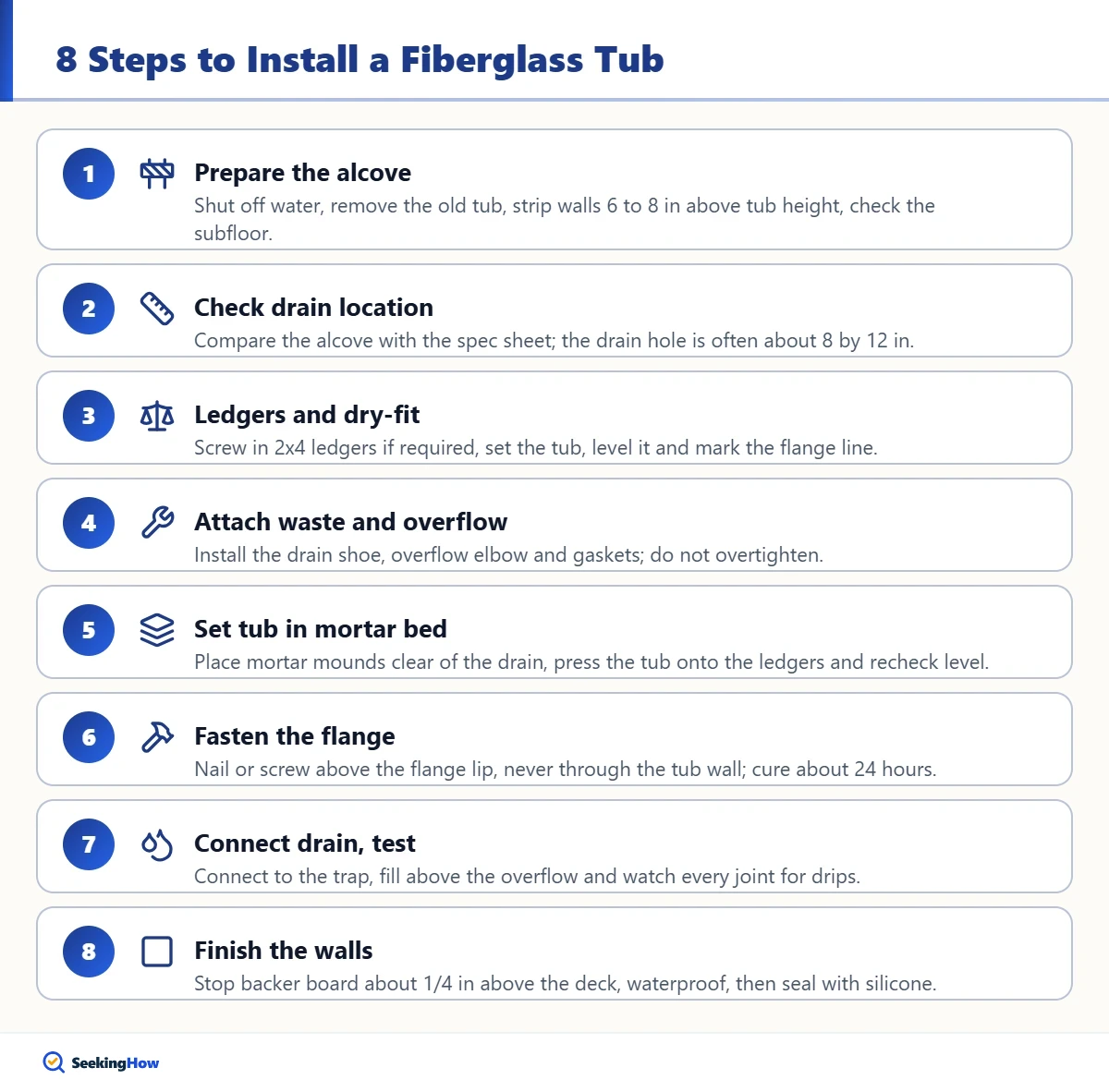
Shut off the water, remove the old tub and strip wall material to about 6 to 8 inches above the tub height so you can reach the flange. Check that the subfloor is solid, flat and dry, and replace any rotted sections. Make sure the studs are plumb at the tub flange line.
Step 2: Check Measurements and Drain Location
Measure the alcove length, width and the distance from the back wall to the drain center. Compare these with the tub’s spec sheet and cut or enlarge the floor opening under the drain so the waste and overflow assembly has room to fit, usually a hole roughly 8 by 12 inches.
Step 3: Install Ledger Boards and Dry-Fit
If the manufacturer calls for them, screw 2×4 ledger boards to the studs at the height of the underside of the flange. Set the tub in place without mortar, check it with a 4-foot level in both directions and mark the flange line on the studs. Shim at the feet if needed and note the shims.
Step 4: Attach the Waste and Overflow Kit
Pull the tub out, lay it on its side on a blanket and install the drain shoe, overflow elbow and gaskets per the kit instructions. Tighten snugly with the tool supplied; overtightening can crack the fiberglass around the drain hole.
Step 5: Set the Tub in a Mortar Bed
Cover the floor with plastic sheeting, then place mounds of mortar or setting compound across the area under the tub floor, staying clear of the drain opening. Lower the tub straight down into the mortar, press it evenly onto the ledgers, and recheck level before the mortar starts to stiffen.
Step 6: Fasten the Flange to the Studs
Fasten the nailing flange to every stud with galvanized roofing nails or screws with washers, placed just above the flange lip or through pre-drilled flange holes as the manufacturer directs. Never drive fasteners through the tub wall itself. Let the mortar cure about 24 hours before standing in the tub.
Step 7: Connect the Drain and Test for Leaks
Connect the waste and overflow assembly to the trap from below or through an access panel. Fill the tub above the overflow and let it drain while you watch every joint for drips. Fix any leak now, while the plumbing is still exposed.
Step 8: Finish the Walls
Install cement backer board so it overlaps the flange but stops about 1/4 inch above the tub deck, then apply the waterproofing membrane. After tile or a surround is installed, seal the joint between the wall and tub with 100% silicone caulk.
Tip: Fill the tub with a few inches of water before caulking the final joint. The weight lowers the tub slightly, so the caulk cures in the loaded position and is less likely to crack.
Safety: Many jurisdictions require a permit for tub replacement, especially if you move drain or supply lines. If you need to relocate the drain, change the trap or alter the shower valve, hire a licensed plumber.
Why Does a Fiberglass Tub Need a Mortar Bed?
Fiberglass is strong but thin. Without full support under the floor, the tub flexes each time someone steps in, which leads to squeaks, stress cracks and eventual leaks. A mortar or setting bed fills the gap between the tub’s underside and the subfloor so the load spreads evenly. Some tubs come with a factory foam base; follow the manufacturer’s instructions, since adding mortar may not be needed or allowed for those models.
If you already have a tub that flexes and has started to crack, see our guide on how to fix a crack in a plastic bathtub.
Common Mistakes When Installing a Fiberglass Tub
- Buying the wrong drain hand: Stand facing the tub; the drain side determines left or right hand.
- Skipping the dry fit: You only get one chance once mortar is down.
- Setting it out of level: A slight slope toward the drain is built into the tub floor; the rim itself should be level.
- Nailing through the tub wall: Creates cracks and leaks.
- Bringing backer board down onto the deck: It wicks water; leave a small gap and caulk.
Finishing Touches and Ventilation
A new tub surround lasts longer in a well-ventilated room. If your bathroom lacks one, see our guide on how to install an exhaust fan in a bathroom window. Once the tub is in use, keep the drain clear with tips from how to unclog a bathtub drain, and watch for drips around the spout; our guide on a tub spout leaking from the back explains the usual fixes.
Fiberglass vs. Acrylic vs. Steel Tubs
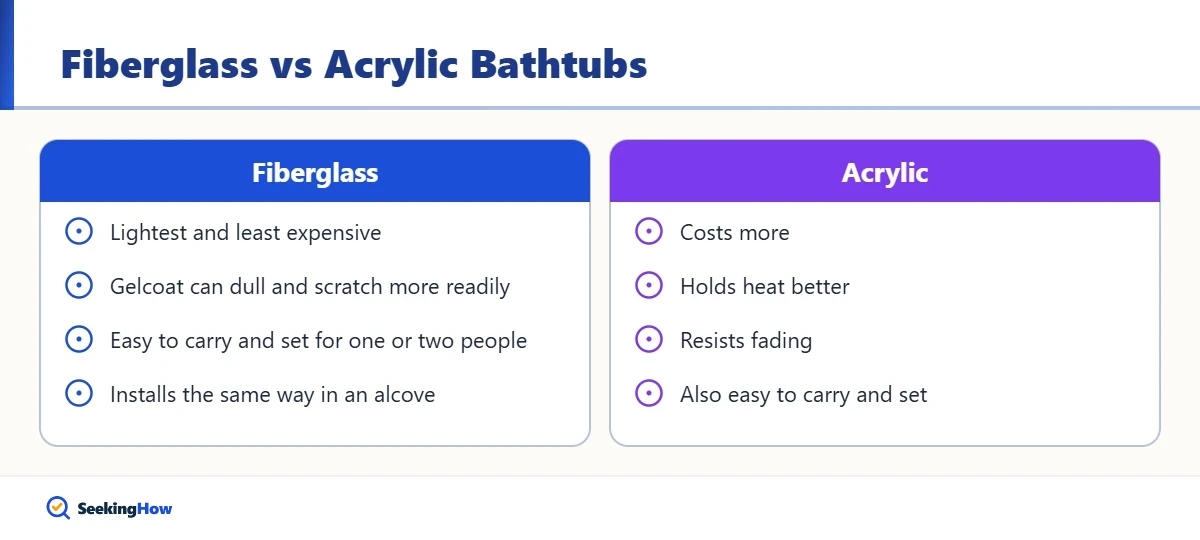
Fiberglass is the lightest and least expensive, but its gelcoat finish can dull and scratch more readily. Acrylic costs more, holds heat better and resists fading. Enameled steel is rigid and durable but heavier and colder to the touch. All three install in a similar way in an alcove, though acrylic and fiberglass are easiest to carry and set for one or two people.
Frequently Asked Questions
Do you need mortar under a fiberglass tub?
Most fiberglass tubs need a mortar or setting-compound bed unless the manufacturer supplies a built-in foam or support base. The bed keeps the floor from flexing, which prevents squeaks and stress cracks. Always follow the specific tub installation instructions.
Can I install a fiberglass tub over a plywood subfloor?
Yes. Fiberglass tubs are commonly set on plywood or OSB subfloors as long as the floor is solid, flat and free of rot. Cover it with plastic sheeting before adding mortar so the subfloor does not absorb moisture.
Can one person install a fiberglass bathtub?
A fiberglass tub is light enough for one strong person to maneuver, but a helper makes dry-fitting and setting in mortar much easier and safer. Two people can lower it evenly and check level while the mortar is still workable.
How do I choose a left or right hand drain tub?
Stand outside the tub facing the back wall. If the drain is on your left, it is a left-hand drain; if on the right, a right-hand drain. Match the existing drain location to avoid moving plumbing.
How long before I can use a newly installed tub?
Wait for the mortar bed to cure, usually about 24 hours, and for the silicone caulk to cure, often 24 hours as well. If you tile above the tub, follow the cure times for thinset and grout before regular use.