
Quick Answer
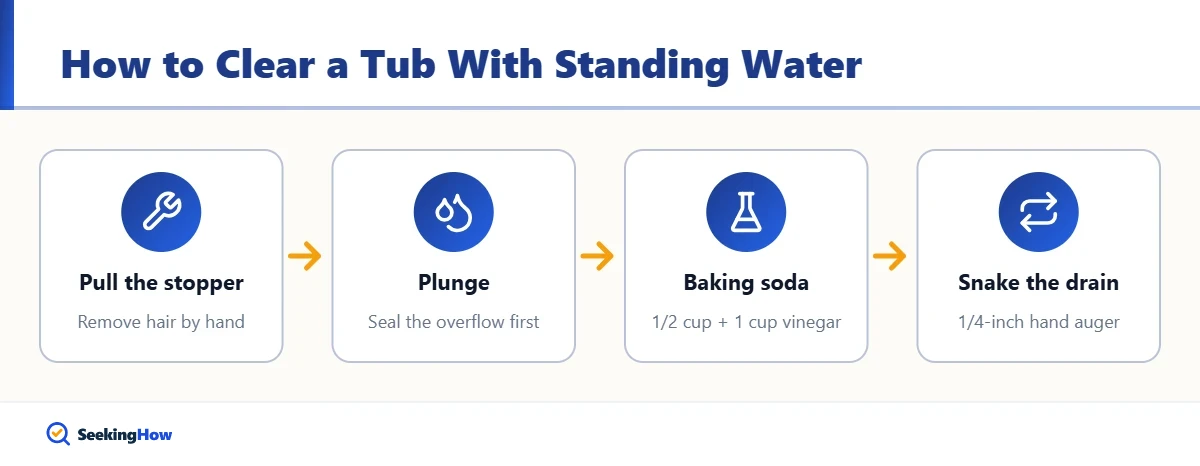
To unclog a bathtub drain with standing water, remove the stopper and pull out hair with gloves or a plastic barbed drain tool, then plunge with a cup plunger while a wet rag blocks the overflow opening. If water still sits, bail it out, pour in 1/2 cup baking soda and 1 cup vinegar for 30 minutes, flush with hot water, or run a 1/4-inch drain snake.
Key Takeaways
- Most tub clogs are hair and soap scum caught within the first 6 to 12 inches of the drain, usually at the stopper.
- Plunging works best with a few inches of water in the tub and the overflow plate sealed off.
- Avoid pouring chemical drain cleaner into standing water; it can splash, sit against your tub finish, and make later plunging dangerous.
- Call a licensed plumber if several drains are slow, drains gurgle, or water backs up into the tub from other fixtures.
A tub full of gray water that will not drain is frustrating, but it is rarely a major plumbing problem. Nine times out of ten the culprit is a mat of hair and soap scum wrapped around the stopper linkage or caught in the drain crossbars. Work through the methods below from easiest to most involved, and you can usually clear it in under an hour without calling anyone.
What Causes a Bathtub Drain to Clog?
Hair is the main cause. It binds with soap scum, body oils and conditioner to form a sticky mass that catches more debris every time you shower. Bar soap made with talc or fats leaves residue that hardens inside the pipe, and hard water adds mineral deposits that narrow the drain over time.
Less common causes include small objects such as bottle caps or kids’ toys, a stopper that is stuck partly closed, or a deeper blockage in the branch line. If the tub drains slowly and the toilet or sink nearby also gurgles, the problem may be further down the line.
What Tools Do You Need?
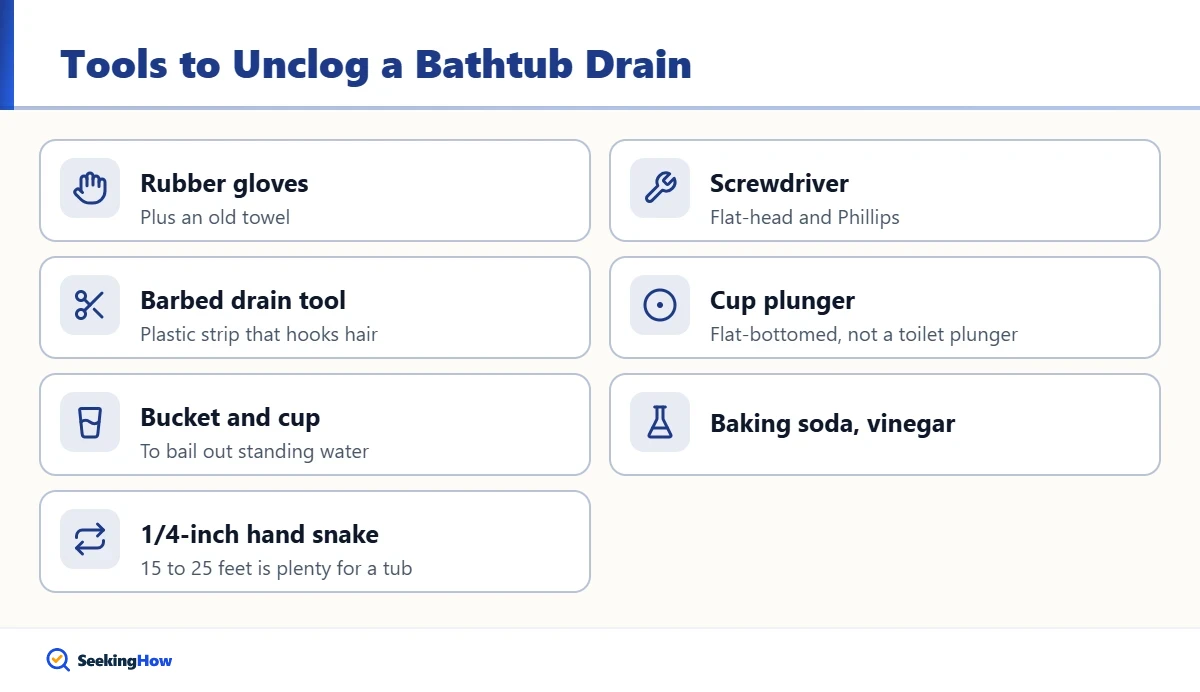
- Rubber gloves and an old towel.
- Screwdriver: flat-head and Phillips for the stopper and overflow plate.
- Plastic barbed drain cleaning tool: an inexpensive strip with teeth that hooks hair.
- Cup plunger: the flat-bottomed type, not a flanged toilet plunger.
- Bucket and cup: to bail out standing water if needed.
- Baking soda and white vinegar.
- 1/4-inch hand drain snake (auger): 15 to 25 feet is plenty for a tub.
How Do You Unclog a Bathtub Drain With Standing Water?
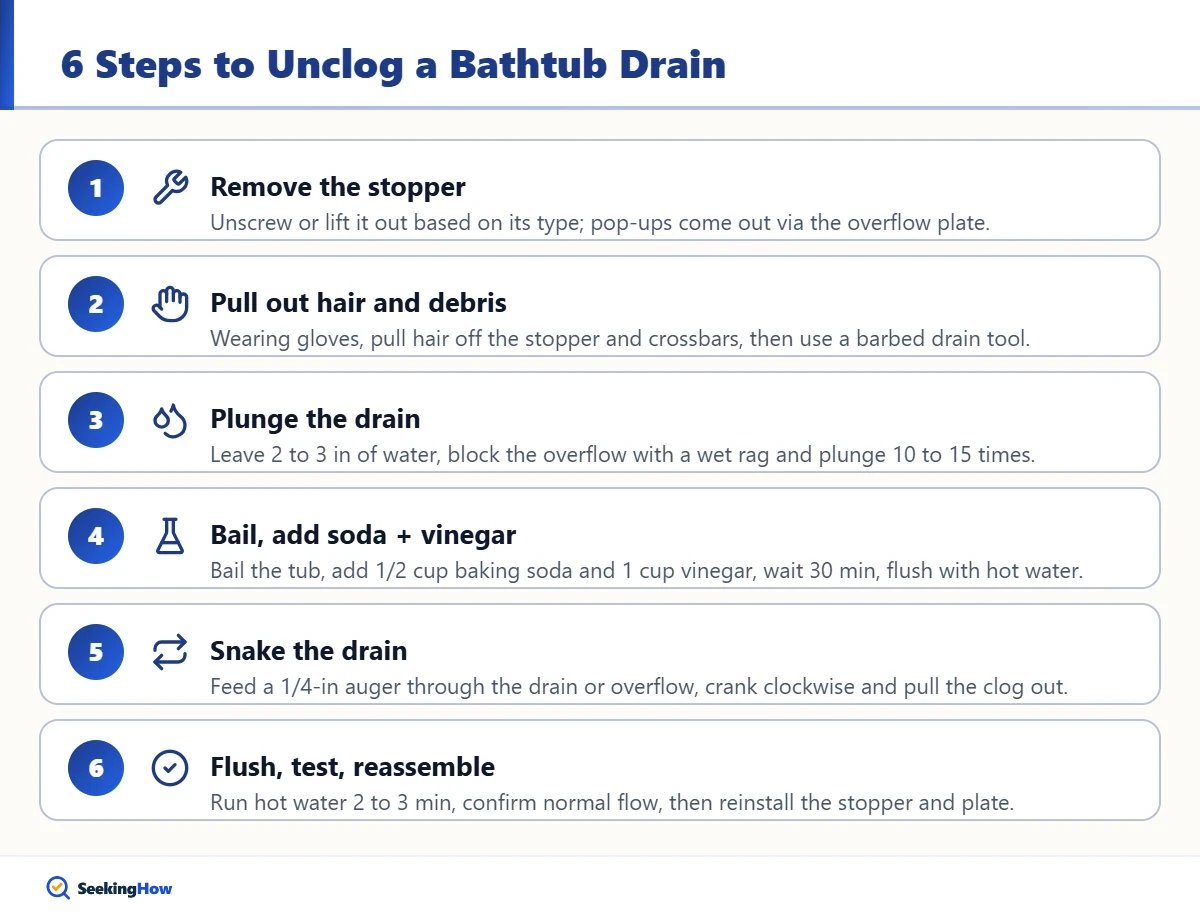
Step 1: Remove the Stopper
Identify your stopper type. Lift-and-turn and push-pull stoppers usually unscrew counterclockwise, sometimes after you loosen a small set screw. Toe-touch stoppers unscrew by hand, and pop-up stoppers with a trip lever on the overflow plate lift out once you remove the two plate screws and pull the linkage.
Step 2: Pull Out Visible Hair and Debris
With gloves on, pull out any hair wrapped around the stopper or caught on the drain crossbars. Push a plastic barbed drain tool down the drain, twist it and pull it straight up; repeat several times. This step alone clears most clogs, and you may see the standing water start to drop right away.
Step 3: Plunge the Drain
Leave 2 to 3 inches of water in the tub so the plunger cup is covered. Stuff a wet rag into the overflow opening, or hold it there with your hand, to keep pressure from escaping. Set the cup over the drain and plunge firmly 10 to 15 times, then pull up sharply and check whether the water drains.
Step 4: Bail and Use Baking Soda and Vinegar
If water still sits, bail it into a bucket until the tub floor is mostly dry. Pour 1/2 cup of baking soda into the drain, followed by 1 cup of white vinegar, and cover the drain with the stopper or a rag. Wait 30 minutes, then flush with a kettle of hot water. This helps loosen soap scum but will not dissolve a solid hair clog.
Step 5: Snake the Drain
Feed a 1/4-inch hand auger into the drain opening, or remove the overflow plate and go in from there, which gives an easier path to the trap. Turn the handle clockwise as you push, and when you feel resistance, keep cranking to grab or break up the clog. Pull the cable back slowly over a towel, wipe it off and repeat until the cable runs freely.
Step 6: Flush, Test and Reassemble
Run hot water for 2 to 3 minutes to wash away loosened debris and confirm that the tub drains at normal speed. Clean the stopper, reinstall it and the overflow plate, and check that the stopper opens and closes properly. Put the towel and tools away and disinfect the plunger.
Which Unclogging Method Should You Try First?
| Method | Works on | Time | Works with standing water? |
|---|---|---|---|
| Remove stopper and pull hair | Hair at the stopper and crossbars | 5 to 15 min | Yes |
| Cup plunger | Soft clogs near the drain | 5 min | Yes; needs some water |
| Baking soda and vinegar | Soap scum and mild buildup | 30 to 45 min | No; bail first |
| 1/4-inch drain snake | Hair mats in the trap and beyond | 15 to 30 min | Yes |
| Enzyme drain cleaner | Prevention and slow drains | Overnight | No; works best in a clear drain |
If you have used a hand auger before on a toilet, the technique is similar; see how to use a drain snake on a toilet for more on feeding and retrieving the cable.
Should You Use Chemical Drain Cleaner?
It is best to avoid it when water is standing in the tub. Caustic and acid drain cleaners can splash, sit against acrylic and fiberglass surfaces, and react with residue in the pipe. If the product fails, you are left with a tub of hazardous water that is unsafe to plunge or snake.
Safety: Never mix drain cleaners with each other, with vinegar, or with bleach, which can release toxic gases. If you already added a chemical cleaner, do not plunge; wear gloves and eye protection, follow the label, ventilate the room and tell a plumber what you used.
Also be cautious with boiling water. Very hot water poured straight from a kettle can soften older PVC joints and stress some acrylic tubs; hot tap water or water just off the boil poured directly into the drain is safer.
When Should You Call a Plumber?
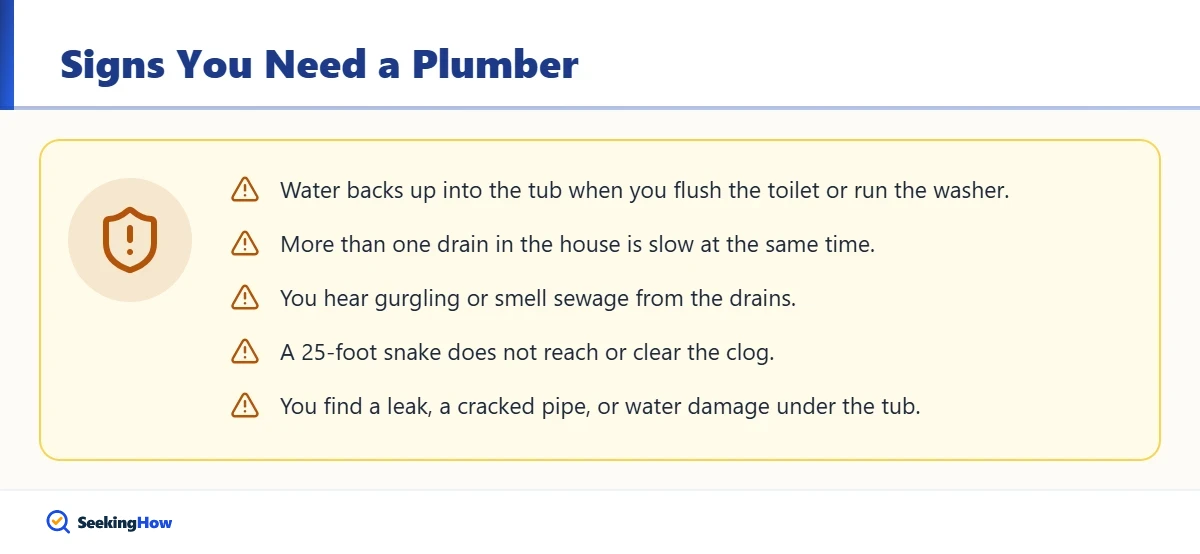
- Water backs up into the tub when you flush the toilet or run the washer.
- More than one drain in the house is slow at the same time.
- You hear gurgling or smell sewage from the drains.
- A 25-foot snake does not reach or clear the clog.
- You find a leak, a cracked pipe, or water damage under the tub.
These signs often mean a blockage in the main line or a venting problem, which needs professional equipment. A licensed plumber can also replace corroded drain parts. If you notice a leak at the spout while you are working, our guide on a tub spout leaking from the back can help.
How Can You Prevent Bathtub Clogs?
- Install a hair catcher: a mesh or silicone cover over the drain stops most hair before it enters the pipe.
- Clean the stopper monthly: remove it and pull off any hair before it builds up.
- Flush with hot water weekly: a few minutes of hot water helps move soap residue along.
- Brush hair before bathing: loose hair ends up in the brush, not the drain.
- Use an enzyme cleaner periodically: follow the label for maintenance doses on slow drains.
A free-flowing drain also helps your shower feel better. If water drains fine but the spray feels weak, see how to increase water pressure in your shower. Damage to the tub surface while working? Our guide on how to fix a crack in a plastic bathtub covers simple repairs.
Frequently Asked Questions
How do you drain a bathtub full of standing water?
First remove the stopper and clear any hair you can reach, which often lets the water drain on its own. If it does not, plunge with the overflow sealed. As a last resort, bail the water into a bucket with a cup so you can use baking soda and vinegar or work with a drain snake more easily.
Will boiling water unclog a bathtub drain?
Hot water can help loosen soap scum and greasy buildup, but it will not remove a hair clog. Very hot water from a kettle may soften older PVC joints or stress acrylic tubs, so use hot tap water or water just off the boil poured directly into the drain.
Can I use a toilet plunger on a bathtub?
A flat cup plunger seals better on a flat tub drain. A flanged toilet plunger can work if you fold the flange inside the cup. Use a dedicated plunger for the tub if possible, and always block the overflow opening so pressure goes into the clog.
Why does my bathtub drain clog again so quickly?
Repeated clogs usually mean hair is still caught on the stopper linkage or deeper in the trap. Snake the drain through the overflow to clear the trap fully, clean the stopper linkage, and install a hair catcher. Frequent clogs in several drains may point to a main line problem.
Is it safe to use Drano in a bathtub with standing water?
It is not recommended. Chemical cleaners diluted in standing water work poorly and leave you with a tub of caustic water that can splash during plunging. Try mechanical methods first. If you already used a chemical product, do not plunge, follow the label and call a plumber if it does not drain.