
Quick Answer
A tub spout leaking from the back is usually caused by failed caulk at the wall, a loose spout, a worn O-ring on a slip-on spout, or a bad threaded connection on the pipe behind it. Remove the spout, inspect the pipe and fitting, reseal threads with PTFE tape or replace the O-ring, reinstall it snug to the wall, and caulk the gap with silicone.
Key Takeaways
- Water dripping behind the spout can soak the wall cavity, so fix it quickly even if the leak looks small.
- Check whether your spout is threaded or slip-on (look for a set screw underneath) before removing it.
- Threaded spouts need fresh PTFE tape; slip-on spouts depend on an O-ring and set screw.
- A pipe nipple that is too short or too long keeps the spout from sealing against the wall.
- Water leaking inside the wall from the valve or a cracked joint needs a plumber.
When water runs out of the back of the spout, or appears around it on the tile when the tub is running, it is escaping before it reaches the spout outlet. Most causes are simple and can be fixed in under an hour with basic tools. The key is figuring out which type of spout you have and where the water is actually coming from.
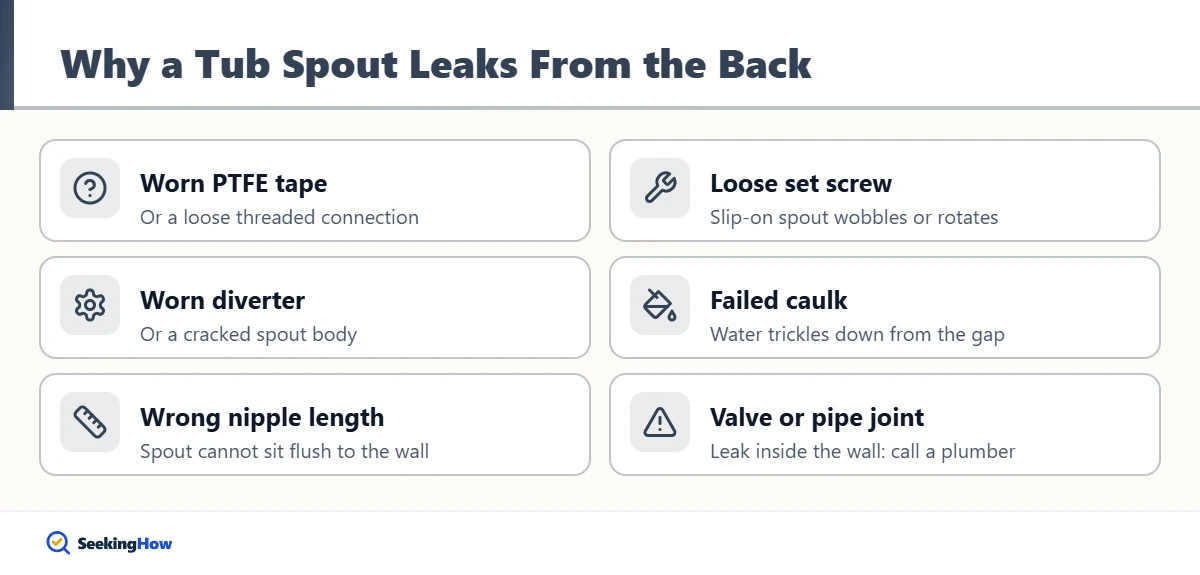
Why Is My Tub Spout Leaking From the Back?
| Symptom | Likely cause | Fix |
|---|---|---|
| Water seeps out around the spout base when the tub runs | Worn PTFE tape or loose threaded connection | Remove spout, clean and retape threads |
| Spout wobbles or rotates easily | Loose set screw (slip-on) or not tightened (threaded) | Tighten set screw or rethread snugly |
| Leak gets worse when the diverter is pulled up | Worn diverter or cracked spout body | Replace the spout |
| Water trickles down the wall from the spout gap | Failed caulk | Remove old caulk and reseal |
| Spout cannot be tightened flush to the wall | Pipe nipple wrong length | Replace the nipple with the right length |
| Water stains below, wall soft, leak when tub is off | Leak at the valve or pipe joint inside the wall | Call a plumber |
How Do You Tell If Your Spout Is Threaded or Slip-On?
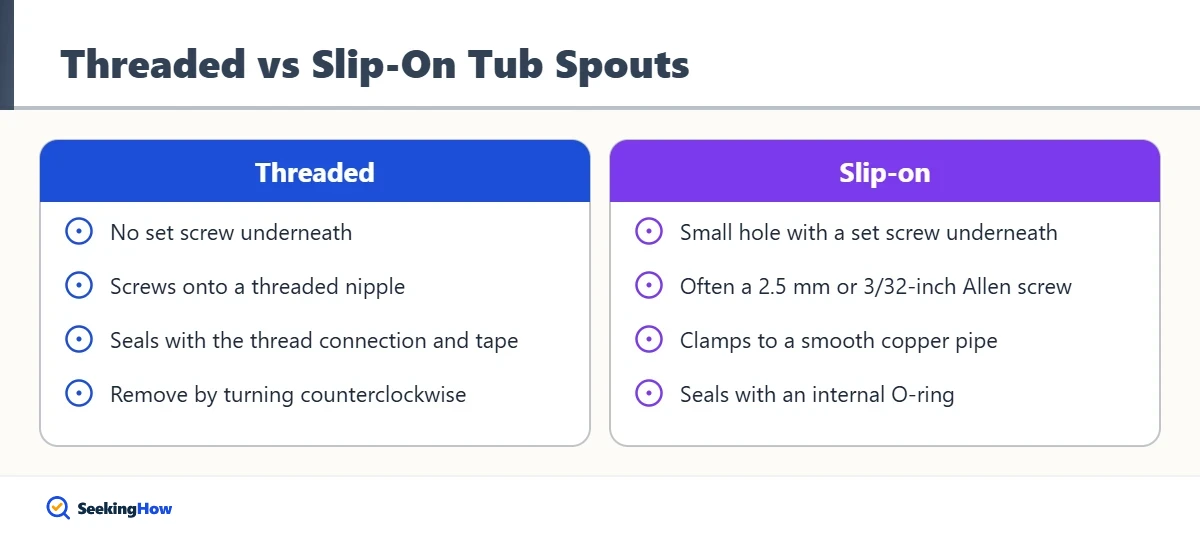
Look at the underside of the spout near the wall with a flashlight. If you see a small hole with a set screw (often a 2.5 mm or 3/32-inch Allen screw), it is a slip-on spout that clamps to a smooth copper pipe. If there is no screw, it is almost always a threaded spout that screws onto a threaded nipple.
Slip-on spouts seal with an internal O-ring, while threaded spouts rely on the thread connection and tape. Some manufacturers use unique connectors, so check the brand’s instructions if neither description fits.
What Do You Need to Fix a Leaking Tub Spout?
- PTFE (Teflon) thread-seal tape
- Allen wrench set (for slip-on spouts)
- Rag or strap wrench to protect the finish
- Replacement O-ring or a new spout matched to your connection type
- Utility knife or caulk removal tool
- 100% silicone kitchen and bath caulk
- Flashlight and isopropyl alcohol for cleaning
How Do You Fix a Tub Spout Leaking From the Back?
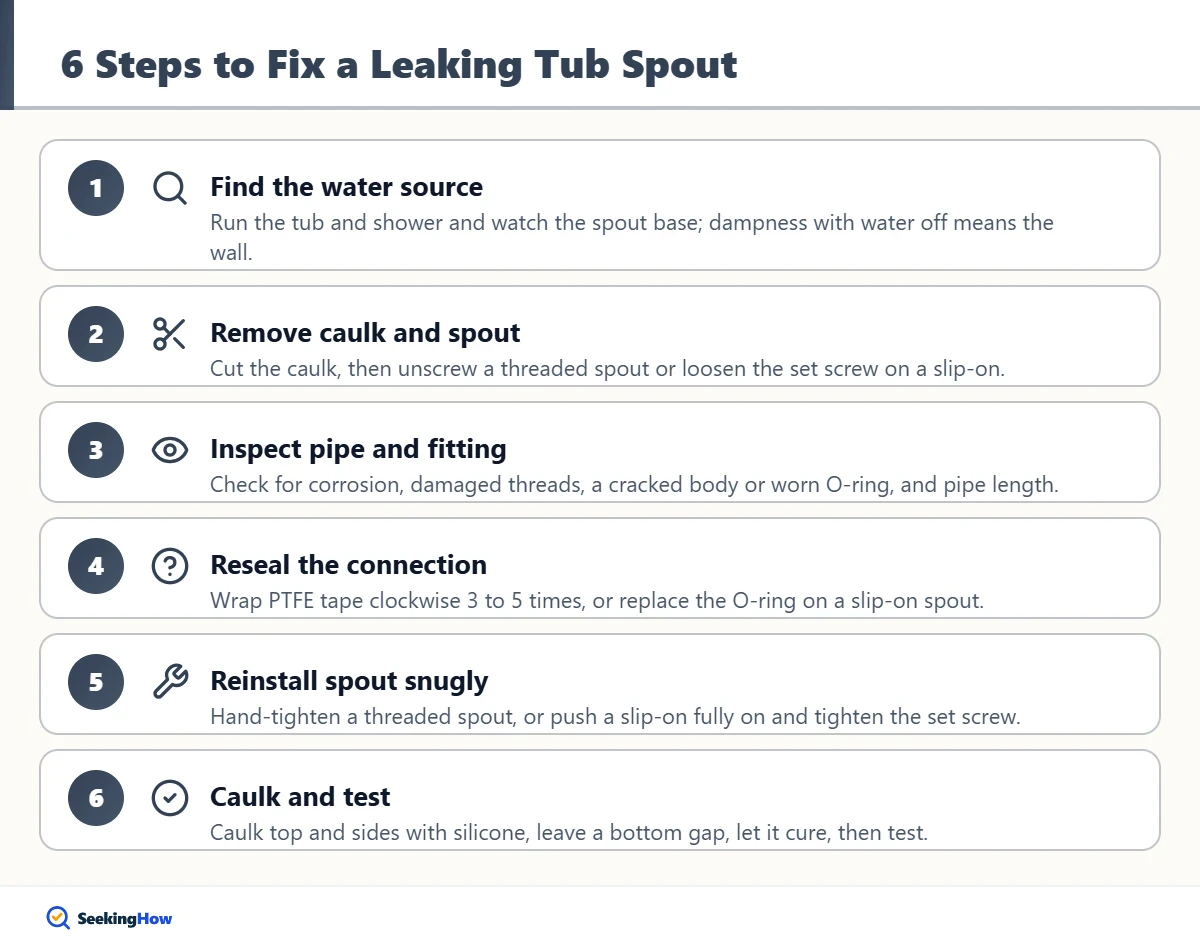
Step 1: Find Where the Water Is Coming From
Dry the spout and wall, then run the tub on warm water and watch the spout base. Pull the diverter up to run the shower and watch again. Water at the base only when the tub runs points to the spout connection, while dampness with the water off suggests a leak inside the wall.
Step 2: Remove the Old Caulk and the Spout
Cut away the caulk between the spout and the wall with a utility knife. For a threaded spout, wrap it in a rag and turn it counterclockwise by hand or with a strap wrench. For a slip-on spout, loosen the set screw underneath and pull the spout straight off.
Step 3: Inspect the Pipe and Fitting
Check the pipe end for corrosion, cracks or damaged threads, and look inside the spout for a cracked body or worn O-ring. Measure how far the pipe extends from the finished wall; your spout’s instructions list the required length. A pipe that is too long or short is a common reason a spout never sits flush.
Step 4: Reseal the Connection
For a threaded spout, clean the threads and wrap PTFE tape clockwise 3 to 5 times. For a slip-on spout, replace the O-ring or install a new spout, and make sure the copper pipe end is smooth and free of burrs.
Step 5: Reinstall the Spout Snug to the Wall
Thread the spout on by hand until it is tight and points straight down, or push the slip-on spout on fully and tighten the set screw firmly. Avoid overtightening with a wrench, which can crack the spout or twist the pipe inside the wall.
Step 6: Caulk and Test
Run a thin bead of 100% silicone caulk around the top and sides of the spout where it meets the wall, leaving a small gap at the bottom so any water can drain out instead of being trapped. Let the caulk cure for the time on the tube, then run the tub and shower to confirm the leak is gone.
Tip: Take the old spout to the store. Spouts differ in connection type, thread size (1/2-inch or 3/4-inch) and pipe-length requirements, and matching them in person avoids a second trip.
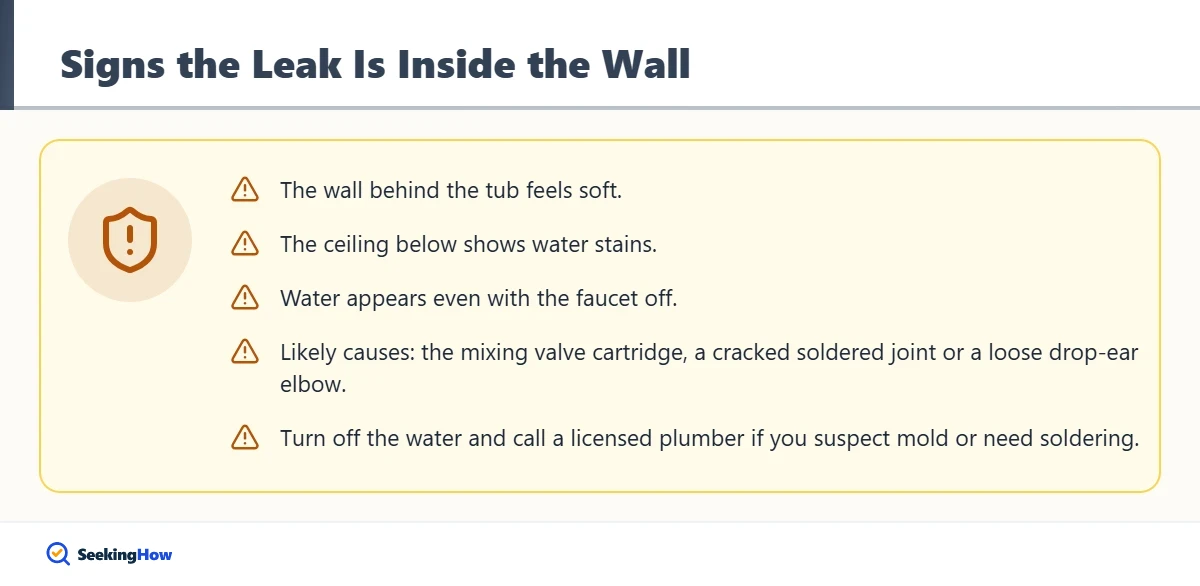
What If the Leak Is Inside the Wall?
If the wall behind the tub is soft, the ceiling below shows stains, or water appears with the faucet off, the problem may be the mixing valve cartridge, a cracked soldered joint, or a loose drop-ear elbow. Those repairs usually require opening an access panel or the wall. Our guide on how to tell if you have a hidden water leak explains checking the water meter for leaks you cannot see.
Safety: Turn off the water supply before cutting into pipes or opening the wall. If you suspect mold, a leak inside the wall, or need soldering near framing, call a licensed plumber.
Common Mistakes to Avoid
- Caulking over a leaking spout instead of fixing the connection.
- Using pipe dope on a slip-on spout, which seals with an O-ring.
- Wrapping PTFE tape counterclockwise so it unravels when you thread the spout on.
- Gripping the spout with bare pliers and scratching the finish.
- Sealing the bottom of the spout with caulk, trapping water against the wall.
Related Bathroom Plumbing Fixes
A spout leak sometimes shows up alongside low shower flow; see how to increase water pressure in the shower. If the spout threads onto a plastic fitting that has been damaged, our guide on fixing cross-threaded plastic pipe can help. And if water has been running down into a cracked tub deck, read how to fix a crack in a plastic bathtub.
Frequently Asked Questions
Should a tub spout be caulked?
Yes, most manufacturers recommend a bead of silicone around the top and sides where the spout meets the wall to keep shower water out of the wall cavity. Leave the bottom uncaulked so any water that gets behind it can drain out.
Why does my tub spout leak when the shower is on?
When the diverter sends water up to the showerhead, pressure builds inside the spout. A worn diverter gate, cracked spout body or bad connection lets water escape at the back or spray from the outlet. Replacing the spout usually solves it.
How tight should a tub spout be?
Tighten a threaded spout by hand until it is snug against the wall and pointing straight down. A small extra turn with a rag-wrapped strap wrench is fine, but heavy force can crack the spout or twist the pipe inside the wall.
Can I replace a tub spout without turning off the water?
Usually yes, because the spout sits after the valve and only carries water when the faucet is on. Keep the faucet closed while you work. If you need to cut or replace the pipe nipple, shut off the main water supply first.
How much does it cost to fix a leaking tub spout?
A DIY fix often costs only the price of PTFE tape, an O-ring or a new spout. A plumber charges a service call plus parts. Leaks inside the wall that require opening drywall or tile cost significantly more.