Quick Answer
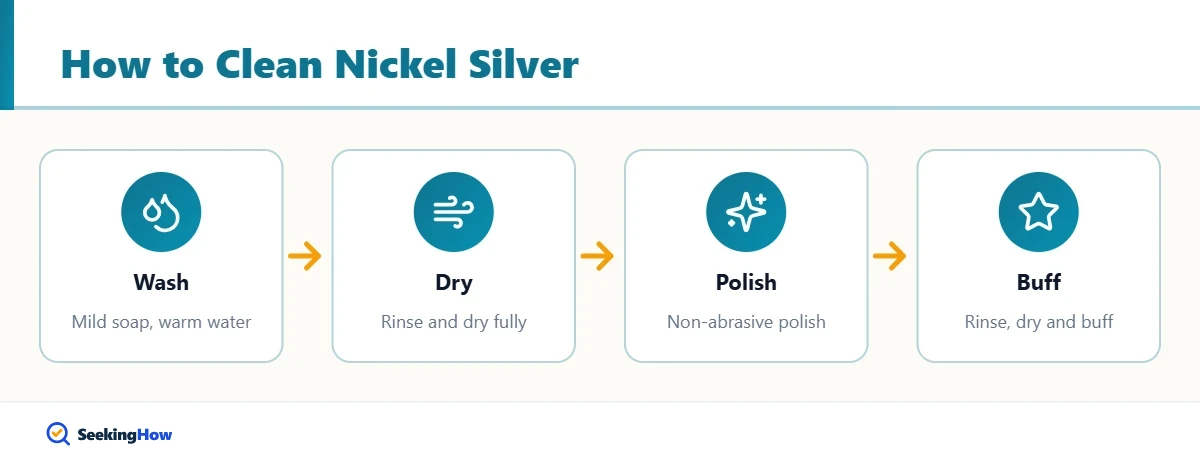
To clean nickel silver, wash it in warm water with a few drops of mild dish soap, dry it, then rub off tarnish with a non-abrasive metal polish or a paste of baking soda and water on a soft cloth. Rinse, dry immediately and buff. Avoid silver dips, bleach and steel wool. Most pieces take 10 to 20 minutes.
Key Takeaways
- Nickel silver (German silver) is a copper, nickel and zinc alloy with no actual silver in it.
- Start with soap and water; use polish only where tarnish remains.
- Silver dips and chlorine bleach can discolor or pit the alloy.
- Instruments, model railroad track and jewelry each need slightly different care.
- Drying thoroughly and storing in a dry place slows tarnish the most.
Nickel silver shows up in flatware, belt buckles, Western and Native American-style jewelry, musical instrument keys and slides, and HO-scale train track. Because it is mostly copper, it tarnishes to a dull yellow-brown or greenish film over time. The right cleaning method removes that film without scratching the surface or stripping any plating.
What Is Nickel Silver?
Nickel silver is a copper alloy, typically containing copper, nickel and zinc in varying proportions. It got the names German silver and alpaca because of its bright silvery look, but it contains no silver. Many pieces are also electroplated with real silver, which is where the term EPNS (electroplated nickel silver) comes from.
This matters for cleaning. Solid nickel silver tolerates mild polishing, while silver-plated pieces have a thin layer that heavy polishing can wear through, revealing yellowish base metal at edges and high points.
Tip: Look for stamps such as EPNS, NS, German Silver or Alpaca. EPNS means silver-plated, so polish gently and less often.
What Do You Need to Clean Nickel Silver?
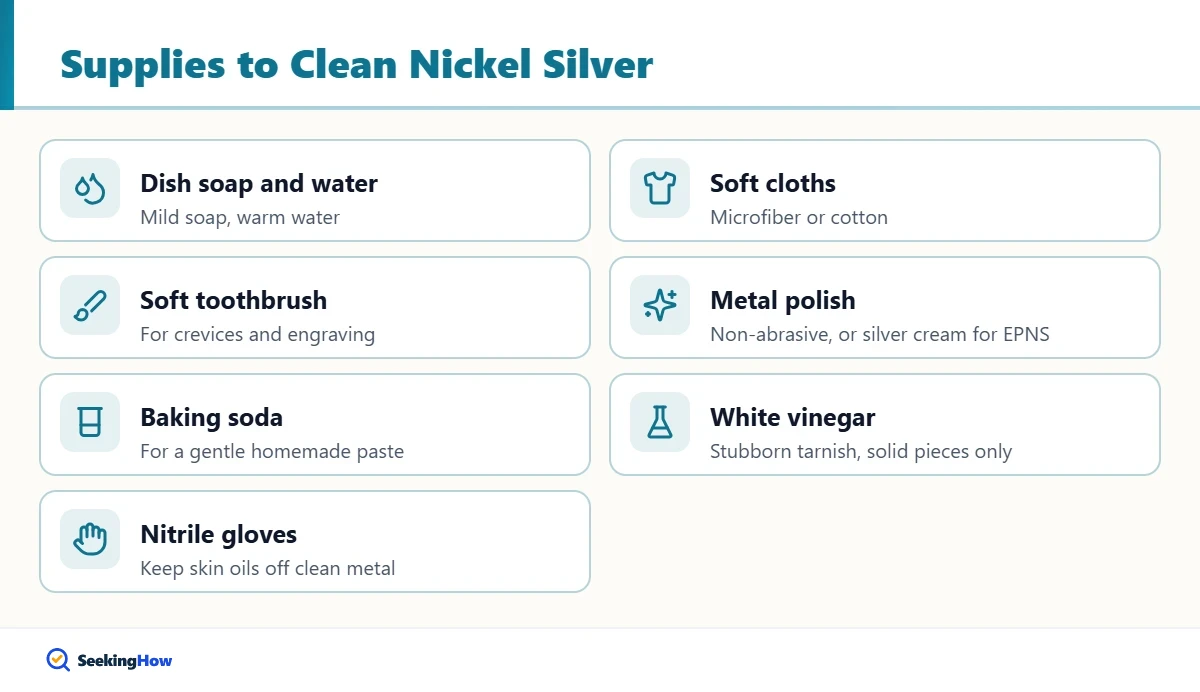
- Mild dish soap and warm water
- Soft microfiber or cotton cloths
- Soft-bristle toothbrush for crevices and engraving
- Non-abrasive metal polish suitable for nickel and copper alloys, or a silver polish cream for EPNS
- Baking soda (for a gentle homemade paste)
- White vinegar (for stubborn tarnish on solid pieces only)
- Nitrile gloves to keep skin oils off clean metal
How Do You Clean Nickel Silver Step by Step?
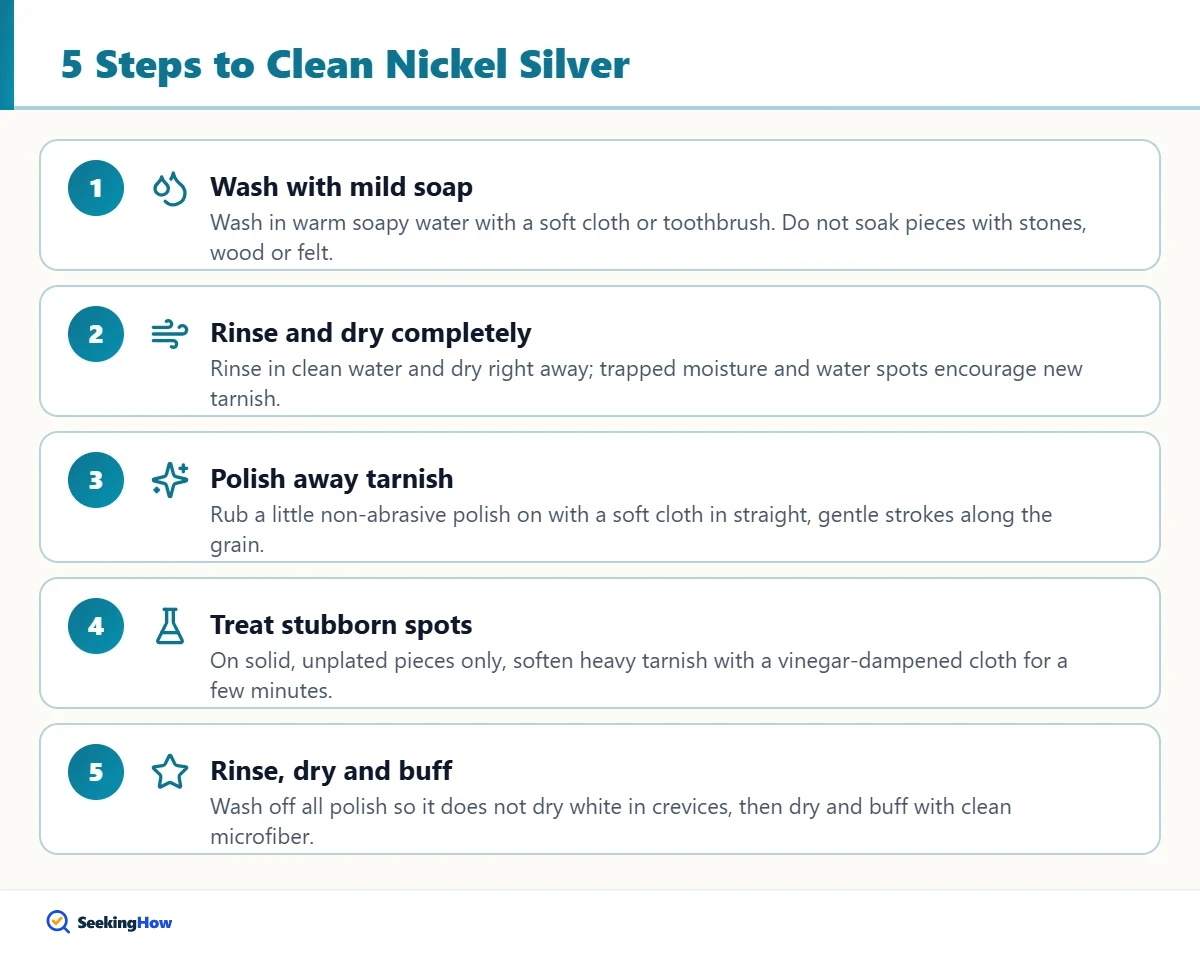
Step 1: Wash With Mild Soap and Water
Fill a basin with warm water and a few drops of dish soap. Wash the piece with a soft cloth or toothbrush to remove grease, fingerprints and dust. Do not soak items with glued stones, wood handles or felt.
Step 2: Rinse and Dry Completely
Rinse in clean water and dry immediately with a soft towel. Water spots and trapped moisture encourage new tarnish. Check whether the piece already looks clean before moving on.
Step 3: Polish Away Tarnish
Apply a small amount of non-abrasive metal polish to a soft cloth and rub in straight, gentle strokes, following the grain. Turn the cloth often as it darkens. For a homemade option, mix baking soda with a little water into a paste and rub lightly.
Step 4: Treat Stubborn Spots
On solid (unplated) pieces, heavier tarnish can be softened with a cloth dampened in white vinegar for a few minutes, followed by more polish. Use a soft toothbrush in engraving or around settings. Never leave vinegar on the metal for long.
Step 5: Rinse, Dry and Buff
Wash off all polish residue in soapy water, because leftover polish dries white in crevices. Rinse, dry thoroughly and buff with a clean microfiber cloth for shine.
Which Cleaning Method Is Best for Your Item?
| Item | Recommended method | Avoid |
|---|---|---|
| Flatware and serving pieces | Hand wash, metal polish, dry immediately | Dishwasher with lemon detergents |
| EPNS (silver-plated) pieces | Gentle silver polish cream, light pressure | Heavy rubbing, abrasive pastes |
| Jewelry and buckles with stones | Damp soapy cloth, polishing cloth | Soaking, vinegar near stones |
| Flute or clarinet keys | Untreated polishing cloth only | Liquid polish near pads and corks |
| Trombone slides | Follow manufacturer cleaning and slide care | Abrasives on the slide tubes |
| Model railroad track | Isopropyl alcohol on a lint-free cloth, track eraser | Sandpaper, steel wool |
How Do You Clean Nickel Silver Instruments and Train Track?
Woodwinds: flutes and clarinets often have nickel silver keys, sometimes silver-plated. Liquid polish can ruin pads and corks, so wipe keys with an untreated polishing cloth after playing and leave deeper cleaning to a repair technician.
Brass instruments: nickel silver is common on trombone slides and trim. Wash with lukewarm water and mild soap, use the cleaning rod and products the manufacturer recommends, and keep abrasives away from slide surfaces.
Model railroads: nickel silver track conducts power through its oxide film better than brass, but dirt still causes stalling. Wipe rails with isopropyl alcohol on a lint-free cloth or use a track-cleaning eraser, and avoid sandpaper, which leaves scratches that collect grime faster.
What Should You Avoid When Cleaning Nickel Silver?
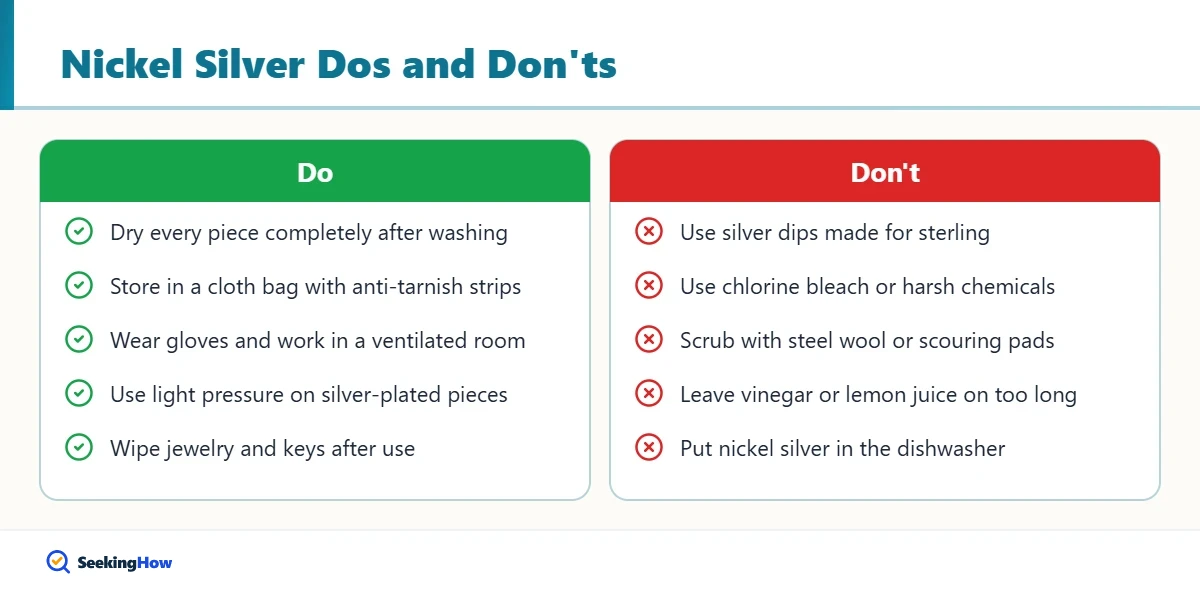
- Silver dips: they are formulated for sterling and can discolor nickel silver or strip thin plating.
- Chlorine bleach and harsh chemicals: they can pit and darken copper alloys.
- Steel wool and scouring pads: they leave permanent scratches.
- Long acid soaks: vinegar, lemon juice and ketchup can etch if left on.
- The dishwasher: heat and detergents can dull and spot the finish.
Safety: Use metal polishes in a ventilated room, wear gloves, and keep them away from children. Never mix vinegar or ammonia-based cleaners with bleach. People with nickel allergies should wear gloves while handling and cleaning nickel silver.
If a piece has green spots or reddish patches, that is corrosion of the copper rather than ordinary tarnish. Light corrosion responds to the vinegar step; deeper damage needs a jeweler or restorer. For tough corrosion on other metals, our guide to the fastest way to remove rust from metal explains how to treat iron and steel parts, which need different methods.
How Do You Keep Nickel Silver From Tarnishing?
- Dry every piece completely after use or washing.
- Store in a dry drawer or a cloth bag, ideally with anti-tarnish strips.
- Keep it away from rubber bands, wool and felt that contain sulfur.
- Wipe jewelry and instrument keys after wearing or playing to remove skin oils.
- For decorative pieces, a thin coat of clear microcrystalline wax adds a protective barrier.
Mirrors and plated decor face similar oxidation problems; see how to deal with that in our guide to repairing mirror desilvering.
When Should You Use a Professional?
Take antique, collectible or heavily worn silver-plated pieces to a jeweler or silversmith, who can clean or replate them without losing value. Musical instruments with tarnished keys or sticky slides should go to an instrument repair technician. Over-polishing collectible items can reduce their value, so when in doubt, clean lightly.
Frequently Asked Questions
Is nickel silver real silver?
No. Nickel silver, also called German silver or alpaca, is an alloy of copper, nickel and zinc and contains no silver. Items marked EPNS are nickel silver with a thin electroplated layer of real silver on top.
Can you use silver polish on nickel silver?
A gentle silver polish cream is generally fine, and it is the best choice for silver-plated EPNS pieces. Avoid silver dip solutions, which are designed for sterling and can discolor nickel silver or strip thin plating.
Does vinegar clean nickel silver?
White vinegar can loosen stubborn tarnish on solid nickel silver if applied briefly on a cloth, then rinsed off and followed by polish. Do not soak pieces or use vinegar on plated items, jewelry with stones, or instrument keys.
Why does nickel silver turn green?
Nickel silver is mostly copper, and copper reacts with moisture, skin acids and air to form greenish corrosion. Light green spots can usually be cleaned off; prevent them by drying pieces thoroughly and storing them in a dry place.
Can nickel silver cause skin reactions?
Yes. Nickel is one of the most common causes of allergic contact dermatitis. If nickel silver jewelry or buckles cause redness or itching, stop wearing them against skin and talk to a doctor or dermatologist if the rash persists.