Quick Answer
To clean a propane tank for a smoker build, use up or have a propane dealer evacuate all gas, remove the valve with a large wrench while the tank is clamped, fill the tank completely with water and dish soap to flush out vapor and odorant, let it soak at least 24 hours, then drain and repeat. Keep it full of water until cutting, and never use heat on an unpurged tank.
Key Takeaways
- An “empty” propane tank still contains flammable vapor; purging with water is not optional.
- The safest route is to have a propane supplier evacuate the tank and remove the valve.
- Filling the tank to the brim with soapy water displaces vapor and loosens residue and odorant oil.
- The rotten-egg smell (mercaptan) can linger after the tank is safe, so smell is not a reliable test.
- Large tanks (100 to 500 gallons and up) should be handled by professionals.
Old propane tanks make excellent smoker bodies because the steel is thick and holds heat well. They are also the most dangerous part of a smoker project, because residual propane vapor and liquid can ignite when you drill, grind or cut. This guide focuses on emptying, purging and cleaning the tank safely so it is ready for fabrication.
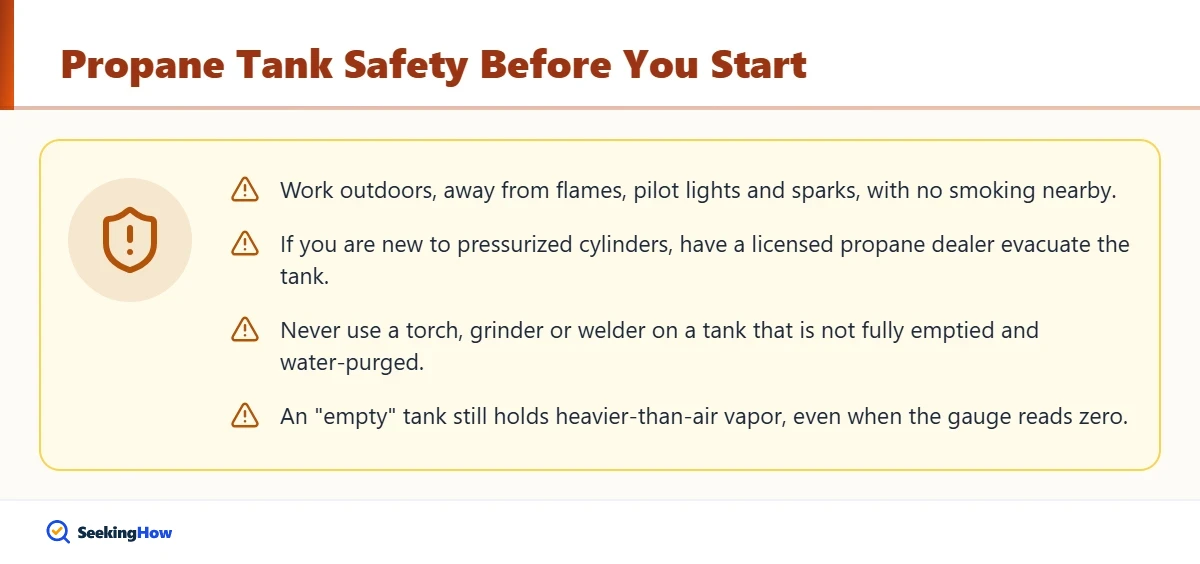
Safety: Work outdoors, away from flames, pilot lights and sparks, with no smoking anywhere nearby. If you are not experienced with pressurized gas cylinders, have a licensed propane dealer evacuate and depressurize the tank. Never use a torch, grinder or welder on a tank that has not been fully emptied and water-purged.
Is It Safe to Turn a Propane Tank Into a Smoker?
Yes, when the tank is properly emptied and purged, and many pitmasters cook on smokers built from old 100-, 250- and 500-gallon tanks. The danger comes from shortcuts: assuming a tank is empty because the gauge reads zero, cutting with a grinder before flushing, or relying on smell. Propane is heavier than air and settles at the bottom of the tank, so vapor can remain even when no gas comes out of the valve.
What Do You Need?
- Garden hose and a large supply of water
- Liquid dish soap (any grease-cutting brand)
- Large pipe wrench or valve wrench, and a breaker bar or cheater pipe
- A way to secure the tank: chains, ratchet straps or a heavy-duty vise for small cylinders
- Safety glasses, chemical-resistant gloves and work boots
- Optional: combustible gas detector (LEL meter)
- Plugs or a pipe fitting to close the valve opening during soaking
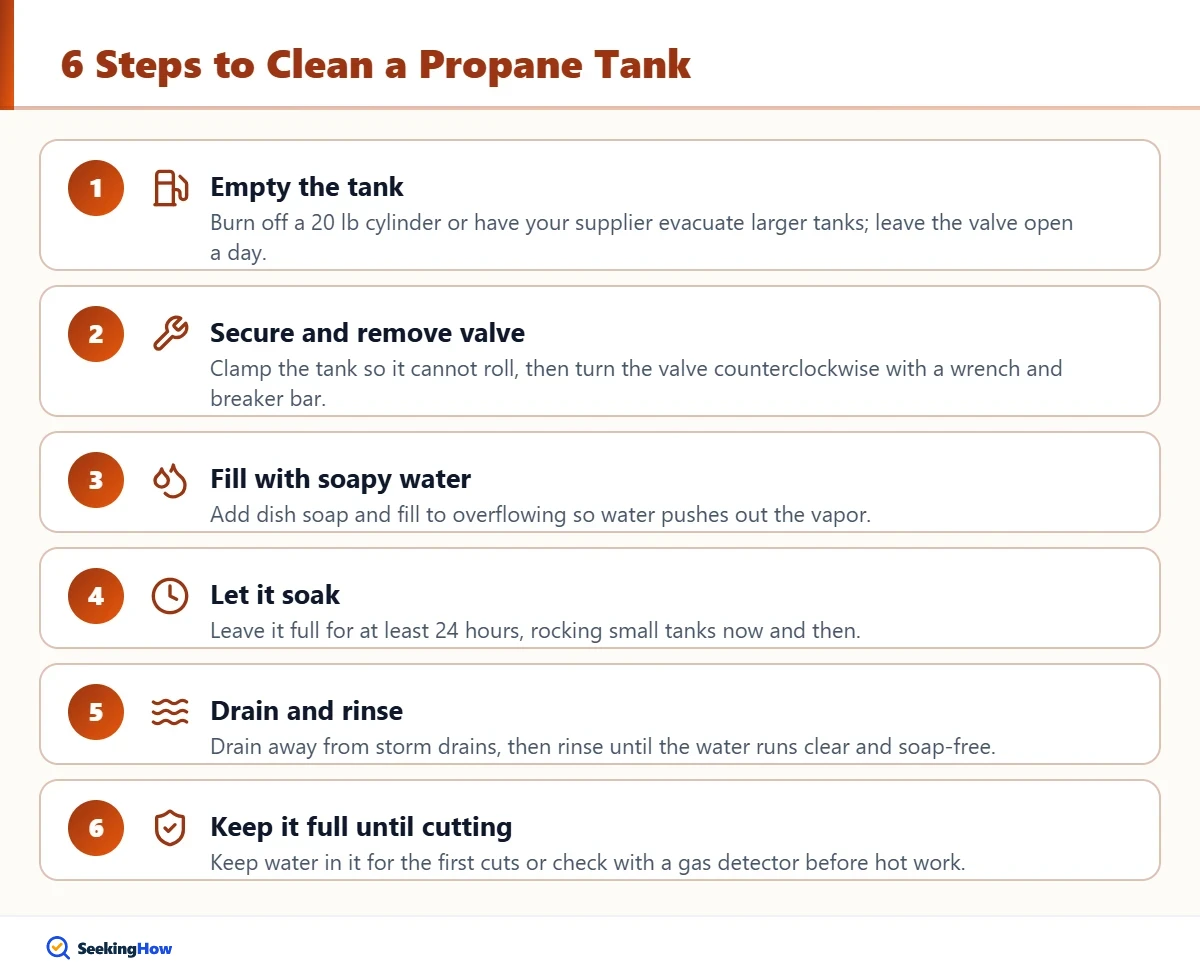
How Do You Clean a Propane Tank for a Smoker Step by Step?
Step 1: Empty the Tank Completely
For a 20-pound grill cylinder, run it on a grill outdoors until the flame goes out and will not relight. For larger tanks, ask your propane supplier to pump out the remaining liquid and evacuate the tank; many dealers do this for a fee. Once no gas flows, open the valve fully and leave it open outdoors for a day so pressure equalizes.
Step 2: Secure the Tank and Remove the Valve
Strap or clamp the tank so it cannot roll, then turn the valve counterclockwise with a large wrench and breaker bar. Valves use tapered pipe threads and are often very tight, so steady force works better than hammering. Stand to the side as it releases in case any residual pressure or liquid escapes.
Step 3: Fill the Tank With Soapy Water
Add a generous squeeze of dish soap, then fill the tank through the valve opening with a garden hose until water overflows. Filling to the very top is the point: water pushes out the heavier-than-air vapor, while the soap helps break down the oily odorant and residue inside.
Step 4: Let It Soak
Leave the tank full for at least 24 hours. Rolling or rocking small tanks occasionally helps the soapy water wash the inside walls. You may see an oily film on the surface at the opening; this is normal.
Step 5: Drain and Rinse
Tip the tank and drain it away from storm drains, gardens and waterways, following any local disposal rules. Refill with clean water and drain again until it runs clear and soap-free. Repeat the full soak if a strong odor remains.
Step 6: Keep It Full Until Fabrication
Many experienced builders refill the tank with water and keep it full during the first cuts, or test the inside with a combustible gas detector before any hot work. If you are not equipped for this, hire a welding or fabrication shop that has done tank conversions before.
Tip: Do not judge safety by smell. The mercaptan odorant added to propane soaks into the steel and can linger for weeks, even after vapor is gone. A gas detector reading, not your nose, tells you whether the tank is ready.
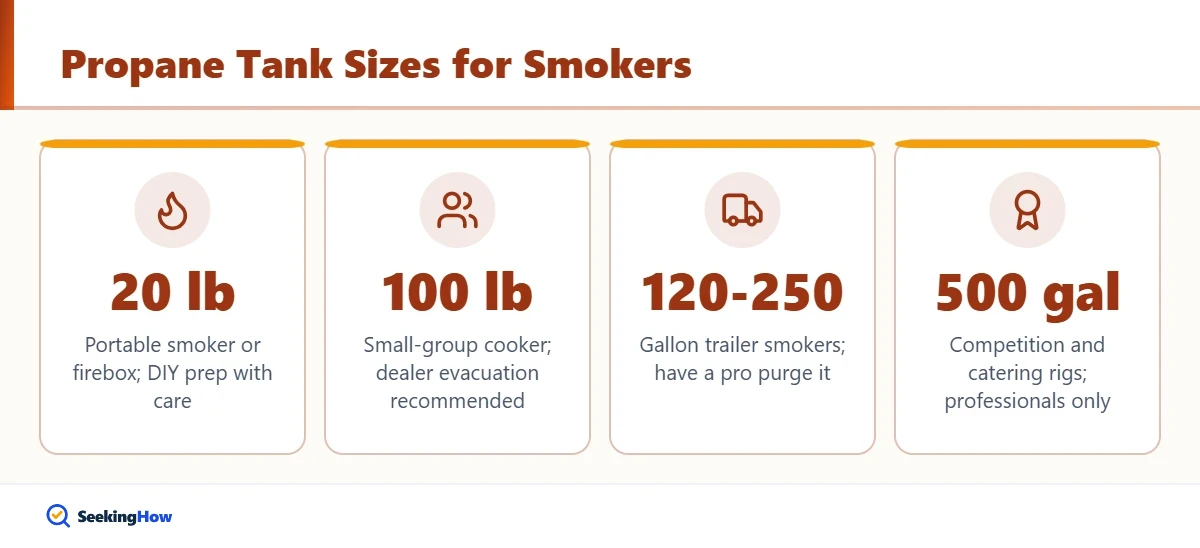
Propane Tank Sizes for Smokers
| Tank size | Typical smoker use | DIY prep? |
|---|---|---|
| 20 lb (about 4.7 gal) | Small portable smoker or firebox | Yes, with care |
| 100 lb | Backyard cooker for small groups | Possible; dealer evacuation recommended |
| 120 to 250 gal | Large backyard or trailer smoker | Have a supplier or fabricator purge it |
| 500 gal and up | Competition and catering rigs | Professional handling only |
How Do You Clean the Outside of the Tank?
Once the inside is safe, remove paint and rust from the outside before you cook on it. Sandblasting, flap discs or wire wheels remove old coatings; wear a respirator, since old paint may contain lead. Our guide to the fastest way to remove rust from metal covers the options. Repaint the exterior only with high-temperature grill or stove paint.
How Do You Burn Out and Season the Smoker?
After fabrication, burn a hot fire inside the cooker to remove mill scale, cutting oils and any residual smell. Then wipe the interior with a thin coat of high-smoke-point cooking oil and run it at cooking temperature for several hours to season the steel. Only cook food after the burn-out leaves no chemical odor.
Once it is seasoned, you can start with long cooks. For indoor backup recipes, see our guides to cooking brisket in the oven and cooking steak in the oven.
Common Mistakes to Avoid
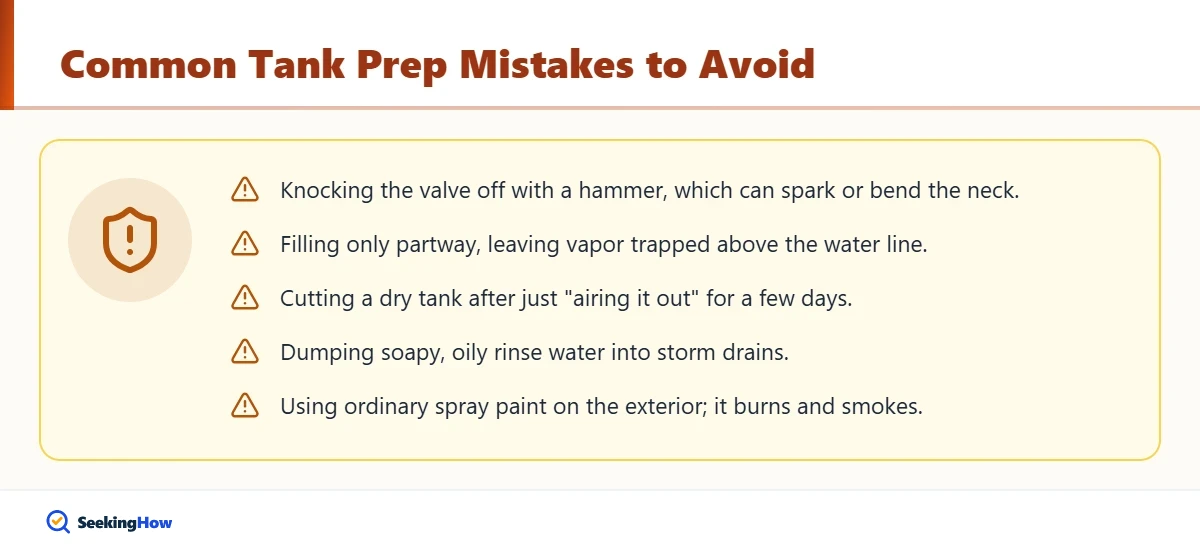
- Knocking the valve off with a hammer, which can spark or bend the neck.
- Filling the tank only partway, leaving vapor trapped above the water line.
- Grinding or cutting a dry tank after “airing it out” for a few days.
- Dumping soapy, oily rinse water into storm drains.
- Using ordinary spray paint on the exterior; it burns and smokes.
Alternatives to DIY Tank Prep
If you only want a smoker, buying a pre-cut tank or a smoker kit from a fabricator is often safer and not much more expensive once you count tools and time. If you simply need to get rid of an old cylinder, propane retailers and many tank exchange sites accept old tanks for recycling or requalification.
Frequently Asked Questions
How do you get the propane smell out of a tank?
Fill the tank to the top with water and dish soap, soak it for at least a day, then drain and rinse. Repeat as needed. A faint odor can linger because mercaptan soaks into the steel, and burning out the finished smoker usually removes the rest.
Can I cut a propane tank with a grinder?
Only after it has been fully emptied, the valve removed and the tank purged with water, ideally kept full of water or verified with a combustible gas detector. Cutting a dry, unpurged tank can ignite residual vapor. If unsure, hire a fabricator.
How long should a propane tank soak before cutting?
Many builders let a tank soak full of soapy water for at least 24 hours, then drain, rinse and repeat if a strong smell remains. Longer soaks do not hurt. The goal is to displace all vapor and wash out the oily residue.
Will a propane company empty a tank for me?
Many propane suppliers will evacuate or pump out a tank for a fee, especially larger tanks. Some will also remove the valve. Call local dealers and ask; it is the safest way to start a tank smoker project.
Can you use an old propane tank smoker for food?
Yes, once the tank is purged, fabricated, burned out at high heat and seasoned with cooking oil. Cook only after the burn-out leaves no chemical odor, and use high-temperature paint on the outside only.