Quick Answer
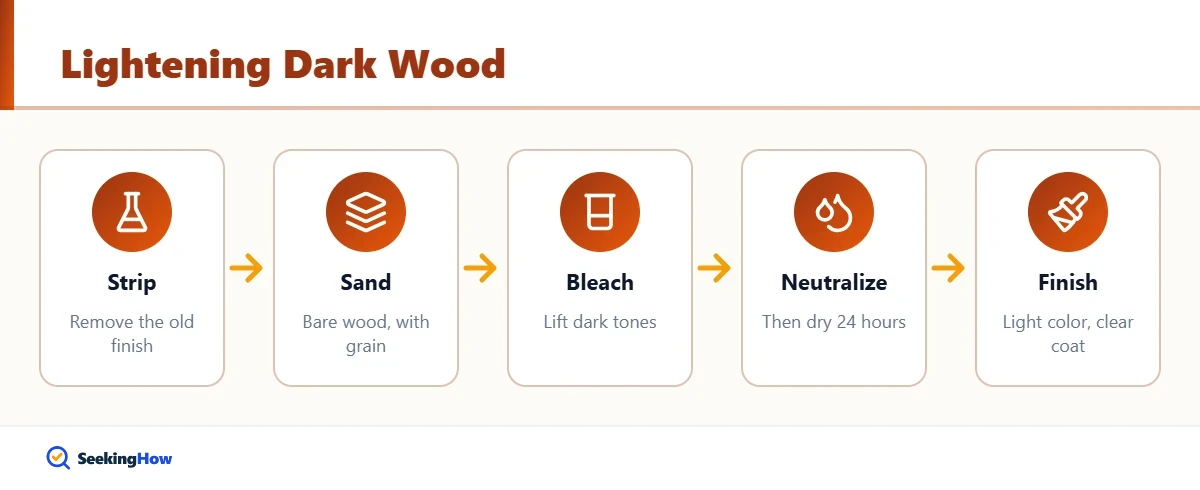
To change wood color from dark to light, strip the old finish with a chemical stripper, sand the bare wood with 120- then 150-grit paper, and lighten it with wood bleach (two-part A/B bleach for natural dark tones, oxalic acid for gray or water stains). Neutralize, let it dry, sand the raised grain, then finish with whitewash, a light stain or a clear water-based topcoat. Plan on 2 to 3 days.
Key Takeaways
- You cannot stain light over dark; the old color has to come out first.
- Stripping removes the finish, sanding removes surface stain, and bleach lightens the wood itself.
- Pick the bleach for the problem: two-part A/B for natural color, oxalic for iron and water stains, chlorine for dye stains.
- Water-based polyurethane stays clear; oil-based finishes add an amber tint.
- Veneered furniture needs light sanding only, or you will sand through.
Dark espresso, walnut and cherry stains can make a room feel heavy, and they go out of style. Lightening wood is entirely doable, but it is a process of removal before it is a process of adding color. Here is how to get from dark to light without blotches, sand-through or a finish that turns yellow.
Why Can’t You Just Stain Wood Lighter?
Wood stain is translucent. It adds color on top of what is already there, so a light stain over dark wood just looks dark. To go lighter, you must remove the existing finish and the stain beneath it, and sometimes bleach the wood fibers themselves. The only shortcut is an opaque finish such as paint or heavy whitewash, which hides the color rather than changing it.
Which Method Should You Use?
| Method | What it changes | Best for | Effort |
|---|---|---|---|
| Chemical stripping | Removes varnish, lacquer, polyurethane, some stain | Finished furniture and floors | Moderate |
| Sanding | Removes surface stain and finish | Solid wood, flat surfaces | Moderate to high |
| Two-part A/B wood bleach | Lightens natural wood color | Walnut, cherry, mahogany, dark solid wood | Moderate |
| Oxalic acid bleach | Removes gray weathering, iron and water stains | Oak, decks, black water rings | Low |
| Chlorine bleach | Removes many dye stains | Dye-stained pieces after stripping | Low |
| Whitewash or pickling | Adds translucent white over light wood | Coastal, Scandinavian looks | Low |
| Paint | Covers color completely | Veneer, laminate, damaged wood | Low to moderate |
What Do You Need?
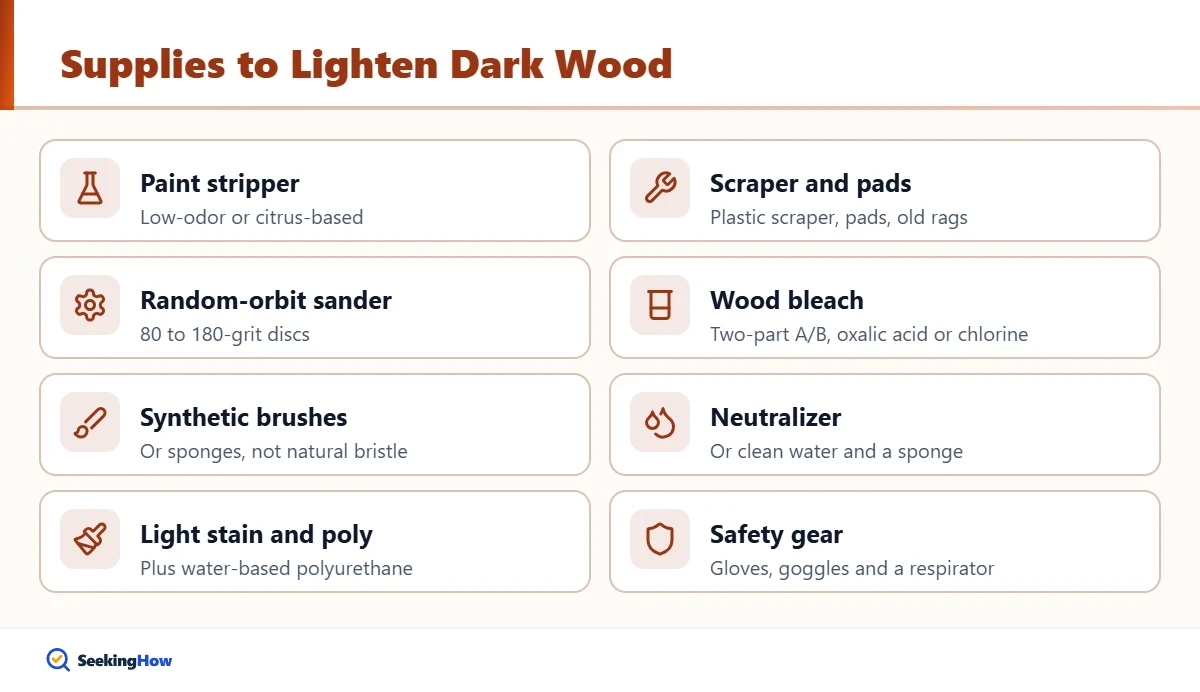
- Chemical paint and varnish stripper (low-odor or citrus-based types are easier to work with)
- Plastic scraper, stripping pads and old rags
- Random-orbit sander with 80-, 120-, 150- and 180-grit discs
- Wood bleach: two-part A/B, oxalic acid crystals, or chlorine bleach depending on the stain
- Synthetic brushes or sponges for applying bleach (not natural bristle)
- Neutralizer as directed by the bleach maker, or clean water and a sponge
- Light stain, whitewash or pickling stain, and water-based polyurethane
- Chemical-resistant gloves, safety goggles and a respirator rated for organic vapors
How Do You Lighten Dark Wood Step by Step?
Step 1: Identify the Wood and Finish
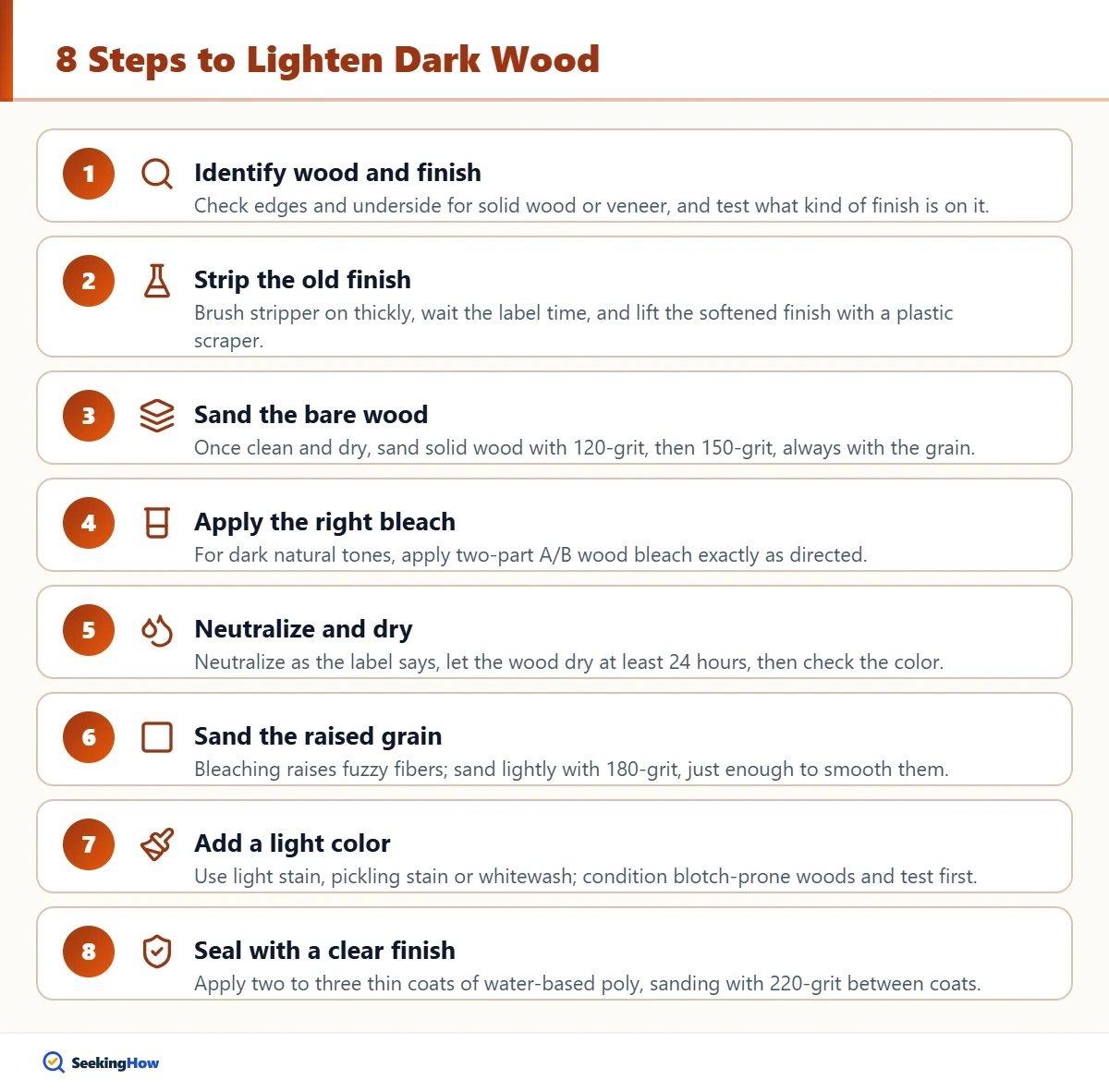
Check edges and the underside to see whether the piece is solid wood or veneer, and test the finish. A drop of denatured alcohol softens shellac; lacquer thinner softens lacquer; polyurethane resists both. Knowing this tells you which stripper and how much sanding you can do.
Step 2: Strip the Old Finish
Apply stripper thickly with a brush, wait the time on the label, and lift the softened finish with a plastic scraper. Use stripping pads on curves and carvings, and repeat if needed. Our guide to removing polyurethane from wood covers this stage in detail.
Step 3: Sand the Bare Wood
Once clean and dry, sand solid wood with 120-grit, then 150-grit, always with the grain. Much of the surface stain will come away. On veneer, use only 150- or 180-grit by hand with light pressure, because most veneers are very thin.
Step 4: Apply the Right Wood Bleach
For dark natural tones, apply two-part A/B bleach as directed: usually part A, then part B shortly after, or mixed, depending on the brand. For black water marks or gray weathering, brush on oxalic acid dissolved in hot water. For leftover dye color, wipe on household chlorine bleach. Apply evenly and keep the surface wet.
Step 5: Neutralize and Let It Dry
Neutralize exactly as the product label instructs, which may mean a water rinse or a specific neutralizing solution. Leftover bleach can damage new finishes. Let the wood dry for at least 24 hours, then check the color; repeat the bleach if it is not light enough.
Step 6: Sand the Raised Grain
Water-based bleaching raises the wood fibers, leaving a fuzzy surface. Sand lightly with 180-grit, just enough to smooth it, and remove all dust with a vacuum and a slightly damp cloth.
Step 7: Add a Light Color
Choose your new look: a light natural stain, a white or gray pickling stain, a whitewash of thinned white paint, or simply clear finish. Apply a pre-stain conditioner on blotch-prone woods like pine, maple and birch. Always test on a hidden area first.
Step 8: Seal With a Clear Finish
Apply two to three thin coats of water-based polyurethane or a water-based clear finish, sanding lightly with 220-grit between coats. Water-based topcoats stay clear, while oil-based polyurethane adds an amber tone that would undo some of your work.
Safety: Never mix different bleaches, and never mix chlorine bleach with ammonia or acids. Two-part bleach and oxalic acid are caustic or toxic; wear goggles, chemical-resistant gloves and a respirator, work with ventilation, and keep children and pets away. Dispose of stripper waste according to local rules.
How Do You Lighten Wood Without Stripping?
If the finish is intact and you just want a lighter overall look, you have a few options.
- Paint: scuff-sand, prime with a bonding primer, and paint in a light color for complete coverage.
- Liming wax or white glaze: on open-grain woods like oak, white wax fills pores for a lighter, textured look, though it works best on bare wood.
- Opaque light gel stain: some gel stains have enough pigment to shift dark wood lighter after scuff-sanding, but the result looks more like a painted finish than natural wood.
Common Mistakes When Lightening Wood
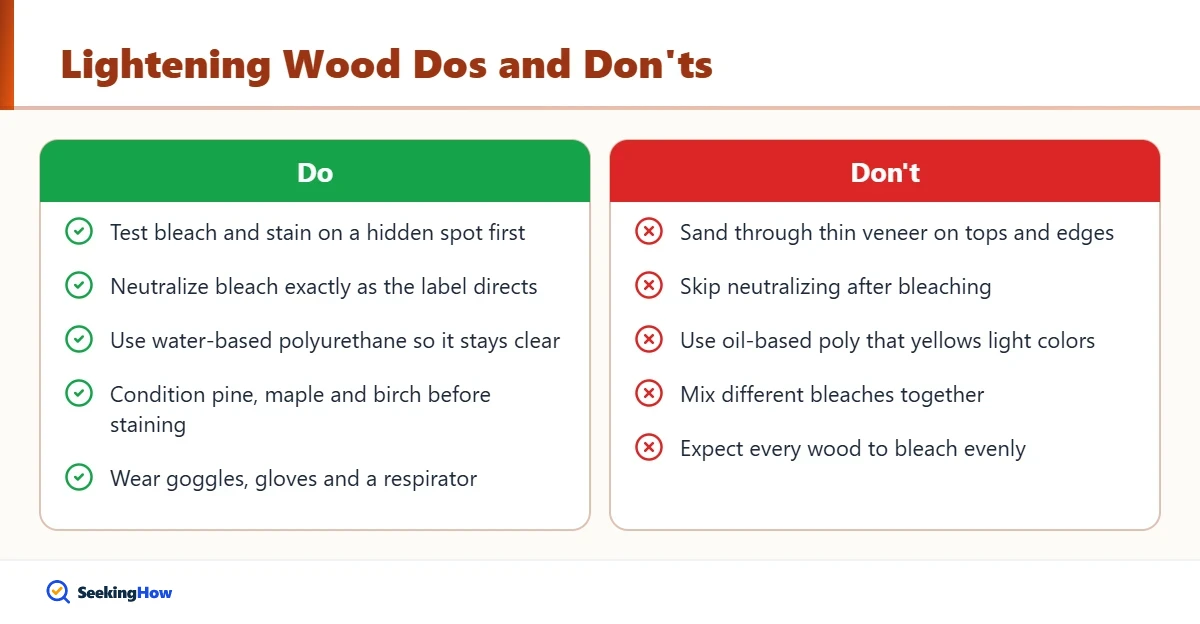
- Sanding through thin veneer on tabletops and edges.
- Skipping neutralizing, which leaves residue that ruins the new finish.
- Using oil-based poly, which yellows the light color.
- Not testing bleach and stain on a hidden spot first.
- Expecting every wood to bleach evenly; sapwood and heartwood can lighten differently.
How Long Does It Take?
Expect stripping and sanding to take a day for a dresser or small table, bleaching and drying another day, and finishing a final day with dry time between coats. Larger projects like floors are best left to a professional floor refinisher who has drum sanders and dust containment.
While the piece is stripped, it is the ideal time to make structural fixes such as fixing a wobbly chair before you put the final finish on.
When Should You Call a Professional?
Hire a furniture refinisher for antiques, pieces with intricate veneer or marquetry, and anything with sentimental or monetary value. Older finishes may contain lead paint; if a painted piece predates 1978, test it with an EPA-recognized lead test kit before sanding, and use a certified professional if lead is present.
Frequently Asked Questions
Can you stain wood lighter than it is?
Not with a regular translucent stain, because stain adds color on top of existing color. To go lighter you need to strip, sand and often bleach the wood, or use an opaque finish such as paint, a heavy whitewash or a highly pigmented gel stain.
Does vinegar or hydrogen peroxide lighten wood?
Household hydrogen peroxide may lighten some woods slightly, and vinegar does very little. Two-part A/B wood bleach uses a much stronger peroxide system with an alkali and gives far more reliable results on dark natural wood.
What is the difference between wood bleaches?
Two-part A/B bleach removes natural wood color. Oxalic acid removes iron stains, black water marks and gray weathering without changing natural color much. Chlorine bleach removes many dye stains. Choose based on what made the wood dark.
Can you lighten wood veneer furniture?
Yes, but carefully. Strip chemically rather than relying on sanding, sand only lightly by hand, and test bleach on a hidden area because excess moisture can loosen veneer. If the veneer is thin or damaged, painting is the safer option.
How do you whitewash dark wood?
Strip and sand the wood first, then brush on white paint thinned with water or a white pickling stain and wipe it back so grain shows through. Over very dark wood, whitewash looks gray, so lightening the wood first gives a cleaner result.
Will lightened wood turn dark again?
Wood naturally changes color with light exposure over time, and oil-based finishes amber as they age. Sealing with a water-based clear finish with UV protection and keeping furniture out of strong direct sun helps the lighter color last.