Quick Answer
To clean a tanzanite ring, soak it for 10-15 minutes in lukewarm water with a few drops of mild dish soap, gently brush under the stone with a soft baby toothbrush, rinse in lukewarm water, and pat dry with a lint-free cloth. Never use ultrasonic or steam cleaners, harsh chemicals, or hot water, because tanzanite is relatively soft and sensitive to heat and impact.
Key Takeaways
- Warm, soapy water and a soft brush are the only cleaning method most jewelers recommend for tanzanite at home.
- Tanzanite rates about 6 to 7 on the Mohs hardness scale and has perfect cleavage, so knocks and pressure can chip or split it.
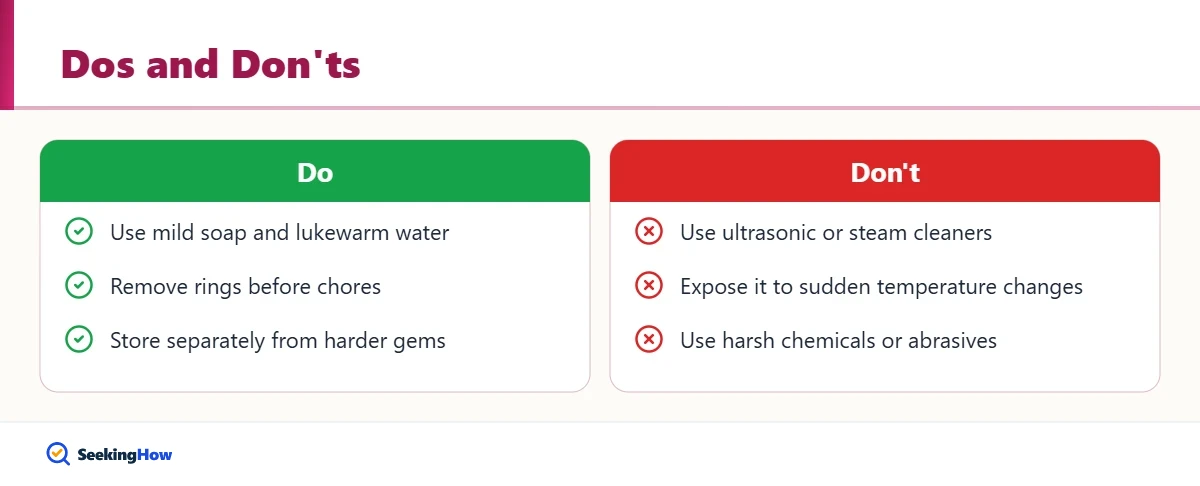
- Avoid ultrasonic cleaners, steamers, sudden temperature changes, bleach, ammonia, and acids such as vinegar.
- Clean a ring you wear daily about every 1-2 weeks; have a jeweler check the prongs once or twice a year.
- Take the ring off for workouts, cleaning, gardening, and cooking to prevent scratches and grime.
Tanzanite’s violet-blue color depends on light passing cleanly through the stone. Lotion, soap film, and skin oils dull it quickly, especially on the back of the stone where you cannot see. Cleaning it safely is simple, as long as you skip the shortcuts that work for harder gems like diamonds and sapphires.
Why Does Tanzanite Need Gentle Cleaning?
Tanzanite is a blue-violet variety of the mineral zoisite, found commercially only in a small area of northern Tanzania. It is beautiful but more delicate than many gems used in rings.
- Moderate hardness: At about 6 to 7 on the Mohs scale, tanzanite can be scratched by everyday dust, which contains quartz (7).
- Perfect cleavage: The crystal has a direction along which it can split with a sharp knock.
- Heat and thermal shock sensitivity: Sudden temperature changes can cause fractures. Gemological guidance from GIA advises against ultrasonic and steam cleaning for tanzanite.
Most tanzanite on the market has been heat-treated to develop its blue color. The treatment is stable, but it does not make the stone tougher.
| Gem | Mohs hardness (approx.) | Ultrasonic cleaner? | Best home cleaning |
|---|---|---|---|
| Tanzanite | 6-7 | No | Warm soapy water, soft brush |
| Diamond | 10 | Usually safe if untreated and not heavily included | Warm soapy water, soft brush |
| Sapphire / ruby | 9 | Usually safe if untreated; not for filled stones | Warm soapy water, soft brush |
| Emerald | 7.5-8 | No | Lukewarm water, gentle wipe |
| Opal | 5.5-6.5 | No | Damp cloth only |
What Do You Need To Clean a Tanzanite Ring?
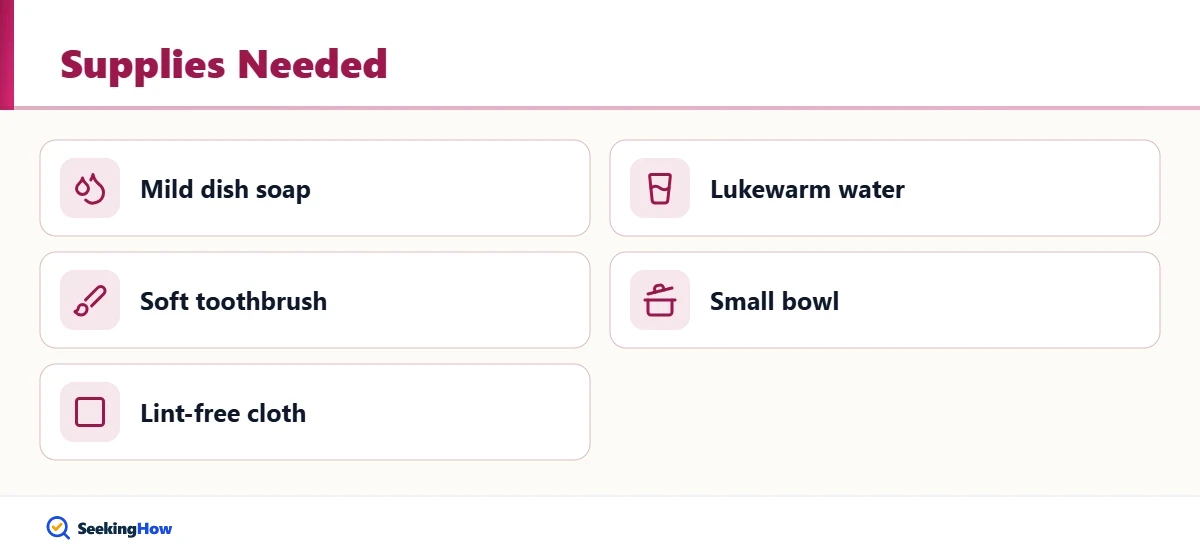
- Small bowl of lukewarm water (comfortable to touch, not hot)
- Mild, dye-free dish soap
- Ultra-soft toothbrush (baby toothbrush) or soft makeup brush
- Lint-free microfiber cloth or jewelry polishing cloth
- A towel or a stopper to cover the sink drain
How To Clean Tanzanite Rings Step by Step
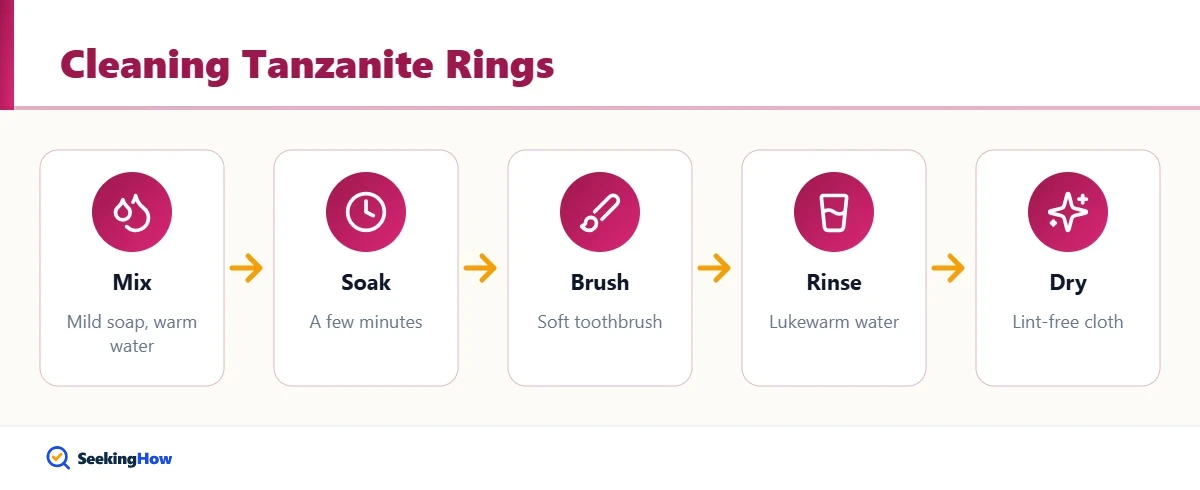
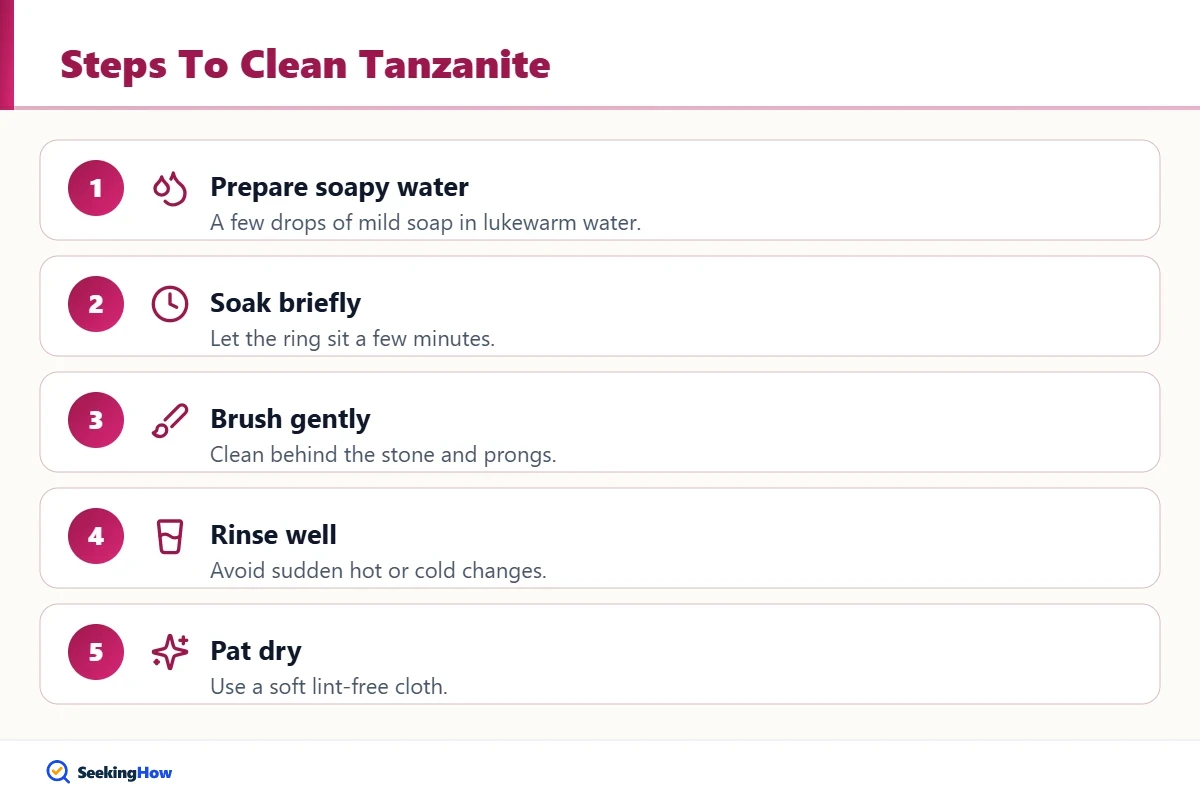
Step 1: Prepare a mild soap bath
Fill a small bowl with lukewarm water and stir in two or three drops of mild dish soap. Avoid hot water and do not move the ring between very warm and very cold water, which can shock the stone.
Step 2: Soak the ring
Place the ring in the bowl for 10-15 minutes. The soak softens lotion, soap scum, and skin oil that collect behind the stone and between prongs.
Step 3: Brush gently
Hold the ring firmly over the bowl, not over an open drain, and brush the top, sides, and especially the back of the stone with an ultra-soft brush. Use light pressure and short strokes, and avoid levering against the prongs.
Step 4: Rinse in lukewarm water
Rinse the ring in a second bowl of clean lukewarm water or under a gentle lukewarm tap with the drain covered. Make sure no soap film remains, since residue dulls the stone.
Step 5: Dry and buff
Pat the ring dry with a lint-free cloth, then lightly buff the metal with a jewelry polishing cloth. Avoid rubbing the stone with paper towels or tissues, which can contain abrasive fibers.
Step 6: Inspect the setting
Look at the prongs under good light, or with a magnifier, and gently feel for snags. If a prong is lifted, worn thin, or the stone moves, stop wearing the ring and take it to a jeweler.
Can You Use an Ultrasonic Cleaner on Tanzanite?
No. Ultrasonic cleaners create intense vibration that can enlarge internal fractures or exploit tanzanite’s cleavage. Steam cleaners add heat and pressure that can cause thermal shock. Even if a ring has diamond side stones that tolerate these machines, the tanzanite center stone does not.
What Cleaners Should You Never Use on Tanzanite?
- Bleach and chlorine: Can damage metal alloys, especially white and yellow gold; remove rings before pools and hot tubs.
- Ammonia-based and harsh glass cleaners: Too aggressive for the stone and some settings.
- Acids, including vinegar and lemon juice: Vinegar is handy around the house, as in these everyday vinegar uses, but acids are not recommended for tanzanite.
- Toothpaste and baking soda: Mildly abrasive and can scratch or haze the surface.
- Silver dips: Formulated for metal only and can harm gemstones.
Careful: If your ring is sterling silver with tanzanite, do not dip it in silver cleaner. Polish only the metal with a silver cloth, keeping it off the stone. Our guide to cleaning nickel silver explains the difference between silver alloys.
How Often Should You Clean a Tanzanite Ring?
For a ring you wear daily, a quick soap-and-water clean every week or two keeps it bright. A ring worn occasionally can be cleaned after a few wears or before special occasions. Have a jeweler professionally check and, if needed, clean the setting about once or twice a year, and ask them to use only gentle methods for tanzanite.
How Do You Protect Tanzanite Between Cleanings?
- Put it on last: Apply lotion, perfume, hairspray, and makeup before your ring.
- Take it off for hands-on tasks: Remove it for workouts, gardening, cleaning, cooking, and lifting.
- Store it separately: Keep it in a soft pouch or a lined compartment so harder gems such as diamonds cannot scratch it.
- Avoid temperature extremes: Do not leave it in a hot car, near a stove, or on a sunny windowsill.
- Consider a protective setting: Bezel and halo settings protect tanzanite from knocks better than tall, exposed prongs, especially for daily-wear rings.
If you wear other piercing jewelry, our guide to removing a flat-back nose stud covers gentle handling and cleaning for small pieces too.
When Should You Take a Tanzanite Ring to a Jeweler?
See a professional jeweler if the stone is loose, a prong is bent or worn, there is a visible chip or new internal crack, or the ring looks cloudy even after cleaning. Cloudiness that will not wash off may be surface abrasion, which a skilled cutter can sometimes repolish. Chips and cracks along cleavage planes usually need professional assessment, and in some cases recutting or replacement.
If you are considering resetting a tanzanite in a new metal, it can help to know how metal values are trending; see our daily gold price update.
Frequently Asked Questions
Can I clean my tanzanite ring with Windex?
It is best not to. Glass cleaners often contain ammonia and other chemicals that are harsher than tanzanite needs and can affect some metal finishes. Lukewarm water with a few drops of mild dish soap cleans the stone safely and effectively.
Is it safe to wear a tanzanite ring every day?
You can, but it needs more care than a diamond or sapphire ring. Tanzanite is about 6 to 7 on the Mohs scale and can chip from knocks. Choose a protective setting, remove it for hands-on tasks, and have the prongs checked once or twice a year.
Why does my tanzanite look cloudy?
Usually it is lotion, soap film or skin oil on the back of the stone, which a soap soak and soft brushing removes. If it stays cloudy after cleaning, the surface may be abraded from wear, which a jeweler can assess and sometimes repolish.
Can tanzanite get wet?
Yes, water itself does not harm tanzanite, and lukewarm soapy water is the recommended way to clean it. Avoid hot water, sudden temperature changes, chlorinated pools and hot tubs, which can stress the stone or damage the metal setting.
Can a jeweler clean tanzanite with an ultrasonic machine?
A jeweler should not use ultrasonic or steam cleaning on tanzanite, since vibration and heat can cause cracks along its cleavage. When you drop off a ring, tell the jeweler it is tanzanite and ask for gentle hand cleaning only.