Quick Answer
You can’t truly re-silver a mirror at home without a chemical kit, but you can hide or patch desilvering. Remove the mirror, strip the damaged backing, clean the bare glass, then spray the back with mirror-effect paint or back the spot with mirror tape, and seal with backing paint. Edge damage is often easier to cover with a frame or trim.
Key Takeaways
- Desilvering (black spots or edges) is corrosion of the thin silver layer behind the glass, usually caused by moisture and harsh cleaners.
- Small spots can be patched from behind with mirror tape or foil; larger areas look best with mirror-effect spray paint.
- A frame, molding or beveled trim is the fastest way to hide black edges.
- Antique and valuable mirrors should go to a professional re-silvering service.
Desilvering shows up as dark, cloudy or black patches, usually starting at the edges or corners of bathroom mirrors. The damage is behind the glass, so no amount of cleaning will remove it. Below you will learn what causes it, which repair fits your mirror, and how to stop it from spreading.
What Causes Mirror Desilvering?
A standard mirror is a sheet of glass with a very thin reflective coating, traditionally silver, protected by layers of copper and/or backing paint. When moisture or chemicals reach that coating, it oxidizes and loses its shine, leaving dark spots.
- Humidity: bathroom steam creeps in at unsealed edges, which is why damage usually starts there.
- Cleaners: ammonia and vinegar-based glass cleaners sprayed directly on the mirror run down and wick behind the edges.
- Wrong adhesive: construction adhesives not rated for mirrors can attack the backing.
- Age and damage: scratched or chipped backing paint exposes the silver layer.
Can You Fix Desilvering or Only Hide It?
Honest answer: at-home methods hide or patch damage rather than restoring the original silver layer. True re-silvering means stripping the whole back and chemically depositing new silver, which is what professional services and some hobby kits do. For a builder-grade bathroom mirror, a patch or frame is usually the practical choice.
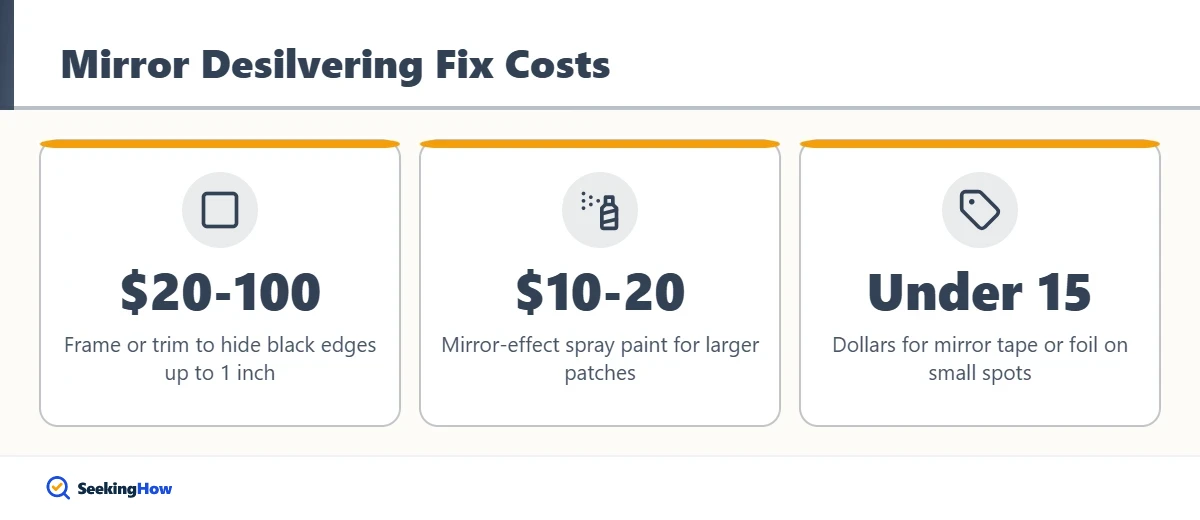
| Option | Best for | Approx. cost | Result |
|---|---|---|---|
| Frame or trim | Black edges up to about 1 inch | $20-$100 | Damage completely hidden |
| Mirror tape or reflective foil | Small spots | Under $15 | Good from straight on |
| Mirror-effect spray paint | Larger patches | $10-$20 | Reflective, slightly softer than real silver |
| DIY silvering kit | Small decorative mirrors | Varies | Near-original, takes practice |
| Professional re-silvering | Antique or valuable mirrors | Quote-based | Like new |
| Replace the mirror | Widespread damage | Varies by size | New |
What Do You Need?
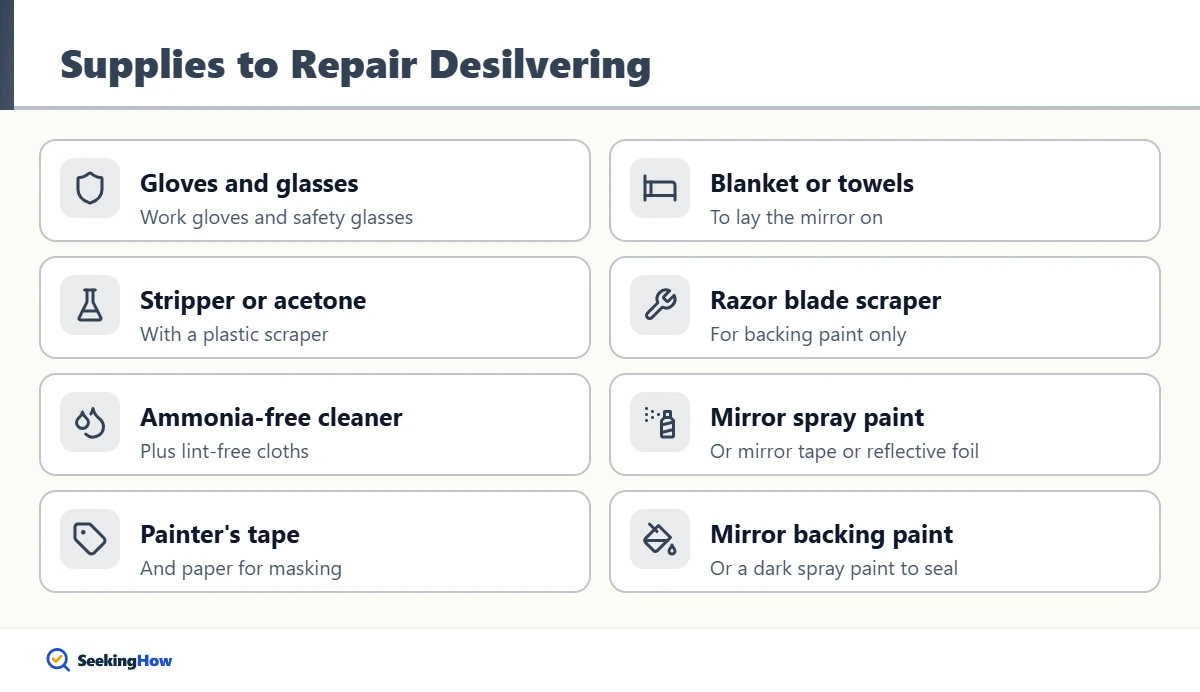
- Work gloves and safety glasses
- Soft blanket or towels to lay the mirror on
- Paint stripper or acetone and a plastic scraper
- Razor blade scraper (for backing paint only)
- Glass cleaner without ammonia, and lint-free cloths
- Mirror-effect spray paint, mirror tape or reflective foil
- Painter’s tape and paper for masking
- Mirror backing paint or a dark spray paint to seal
How Do You Repair Mirror Desilvering Step by Step?
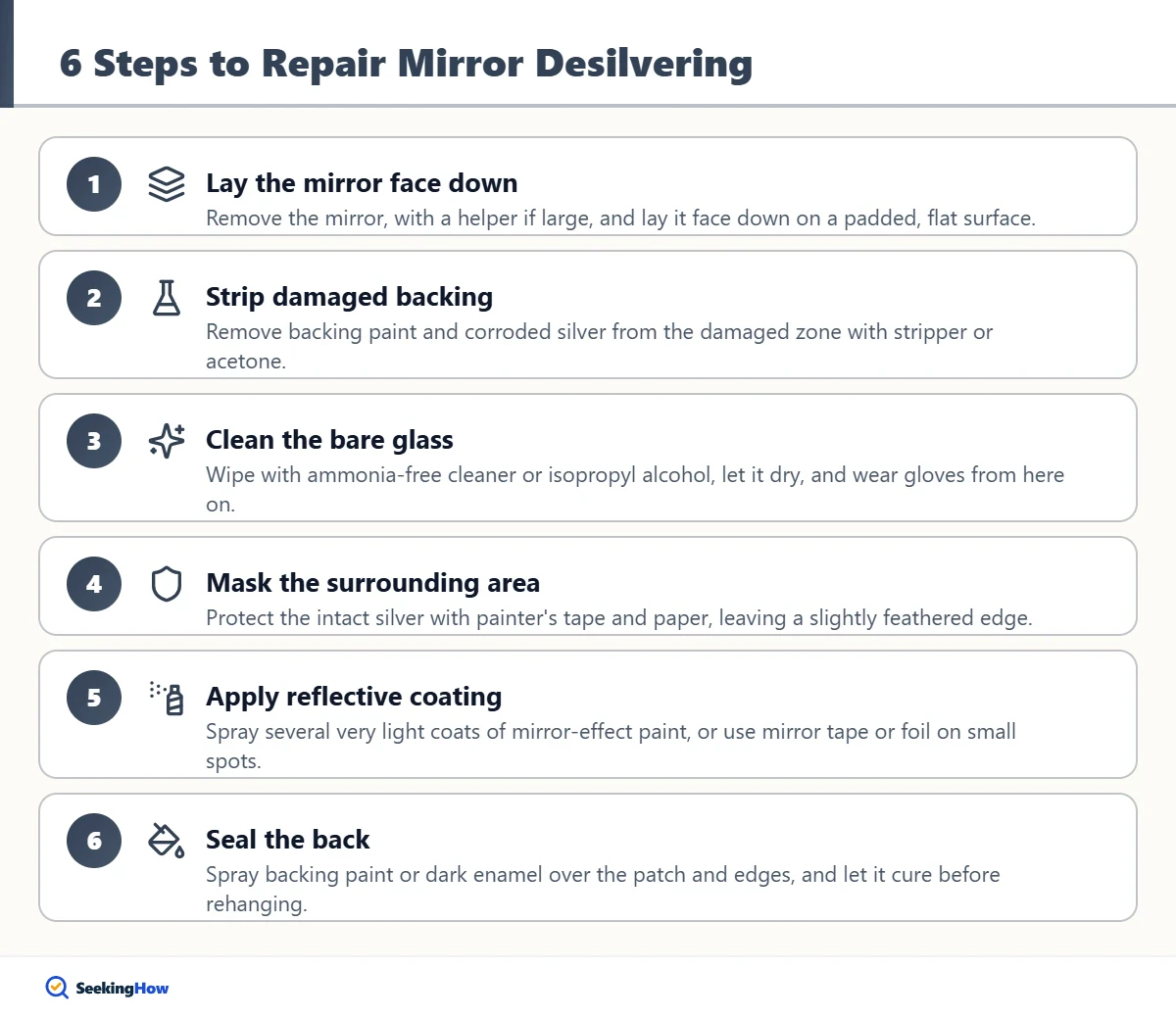
Step 1: Remove the Mirror and Lay It Face Down
Take the mirror off the wall or out of its frame, with a helper for anything large. Lay it face down on a padded, flat surface. Glued-on mirrors are hard to remove safely; for those, skip to the frame option below.
Step 2: Strip the Damaged Backing
Mark the damaged zone, then remove the backing paint and corroded silver from that area with paint stripper or acetone and a plastic scraper. A razor scraper helps with stubborn paint. Clear only the damaged section, plus a small margin, so you keep as much original coating as possible.
Step 3: Clean the Bare Glass
Wipe the exposed glass with ammonia-free glass cleaner or isopropyl alcohol and let it dry completely. Any residue or fingerprints will show through the new coating, so wear gloves from this point on.
Step 4: Mask the Surrounding Area
Protect the intact silver around the bare spot with painter’s tape and paper. Leave a slightly ragged or feathered edge rather than a hard straight line, which helps the patch blend in.
Step 5: Apply the Reflective Coating
Spray mirror-effect paint onto the back of the glass in several very light coats, following the can’s directions on drying time between coats. For small spots, you can instead press mirror tape or smooth reflective foil, shiny side toward the glass, over the bare area.
Step 6: Seal the Back
Once dry, spray a protective coat of mirror backing paint or a dark enamel over the patch and the edges. This protects the new layer from scratches and moisture. Let it cure fully before rehanging.
Safety: Mirrors are heavy and break into sharp shards. Wear gloves and eye protection, work in a ventilated area when using strippers or spray paint, and keep solvents away from flames.
How Do You Hide Black Edges Without Removing the Mirror?
If the mirror is glued to the wall, the safest fix is cosmetic. Frame kits made for builder-grade bathroom mirrors attach directly to the glass with mounting tape and cover the outer inch or so. Wood trim, mosaic tile borders and beveled mirror strips work too. Choose a frame wider than the damaged edge, and leave the very bottom slightly open or sealed with clear silicone so water can’t collect behind it.
If you are hanging a new or reframed mirror, our guides on how high to hang a mirror over a console table and mirror height over a buffet help you place it well.
What Mistakes Should You Avoid?
- Scraping the front of the glass: desilvering is on the back; scraping the front just scratches it.
- Heavy coats of mirror paint: thick coats look gray and blotchy. Light mist coats reflect best.
- Using regular silver paint: metallic craft paint isn’t reflective through glass the way mirror-effect paint is.
- Skipping the sealing coat: unprotected mirror paint scratches and corrodes quickly.
- Expecting perfection: patches are most convincing near edges and corners, less so in the center of a large mirror.
How Do You Prevent Desilvering?
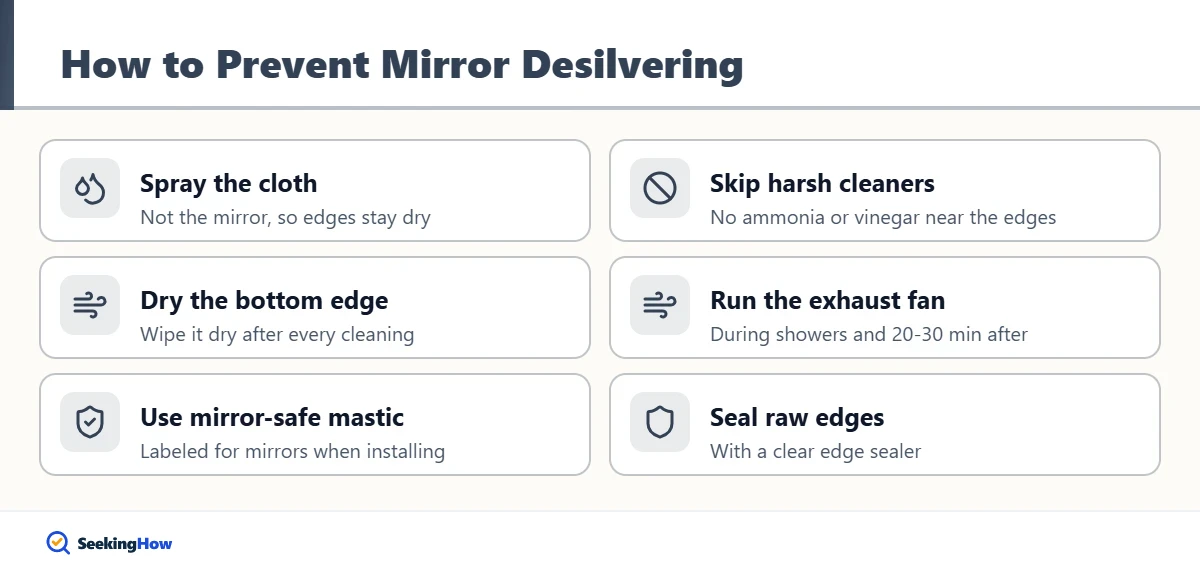
Spray cleaner onto your cloth, not onto the mirror, so liquid doesn’t run down into the edges. Avoid ammonia and vinegar near edges and dry the bottom edge after cleaning. Run the bathroom exhaust fan during and for 20-30 minutes after showers to cut humidity.
When installing a new mirror, use a mirror-safe mastic labeled for mirrors and seal raw edges with clear edge sealer. The same gentle approach applies to other glass in your home; for example, when you remove spray paint from glass, keep solvents off the back of a mirror.
When Should You Call a Professional?
Take antique, beveled or sentimental mirrors to a professional re-silvering or glass restoration shop, since a botched DIY patch can lower the value of an antique. Large wall mirrors that are bonded to the wall should be removed by a glazier, because prying them off risks breakage and injury. If the damage covers most of the surface, a new mirror is usually cheaper than restoration.
Frequently Asked Questions
Can vinegar cause mirror desilvering?
Vinegar and ammonia cleaners can contribute when they are sprayed directly on a mirror and run behind the edges, where they attack the backing and silver layer. Spray your cloth instead and dry the edges. Occasional careful use on the glass face is generally fine.
Does mirror spray paint look like a real mirror?
Mirror-effect spray paint applied to the back of clear glass looks quite reflective, especially in light coats, but it is usually a little softer and less crisp than a factory silver coating. It is most convincing for edges, corners and small patches.
How much does professional mirror re-silvering cost?
Pricing depends on the mirror size, the condition of the glass, any bevels or frames, and your area, so shops quote individually. For ordinary modern mirrors, replacing the glass is often cheaper. Re-silvering makes the most sense for antiques and mirrors with sentimental value.
Will desilvering keep spreading?
It usually spreads slowly as long as moisture keeps reaching the backing. Sealing the edges, improving ventilation and cleaning carefully can slow it. Patching the damaged spot and resealing the back also protects surrounding areas.
Is it safe to use a mirror with black spots?
Yes. Desilvering is cosmetic and does not weaken the glass. The only concerns are appearance and, if moisture is the cause, whether water is also damaging the wall behind the mirror.