Quick Answer
You can repair surface damage on a glass cooktop, but not cracks. Remove burned-on residue and metal marks with ceramic cooktop cleaner and a razor scraper held at about 45 degrees, and buff light scratches with cooktop cream. A crack, deep chip or shattered area means the glass top must be replaced with the manufacturer part for your model; stop using the burner and switch off the breaker.
Key Takeaways
- Many “scratches” are really aluminum or copper marks or burned sugar, which come off with cooktop cleaner.
- True scratches can be made less visible but never fully erased.
- A cracked cooktop is a shock and fire hazard; do not cook on it.
- Replacement glass tops are ordered by the range or cooktop model number.
- Flat-bottomed pans, lifting instead of sliding, and quick cleanup prevent most damage.
Smooth-top ranges use a sheet of glass-ceramic over radiant or induction elements. It is tough against heat but vulnerable to impact, grit and sugary spills. Before you decide the top is ruined, figure out what kind of damage you actually have, because the fix ranges from a five-minute clean to a full glass replacement.
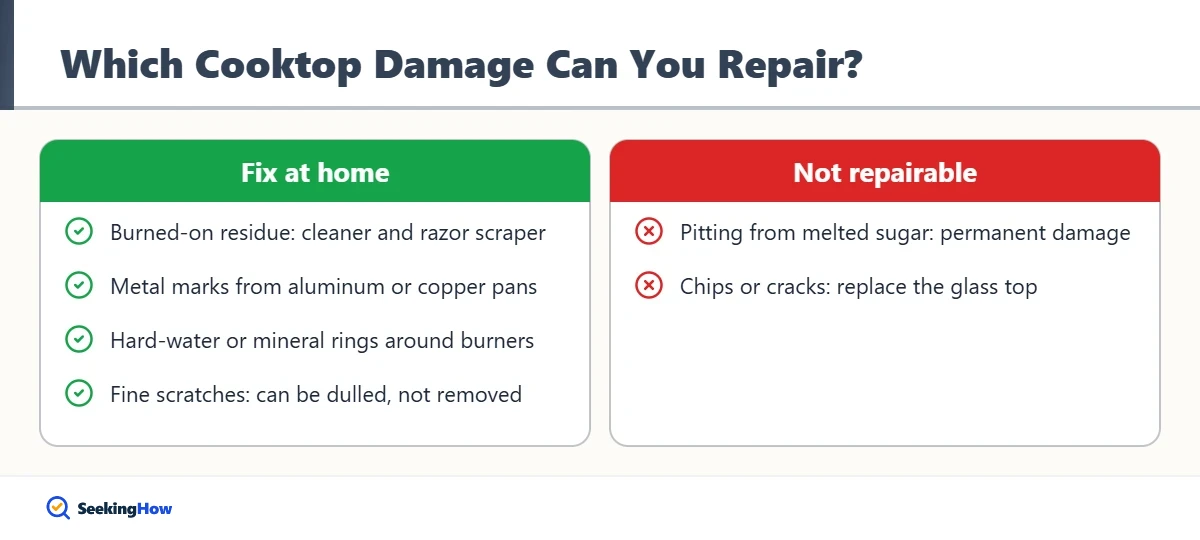
What Kind of Damage Does Your Cooktop Have?
| Damage | How it looks and feels | Repairable at home? |
|---|---|---|
| Burned-on residue | Brown or black raised spots, often rough to the touch | Yes, with cleaner and a razor scraper |
| Metal marks | Gray or silver lines from aluminum or copper pans | Yes, with cooktop cleaning cream |
| Hard-water or mineral rings | White cloudy rings around burners | Yes, with cooktop cleaner or diluted white vinegar |
| Fine scratches | Thin lines you can feel with a fingernail | Can be dulled, not removed |
| Pitting from sugar | Small craters where sugar melted and fused | No; permanent surface damage |
| Chip or crack | Missing glass or a visible fracture line | No; replace the glass top |
Run a fingernail across the mark. If your nail glides over it, it is probably residue or metal transfer. If your nail catches, it is a scratch or pit in the glass itself.
What You Need
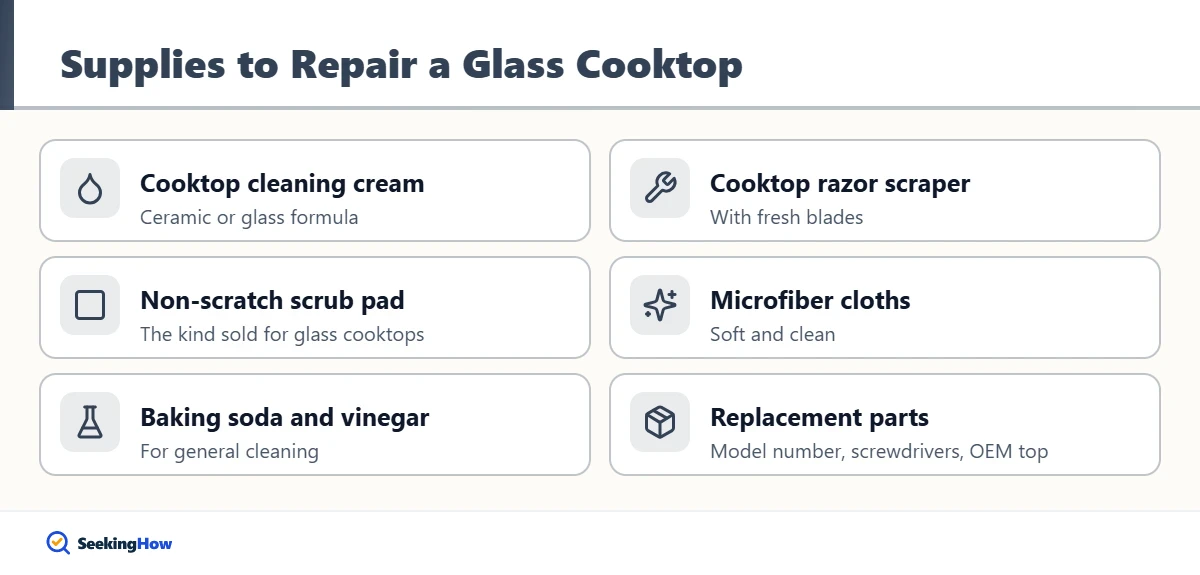
- Ceramic or glass cooktop cleaning cream
- Razor-blade scraper made for cooktops, with fresh blades
- Non-scratch scrub pad (the kind sold for glass cooktops)
- Soft microfiber cloths
- Baking soda and white vinegar for general cleaning
- For replacement: the model number, screwdrivers, and the OEM replacement glass top
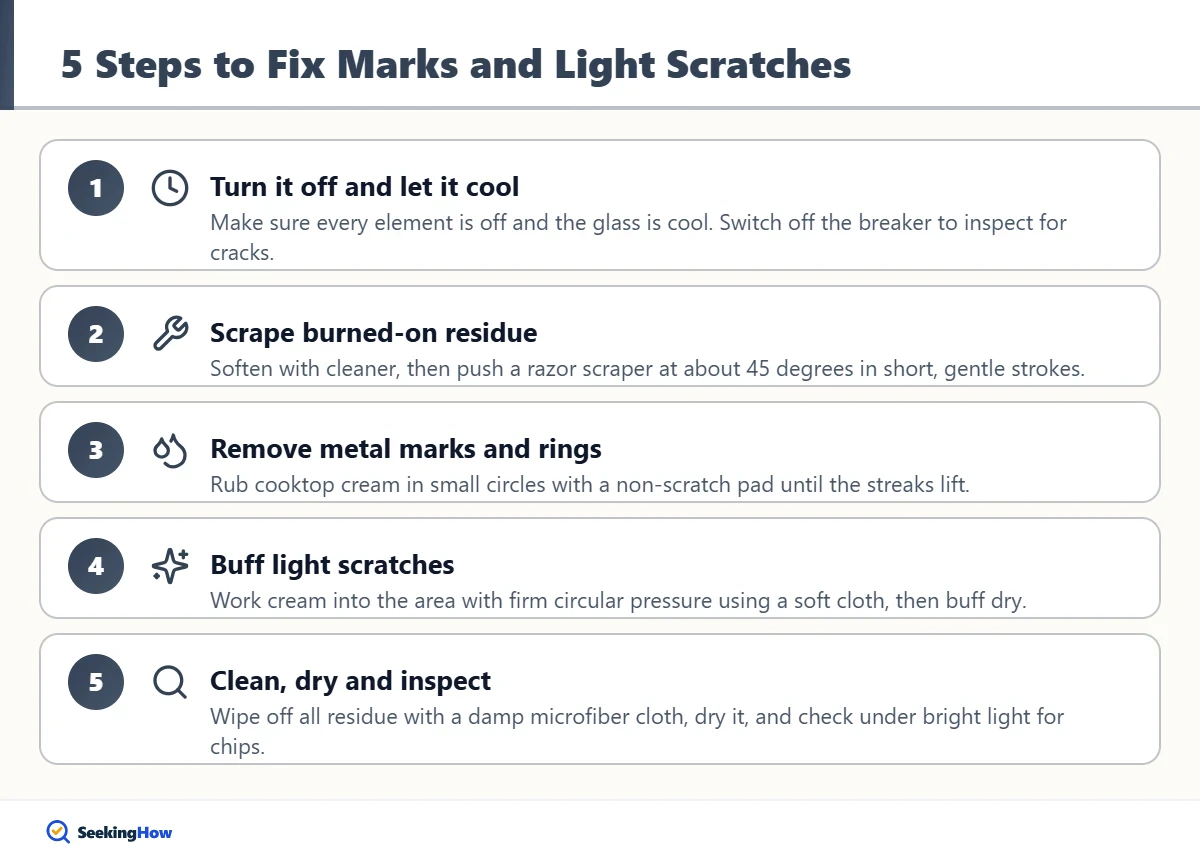
How Do You Fix Marks and Light Scratches on a Glass Cooktop?
Step 1: Turn It Off and Let It Cool
Make sure every element is off and the glass is completely cool to the touch. Hot glass can burn you, and cleaners can bake onto a warm surface. If you are inspecting for cracks, switch off the circuit breaker first.
Step 2: Scrape Off Burned-On Residue
Apply a little cooktop cleaner to soften the spot. Hold a cooktop razor scraper at roughly 45 degrees and push gently across the residue with short strokes. Keep the blade flat enough that the corners do not dig in, and replace dull or nicked blades.
Step 3: Remove Metal Marks and Rings
Dab cooktop cleaning cream onto the marks and rub with a non-scratch pad in small circles. Aluminum and copper streaks usually lift within a minute or two of rubbing. For white mineral rings, a cloth dampened with diluted white vinegar helps before the cream.
Step 4: Buff Light Scratches
Work cooktop cream into the scratched area with a soft cloth using firm, circular pressure, then buff dry. The cream fills and polishes fine scratches so they reflect less light. They will still be there, but they should be much harder to see.
Step 5: Clean, Dry and Inspect
Wipe away all cleaner residue with a damp microfiber cloth and dry with a clean one. Inspect under bright light for chips or cracks you may have missed. If you find any, stop and move to the replacement section below.
Tip: Avoid abrasive powders, steel wool, and green scouring pads. They create a haze of fine scratches that is permanent.
Can You Repair a Cracked or Chipped Glass Cooktop?
No safe home repair exists for a cracked cooktop. Glass-ceramic is engineered to handle rapid temperature changes, and epoxy or nail-polish fixes for chips are not designed for those temperatures and can let spills reach the elements below. A crack can also spread suddenly when the burner heats.
Safety: If the glass is cracked, stop using the cooktop, turn off its circuit breaker, and keep liquids away from the crack. Spills reaching radiant elements or induction coils can cause electric shock, short circuits or fire.
How Do You Replace a Glass Cooktop Top?
On many freestanding electric ranges, the glass top is a replaceable assembly that lifts or slides off after a few screws are removed. Replacement is a moderate DIY job if you are comfortable with appliance work.
- Find the model number: it is usually on a label inside the oven door frame, behind the storage drawer, or under the cooktop.
- Order the correct part: buy the OEM glass top for that exact model through the manufacturer or an authorized parts dealer. Many come with the frame and seal attached.
- Disconnect power: turn off the breaker and unplug the range if you can reach the outlet.
- Follow the service steps: remove the screws (often at the back or under the front edge), lift the top, and transfer the elements and wiring exactly as they were.
- Test carefully: restore power and test each element on low before regular cooking.
Built-in cooktops and induction units are often sealed into the countertop and wired directly. For those, and for any job that involves disconnecting wiring you are unsure about, call a licensed appliance technician. Compare the parts-plus-labor cost against a new cooktop, because on older or budget models replacement can make more sense.
What Damages a Glass Cooktop?
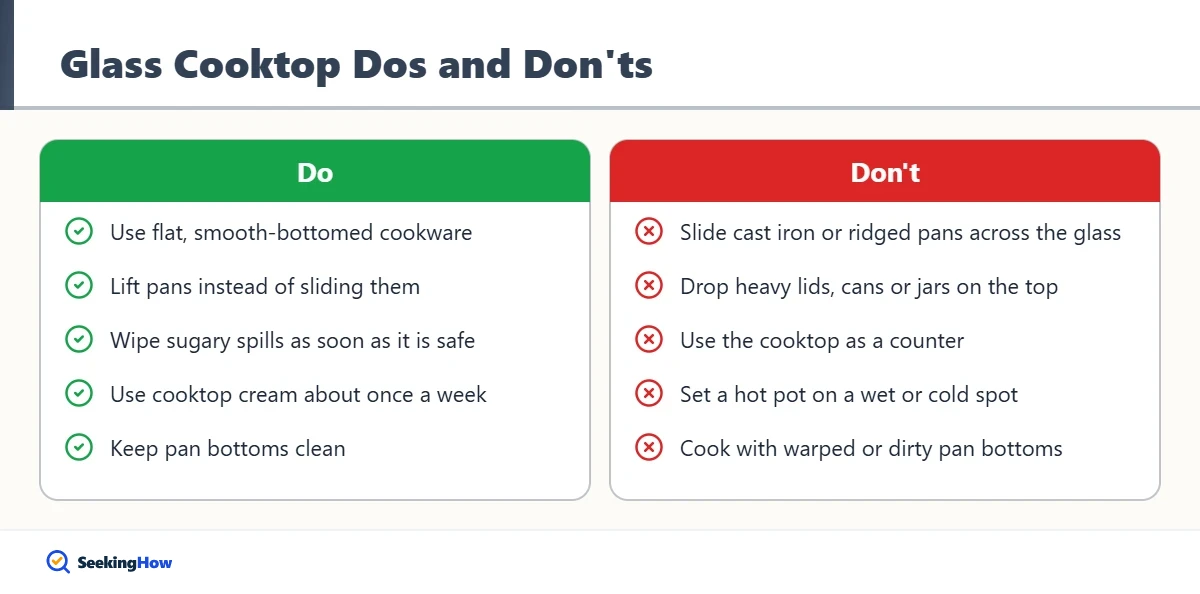
- Sliding cast iron, stoneware or ridged pans across the surface.
- Dropping heavy lids, cans or jars on the glass.
- Letting sugary sauces or jam boil over and harden, which can pit the surface.
- Using the cooktop as a counter for cutting boards or small appliances.
- Placing a hot pot on a wet or cold spot, or cleaning while hot.
- Cooking with warped or dirty pan bottoms that trap grit.
How Do You Prevent Future Damage?
- Use the right cookware: flat, smooth-bottomed stainless steel, enameled or heavy aluminum pans. For induction, cookware must be magnetic.
- Lift, do not slide: pick pans up to move them.
- Wipe spills quickly: clean sugary spills as soon as it is safe; follow your manual for when to scrape.
- Clean regularly: a quick wipe after each use and cooktop cream once a week keeps buildup from forming.
- Keep pan bottoms clean: burned residue on the pan transfers to the glass.
Good habits matter most with high-heat cooking. If you often sear in cast iron, finishing in the oven, as in our guide to cooking steak in the oven, reduces the time heavy pans spend on the glass. Even simple recipes like hard-boiled eggs can leave mineral rings if pots boil over, so wipe the surface after cooking.
When Should You Call an Appliance Technician?
Call a pro if the glass is cracked on a built-in or induction cooktop, if an element stays on or will not heat after a spill, if you smell burning plastic, or if a breaker trips when the range is used. Damage covered by the manufacturer warranty should also go through an authorized service provider to keep the warranty valid.
Frequently Asked Questions
Can you use a cracked glass cooktop if the crack is small?
No. Even a small crack can spread when the glass heats, and spills can seep through to the elements and wiring, creating shock and fire risks. Turn off the breaker and replace the glass top or the cooktop before using it again.
Does toothpaste or baking soda remove scratches from a glass cooktop?
Baking soda and toothpaste are mild abrasives that can lift residue and make faint marks less visible, but they cannot remove true scratches and may add fine haze if scrubbed hard. Cooktop cleaning cream is the safer, purpose-made option.
How much does it cost to replace a glass cooktop top?
Cost depends on the brand and model. The OEM glass top part is often a significant share of the price of a new range, and labor adds more if a technician installs it. Get a parts quote by model number and compare it with replacing the appliance.
Are metal marks on a glass cooktop permanent?
Usually not. Gray or silver streaks from aluminum or copper pans sit on top of the glass and normally rub off with cooktop cleaning cream and a non-scratch pad. If a fingernail catches on the line, it is a scratch instead.
Is a razor blade safe on a glass cooktop?
Yes, when used correctly. Most manufacturers approve a cooktop razor scraper for burned-on residue. Use a fresh blade, apply cleaner first, hold it at a low angle, and push gently so the corners never dig into the glass.