Quick Answer
To repair plastic (resin) wicker furniture, clean it with mild soap, trim broken strands, then weave in matching replacement resin wicker strand and secure the ends to the frame with stainless staples, a plastics-bonding adhesive or a hidden zip tie. Tighten loose frame bolts, and refresh faded wicker with a spray paint made for plastic. Most repairs take one to three hours.
Key Takeaways
- Most outdoor wicker is HDPE or PVC resin woven over an aluminum or steel frame.
- Polyethylene resists ordinary glue, so use a plastics-bonding adhesive or mechanical fasteners.
- Replacement strand is sold by the coil in flat, half-round and round profiles; match width and color.
- Soften stiff strand in warm water before weaving so it bends without cracking.
- Spray paint labeled for plastic bonds well enough to refresh faded resin wicker.
All-weather resin wicker is built to live outdoors, but sun, cold snaps and heavy use eventually snap strands, loosen frames and fade color. Because the weave is wrapped around a metal frame, most damage is local and fixable without replacing the piece. Here is how to diagnose the problem and repair it properly.
What Is Plastic Wicker Made Of?
Plastic, resin or all-weather wicker is a synthetic strand woven over a frame. Knowing the material tells you which adhesives and paints will work.
- HDPE (high-density polyethylene): the most common premium resin wicker. It is UV-stabilized, flexible and very hard to glue.
- PVC (vinyl): cheaper wicker, stiffer, can become brittle and crack with age and cold. PVC cement and many plastic glues bond to it.
- Frames: usually powder-coated aluminum on better sets and steel on budget sets. Steel frames can rust through the weave.
A simple test: HDPE feels slightly waxy and bends without cracking, while old PVC feels harder and snaps. If you are unsure, assume HDPE and choose fasteners or a polyethylene-rated adhesive.
What Tools and Supplies Do You Need?
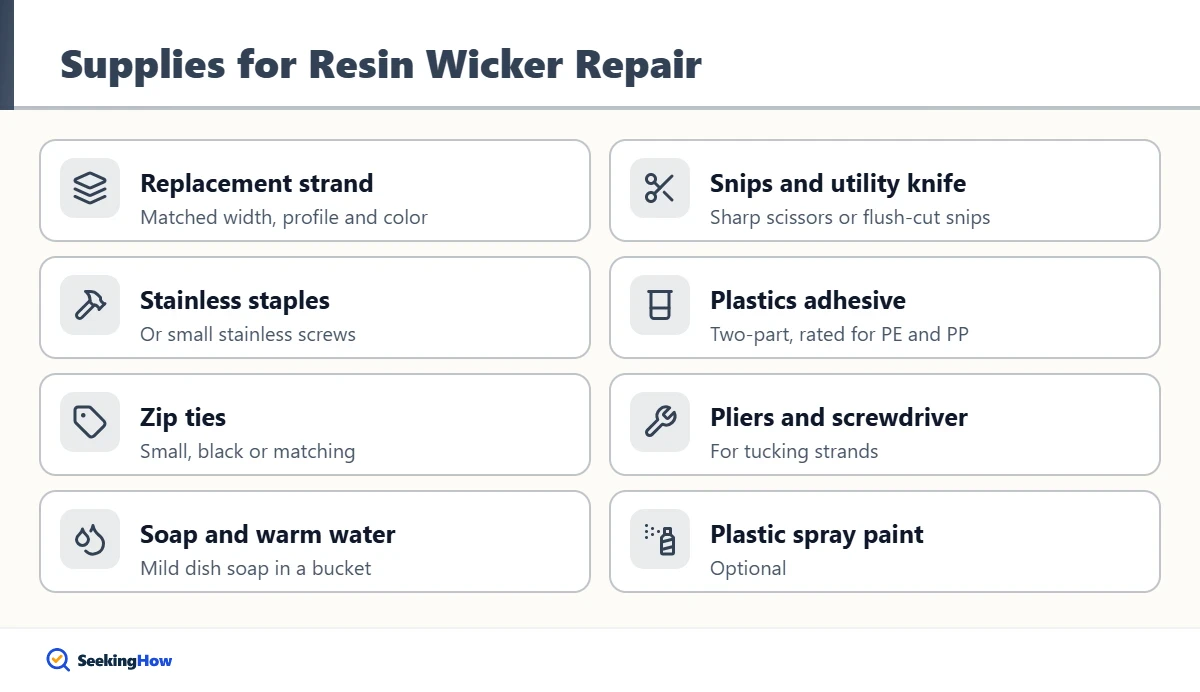
- Replacement resin wicker strand matched to width, profile and color
- Sharp scissors or flush-cut snips and a utility knife
- Stainless steel staples and a staple gun, or small stainless screws
- Plastics-bonding adhesive (a two-part system rated for polyethylene and polypropylene)
- Small black or matching zip ties
- Needle-nose pliers and a flat screwdriver for tucking strands
- Bucket of warm water and mild dish soap
- Spray paint formulated for plastic (optional)
How Do You Repair Broken Resin Wicker Strands?
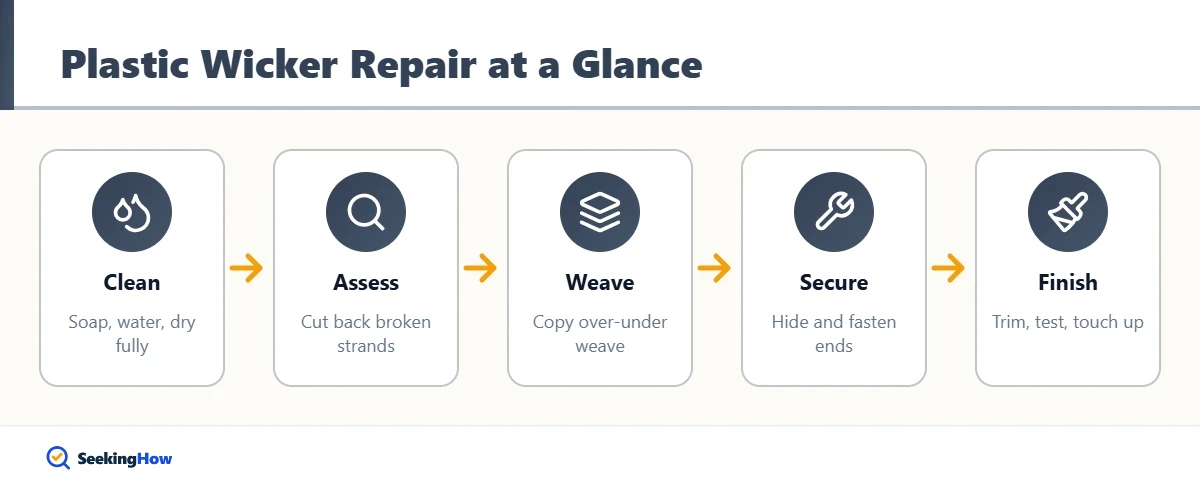
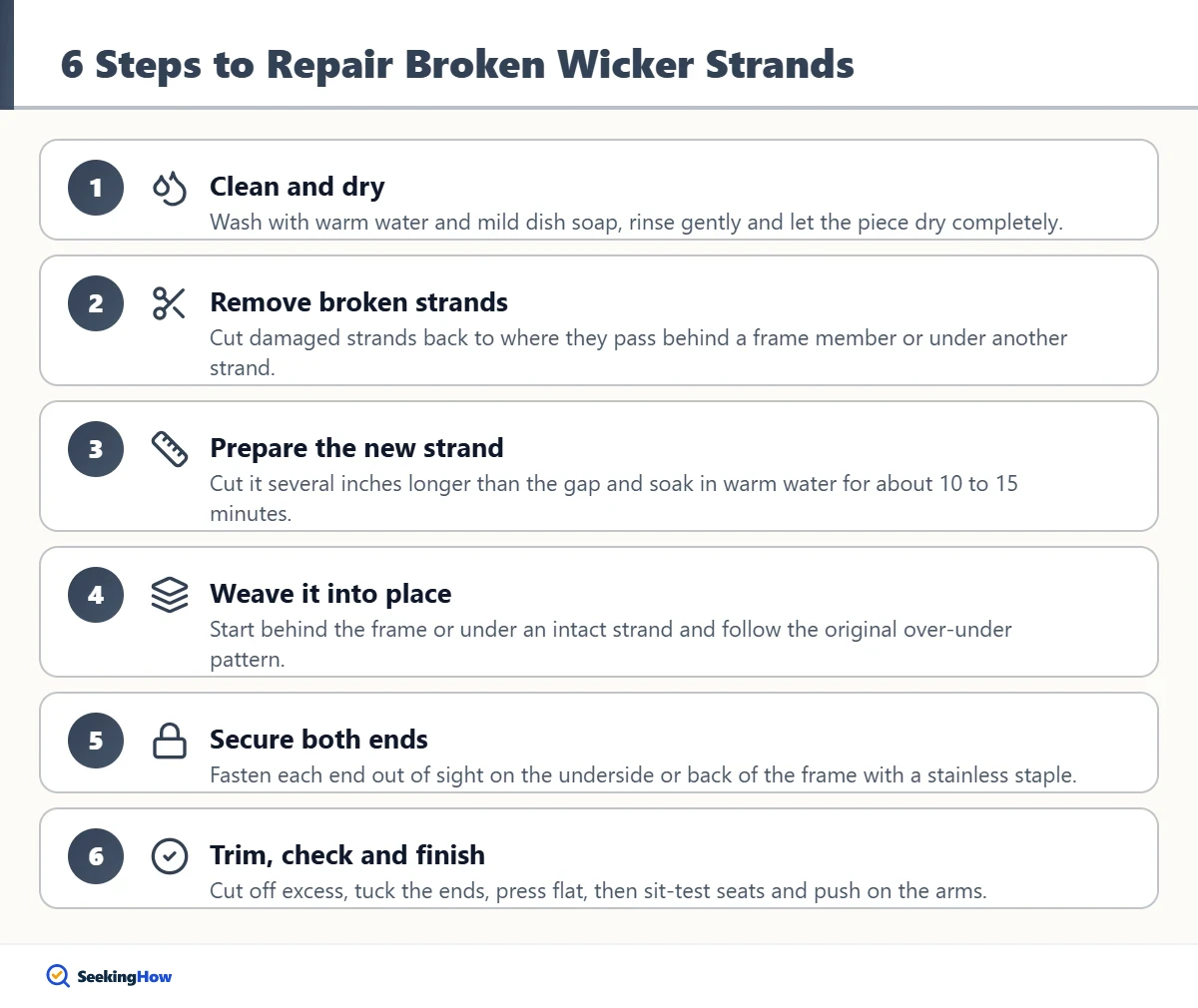
Step 1: Clean and Dry the Furniture
Wash the piece with warm water and mild dish soap, using a soft brush to clean between the weave. Rinse with a garden hose on low pressure and let it dry completely. Adhesives and paint will not bond to dirt, pollen or sunscreen residue.
Step 2: Assess the Damage and Remove Broken Strands
Find where broken strands start and end. Cut each damaged strand back to a point where it passes behind a frame member or under another strand, so the new piece can be hidden. Pull out the loose section with pliers, and note the weave pattern so you can copy it.
Step 3: Prepare the Replacement Strand
Cut a length of new strand several inches longer than the gap. Soak it in warm water for about 10 to 15 minutes so it becomes pliable, which reduces kinks and cracking. Trim the end at an angle so it threads through the weave more easily.
Step 4: Weave the New Strand Into Place
Start behind the frame or under an intact strand and follow the original over-under pattern. Use a flat screwdriver to open tight spots and needle-nose pliers to draw the strand through. Keep tension even so the new section sits flush with the old weave.
Step 5: Secure Both Ends
Fasten each end where it will not show, typically on the underside or back of the frame. Use a stainless staple or small screw into the frame wrap, a dab of plastics-bonding adhesive, or a hidden zip tie trimmed short. Stainless hardware avoids rust stains.
Step 6: Trim, Check and Finish
Cut off excess strand, tuck the ends, and press the area flat. Sit-test seats and push on arms to make sure nothing shifts. If the color does not match perfectly, consider painting the whole panel or piece for an even look.
Tip: Take a photo of the weave before you cut anything. Copying the original pattern is much easier with a reference.
How Do You Fix Other Common Wicker Problems?
| Problem | Likely cause | Fix |
|---|---|---|
| Unraveling end strand | Original staple or glue failed | Re-tuck and secure with a stainless staple or adhesive |
| Wobbly chair or loose arm | Loose bolts or cracked weld | Tighten bolts; have cracked welds repaired by a welder |
| Rust stains bleeding through | Steel frame corroding | Treat accessible rust, prime, and paint; replace if badly rusted |
| Sagging seat | Stretched weave or broken support strap | Re-weave the seat or add a hidden support board |
| Faded or chalky color | UV exposure | Clean, scuff lightly and spray with paint made for plastic |
| Cracked, brittle strands everywhere | Aged PVC | Replacing the weave or the piece is often more practical |
A wobble usually comes from the frame rather than the weave. Tighten every bolt and check the feet; the same diagnostic process we describe for fixing a wobbly chair applies to wicker chairs too.
Can You Paint Plastic Wicker Furniture?
Yes. Paint is the easiest way to revive faded resin wicker or hide a mismatched repair.
- Clean the piece thoroughly and let it dry for a full day.
- Lightly scuff glossy areas with a fine abrasive pad and wipe off the dust.
- Work outdoors in mild, dry weather, ideally within the temperature range on the can.
- Apply several thin coats of spray paint formulated to bond to plastic, rotating the piece to reach every angle of the weave.
- Let it cure fully, often several days, before putting cushions back on.
Safety: Spray in a ventilated area, wear a respirator rated for paint vapors and eye protection, and keep solvent-based adhesives away from flames. Follow each product label.
Common Wicker Repair Mistakes
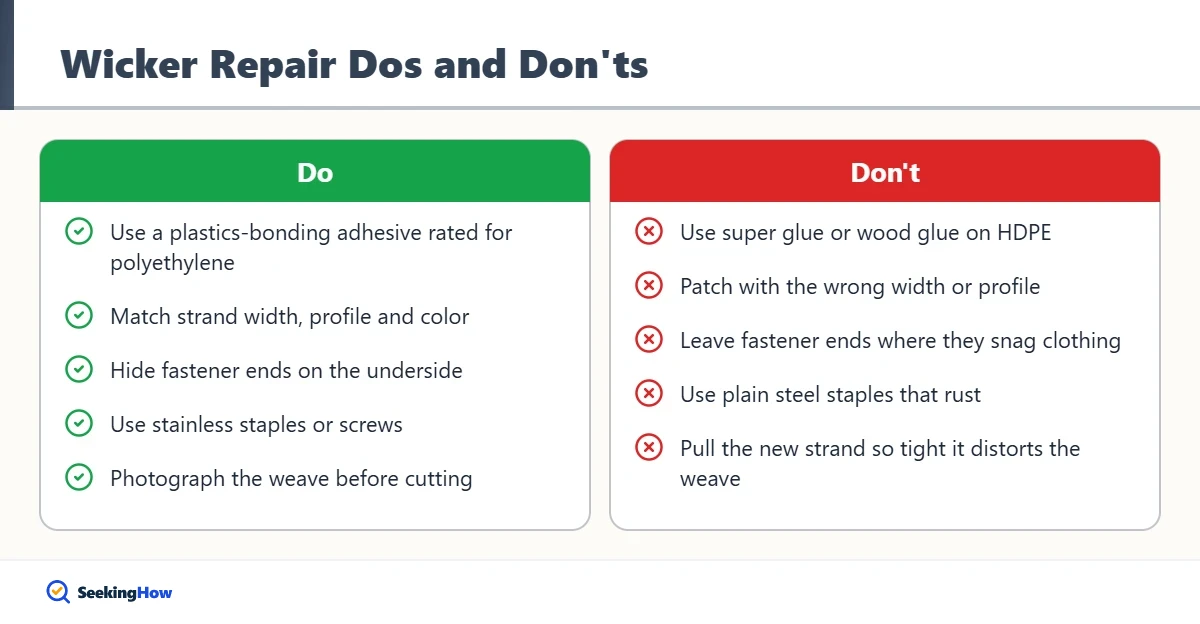
- Using regular super glue or wood glue on HDPE, which peels off.
- Choosing strand that is the wrong width or profile, making the patch obvious.
- Leaving fastener ends exposed on seats where they snag clothing.
- Using plain steel staples that rust and stain the weave.
- Pulling the new strand so tight that it distorts surrounding weave.
How Do You Make Resin Wicker Last Longer?
- Wash it a few times a season with mild soap and water.
- Cover it or store it in a garage or shed over winter, since cold makes strands less flexible.
- Keep it out of standing water and off soggy lawns.
- Use furniture covers or move pieces into shade during the harshest summer months.
- Do not stand on chairs or overload seats beyond their rated use.
If a set is beyond saving, check whether it can be donated; see our guide on what items Goodwill accepts before you haul it away.
When Should You Call a Professional?
Hand the job to a furniture repair shop or a wicker specialist if the aluminum frame has a cracked weld, a steel frame has rusted through, a large section needs re-weaving, or the set is valuable. Shops can re-weave whole seats and backs and match strand profiles you may not be able to buy in small quantities.
Frequently Asked Questions
What glue works on plastic wicker?
For HDPE resin wicker, use a two-part plastics-bonding adhesive labeled for polyethylene and polypropylene, because ordinary glues do not grip it. For PVC wicker, many plastic cements and epoxies work. Mechanical fasteners like stainless staples are often more reliable than glue alone.
Where can you buy replacement resin wicker strand?
Replacement synthetic wicker is sold in coils by online furniture repair suppliers and marketplaces, and some outdoor furniture brands sell matching strand. Bring or measure a sample to match the width, flat or round profile, and color as closely as possible.
Can you repair resin wicker that is cracking all over?
Widespread cracking usually means the strand, often older PVC, has become brittle from UV exposure. Spot repairs will keep failing, so re-weaving the whole panel or replacing the furniture is usually more cost-effective than patching.
How do you clean plastic wicker before repairing it?
Use warm water with a little mild dish soap and a soft brush to clean between the weave, then rinse with a hose on low pressure. Avoid harsh solvents and high-pressure washers, which can fray strands, and let the furniture dry completely before repairs.
Is it worth repairing cheap plastic wicker furniture?
Small strand repairs and tightening loose bolts are inexpensive and worth doing on almost any set. If the frame is rusted through or most strands are brittle, the cost of strand and time can exceed the value of budget furniture.