Quick Answer
The fastest way to remove rust from metal is mechanical: a wire wheel or flap disc on a drill or angle grinder strips surface rust in minutes. For small parts or detailed pieces, a commercial rust remover gel or phosphoric-acid product works in about 5-30 minutes. White vinegar or citric acid also work but need several hours to overnight. Afterward, dry the metal fully and prime, paint, or oil it.
Key Takeaways
- Power tools are fastest for large, flat, sturdy surfaces; chemical removers are fastest for small or intricate parts.
- Vinegar, citric acid, and chelating soaks are cheap and effective but take hours.
- Light surface rust comes off easily; deep pitting or flaking rust may mean the part needs replacing.
- Always neutralize, dry, and protect bare metal immediately, or flash rust can form within hours.
- Wear safety glasses, gloves, and a dust mask; grinding rust and paint can throw sharp debris.
Rust is iron oxide, formed when iron or steel reacts with oxygen and moisture. Whether it is on garden tools, a bike chain, cast-iron hardware, or patio furniture, the right method depends on the size of the item, how deep the rust goes, and how much time you have. Below are the fastest options, ranked, with step-by-step instructions.
Which Rust Removal Method Is Fastest?
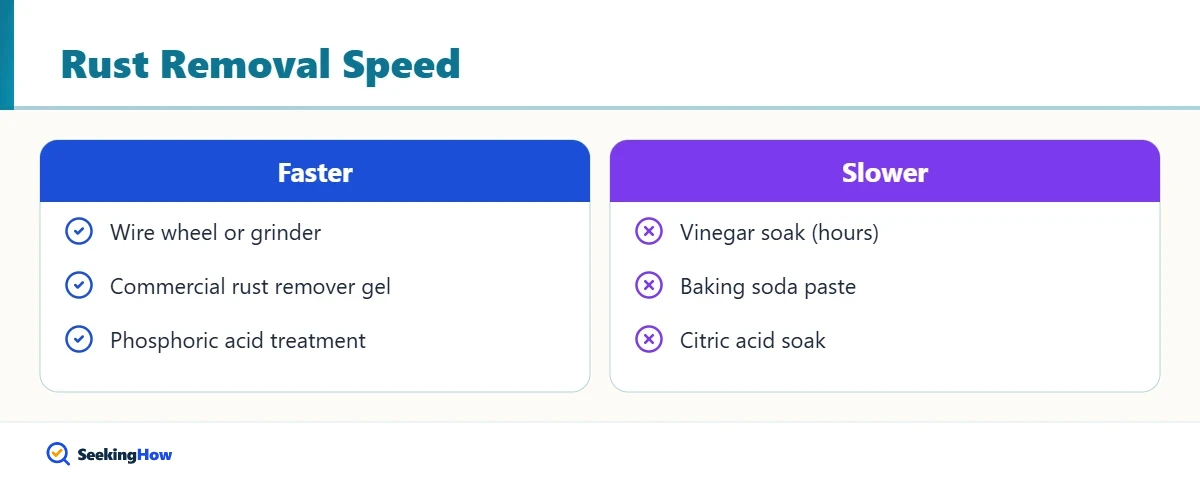
| Method | Typical time | Best for | Drawbacks |
|---|---|---|---|
| Wire wheel or flap disc (drill/grinder) | Minutes | Large, flat, sturdy surfaces; trailers, railings, tools | Removes some metal; noisy; dust and flying wires |
| Phosphoric or oxalic acid remover | 5-30 min | Tools, car parts, fasteners | Needs gloves and ventilation; rinse well |
| Rust remover gel | 15-60 min | Vertical surfaces, sinks, small spots | Repeat applications for heavy rust |
| Sandpaper or steel wool | 10-30 min | Light rust on small items | Labor-intensive; scratches finishes |
| Citric acid soak | 2-12 hours | Small parts, tools | Slow; can darken metal |
| White vinegar soak | 2-24 hours | Small tools, hardware, cookie cutters | Slow; can etch if left too long |
| Chelating soak (non-acid) | 1-24 hours | Delicate or precision parts | Slower; product cost |
| Baking soda paste | 1-2 hours plus scrubbing | Very light rust, kitchen items | Weak on heavy rust |
For anything you can clamp down and reach with a tool, mechanical removal wins on speed. For screws, chains, and parts with nooks, a chemical remover finishes faster because it reaches every crevice at once.
What Do You Need to Remove Rust?
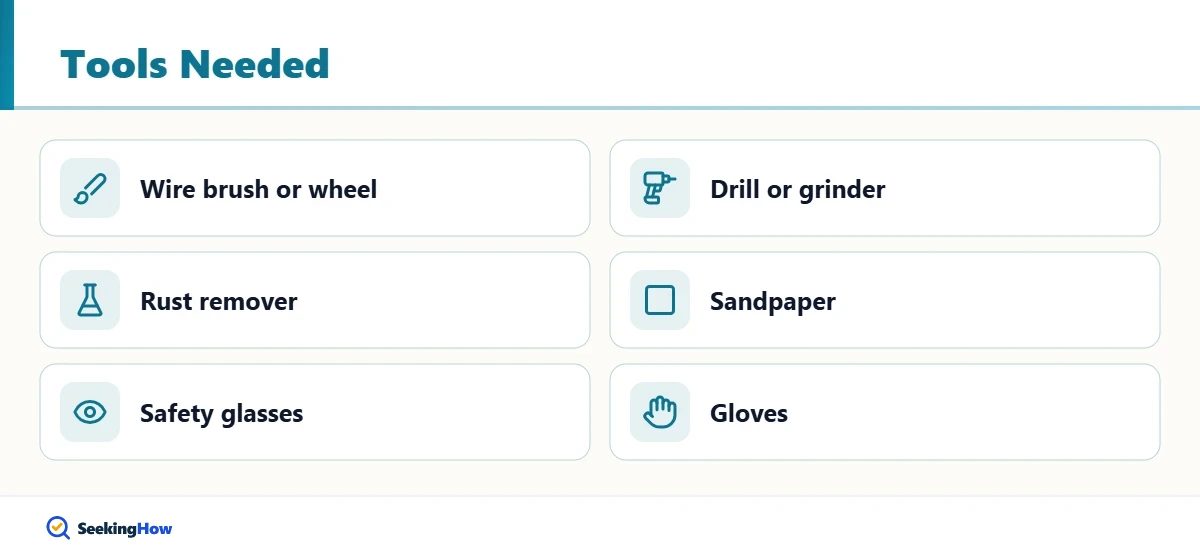
- Safety glasses, chemical-resistant gloves, and an N95 dust mask
- Drill or angle grinder with a wire wheel, wire cup brush, or flap disc
- Wire brush, 80- to 220-grit sandpaper, and fine steel wool
- Commercial rust remover, gel, or rust converter
- White vinegar or citric acid powder for soaking
- Baking soda, clean rags, and a plastic tub
- Rust-inhibiting primer, paint, or light machine oil
How to Remove Rust From Metal Fast
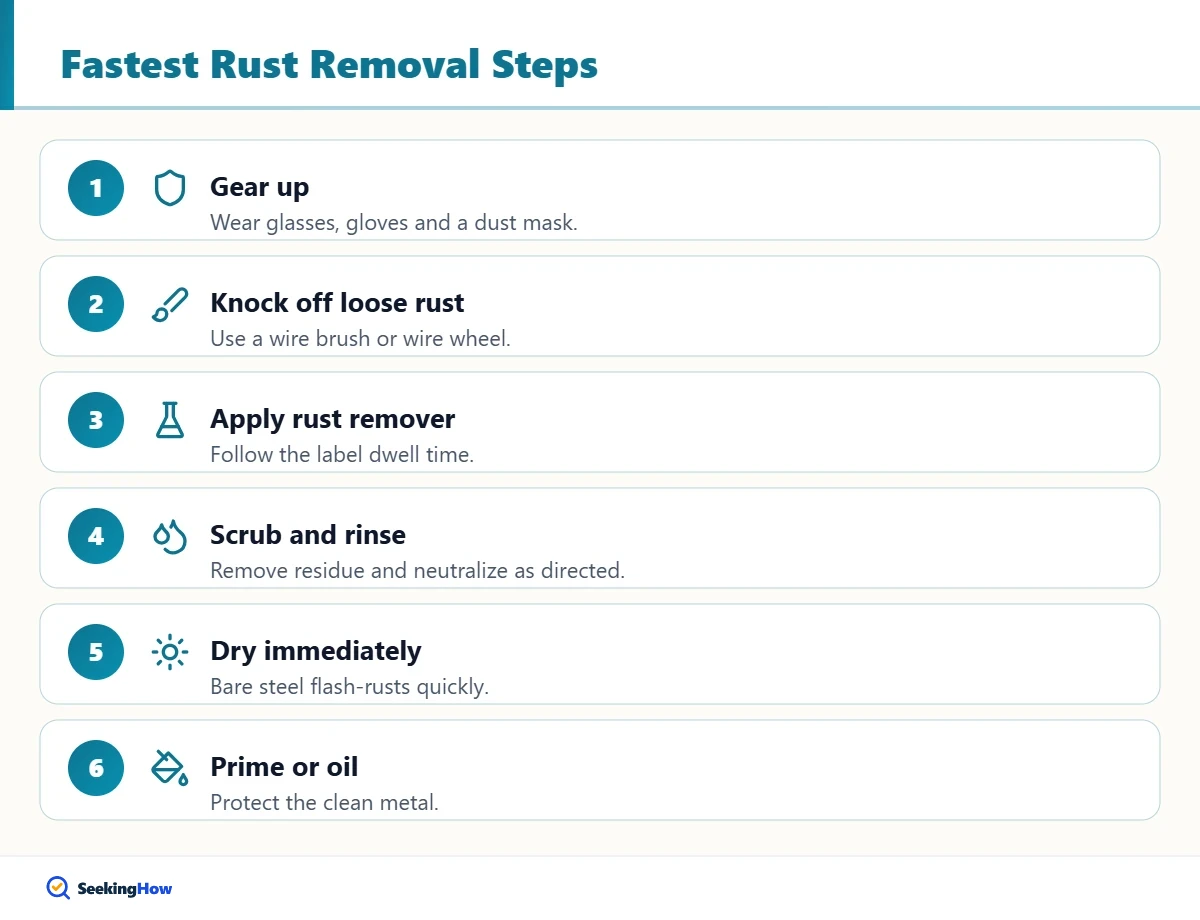
Step 1: Assess the Rust and the Metal
Check whether the rust is a light orange film, scaly buildup, or deep pitting that has eaten holes into the metal. Confirm the metal is steel or iron and not chrome-plated, aluminum, or a thin decorative finish, which need gentler methods. Structural parts with heavy pitting, such as trailer hitches or load-bearing brackets, should be inspected or replaced rather than just cleaned.
Step 2: Clean Off Dirt and Grease
Wash the item with dish soap and water or a degreaser and let it dry. Oil and grime block rust removers and clog abrasive discs. Remove any loose, flaking rust with a stiff wire brush.
Step 3: Strip Rust Mechanically on Large Surfaces
Secure the item in a vise or clamp. Run a wire wheel or flap disc on a drill or angle grinder at moderate pressure, keeping it moving to avoid gouging. Switch to 120-220-grit sandpaper by hand for edges and to smooth the surface.
Step 4: Treat Small or Detailed Parts Chemically
For screws, chains, tools, and crevices, apply a commercial rust remover per the label or submerge the part in white vinegar or a citric acid solution (about 1-2 tablespoons per cup of warm water). Check every 30-60 minutes. Scrub loosened rust with a brush or steel wool between checks.
Step 5: Neutralize and Rinse
After acid treatments, rinse thoroughly and wipe with a solution of 1 tablespoon baking soda per quart of water to neutralize leftover acid. Rinse again with clean water. Leftover acid keeps eating into bare steel.
Step 6: Dry Completely Right Away
Towel-dry the metal, then use a hair dryer, heat gun on low, or warm oven (for small solid parts) to remove moisture from seams and threads. Bare steel can develop a light orange flash rust within hours if left damp.
Step 7: Protect the Bare Metal
Coat tools with a thin film of light machine oil or paste wax. For outdoor items, apply a rust-inhibiting primer and paint within a day. Season cast-iron cookware with a thin layer of cooking oil baked on.
Does Vinegar Remove Rust?
Yes. The acetic acid in vinegar dissolves iron oxide, making it a useful, inexpensive option for small items. Soak rusty parts for a few hours to overnight, then scrub and rinse. Do not leave items in vinegar for days, since the acid can begin to etch good metal. More household ideas are in this guide to vinegar uses around the house, and kitchen tools are covered in how to remove rust from cookie cutters.
What About Rust Converters?
A rust converter is different from a remover. It chemically changes remaining rust into a stable, dark compound that can be painted over. Converters are helpful on large items like fences and trailer frames where you cannot reach bare metal everywhere. Remove loose rust first, apply the converter, let it cure as directed, then topcoat with paint.
What Are Common Rust Removal Mistakes?
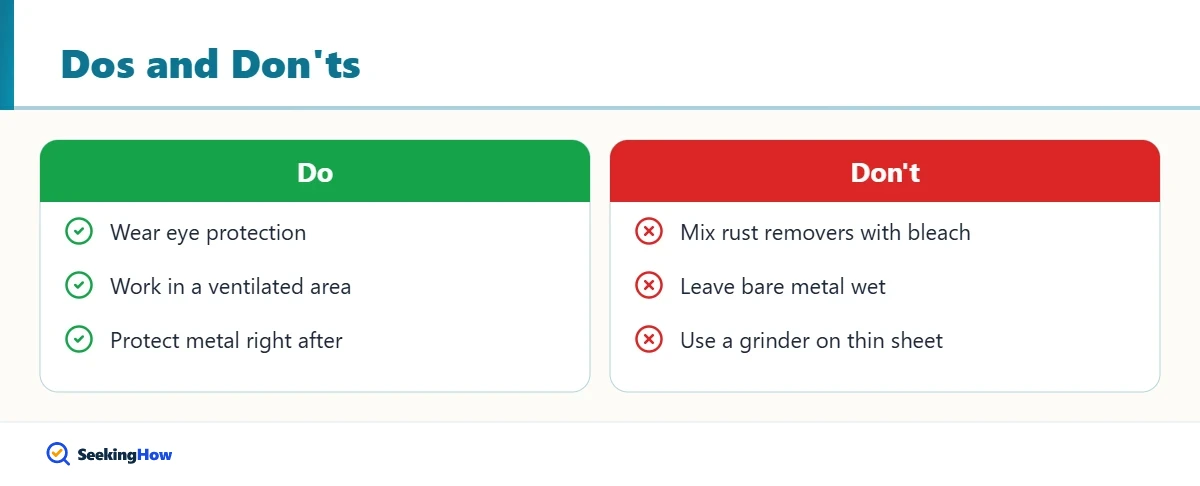
- Skipping protection: clean steel left bare will rust again quickly.
- Using a grinder on thin sheet metal: it can warp or burn through; use sandpaper or chemicals instead.
- Soaking too long: acids keep working on good metal once rust is gone.
- Mixing chemicals: never combine rust removers, bleach, or other cleaners.
- Ignoring stuck fasteners: rusted screws can strip; penetrating oil and the right bit help, as explained in how to remove a stripped Allen screw.
Safety: Wear safety glasses, gloves, and a dust mask. Wire wheels throw small wire bristles at high speed. Old paint on vintage metal may contain lead; do not grind or sand it without testing. Use acid-based removers outdoors or with good ventilation and keep them away from children and pets.
How Do You Prevent Rust From Coming Back?
- Store tools in a dry place and wipe them down after use.
- Add silica gel packs or a rust-inhibitor emitter to toolboxes.
- Keep outdoor metal painted, and touch up chips before rust spreads.
- Apply paste wax or a light oil to steel surfaces like table saw tops.
- Choose stainless or galvanized hardware for outdoor projects; for working stainless properly, see how to cut stainless steel without discoloration.
When Should You Replace a Rusted Part?
Replace rather than clean if rust has created holes, if metal flakes away in layers, or if the part bears weight or affects safety, such as brake components, ladder hardware, trailer hitches, or structural brackets. For vehicles, a mechanic or body shop can tell you whether frame or brake-line rust is safe. Cosmetic rust on garden tools, outdoor furniture, and hardware is almost always fixable at home.
Frequently Asked Questions
What removes rust instantly?
Nothing is truly instant, but a wire wheel or flap disc on a drill or angle grinder removes surface rust in seconds to minutes on sturdy metal. Fast-acting phosphoric acid removers can lift light rust in about 5 to 30 minutes. Heavier rust needs repeated passes or longer soaks.
Is WD-40 good for removing rust?
Standard WD-40 helps loosen light rust and stuck fasteners and displaces moisture, but it is not a dedicated rust remover. Spray it on, let it soak, then scrub with steel wool or a wire brush. For heavier rust, use a dedicated rust remover or mechanical method.
How long does it take vinegar to remove rust?
Light rust often loosens after 2 to 4 hours in white vinegar, while heavier rust may need an overnight soak. Check the part periodically and scrub between checks. Avoid leaving it for days, since the acid can begin to etch the good metal.
Does Coca-Cola remove rust?
Cola contains phosphoric acid, so it can loosen light rust over several hours, but it is sticky, slower, and weaker than vinegar, citric acid, or commercial rust removers. Rinse thoroughly afterward. A dedicated remover gives more reliable results.
How do you keep metal from rusting after cleaning?
Dry it immediately and completely, then protect it. Apply a thin coat of machine oil or paste wax to tools, or prime and paint outdoor metal within a day. Store items in a dry place and touch up scratches before moisture reaches bare steel.