
Quick Answer
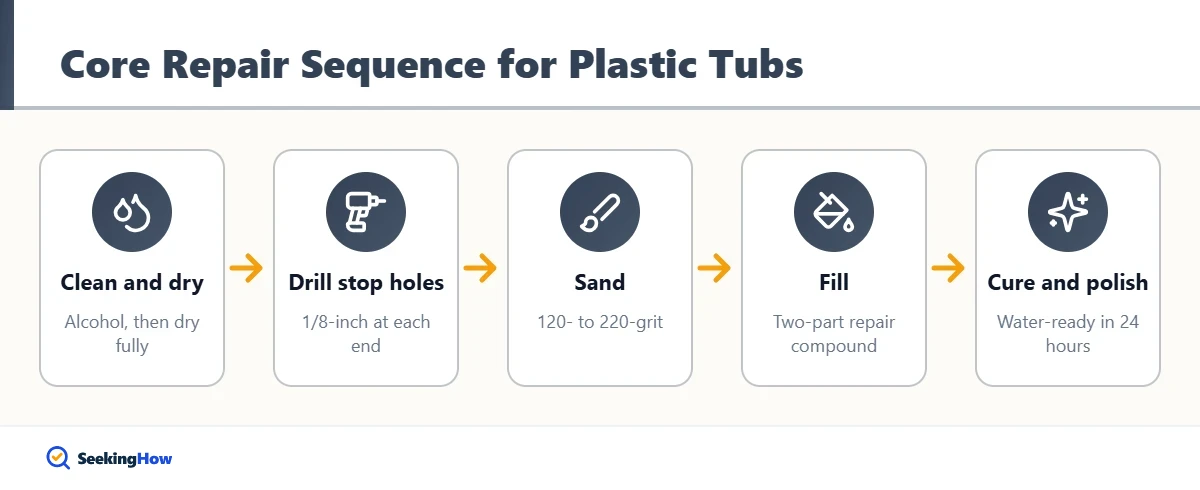
To fix a crack in a plastic (acrylic or fiberglass) bathtub, clean and dry the area, drill a 1/8-inch stop hole at each end of the crack, sand it with 120- to 220-grit paper, fill it with a two-part acrylic or fiberglass tub repair compound, then wet-sand smooth and polish. Let it cure 24 hours before showering.
Key Takeaways
- Hairline and small cracks in acrylic or fiberglass tubs are very repairable with a color-matched repair kit.
- Stop holes at each end keep a crack from spreading after you fill it.
- The tub must be completely dry; trapped moisture causes repairs to fail.
- If the floor flexes under your feet, support the tub from below or the crack will return.
- Large holes, cracks through the drain area, or leaking into the ceiling below need a professional.
Plastic bathtubs are usually acrylic sheet reinforced with fiberglass, or gelcoated fiberglass. Both crack for the same reasons: a dropped heavy object, a tub that flexes because it lacks support underneath, or age. The good news is that most cracks can be repaired in an afternoon for the price of a kit.
What Causes a Plastic Bathtub to Crack?
- Impact: A dropped shampoo bottle, tile or tool can chip the surface and start a crack.
- Poor support: Tubs not set in a mortar or foam bed flex each time someone stands in them, and repeated flexing cracks the floor of the tub.
- Harsh cleaners: Abrasive powders and some solvents weaken the gelcoat or acrylic finish over time.
- Temperature stress and age: Repeated hot and cold cycles plus years of use make older tubs more brittle.
Knowing the cause matters. If the crack is in the floor and the tub feels springy, a surface patch alone will not last.
Is the Crack Repairable?
| Damage type | DIY fix? | Best approach |
|---|---|---|
| Surface chip or scratch | Yes | Gelcoat or acrylic touch-up compound |
| Hairline crack under 6 inches | Yes | Stop holes plus two-part repair kit |
| Crack with tub floor flexing | Yes, with extra work | Support from below, then fill and patch |
| Hole or crack that leaks through | Usually | Fiberglass cloth patch, then filler and finish |
| Long cracks, shattered area, drain flange cracked | Often no | Professional refinisher or tub replacement |
What Do You Need?
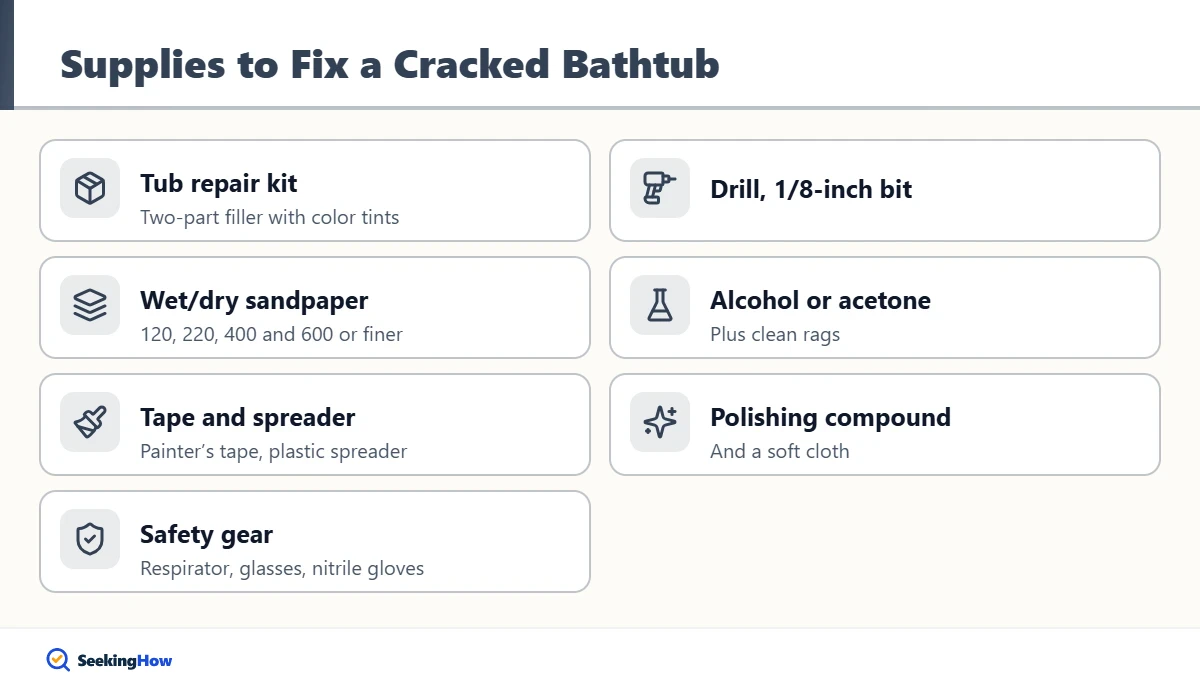
- Acrylic or fiberglass bathtub repair kit (two-part filler with color tints or a color-matched kit)
- Drill with a 1/8-inch bit
- Sandpaper: 120, 220, 400 and 600 or finer wet/dry grits
- Isopropyl alcohol or acetone and clean rags
- Painter’s tape and a plastic spreader or putty knife
- Rubbing or polishing compound and a soft cloth
- Respirator or dust mask, safety glasses and nitrile gloves
How Do You Fix a Crack in a Plastic Bathtub?
Step 1: Clean and Dry the Tub Completely
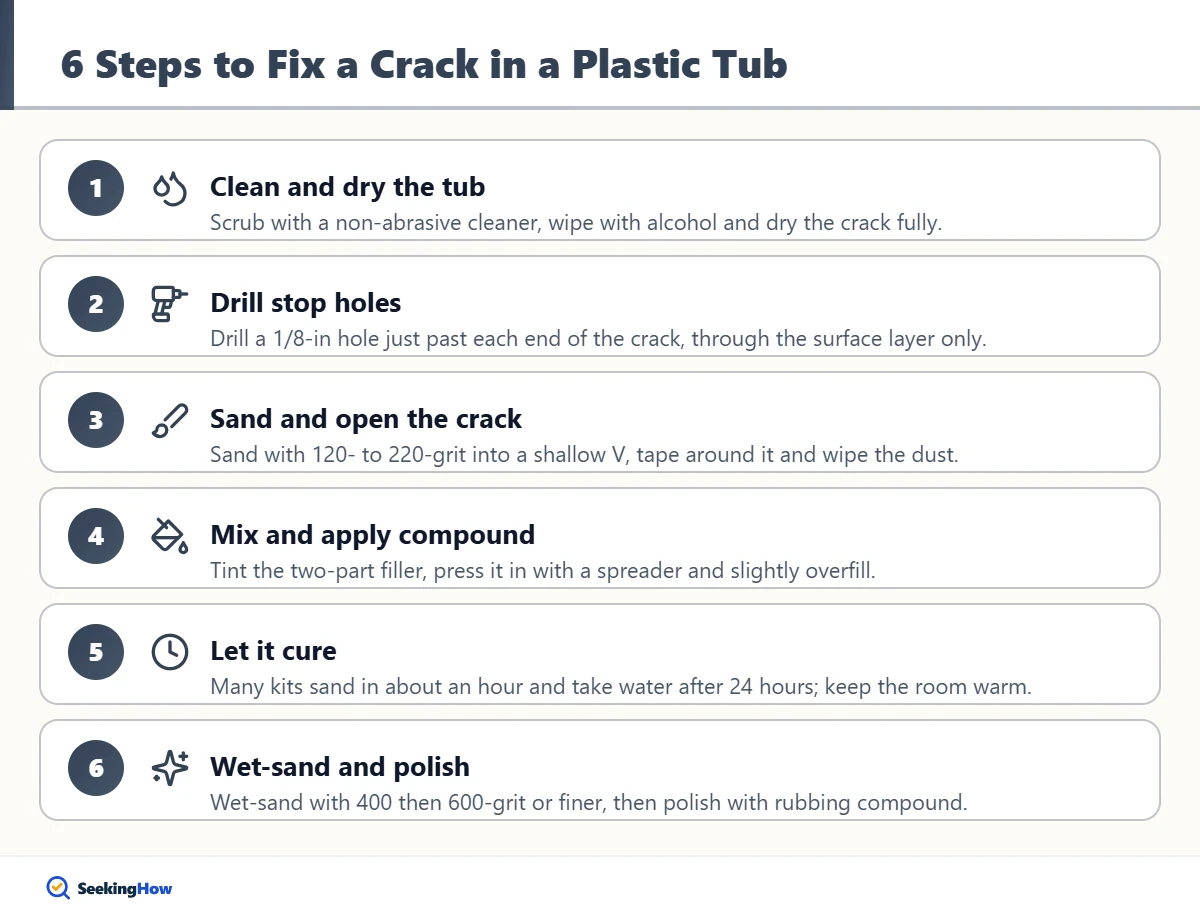
Scrub the area with a non-abrasive bathroom cleaner to remove soap scum and body oils. Rinse, then wipe the crack with isopropyl alcohol. Leave the tub dry for several hours, and use a hair dryer on low along the crack to drive out moisture trapped inside it.
Step 2: Drill Stop Holes at Each End
Drill a small 1/8-inch hole just past each visible end of the crack, going through the surface layer but not all the way through the tub. These stop holes relieve the stress at the crack tips so the crack does not keep running after it is filled. Go slowly so you do not chip the acrylic.
Step 3: Sand and Open the Crack
Sand along the crack with 120- to 220-grit paper to rough up the surface and slightly widen the crack into a shallow V. This gives the filler something to grip. Tape around the area, then wipe away the dust with alcohol and let it flash off.
Step 4: Mix and Apply the Repair Compound
Mix the two-part filler exactly as the kit instructs, adding tint to match your tub color. Press it into the crack and stop holes with a plastic spreader, slightly overfilling so it sits just above the surface. For a crack that goes all the way through, apply fiberglass cloth and resin from below first if you can reach it.
Step 5: Let It Cure
Allow the filler to cure fully per the product label; many kits are sandable in about an hour and ready for water after 24 hours. Keep the room warm and ventilated, because cold temperatures slow the cure.
Step 6: Wet-Sand and Polish
Wet-sand the patch flush using 400-grit, then 600-grit or finer paper, keeping the paper wet and flat. Finish with rubbing compound and a soft cloth until the patch matches the surrounding gloss. Remove the tape and wait the full cure time before using the tub.
Tip: Test your tint mix on a piece of white cardboard and let it set for a minute. Tub whites and almonds vary a lot, and a slightly off color is far more visible than a smooth seam.
How Do You Stop a Tub Floor From Flexing?
If the bottom of the tub moves when you stand in it, the crack will return no matter how good the patch looks. The fix is to fill the void under the tub. If you have access from an adjacent closet, the basement below or an access panel, low-expansion spray foam or a mortar bed can be packed under the tub floor. Some repair pros inject low-expansion foam through small holes drilled in the tub, then patch the holes.
This is also the right time to check for leaks under the tub. Water that has been running through a crack can soak the subfloor, so look for stains on the ceiling below and soft spots in the floor.
Safety: Repair resins and solvents give off strong fumes. Open a window, run the bath exhaust fan, wear gloves and a respirator rated for organic vapors, and keep flames and space heaters away while working.
Common Mistakes to Avoid
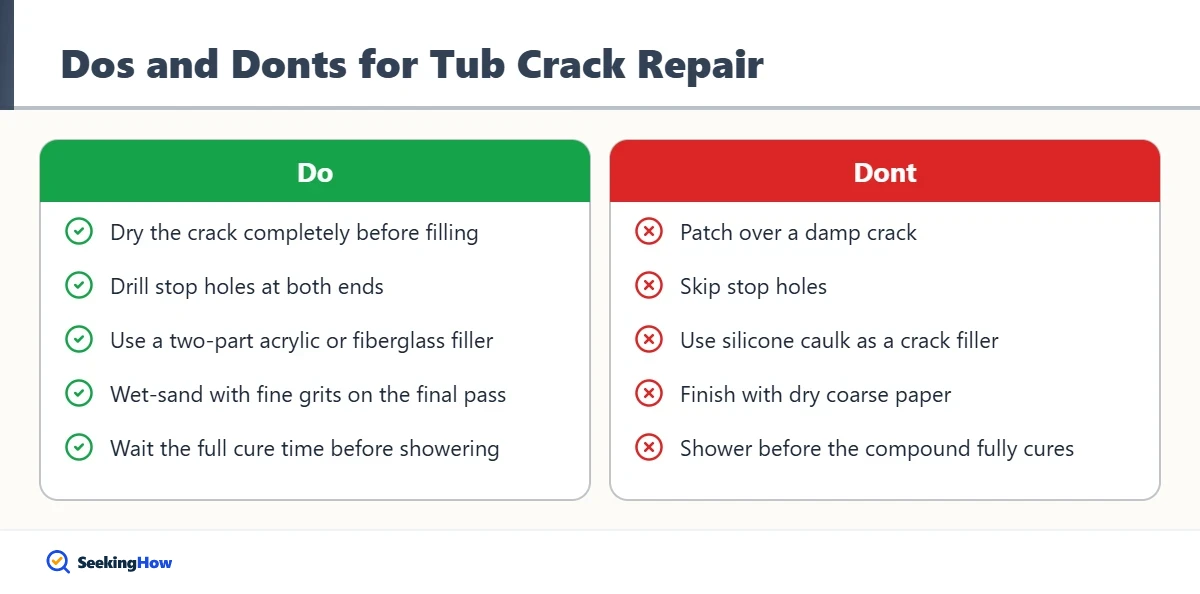
- Patching over a damp crack, which leaves the filler unbonded and cloudy.
- Skipping stop holes, so the crack keeps growing past the repair.
- Using silicone caulk as a crack filler; it peels and grows mildew.
- Sanding with dry coarse paper on the final pass, which leaves dull scratches.
- Showering before the compound has fully cured.
How Do You Keep Your Plastic Tub From Cracking Again?
Use non-abrasive cleaners and soft sponges, keep heavy items off tub edges, and put a rubber mat in the tub if you stand in it to shower. Keep the drain flowing freely so standing water does not sit around a repair; our guide on how to unclog a bathtub drain covers that. If there is a drip behind the spout, fix it early with our walkthrough on a tub spout leaking from the back.
To remove old tape or kit residue from the finish, see how to remove adhesive from plastic without scratching it.
When Should You Call a Professional or Replace the Tub?
Call a bathtub refinisher if the crack is longer than about a foot, branches in several directions, runs through the drain or overflow area, or keeps returning after repair. Replace the tub if the base is badly broken or the subfloor below is rotted. If you are going that route, our guide to installing a fiberglass bathtub explains what the job involves.
Frequently Asked Questions
Can you use Flex Seal or silicone on a cracked bathtub?
They can slow a leak temporarily, but they are not proper repairs. Silicone and rubberized coatings do not bond well to acrylic, look obvious, peel with use and trap mildew. A two-part acrylic or fiberglass repair compound gives a durable, sandable, color-matched result.
How long does a bathtub crack repair last?
A well-done repair on a properly supported tub can last for years. Repairs fail early when the crack was damp during application, stop holes were skipped, or the tub floor still flexes. Fix the underlying support problem to get the longest life.
How do I know if my tub is acrylic or fiberglass?
Acrylic tubs are usually thicker with a deep, glossy color, and the edge often shows a uniform solid sheet. Fiberglass tubs feel thinner, may flex more and show a fibrous layer under the gelcoat at chips. Many repair kits work on both.
Is a cracked bathtub an emergency?
A cosmetic hairline crack is not urgent, but fix it soon. If water passes through the crack, it can rot the subfloor and stain the ceiling below. Stop using the tub until it is repaired if you see leaks or soft flooring.
How much does it cost to have a bathtub crack fixed professionally?
Prices vary by location and damage. A small crack repair by a refinisher is usually far cheaper than replacing the tub, while extensive damage or rotted subfloor raises the cost. Ask for a written quote that includes color matching.