Quick Answer
To make a swamp cooler colder, open windows or vents so humid air can escape, keep the pads fully soaked before turning on the fan, clean or replace clogged pads, and shade the unit from direct sun. Upgrading to thicker rigid media pads and fixing the water pump and distribution lines also help. Expect the best results when outdoor humidity is low.
Key Takeaways
- Evaporative coolers depend on dry air; they cool much less on humid days.
- Cross-ventilation is essential: without an exit for air, the room becomes muggy and warm.
- Dry spots on the pads mean warm air is passing through uncooled.
- Rigid media pads usually cool more efficiently than thin aspen or fiber pads.
- Ice in the reservoir gives only a small, short-lived boost.
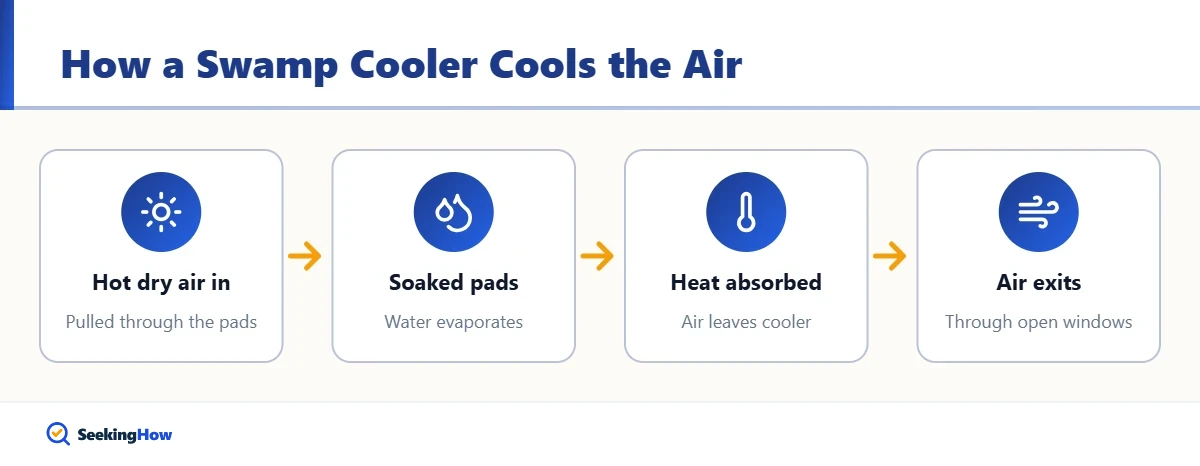
A swamp cooler, or evaporative cooler, pulls hot outside air through water-soaked pads. As water evaporates, it absorbs heat and the air leaving the cooler is cooler and more humid. When a unit feels weak, the cause is usually one of three things: humidity, airflow, or wet pads that are not really wet.
Why Is My Swamp Cooler Not Cooling Enough?
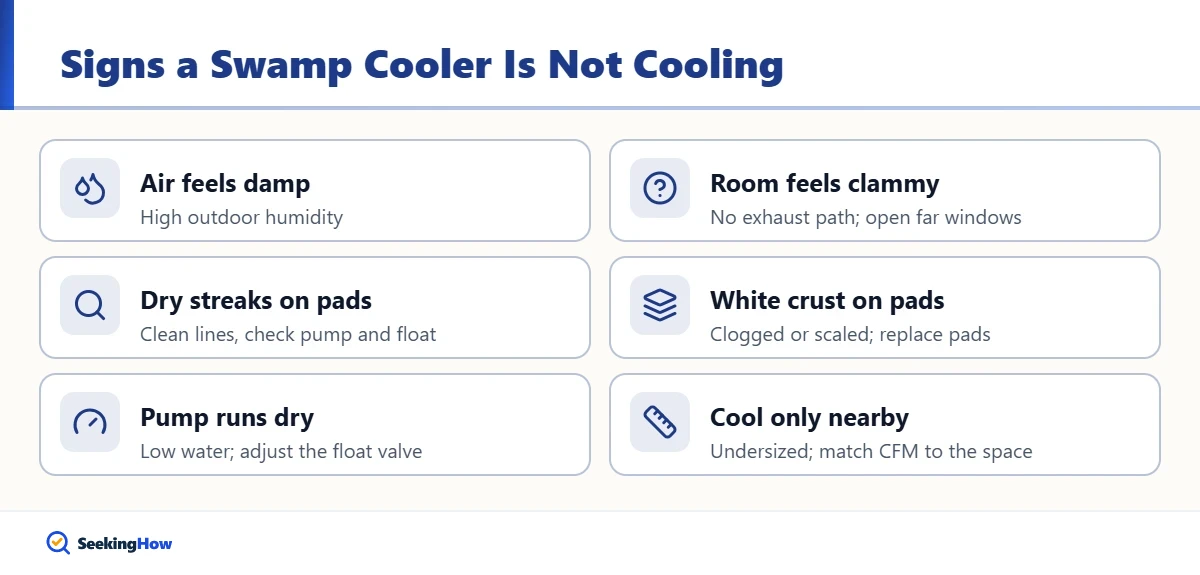
| Problem | What you notice | Fix |
|---|---|---|
| High outdoor humidity | Air feels damp, not cold | Run on drier days or hours; consider AC in humid seasons |
| No exhaust path | Room feels clammy and stuffy | Open windows on the far side of the room |
| Dry or uneven pads | Dry streaks on the media | Clean distribution lines, check pump and float |
| Clogged or scaled pads | White crust, weak airflow | Replace pads; manage mineral buildup |
| Low water level | Pump runs dry or cycles | Adjust float valve, check supply line |
| Undersized unit | Cool only near the cooler | Match CFM rating to the space |
How Does Humidity Affect a Swamp Cooler?
Evaporation slows as the air fills with moisture. In the dry climates of the U.S. Southwest and Mountain West, evaporative coolers can drop air temperature dramatically. In humid regions or during monsoon season, the same unit may only make the air feel slightly cooler and noticeably damper. If you live somewhere humid most of the summer, a swamp cooler will never match a refrigerated air conditioner.
10 Ways to Make a Swamp Cooler Colder
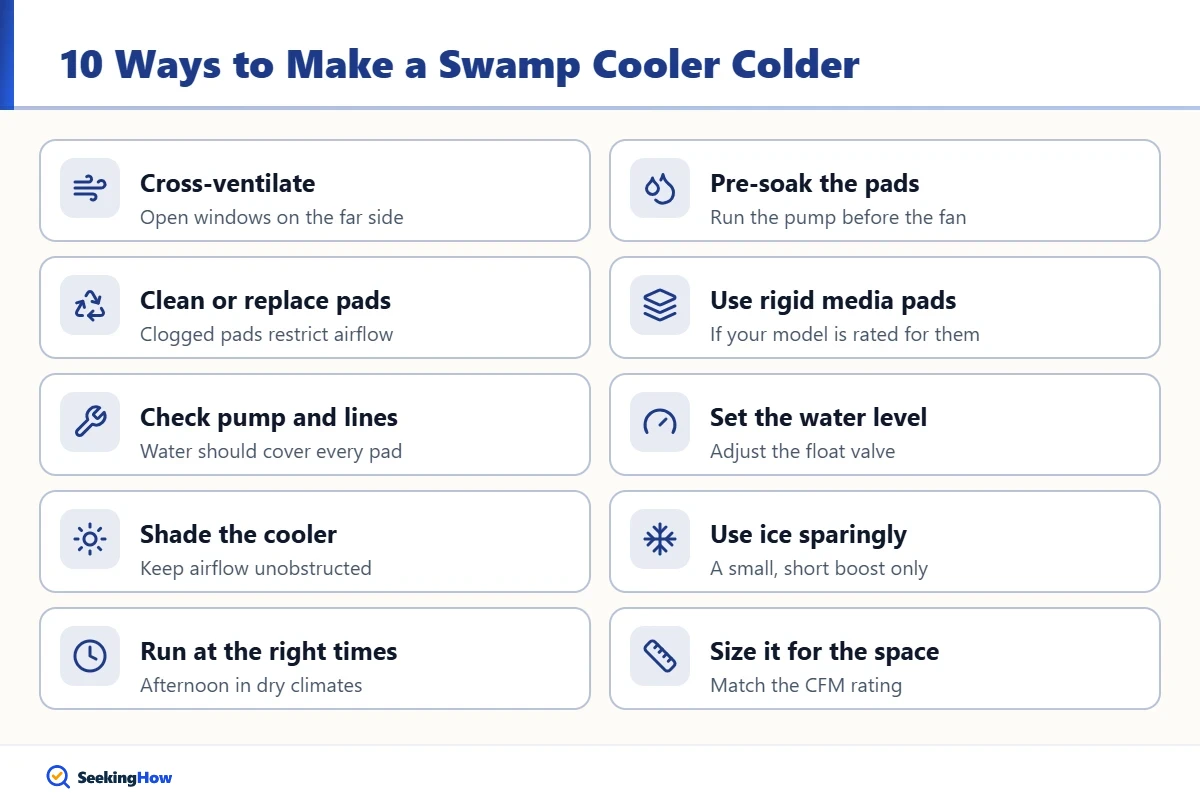
1. Open windows for cross-ventilation
Evaporative cooling needs a constant flow of fresh air in and humid air out. Open a window or door a few inches on the far side of the house or room from the cooler, so cooled air flows across the space. Open more if the room feels damp, less if airflow is weak.
2. Pre-soak the pads before starting the fan
Run the pump alone for a few minutes until the pads are fully saturated, then turn on the fan. Starting the fan with dry pads just blows warm air into the house.
3. Clean or replace the pads
Pads clogged with dust or mineral scale restrict airflow and hold less water. Many owners replace aspen pads at least once a season and rigid media less often, depending on water hardness. Replace pads that are crumbling, crusted white or smell musty.
4. Upgrade to rigid media pads
Thick, corrugated rigid media pads, such as 8-inch or 12-inch cellulose media in larger units, usually cool more efficiently than thin pads and last longer. Make sure your cooler model is designed or rated for them.
5. Check the pump and water distribution
Look for dry streaks on the pads while the cooler runs. Clean the pump intake screen, flush clogged distribution tubes or spider lines, and make sure water flows evenly over every pad.
6. Keep the water level right
Adjust the float valve so the reservoir maintains the manufacturer’s water level. A low level starves the pump; an overfilled reservoir can spill or overflow.
7. Shade the cooler
A unit baking in direct sun heats its water and pulls in hotter air. An awning, shade sail or placement on the shaded side of the house helps, as long as airflow to the pads stays unobstructed.
8. Use cooler water carefully
Adding ice or frozen water bottles to a portable cooler’s tank gives a small, short boost. It is not a substitute for good airflow and soaked pads, and it melts quickly.
9. Run it at the right times
Humidity is often lowest in the afternoon in dry climates. Running the cooler in the late morning and afternoon, and opening the house to cooler outdoor air at night, makes the most of evaporation.
10. Make sure the unit is sized for the space
Coolers are rated in cubic feet per minute (CFM). A portable unit meant for one room cannot cool a whole house. Check the manufacturer’s square-footage guidance and close off rooms you do not need to cool.
Tip: Bleed-off or a periodic drain-and-refill helps reduce mineral scale on the pads and in the pan, especially with hard water. Follow your cooler’s maintenance instructions for drain frequency.
Common Mistakes That Make Swamp Coolers Warmer
- Running the cooler with every window closed.
- Letting the reservoir go stagnant, which causes odors and algae.
- Running the fan on high with dry pads.
- Covering the side intake grilles with furniture or plants.
- Ignoring roof-mounted unit ducts that leak cooled air into the attic.
Safety: Unplug portable units or switch off the breaker before cleaning a pump or opening the cabinet. For roof-mounted coolers, use proper ladder safety or hire an HVAC technician, and have a licensed electrician handle wiring problems.
Swamp Cooler Maintenance Schedule
- Weekly in heavy use: Check water level and look for dry streaks.
- Monthly: Clean the pump screen and wipe out the reservoir.
- Each season: Inspect and replace pads, check belts and motor on large units, flush distribution lines.
- End of season: Drain, clean, dry and cover the unit to prevent corrosion.
If your evaporative cooler shares its water with other appliances that need regular filter care, see our guides on cleaning a Honeywell humidifier and changing a drinking water filter, which use similar descaling habits.
When Should You Switch to Air Conditioning?
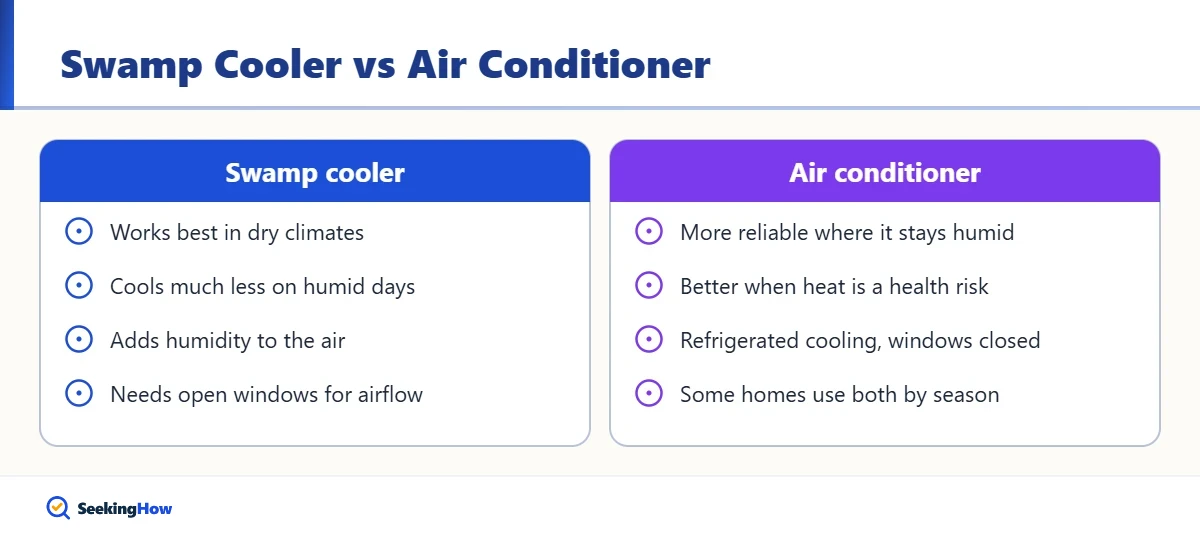
If your area stays humid for much of the cooling season, or someone in the home has health conditions that make heat dangerous, a refrigerated air conditioner or a heat pump is the more reliable choice. Some households use both: the swamp cooler on dry days and AC during humid spells.
Frequently Asked Questions
Does putting ice in a swamp cooler make it colder?
Ice gives a small, short-lived drop in output temperature, mainly in portable units. The main cooling comes from evaporation, so soaked pads, dry outdoor air and good ventilation matter far more than ice. Frozen bottles are a convenient way to try it.
Should windows be open with a swamp cooler?
Yes. A swamp cooler needs an exit for humid air. Open a window or door a few inches on the opposite side of the room or house. Without an exhaust path, humidity builds up and the cooler stops cooling effectively.
What humidity is too high for a swamp cooler?
Evaporative coolers work best in dry air and lose effectiveness as humidity rises. Many manufacturers and utilities note that performance drops sharply in humid, muggy conditions. If the air already feels sticky, expect limited cooling.
How often should I change swamp cooler pads?
It depends on pad type and water hardness. Aspen or fiber pads are often replaced every season, while rigid media pads can last several seasons with good maintenance. Replace any pad that is crusted, crumbling or smells musty.
Why does my swamp cooler smell bad?
Odors usually come from stagnant water, algae or old pads. Drain and clean the reservoir, replace the pads and make sure the cooler drains or bleeds off water regularly. Run the fan with the pump off for a while before shutting down to dry the pads.