Quick Answer
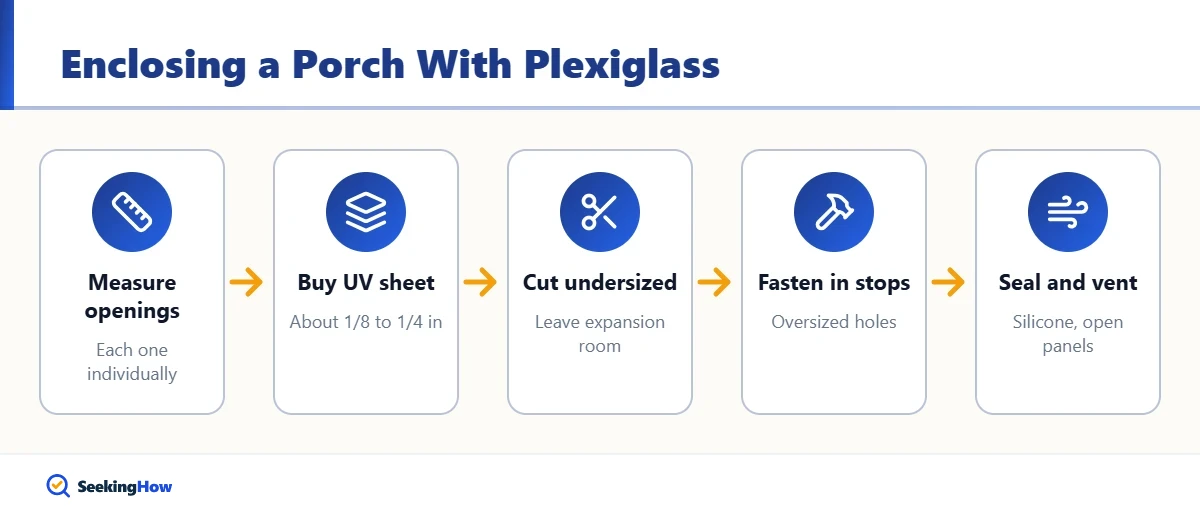
To enclose a porch with plexiglass, measure each opening, buy UV-stabilized acrylic or polycarbonate sheet (about 1/8 to 1/4 inch thick), cut panels slightly undersized for expansion, and fasten them into wood stops or channels using oversized pre-drilled holes and washers. Seal the edges with a compatible silicone and leave some way to ventilate. A typical porch takes one to three weekends.
Key Takeaways
- Plexiglass (acrylic) is clearer and more scratch resistant; polycarbonate is far tougher against impact and hail.
- Plastic sheets expand and contract much more than glass, so leave gaps and drill oversized holes.
- Mounting panels between wood stops is the simplest, cleanest method for most porches.
- Check local building rules and HOA guidelines before enclosing a porch.
- Plan for ventilation; a sealed plastic enclosure can trap heat and condensation.
Plexiglass panels turn a screened porch or open deck into a three-season room for a fraction of the cost of a framed sunroom with glass windows. The material is light, easy to cut, and installs with common carpentry tools. Getting a clean, long-lasting result comes down to choosing the right sheet and respecting how plastic moves with temperature.
Plexiglass vs. Polycarbonate: Which Should You Use?
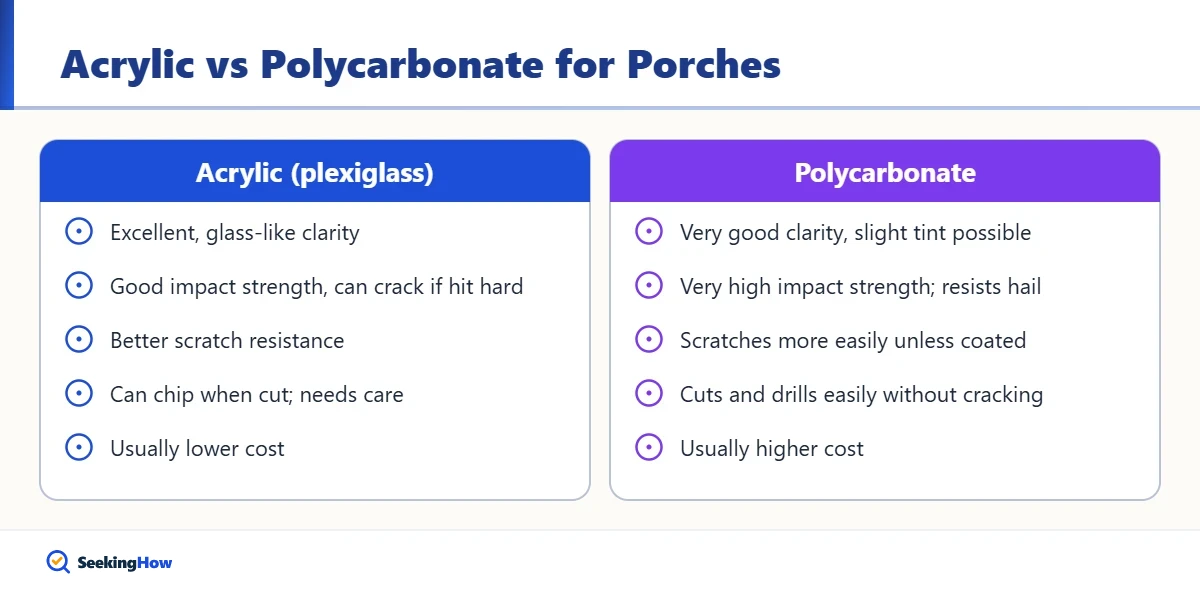
“Plexiglass” is a brand name that people use for any clear acrylic sheet, and many porch kits use polycarbonate instead. Both work; choose based on your climate and how much abuse the panels will take.
| Feature | Acrylic (plexiglass) | Polycarbonate |
|---|---|---|
| Clarity | Excellent, glass-like | Very good, slight tint possible |
| Impact strength | Good, but can crack if struck hard | Very high; resists hail and balls |
| Scratch resistance | Better | Scratches more easily unless coated |
| Ease of cutting and drilling | Can chip; needs care | Cuts and drills easily without cracking |
| Cost | Usually lower | Usually higher |
| Outdoor use | Choose UV-stabilized sheet | Choose UV-protected sheet |
For most porches, 1/8-inch sheet works for small openings, while openings wider than about 3 feet or exposed to wind benefit from 3/16- to 1/4-inch sheet. Check the manufacturer’s span recommendations for your panel size.
What Do You Need to Enclose a Porch?
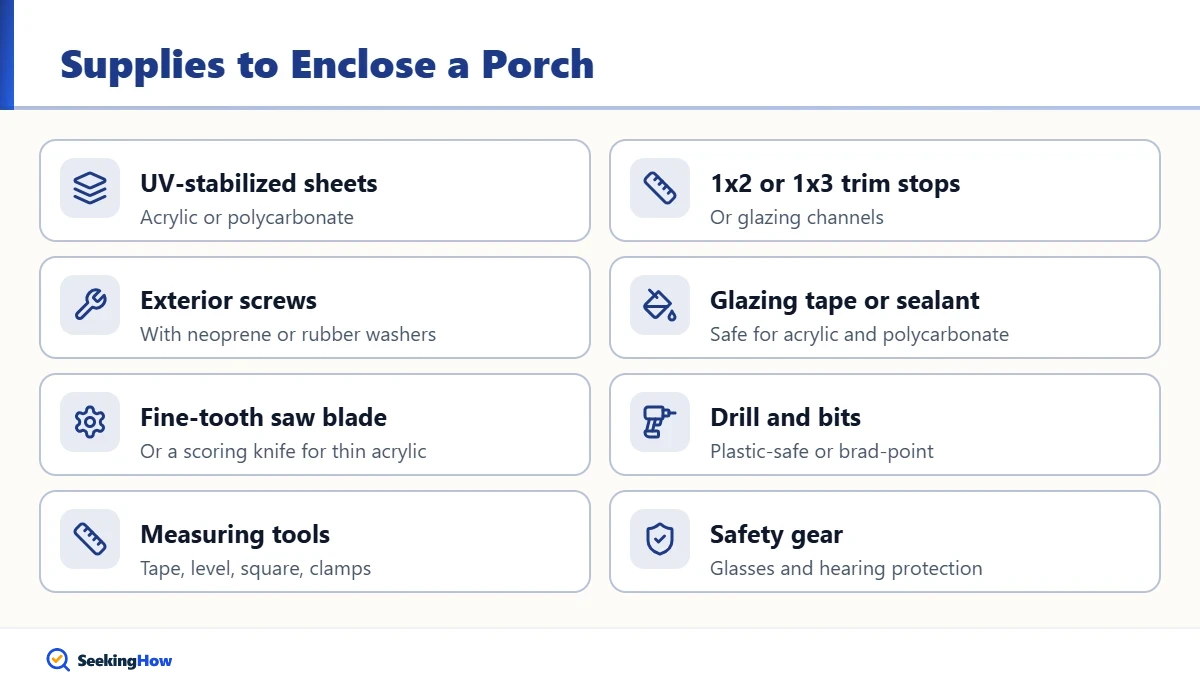
- UV-stabilized acrylic or polycarbonate sheets
- 1×2 or 1×3 trim boards for stops, or aluminum or vinyl glazing channels
- Exterior screws with neoprene or rubber washers
- Glazing tape or a silicone sealant labeled safe for acrylic and polycarbonate
- Circular saw or table saw with a fine-tooth plastic-cutting blade, or a scoring knife for thin acrylic
- Drill with plastic-safe or brad-point bits
- Tape measure, level, square, clamps and a straightedge
- Safety glasses and hearing protection
How Do You Enclose a Porch With Plexiglass Step by Step?
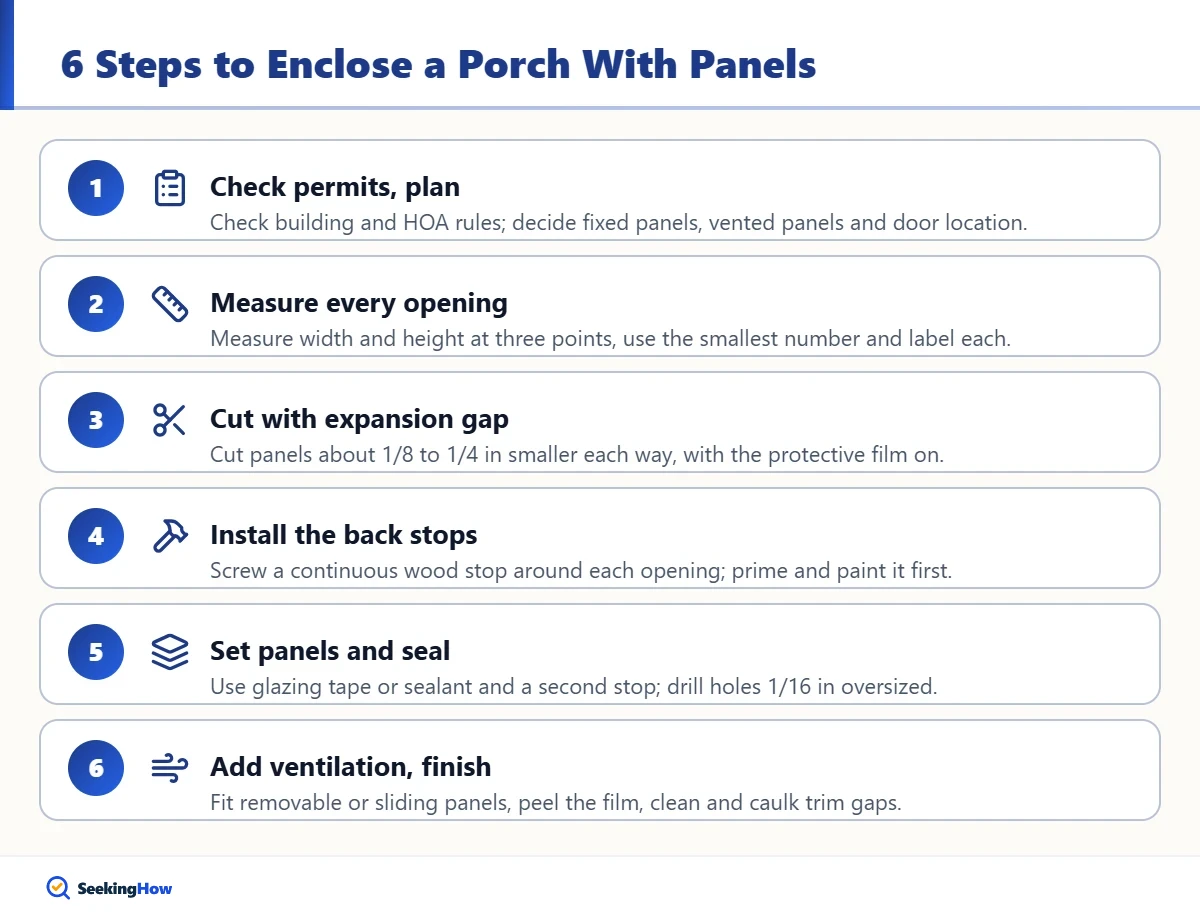
Step 1: Check Permits and Plan the Layout
Call your local building department and check HOA rules; enclosing a porch can change how it is classified, especially if you add doors, electrical or heat. Decide which openings get fixed panels, which need removable or sliding panels for ventilation, and where the door goes.
Step 2: Measure Every Opening
Measure the width and height of each opening at three points and use the smallest number. Openings on porches are rarely square, so treat each one individually and label your measurements by location.
Step 3: Cut the Panels With an Expansion Gap
Leave the protective film on and cut each panel about 1/8 to 1/4 inch smaller than the opening in each direction so it can expand in summer. Use a fine-tooth blade at a steady feed rate, or score thin acrylic several times along a straightedge and snap it over a table edge.
Step 4: Install the Back Stops
Screw a continuous wood stop around the inside or outside of each opening to create a ledge the panel rests against. Prime and paint the stops before installation so moisture does not rot them behind the panels.
Step 5: Set the Panels and Seal
Apply glazing tape or a bead of compatible sealant to the stop, press the panel in, and add a second set of stops on the other side to sandwich it. If you screw through the panel instead, drill holes about 1/16 inch larger than the screw and use washers, keeping holes at least 1/2 inch from the edge.
Step 6: Add Ventilation and Finish
Fit at least a few openings with removable panels, sliding sash or screened vents so you can release heat and humidity. Peel off the protective film, clean the panels with mild soap and water, and caulk any gaps between trim and framing.
Safety: Acrylic dust and chips are sharp, and spinning blades can grab thin plastic. Wear eye protection, clamp sheets firmly, and support both sides of the cut. Never create a fully sealed enclosure around gas grills, heaters or fireplaces.
How Much Does It Cost to Enclose a Porch With Plexiglass?
Costs depend on the total panel area, sheet type and thickness, and whether you build frames from scratch or buy a porch panel system. Acrylic is usually the cheaper sheet, polycarbonate costs more, and prefabricated vinyl or aluminum track systems cost more again but make panels removable. Price your sheets by square foot at local plastics suppliers as well as home centers, since cut-to-size services can save time.
Common Mistakes When Using Plexiglass Outdoors
- No expansion room: Tight panels bow or crack in hot weather.
- Screwing tight through the plastic: Stress cracks start at small holes.
- Using the wrong sealant: Some solvent-based caulks craze acrylic; check the label.
- Cleaning with ammonia or paper towels: Both cloud or scratch the surface. Use a microfiber cloth.
- Skipping UV protection: Non-UV sheets yellow and become brittle in sun.
If you need to trim corrugated or twin-wall roofing panels for the porch roof, our guide on how to cut corrugated plastic sheeting covers clean cuts.
Alternatives to Plexiglass Porch Enclosures
- Clear vinyl roll-down curtains: Cheapest and removable, but less clear and less durable.
- Porch window kits (vinyl or aluminum sash): Operable windows with track systems; more ventilation control.
- Tempered glass windows: Best clarity and scratch resistance, but heavier and usually requires professional framing.
- Retractable screens: Keep bugs out without closing the porch to the air.
Finishing the Space
A new enclosure is a good time to fix related trouble spots. If the porch steps are worn, see how to build free-standing wooden steps, and for a yard gate that lets pets slip out, read how to fix the gap under a fence gate.
Frequently Asked Questions
How thick should plexiglass be for a porch enclosure?
Thin 1/8-inch sheet works for small openings, while larger openings or windy sites usually call for 3/16- to 1/4-inch sheet so panels do not flex or rattle. Check the manufacturer span chart for the exact size of each opening.
Will plexiglass yellow in the sun?
Standard acrylic and polycarbonate made for outdoor use include UV stabilizers or coatings that resist yellowing for many years. Cheap indoor-grade sheet can yellow and turn brittle. Buy sheet labeled UV-stabilized or UV-protected for porches.
Do I need a permit to enclose my porch?
It depends on your local code. Some areas allow removable panels without a permit, while permanent enclosures, new doors, electrical work or heating often require one. Contact your building department and HOA before you start.
How do you clean plexiglass porch panels?
Rinse off grit first, then wash with mild dish soap and lukewarm water using a soft microfiber cloth. Avoid ammonia-based glass cleaners, solvents and paper towels, which can cloud or scratch the surface.
Can plexiglass keep a porch warm in winter?
Panels block wind and rain and trap some solar heat, making the porch more comfortable in spring and fall. Single-layer sheet insulates poorly, so an enclosed porch usually remains a three-season space unless you add insulated walls and heating.