Quick Answer
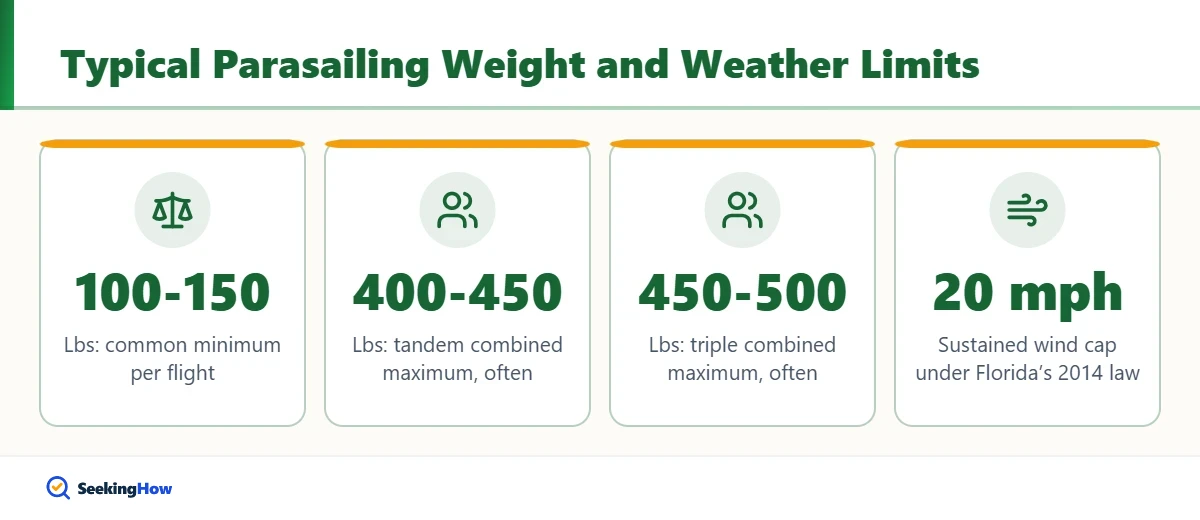
Yes. Most parasailing operators set both a minimum and a maximum weight. Combined limits for tandem or triple flights commonly fall around 400 to 500 pounds, and many require a minimum of roughly 100 to 150 pounds per flight so the canopy can lift and stay stable. Lighter riders, including kids, usually fly tandem with an adult. Limits vary with the boat, canopy and wind.
Key Takeaways
- Weight limits exist because the canopy needs the right load for the day’s wind to lift safely.
- Typical combined maximums for tandem or triple flights are about 400 to 500 pounds; individual operators vary.
- Riders under the minimum are usually paired with another person; riders over the maximum may fly solo or not at all.
- Operators can change limits on the spot when winds are light or strong.
- Always ask the operator for its exact weight, age and health rules before you book.
Parasailing looks effortless, but every flight is a balance between the weight in the harness, the size of the parachute-style canopy, the boat’s speed and the wind. That balance is why operators weigh guests or ask for weights at check-in. Here is how weight limits work, what typical numbers look like, and how to prepare if you are near either end of the range.
Why Do Parasailing Companies Have Weight Limits?
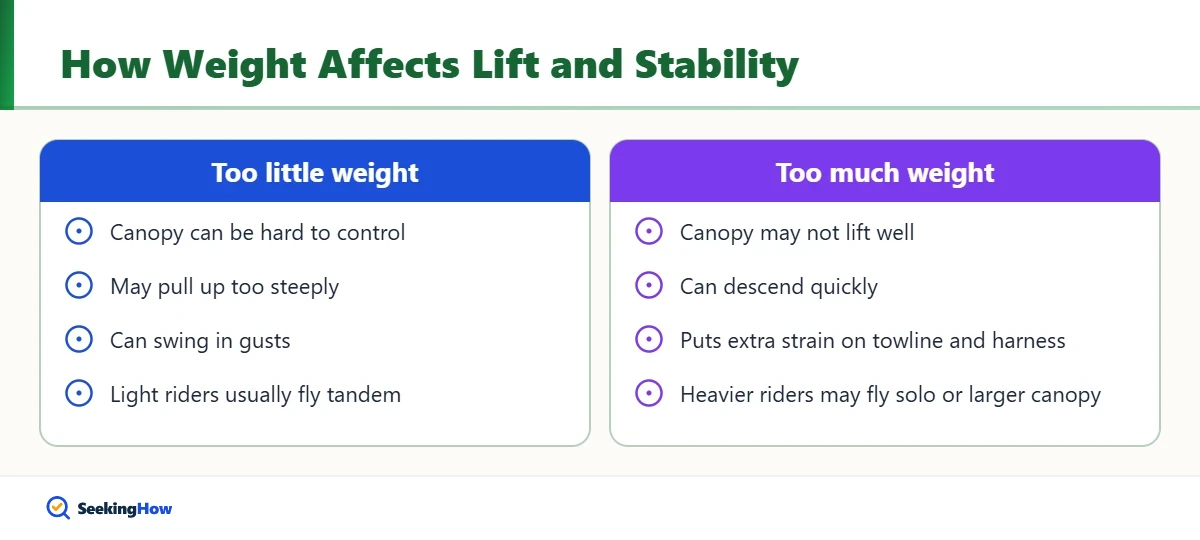
A parasail canopy generates lift from the airflow created by the boat moving into the wind. Too little weight and the canopy can be hard to control, pull up too steeply or swing in gusts. Too much weight and the canopy may not lift well, can descend quickly, and puts extra strain on the towline, harness and winch.
Operators choose canopy sizes for different loads and conditions. On light-wind days, they may need a minimum weight so the flight stays stable; on windy days, they may raise minimums or cancel flights entirely. These decisions are about safety, not about singling out guests.
What Are Typical Parasailing Weight Limits?
| Flight type | Typical requirement | Notes |
|---|---|---|
| Solo flight | Often a minimum around 100 to 150 lbs | Lighter riders are usually paired with someone |
| Tandem (2 riders) | Combined maximum often around 400 to 450 lbs | Most common setup for couples, friends and kids with adults |
| Triple (3 riders) | Combined maximum often up to about 450 to 500 lbs | Offered only by some operators and conditions |
| Wind-dependent changes | Limits can shift on the day | Light wind may require more weight; strong wind may ground flights |
These figures reflect common published ranges from U.S. beach operators and are not universal. Your operator’s posted policy, and the captain’s call on the day, always control.
Can Heavier People Go Parasailing?
Often, yes. Many heavier riders fly solo instead of tandem so the combined load stays under the maximum. Operators may also use a larger canopy rated for heavier loads. If you are over a company’s limit, call ahead; some operators simply cannot accommodate certain weights, and it is better to know before you pay a deposit.
Harness fit also matters. Ask whether the operator has harnesses in your size. A properly fitted harness is a key piece of safety equipment, and a good operator will be glad to answer.
Can Kids and Light Riders Parasail?
Light riders, including many children, usually fly tandem with an adult or another passenger to reach the minimum weight. Age minimums vary by company, and minors generally need a parent or guardian’s consent and signature. Some operators do not allow very young children at all, and many require that kids are comfortable in the water and wearing a life jacket.
What Other Requirements Do Parasailing Operators Have?
- Health: Operators commonly ask riders with heart conditions, recent surgery, back or neck injuries, or seizure disorders to skip the flight. Pregnant guests are often not allowed to fly.
- Sobriety: Riders who appear intoxicated are turned away.
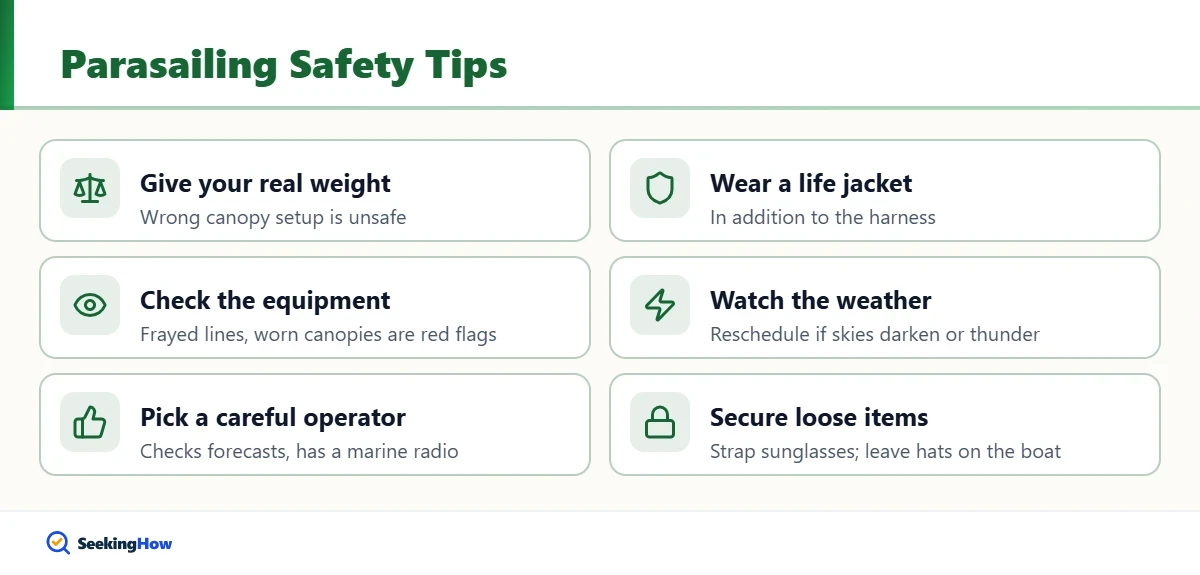
- Life jackets: Riders wear a personal flotation device in addition to the harness.
- Waivers: Expect to sign a liability waiver and confirm your weight honestly.
Tip: Give your real weight. Understating it does not change physics, and an operator who sets up the canopy for the wrong load can create an unsafe flight for you and your partner.
How Does Weather Affect Parasailing?
Wind and storms are the biggest risk factors. Florida’s 2014 White-Miskell Act, for example, prohibits commercial parasailing when sustained winds exceed 20 mph, when gusts are 15 mph or more above sustained winds or exceed 25 mph, when rain or fog reduces visibility below half a mile, or when a known lightning storm is within 7 miles. It also requires operators to carry liability insurance, hold a Coast Guard license and keep a weather log. Rules differ by state and country, but reputable operators follow similar weather limits.
Safety: If skies darken, winds pick up or you hear thunder, it is reasonable to ask to reschedule. Choose operators that check forecasts, have a working marine radio, and are willing to cancel when conditions are poor.
How to Choose a Safe Parasailing Operator
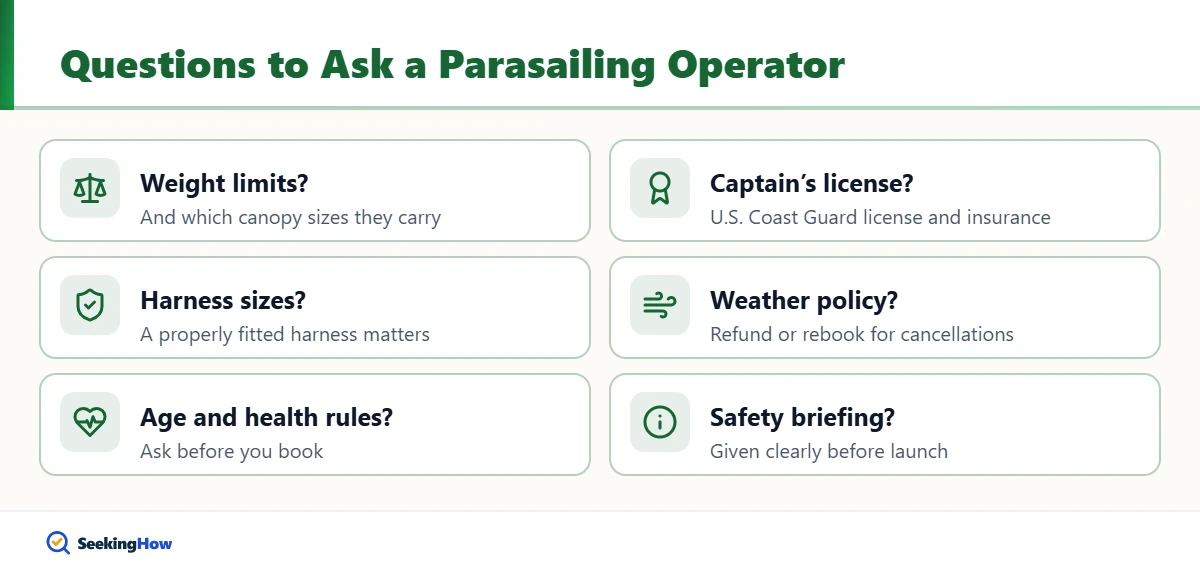
- Ask about the captain’s U.S. Coast Guard license and the company’s insurance.
- Ask how they set weight limits and which canopy sizes they carry.
- Look at the equipment: frayed towlines, faded harnesses or worn canopies are red flags.
- Confirm their weather policy and whether they refund or rebook weather cancellations.
- Choose an operator that gives a clear safety briefing before launch.
How to Prepare for Your Flight
Wear a swimsuit and secure sunglasses with a strap; leave loose hats and jewelry on the boat. Use water-resistant sunscreen, eat a light meal and stay hydrated. If you have a healing cut or stitches, protect it first; our guide on how to keep stitches dry while swimming explains your options, and check with your doctor before any water activity.
If you enjoy time on the water, you may also like gear projects such as installing a fish finder on a kayak for your next trip.
Frequently Asked Questions
What is the minimum weight to parasail alone?
Many operators set a solo minimum somewhere around 100 to 150 pounds, depending on the canopy and wind. Riders below that usually fly tandem with another person. Ask your operator, because the minimum can rise on light-wind days.
Can two adults parasail together?
Yes, tandem flights are the most common option. Most operators allow two adults as long as their combined weight stays under the limit, often around 400 to 450 pounds. Heavier pairs may need to fly separately.
How high do you go when parasailing?
Flight height depends on the towline length the operator uses. Many tours offer lines of several hundred feet, with some advertising options up to about 800 to 1,000 feet. Longer lines mean higher flights and often higher prices.
Is parasailing safe?
Parasailing with a licensed, insured operator that follows weather limits and maintains its equipment is generally considered a low-risk activity. Most serious accidents have been linked to flying in high winds or storms or to equipment failure, which is why weather rules matter.
Do you get wet when parasailing?
Many boats use a winch platform so you take off and land on the deck and may stay mostly dry. Some captains offer an optional dip in the water before reeling you in. Wear swimwear just in case.