Quick Answer
A washing machine leaking from the bottom is most often caused by a loose or cracked inlet hose, a clogged drain pump filter, a worn door boot seal on front-loaders, a split internal hose or a faulty water pump. Unplug the washer, shut off the water, run a short cycle with the cabinet visible, and trace where the drip starts before replacing any part.
Key Takeaways
- Start with the cheap checks: inlet hose washers, the drain hose connection and the pump filter.
- Front-loaders often leak from a torn door boot seal or a clogged pump filter behind the lower kick panel.
- Top-loaders commonly leak from the water pump, tub seal or an internal hose.
- Too much or the wrong detergent causes oversudsing that spills out the bottom.
- A leaking tub seal or bearing usually means a professional repair or replacement washer.
Water under a washer can damage subfloors, ceilings below and cabinetry quickly, so act on it right away. The good news is that many leaks come from parts you can inspect or replace with basic tools. This guide shows you how to find the source and fix it safely.
Why Is My Washing Machine Leaking From the Bottom?
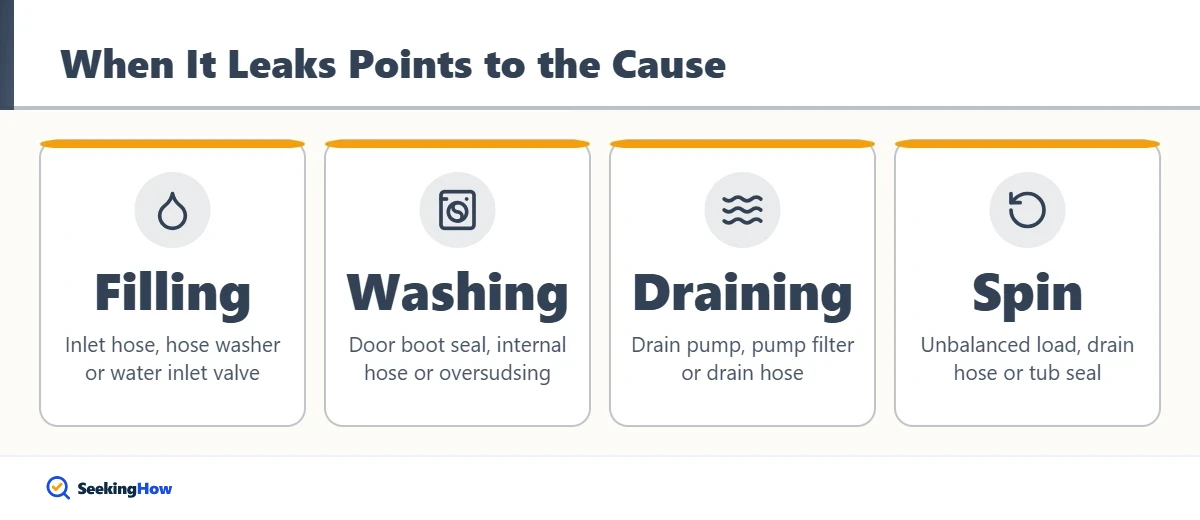
Water reaches the floor beneath a washer from only a handful of places. Knowing when the leak happens, during fill, wash, drain or spin, narrows it down fast.
Inlet hoses and connections
The hot and cold supply hoses connect the wall valves to the back of the washer. Rubber washers inside each fitting harden and crack with age, and the hoses themselves can bulge or split. A leak here often shows up during the fill cycle and runs down the back of the cabinet.
Drain hose and standpipe
A loose drain hose clamp, a split hose or a clogged standpipe can let water escape during drain and spin. If the standpipe overflows, water runs down behind the machine and looks like a bottom leak.
Drain pump and pump filter
Most front-loaders have a coin or lint trap filter behind a small door on the lower front panel. If it is clogged or not tightened fully, water leaks from the front bottom corner. A cracked pump housing or failed pump seal causes leaking mainly during draining.
Door boot seal (front-loaders)
The rubber boot between the door and the tub can tear or collect debris that breaks the seal. Water then drips down the front of the cabinet and pools under the machine, especially during the wash cycle.
Internal hoses and tub seal
Hoses inside the cabinet connect the tub, pump and dispenser. They can loosen or split. A worn tub seal, often accompanied by loud spin noise from failing bearings, leaks from the center underneath and is a major repair.
Oversudsing
Using regular detergent in a high-efficiency (HE) washer, or simply too much HE detergent, creates excess foam that can push water out through vents and seals. Look for the HE symbol on the bottle and measure carefully.
When Does It Leak? Match the Timing to the Cause
| Leak timing | Most likely cause | Where to look |
|---|---|---|
| While filling | Inlet hose, hose washer or water inlet valve | Back of the washer |
| During wash/agitate | Door boot seal, internal hose, oversudsing | Front bottom or inside cabinet |
| During drain | Drain pump, pump filter, drain hose | Front panel, under the pump |
| During spin | Unbalanced load, drain hose, tub seal | Standpipe and center underneath |
| When not running | Inlet valve not shutting fully or a supply hose | Back panel and wall valves |
What You Need
- Towels, a shallow pan or baking tray, and a flashlight
- Adjustable pliers, a screwdriver set and a nut driver
- Replacement hose washers or braided stainless-steel inlet hoses
- HE detergent if you have a high-efficiency washer
- Your washer’s model number (inside the door or lid, or on the back)
How To Fix a Washing Machine Leaking From the Bottom
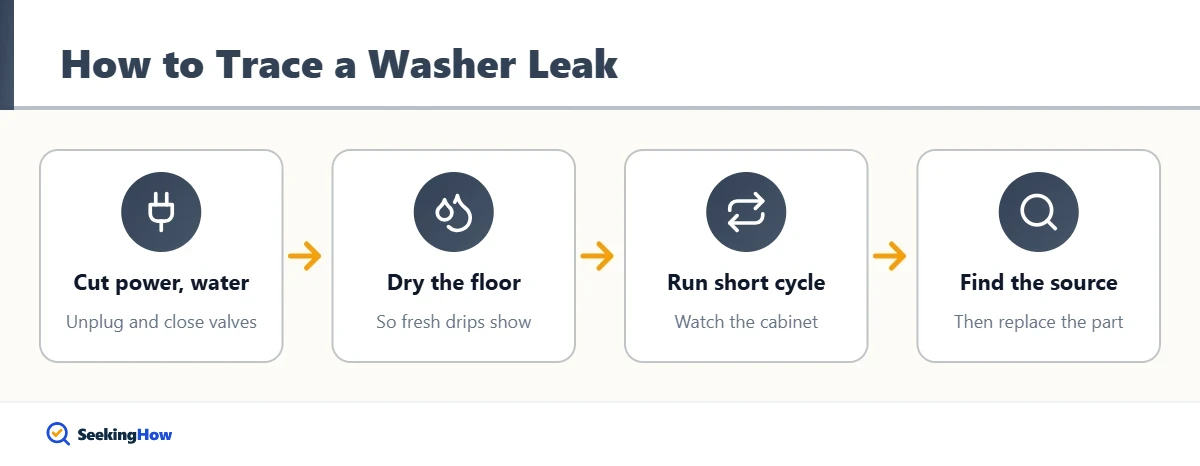
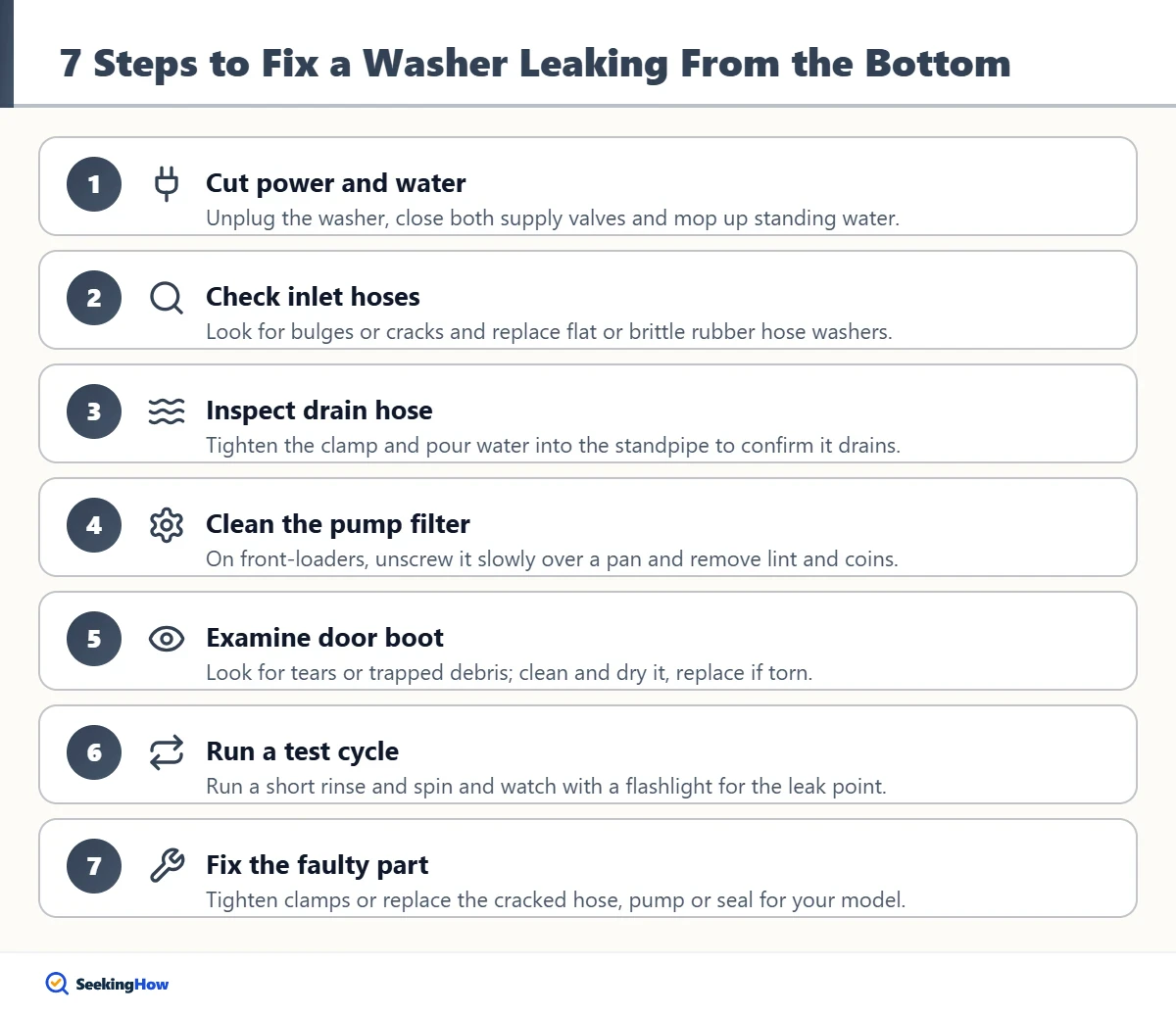
Step 1: Cut power and water
Unplug the washer and close both water supply valves behind it. Mop up standing water so you can spot fresh drips. If the outlet is wet, switch off the circuit breaker before touching the plug.
Step 2: Check the inlet hoses
Pull the washer forward carefully and inspect both supply hoses for bulges, cracks or wet fittings. Unscrew each fitting and replace the rubber washer if it is flat or brittle. Many manufacturers recommend replacing rubber hoses about every five years; braided stainless-steel hoses are more durable.
Step 3: Inspect the drain hose and standpipe
Make sure the drain hose clamp is tight and the hose is not split or kinked. Pour a bucket of water into the standpipe to confirm it drains quickly. If it backs up, the drain line needs clearing before you reconnect the washer.
Step 4: Clean the pump filter
On front-loaders, place a shallow pan and towels under the access door at the lower front, then drain the small emergency hose if present. Unscrew the filter slowly, remove lint, coins and hair, and screw it back until it seats firmly. Check your manual, because some top-loaders have no user-serviceable filter.
Step 5: Examine the door boot seal
Fold back the rubber boot on a front-loader and look for tears, holes and trapped socks or debris. Clean it with warm water and a mild cleaner, and dry it thoroughly. Replace a torn boot; it is a moderate DIY job on many models using the clamp rings that hold it in place.
Step 6: Run a test cycle and watch the cabinet
With the front or rear panel removed if your model allows it, restore water and power and run a short rinse-and-spin cycle. Keep hands away from moving parts and wiring, and watch with a flashlight for where water first appears. Stop the cycle as soon as you find the leak point.
Step 7: Tighten or replace the faulty part
Tighten loose internal hose clamps and replace any cracked hose, pump or seal with a part matched to your model number. Reassemble the panels and run another test cycle. Use the correct dose of HE detergent going forward to prevent oversudsing.
Safety: Water and electricity are a dangerous mix. Always unplug the washer before removing panels, never touch wiring while the machine is running, and use a GFCI-protected outlet in laundry areas.
How Do You Prevent Future Washer Leaks?
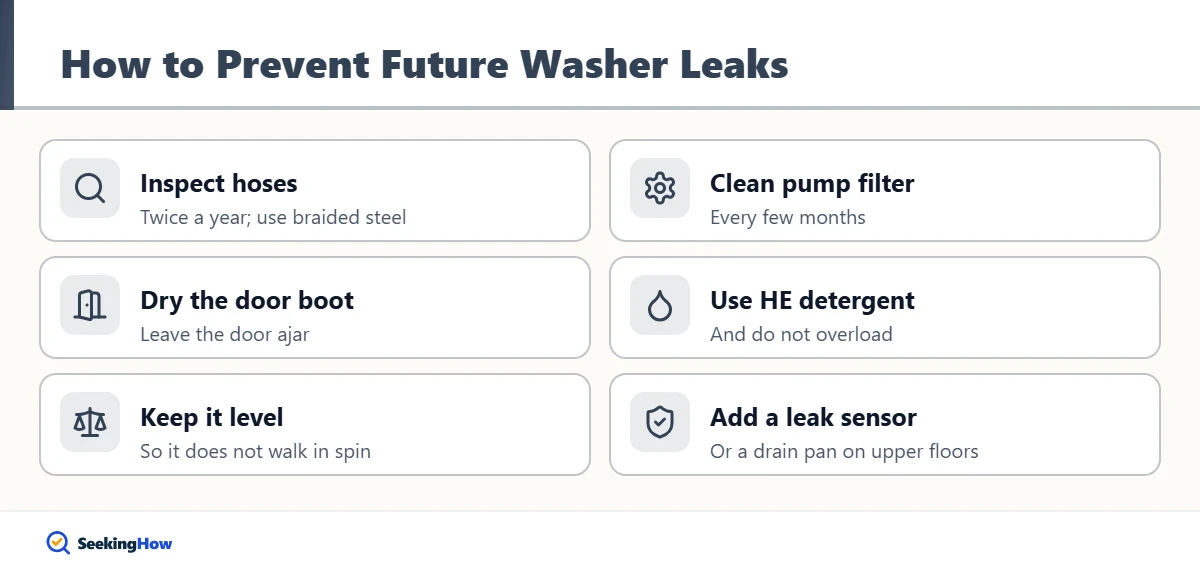
- Inspect supply hoses twice a year and replace rubber hoses with braided stainless-steel ones.
- Clean the front-loader pump filter every few months, or as your manual recommends.
- Wipe the door boot dry after use and leave the door ajar to prevent mold.
- Use HE detergent in HE machines and do not overload the drum.
- Keep the washer level so it does not walk and strain hoses during spin.
- Install a water leak sensor or a drain pan with an outlet under washers on upper floors.
Leaks that run behind walls or under floors can go unnoticed. Read our guide on how to spot hidden water leaks if you suspect water has spread. If a fitting on a plastic drain connection is the culprit, see how to fix a leaking PVC joint without cutting.
Repair or Replace: When To Call a Pro
Hose washers, hoses, pump filters and door boots are reasonable DIY repairs for a handy homeowner. A leaking tub seal, failed main bearing or cracked outer tub is a different story: these jobs require removing the drum, and on many washers the parts cost and labor approach the price of a new machine.
Call an appliance technician if you cannot find the source, if the leak involves electrical components, or if the washer is under warranty. Get a written estimate, and weigh it against the age of the machine; many washers are designed to last roughly 10 to 14 years.
Frequently Asked Questions
Is it safe to use a washing machine that is leaking?
It is best not to. Leaking water can damage floors and create a shock risk near outlets and wiring. Unplug the washer, shut off the water and find the cause before running it again, especially if the leak is near electrical components.
Can too much detergent make a washer leak?
Yes. Too much detergent, or regular detergent in a high-efficiency washer, creates excess suds that can overflow through vents and seals. Use HE detergent in HE machines, measure the recommended dose, and run a rinse cycle to clear suds.
Why is my front-load washer leaking from the front bottom?
The most common causes are a pump filter that is clogged or not tightened fully and a torn or dirty door boot seal. Check the filter behind the lower front access door, clean it and reseat it, then inspect the rubber boot for damage.
How much does it cost to fix a leaking washing machine?
Hose washers and inlet hoses are inexpensive DIY fixes. Replacing a pump, door boot or internal hose costs more, and a tub seal or bearing job can approach the price of a new washer. Get a written estimate based on your model.
How often should washing machine hoses be replaced?
Many manufacturers and insurers suggest replacing rubber inlet hoses about every five years, or sooner if they bulge, crack or leak. Braided stainless-steel hoses last longer, but you should still inspect fittings and washers once or twice a year.