Quick Answer
A fridge leaking water inside is usually caused by a clogged defrost drain. Ice or food debris blocks the small drain hole at the back of the fresh-food section, so defrost water overflows and pools under the crisper drawers. Clear it by flushing the drain with warm water using a turkey baster, then check the door seals, temperature setting and water-line connections.
Key Takeaways
- A blocked defrost drain is the most common reason for water inside the fridge compartment.
- Flushing the drain with warm water and a baster or syringe fixes most leaks in under 30 minutes.
- Worn door gaskets, a too-cold setting and an unlevel fridge also cause interior water and ice.
- Water dispenser and ice maker models can leak from the water filter or supply line.
- Call a technician for a frozen evaporator, a failed defrost heater or a cracked inner liner.
Finding a puddle under the crisper drawers or ice on the back wall of your refrigerator is frustrating, but it rarely means the fridge is failing. In most cases a small drain or seal problem is to blame, and you can fix it with basic tools. This guide walks through each cause in order from most to least likely.
Why Is My Fridge Leaking Water Inside?
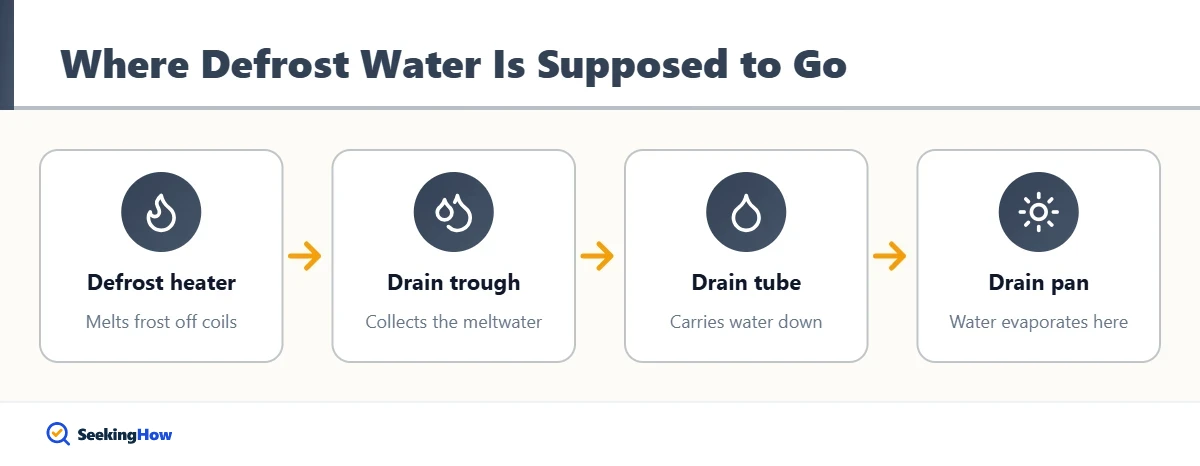
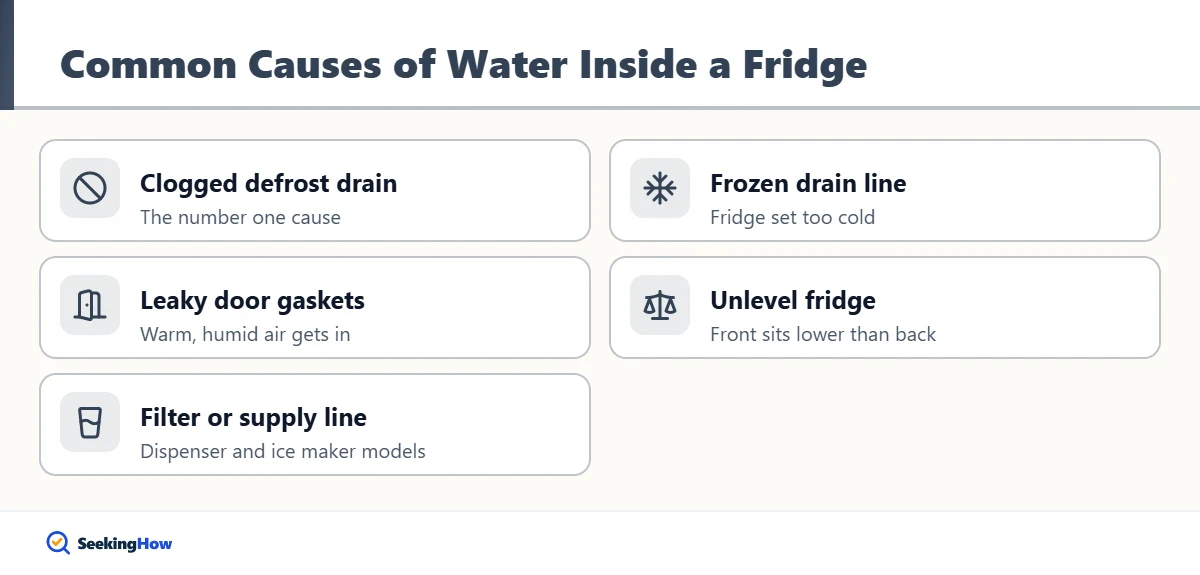
Modern frost-free refrigerators run an automatic defrost cycle several times a day. A heater melts frost off the evaporator coils, and the water runs into a trough and down a drain tube to a pan under the fridge, where it evaporates. When any part of that path is blocked or misaligned, water ends up inside the cabinet instead.
Clogged defrost drain
This is the number one cause. Crumbs, mold or a plug of ice block the drain hole, usually located at the back wall of the fresh-food compartment just below the coils or behind the crisper drawers. Water backs up, then spills onto the floor of the fridge.
Frozen drain line
If the fridge is set too cold or the drain tube sits near cold air, the water in the tube freezes. You may see a sheet of ice along the back wall or under the crispers. Some models use a small metal clip or a drain heater to prevent this, and a missing clip can cause repeated freezing.
Leaky door gaskets
Torn, warped or dirty door seals let warm, humid air in. That moisture condenses on cold surfaces and drips down, and it also adds extra frost that the drain must handle. Test the seal by closing the door on a dollar bill; if it slides out with no resistance, the gasket is not sealing there.
Unlevel refrigerator
Most refrigerators should sit level side to side and tilt slightly backward so the doors swing shut and defrost water flows toward the drain. If the front is lower than the back, water can pool at the front of the compartment.
Water filter or supply line problems
On fridges with a water dispenser or ice maker, an incorrectly seated filter, cracked filter housing or loose supply line can drip inside the cabinet. These leaks often appear near the filter location, which is commonly in the upper right corner of the fresh-food compartment or in the base grille.
How Do You Diagnose Where the Water Is Coming From?
The location of the water is your best clue. Use this table to match what you see with the likely cause.
| What you see | Likely cause | DIY fix |
|---|---|---|
| Water pooled under crisper drawers | Clogged defrost drain | Flush drain with warm water |
| Ice sheet on back wall | Frozen drain line or too-cold setting | Thaw, flush, raise temperature |
| Water near door edges, sweaty walls | Worn or dirty door gasket | Clean or replace gasket |
| Water at the front of shelves | Fridge not tilted backward | Adjust leveling legs |
| Drips near filter housing | Loose or wrong water filter | Reseat or replace filter |
| Water in freezer and fridge after power outage | Normal thawing | Dry out, check food safety |
What You Need
- Turkey baster, large plastic syringe or squeeze bottle
- Warm water (not boiling) and a little baking soda
- Pipe cleaner, thin plastic tubing or a flexible drain brush
- Towels, a shallow pan and a flashlight
- Screwdriver or nut driver for back panels, and a bubble level
How To Fix a Fridge Leaking Water Inside
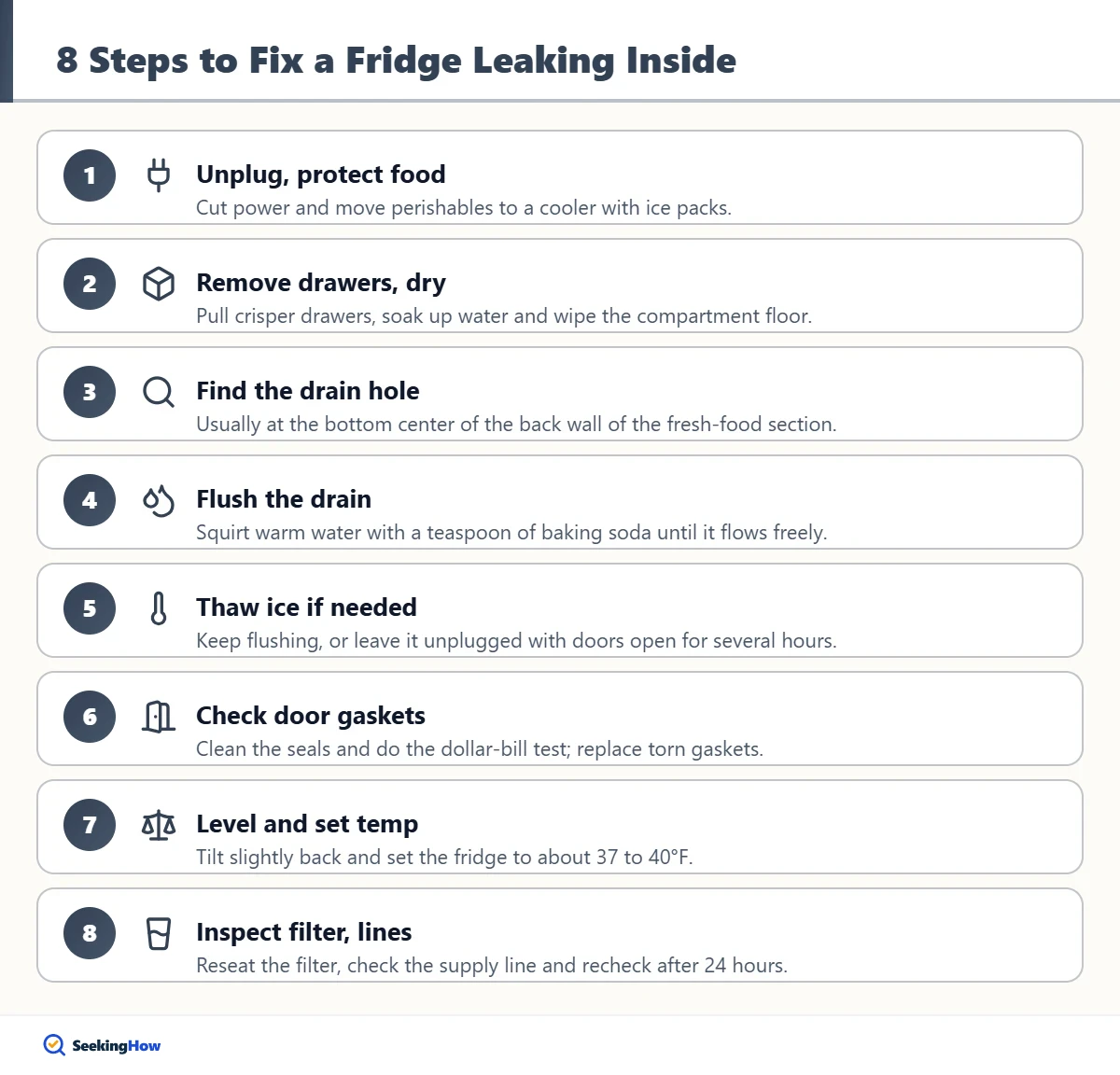
Work through these steps in order. Most leaks are solved by step 4.
Step 1: Unplug the fridge and protect your food
Unplug the refrigerator or switch off its circuit breaker before working near panels or drains. Move perishables to a cooler with ice packs. Keep the doors closed as much as possible so the freezer stays cold.
Step 2: Remove drawers and dry the compartment
Pull out the crisper drawers and any lower shelves, and soak up standing water with towels. Wipe the floor of the compartment so you can see where new water appears. Wash the drawers with warm, soapy water while they are out.
Step 3: Find the defrost drain hole
Look at the back wall of the fresh-food section, usually at the bottom center or just below the rear panel. Some models hide the drain behind a removable cover held by screws or clips. Your owner’s manual or the model number on the label inside the fridge will show the exact location.
Step 4: Flush the defrost drain
Fill a turkey baster or syringe with warm water mixed with a teaspoon of baking soda and squirt it into the drain hole. Repeat until the water flows freely and you hear it reach the drain pan. Gently push a pipe cleaner or thin tubing through stubborn clogs, but never use a sharp object that could puncture the drain or liner.
Step 5: Thaw ice from the drain line if needed
If water will not go down, ice is likely blocking the tube. Keep flushing with warm water, or leave the fridge unplugged with the doors open and towels down for several hours to thaw. A hair dryer on low, held at a safe distance, can speed up thawing but never point it at plastic for long.
Step 6: Check the door gaskets
Wipe the gaskets with warm, soapy water to remove sticky residue, then do the dollar-bill test around each door. Replace gaskets that are torn, hardened or still leaking air. Replacement gaskets are sold by model number from the manufacturer or appliance-parts suppliers.
Step 7: Level the fridge and set the temperature
Use a bubble level on a shelf and adjust the front leveling legs or rollers so the fridge is level side to side and tilts slightly back. Set the fresh-food compartment to about 37 to 40°F, which the FDA recommends keeping at or below 40°F, and avoid the coldest setting that can freeze the drain.
Step 8: Inspect the water filter and lines
If your model has a dispenser, remove and reinstall the filter until it locks fully, and replace it if it is overdue or cracked. Check the supply line connection at the back for drips, and tighten fittings by hand. Plug the fridge back in and check for new water after 24 hours.
Tip: If you see water on the kitchen floor rather than inside the fridge, check the drain pan underneath and the water supply line. Hidden leaks behind appliances can go unnoticed for weeks; our guide on how to tell if you have a hidden water leak covers the warning signs.
How Do You Keep the Defrost Drain From Clogging Again?
- Flush the drain with warm water every few months as routine maintenance.
- Cover food and wipe up spills quickly so crumbs and liquids do not wash into the drain.
- Do not push food against the back wall, where it can block airflow and the drain trough.
- Keep the fridge at 37 to 40°F rather than the coldest setting.
- Clean door gaskets monthly and close doors firmly.
Cleaning the interior with a mild solution also helps prevent mold that can clog the drain. If you want a natural cleaner, see our list of practical vinegar uses around the house.
When Should You Call a Refrigerator Repair Technician?
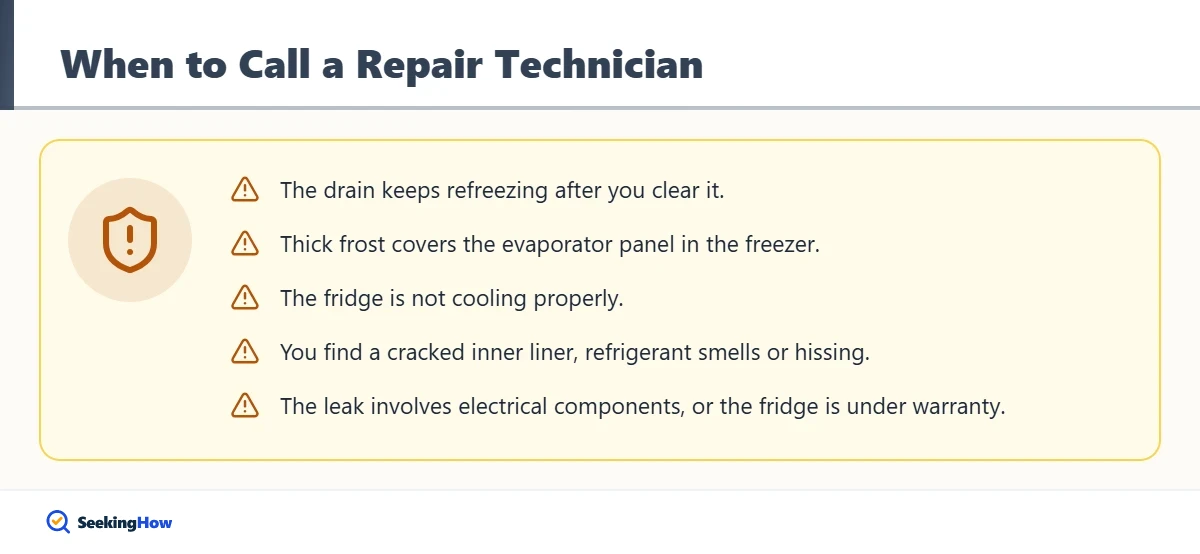
Some causes are beyond a basic DIY fix. Call a qualified appliance technician if the drain keeps refreezing after you clear it, if thick frost covers the evaporator panel in the freezer, or if the fridge is not cooling properly. These symptoms point to a failed defrost heater, defrost thermostat, defrost timer or control board.
Also get professional help for a cracked inner liner, refrigerant smells or hissing, and any leak that involves electrical components. If the fridge is still under warranty, contact the manufacturer first, because opening sealed panels yourself may affect coverage.
Safety: Always unplug the refrigerator before removing panels, and never chip ice off coils with a knife or screwdriver. Puncturing a refrigerant line can ruin the sealed system and is an expensive repair.
Frequently Asked Questions
Is it dangerous if my fridge is leaking water inside?
The water itself is usually harmless, but it can damage floors, encourage mold and, near outlets or wiring, create an electrical hazard. Unplug the fridge before cleaning up, dry the area, and fix the cause promptly so food stays at a safe temperature.
Where is the defrost drain on a refrigerator?
In most frost-free fridges the defrost drain is at the back wall of the fresh-food compartment, near the bottom or just below the rear panel. On freezer models it is often under the evaporator cover. Check your owner manual by model number for the exact spot.
Can a dirty water filter cause a fridge to leak inside?
A filter that is not fully locked in, the wrong filter model or a cracked housing can leak inside the fridge. Remove and reinstall the filter until it clicks, and replace it if it is overdue or damaged. Use a filter rated for your model.
Why is there ice under my fridge crisper drawers?
Ice under the crispers usually means the defrost drain froze, so water pooled and then froze. A too-cold temperature setting or a missing drain clip can cause it. Thaw the ice, flush the drain with warm water and raise the setting slightly.
How much does it cost to fix a fridge leaking water?
Clearing a clogged drain or reseating a filter costs little or nothing if you do it yourself. Professional service calls and part replacements such as a defrost heater or door gasket cost more and vary by region, brand and model, so get a written quote first.