Quick Answer
White vinegar (5% acetic acid) is best for jobs where its acidity dissolves minerals, soap scum, and odors: descaling kettles and coffee makers, cleaning glass and shower doors, unclogging showerheads, freshening laundry, deodorizing drains, and wiping ant trails. Dilute it 1:1 with water for most surfaces, but keep it off natural stone, waxed wood, cast iron, and screens, and never mix it with bleach.
Key Takeaways
- Vinegar excels at mineral deposits, hard-water spots, soap scum, and odors because it is a mild acid.
- A 1:1 mix of vinegar and water handles most everyday cleaning; use it full strength for scale.
- It is not an EPA-registered disinfectant, so use a registered product when you need to kill germs.
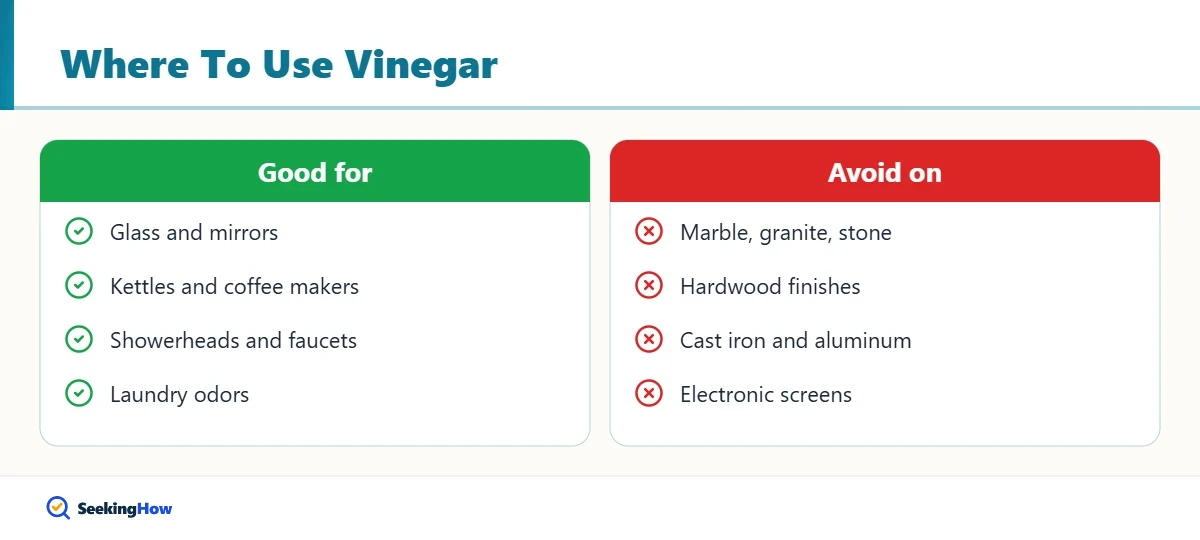
- Avoid vinegar on marble, granite, travertine, unsealed grout, hardwood finishes, and electronics.
- Never combine vinegar with bleach or store it mixed with hydrogen peroxide.
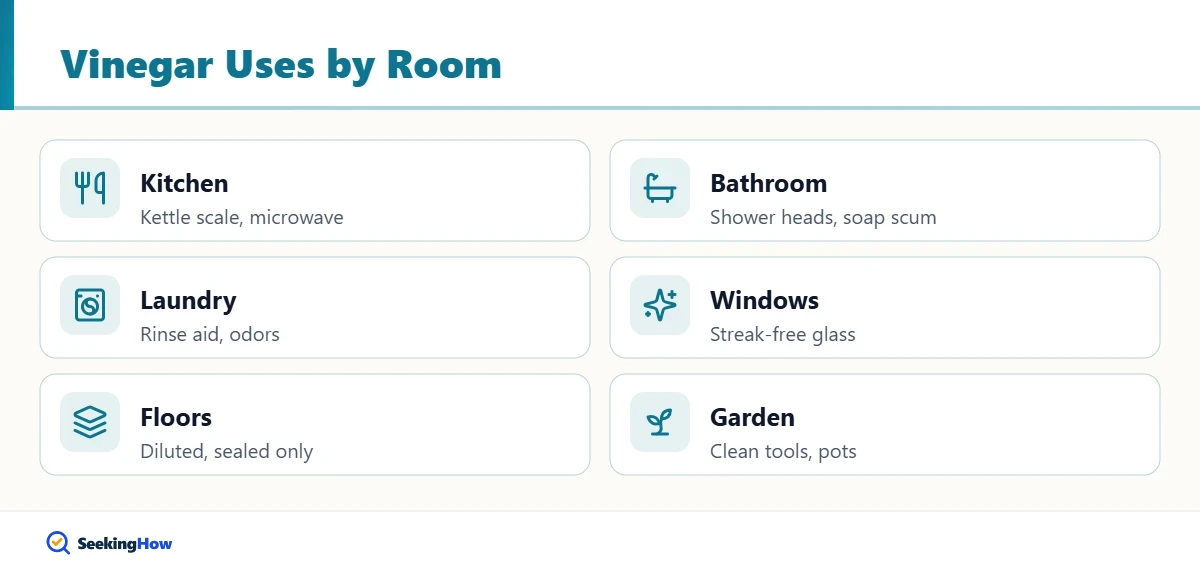
A gallon jug of distilled white vinegar is one of the cheapest, most versatile cleaners in the house. It is not magic, and it does not replace every product, but it outperforms many specialty sprays at specific tasks. Here are 20 uses that work, grouped by room, plus the surfaces where vinegar does more harm than good.
Why Does Vinegar Work So Well for Cleaning?
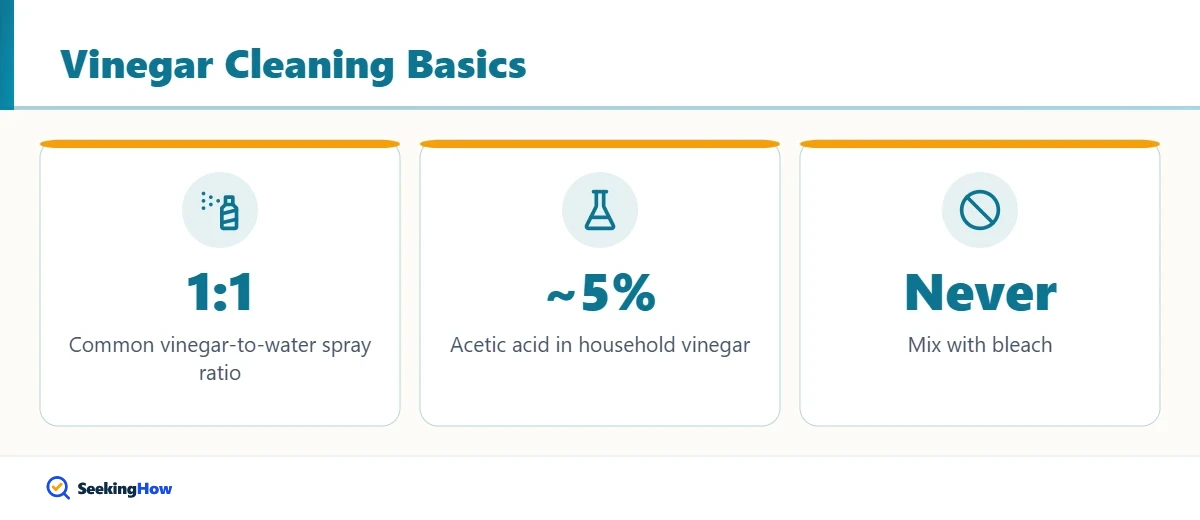
Household white vinegar is about 5% acetic acid. Acids dissolve alkaline buildup such as limescale (calcium carbonate), hard-water spots, and soap scum, which is why vinegar shines in kitchens and bathrooms. It also neutralizes some alkaline odors and evaporates without leaving streaks. Its weakness is grease and heavy grime, where dish soap or a degreaser works better.
Not sure which bottle to buy? This guide to white vinegar vs. distilled white vinegar explains the labels and acidity levels.
What Are the Best Vinegar Uses in the Kitchen?
- Descale a kettle: fill halfway with equal parts vinegar and water, bring to a boil, let it sit 30-60 minutes, then rinse and boil plain water once or twice.
- Clean a drip coffee maker: run a brew cycle with a 1:1 vinegar-water mix, pause halfway for 30 minutes, finish, then run two or three cycles of fresh water. Check your manufacturer’s manual first; some brands recommend their own descaler.
- Steam-clean the microwave: heat a bowl of 1 cup water and 2 tablespoons vinegar for about 5 minutes, let it stand with the door closed, then wipe softened splatters away.
- Remove hard-water film from glassware: soak cloudy glasses in warm vinegar for 15 minutes, then wash normally. If the cloudiness stays, it may be permanent etching.
- Deodorize the dishwasher: place a cup of vinegar upright on the top rack and run a hot empty cycle, unless the manual advises against it.
- Freshen cutting boards: wipe plastic boards with vinegar to cut odors after washing with soap and hot water. Use a proper sanitizer after raw meat.
- Clean the refrigerator: wipe shelves and door seals with a 1:1 vinegar-water solution to remove spills and smells.
How Can You Use Vinegar in the Bathroom?
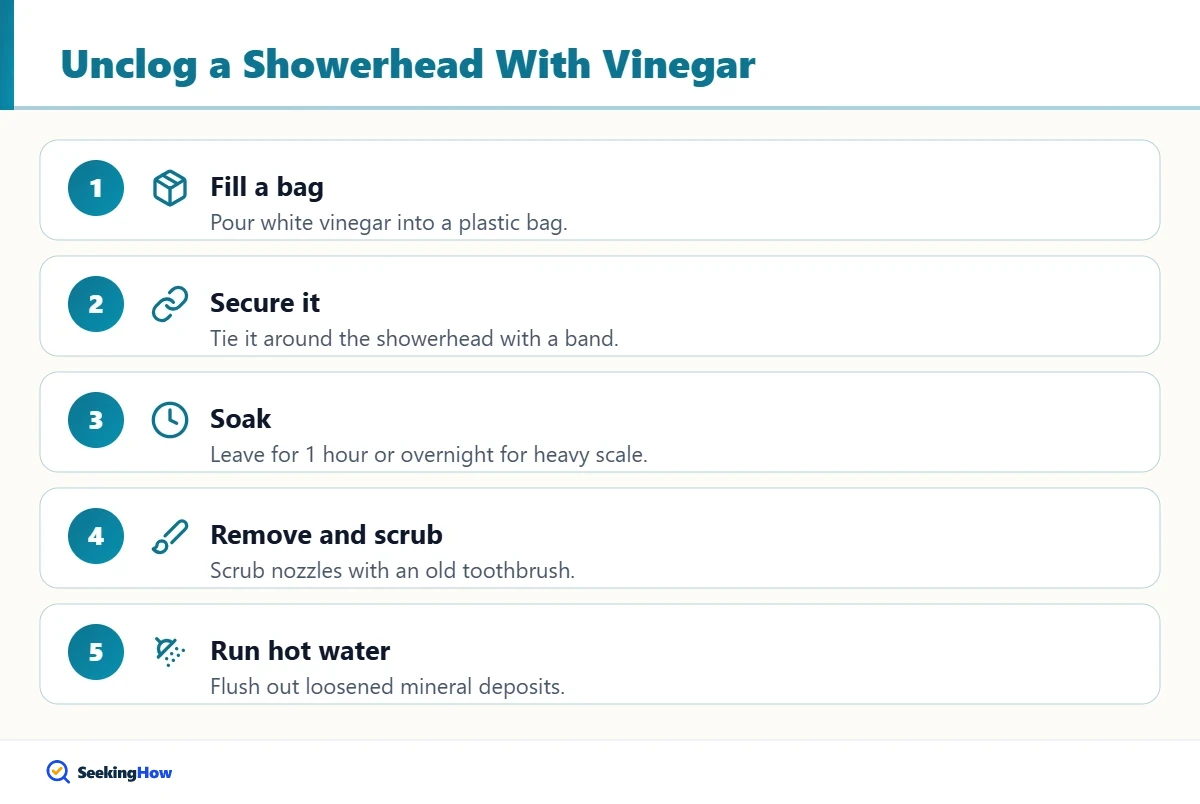
- Unclog a showerhead: fill a plastic bag with vinegar, secure it over the showerhead with a rubber band, soak for 1 hour to overnight, then run hot water. Skip long soaks on brass, nickel, or gold finishes.
- Cut soap scum on glass shower doors: spray warm vinegar, wait 15 minutes, scrub with a non-scratch sponge, and rinse.
- Remove faucet limescale: wrap the faucet base in a vinegar-soaked paper towel for 30 minutes, then wipe and dry.
- Brighten toilet bowl rings: pour 1-2 cups of vinegar into the bowl, let it sit for several hours, then scrub.
- Freshen slow drains: pour 1/2 cup baking soda followed by 1 cup vinegar, wait 15 minutes, and flush with hot water. It helps mild buildup, not true clogs; see how to unclog a bathtub drain for stubborn ones. The fizz is explained in why vinegar and baking soda react.
Which Vinegar Hacks Work for Laundry?
- Natural fabric softener: add 1/2 cup of vinegar to the rinse cycle or softener dispenser to help remove detergent residue. The smell disappears as clothes dry.
- Clean the washing machine: run a hot empty cycle with 2 cups of vinegar to cut odors and mineral buildup, following your manufacturer’s guidance.
- Remove musty smells from towels: wash with hot water and 1 cup of vinegar (no detergent), then rewash with detergent.
- Pre-treat deodorant marks: dab underarm areas with vinegar, let it sit 15 minutes, then wash.
Smart Vinegar Uses Around the House and Yard
- Streak-free windows and mirrors: spray a 1:1 vinegar-water mix and wipe with a microfiber cloth or newspaper.
- Erase ant trails: wipe ant paths with diluted vinegar to remove the scent trail they follow; combine with baits, as explained in how to get rid of ants in the house.
- Loosen light rust: soak small rusty tools or hardware in vinegar for a few hours to overnight, then scrub; see the fastest way to remove rust from metal.
- Remove sticker residue and hard-water spots on car windows: soak residue with vinegar for several minutes before wiping; this guide to removing sticky residue covers other options.
Tip: Warm vinegar works faster on scale and soap scum. Heat it briefly in a microwave-safe container until warm, not boiling, before spraying or soaking.
Where Should You Never Use Vinegar?
| Surface or item | Why to avoid vinegar | Use instead |
|---|---|---|
| Marble, granite, travertine, limestone | Acid etches and dulls stone | pH-neutral stone cleaner |
| Hardwood and waxed wood | Can dull or strip finishes | Manufacturer-approved wood cleaner |
| Unsealed grout | Erodes cement-based grout | Mild dish soap and water |
| Cast iron and some knives | Strips seasoning and pits metal | Hot water and a brush |
| Phone, TV, and laptop screens | Can damage anti-glare coatings | Screen cleaner or water on microfiber |
| Rubber seals and gaskets (long soaks) | Can degrade rubber over time | Short wipes only |
| Egg spills | Acid makes egg proteins coagulate | Cold water and soap |
Is Vinegar Safe to Use Around the House?
Household vinegar is safe when used sensibly. Its smell is strong but fades quickly with ventilation. The main hazards come from mixing it with other cleaners or using high-strength products.
Safety: Never mix vinegar with bleach, which releases toxic chlorine gas. Do not mix vinegar and hydrogen peroxide in one container, which creates corrosive peracetic acid. Cleaning vinegar (about 6%) and horticultural vinegar (20% or more) can irritate skin and eyes; wear gloves and keep them away from children and food.
Vinegar also is not a reliable disinfectant. For bathrooms during illness or surfaces touched by raw meat, use an EPA-registered disinfectant and follow the label contact time, as covered in how to use Lysol disinfectant spray.
What Is the Best Vinegar Cleaning Solution Ratio?
- Glass and general surfaces: 1 part vinegar to 1 part water.
- Light-duty floor cleaning (sealed vinyl, ceramic tile): about 1/2 cup vinegar per gallon of warm water.
- Mineral scale and soap scum: full-strength, preferably warm.
- Scented spray: add lemon peel or a few drops of essential oil to a bottle of diluted vinegar and let it steep for a week, keeping in mind some oils are unsafe for pets.
Frequently Asked Questions
What is vinegar best used for in cleaning?
Vinegar is best for dissolving mineral scale, hard-water spots, and soap scum, and for neutralizing odors. Typical jobs include descaling kettles and coffee makers, cleaning shower glass and faucets, unclogging showerheads, and streak-free window cleaning. It is weaker on grease than dish soap.
Does vinegar kill germs?
Vinegar can reduce some bacteria, but it is not registered by the EPA as a disinfectant and does not reliably kill many common germs. When you need to disinfect, such as after raw meat or during illness, use an EPA-registered product and follow its label contact time.
Can I use vinegar on hardwood floors?
It is best to avoid it. Vinegar can dull or break down the protective finish on many hardwood floors over time, and some flooring makers say not to use it. Use a cleaner approved by your floor manufacturer, or a slightly damp microfiber mop with plain water.
How long should vinegar sit to remove hard water stains?
Let vinegar sit for about 15 to 30 minutes on hard-water spots and soap scum, longer for heavy buildup. Wrapping a fixture in a vinegar-soaked paper towel keeps it wet. Warm vinegar works faster. Rinse and dry afterward to prevent new spots.
Does the vinegar smell go away?
Yes. Vinegar odor fades as it evaporates, usually within an hour with good ventilation. In laundry, the smell disappears as clothes dry. Adding citrus peels to a vinegar spray bottle can make the scent more pleasant while you clean.