
Quick Answer
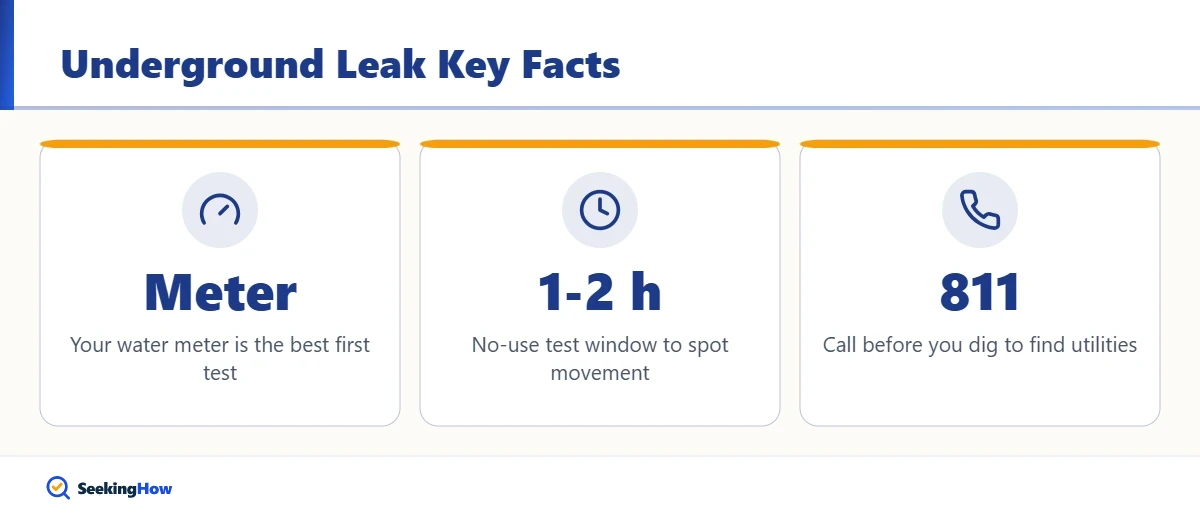
To tell if you have an underground water leak, turn off every faucet and water-using appliance, then watch your water meter’s low-flow indicator for 15-30 minutes. If it moves, water is escaping somewhere. Shut the house’s main valve and check again: if the meter still moves, the leak is most likely in the buried service line between the meter and your house.
Key Takeaways
- The water meter test is the fastest, free way to confirm a hidden leak.
- Closing the main shutoff valve tells you whether the leak is inside the house or in the buried line.
- Soggy patches, unusually green grass, low pressure and rising bills are the classic outdoor warning signs.
- Homeowners are usually responsible for the line from the meter to the house; the utility usually handles the street side.
- Confirmed underground leaks need a licensed plumber or leak detection service, not guesswork digging.
Underground leaks are called silent leaks because you rarely see or hear them. Water seeps into the soil for weeks or months while your bill climbs and the ground around your foundation softens. The good news: you can confirm a leak and narrow down its location in under an hour with nothing more than your water meter and a flashlight.
What Are the Signs of an Underground Water Leak?
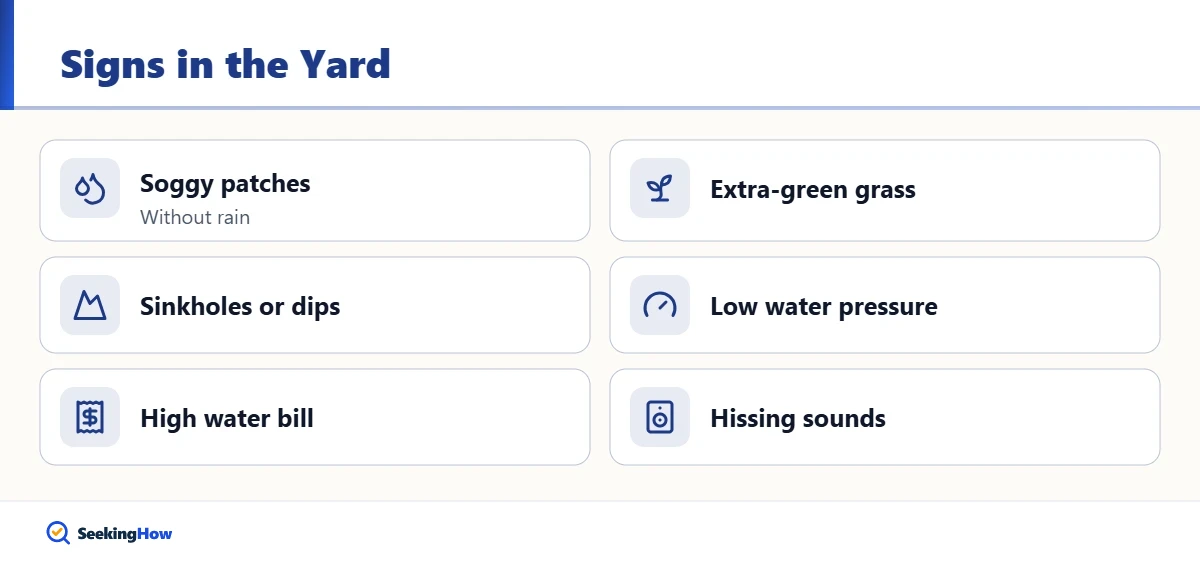
Most buried leaks announce themselves indirectly. Look for a cluster of these clues rather than one in isolation, since weather and irrigation can mimic a few of them.
- A higher water bill with no change in household habits, especially one that keeps rising month over month.
- Wet or spongy ground along the path between the meter (often near the curb) and the house, even in dry weather.
- A strip of greener, faster-growing grass over the service line route, or puddles that never seem to dry.
- Low water pressure at every fixture, not just one faucet.
- Hissing or running-water sounds near the meter box or where the line enters the house when nothing is on.
- Sinkholes, sunken pavers or cracks in driveways, walkways or slabs as soil washes away.
- Damp basement walls or foundation cracks on the side where the water line enters.
- Rusty or cloudy water, which can indicate a damaged pipe drawing in sediment.
Tip: Compare your current bill with the same month last year. Seasonal irrigation makes summer bills higher, so a year-over-year jump is a more reliable signal than a month-over-month one.
How Do You Check for an Underground Leak With Your Water Meter?
The meter test is the single most useful check because your meter records every drop that passes into your property. Plan for about 30-60 minutes, mostly waiting.
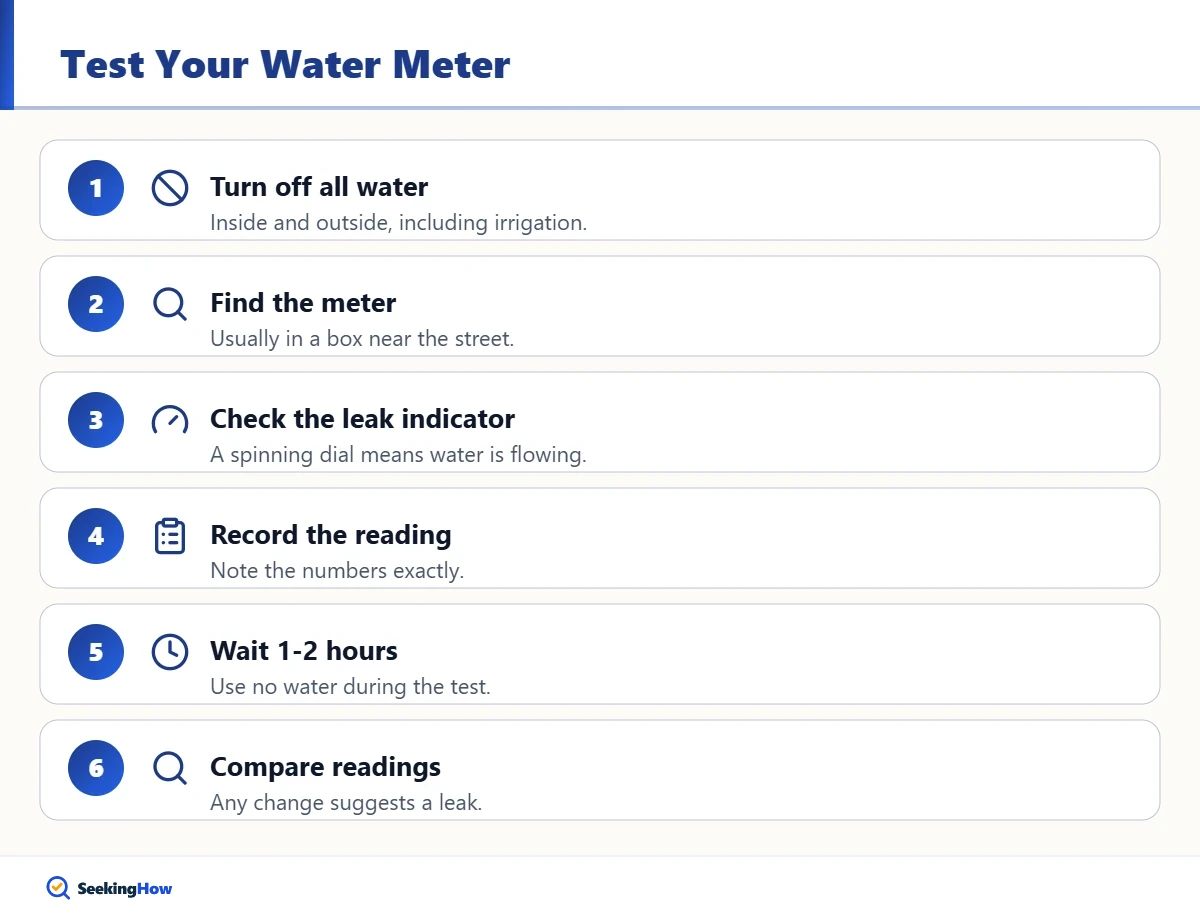
Step 1: Turn Off All Water Use
Close every faucet and make sure no one showers, flushes or runs the dishwasher or washing machine. Turn off the irrigation controller, ice maker, water softener regeneration and any pool autofill. The goal is zero intentional water use during the test.
Step 2: Find and Open the Meter Box
The meter is usually in a concrete or plastic box near the street or sidewalk; in cold climates it may be in the basement. Lift the lid with a screwdriver or meter key and wipe off the dial face. Watch for insects and standing water in the box.
Step 3: Watch the Low-Flow Indicator
Most meters have a small triangle, star or gear called the low-flow or leak indicator that spins with even a trickle. If it moves while nothing is running, water is leaving your system. Digital meters often show a dripping-faucet icon or a flow rate instead.
Step 4: Record a Reading and Wait
Write down the full meter reading or snap a photo, then wait 15-30 minutes without using water (a few hours is even better for slow leaks). Any change in the reading confirms a leak, and a larger change means a bigger leak.
Step 5: Close the Main Shutoff Valve
Shut the main valve where the water line enters the house, usually in the basement, crawlspace, garage or utility closet. Recheck the meter. If the indicator stops, the leak is inside the house (toilets, water heater, fixtures). If it keeps moving, the leak is between the meter and the shutoff, which means the buried service line.
Step 6: Rule Out Toilets and Irrigation
A running toilet is the most common hidden leak, so add a few drops of food coloring to each tank and wait 15 minutes; color in the bowl means a leaking flapper. Also inspect sprinkler valves and outdoor spigots, since irrigation lines are buried too and often leak at fittings.
How Do You Tell Whether the Leak Is Inside or Outside?
The main-valve test does most of the work, but these comparisons help you decide what to do next.
| What You Observe | Likely Location | Next Step |
|---|---|---|
| Meter stops when main valve is closed | Inside the house | Check toilets, water heater relief valve, fixtures, under-slab lines |
| Meter keeps moving with main valve closed | Service line (meter to house) | Call a plumber or leak detection service |
| Wet soil near the street or meter box | Utility side or meter connection | Call your water utility first |
| Leak only when irrigation is on | Sprinkler line or valve | Inspect zones and valve box |
| Warm spots on floor, meter moving | Hot-water line under slab | Call a plumber about a slab leak |
If you trace a problem to a fitting you can reach, such as an exposed connection in a crawlspace, our guide on fixing a leaking PVC joint without cutting covers temporary and permanent repairs. Leaks inside the house can also come from appliances; see why a washing machine leaks from the bottom.
How Do Professionals Find Underground Leaks?
Once you know the leak is in the buried line, pinpointing it takes equipment most homeowners do not own. Leak detection specialists and many plumbers use several non-invasive methods so they dig one small hole instead of trenching the whole yard.
- Acoustic listening devices amplify the sound of pressurized water escaping from a pipe.
- Ground microphones and correlators compare sounds at two points to calculate the leak’s position.
- Tracer gas (a harmless hydrogen-nitrogen mix) is pushed into the drained line and detected as it rises through the soil.
- Thermal imaging spots temperature differences, especially useful for hot-water slab leaks.
- Pipe locators map the route of the line before any digging starts.
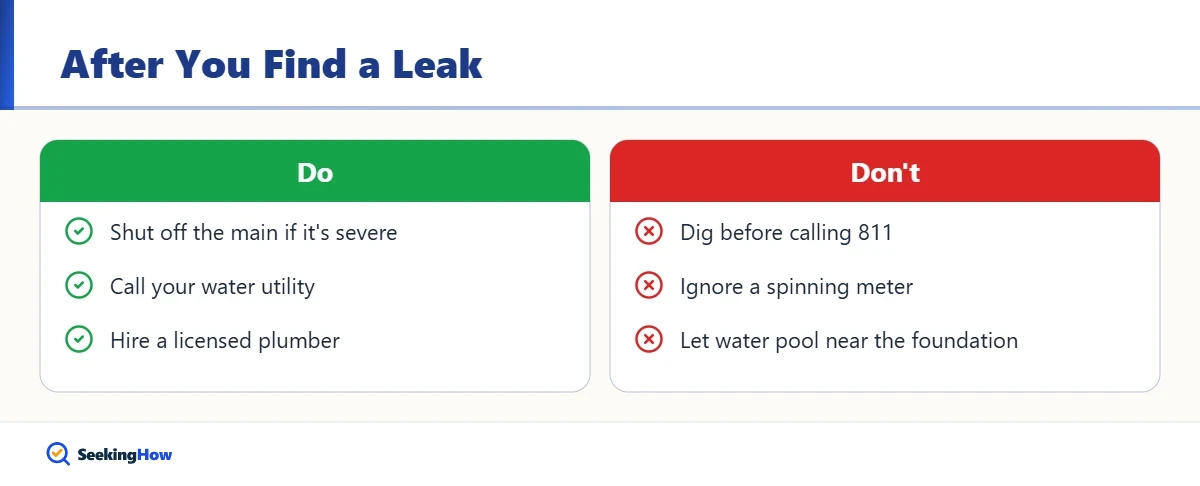
Safety: Before you dig anywhere in the US, call 811 or use your state’s 811 website so gas, electric and communication lines are marked. Hitting a buried gas or power line is dangerous and can be costly.
What Causes Underground Water Leaks?
Knowing the cause helps you judge whether a repair or a full line replacement makes more sense.
- Age and corrosion: Galvanized steel corrodes from the inside, and older copper can pit in aggressive water or soil.
- Tree roots: Roots seek moisture and can crack or crush lines and loosen joints.
- Ground movement: Freeze-thaw cycles, expansive clay soils and settling shift pipes and stress fittings.
- High water pressure: Pressure well above about 80 psi strains joints; a pressure-reducing valve protects the whole system.
- Poor installation: Shallow burial, rocks in the backfill or improper fittings shorten a line’s life.
- Construction damage: Digging for fences, landscaping or utility work can nick a pipe that fails later.
Drainage problems can mimic a supply leak by leaving soggy ground. If water pools near a downspout rather than along the service line, read how to unclog an underground gutter drain pipe.
Who Is Responsible for Fixing an Underground Leak?
In most US communities, the utility owns the water main and the pipe up to and including the meter, and the property owner owns the service line from the meter to the house. Rules vary by city, so call your utility, describe your meter test results and ask where their responsibility ends. Many utilities will check the meter and their side at no charge.
Some utilities offer a one-time leak adjustment on your bill once you show proof of repair, such as a plumber’s invoice. Ask about it before you pay the high bill in full.
What Should You Do After Confirming a Leak?
Act quickly, because a steady leak wastes water, can undermine soil under slabs and walkways, and may damage your foundation over time.
- Limit the damage: If the leak is large, close the curb stop or main valve between uses.
- Document everything: Photograph the meter readings, wet areas and bills for your utility and insurer.
- Call a licensed plumber: Ask about leak detection, spot repair versus replacement, and trenchless options such as pipe bursting or pulling new line.
- Check your insurance: Standard homeowners policies vary on service-line coverage; some insurers and utilities sell separate service-line protection.
- Watch the foundation: Persistent saturation near the house can contribute to cracking; our guide to repairing foundation cracks in concrete walls explains what to look for.
How Can You Prevent Underground Leaks?
- Install a pressure-reducing valve if your static pressure is high, and test pressure with an inexpensive hose-bib gauge.
- Plant trees well away from the service line route.
- Read the meter monthly at a time when no water is in use, so you catch a new leak early.
- Consider a smart water monitor or automatic shutoff valve that alerts you to continuous flow.
- When an old galvanized line starts leaking repeatedly, budget for replacement with copper or PEX rather than repeated patches.
When to call a professional: If the meter test shows a leak in the service line, you see a sinkhole, or water is entering your basement or crawlspace, call a licensed plumber promptly. Leave anything on the street side of the meter to your water utility.
Frequently Asked Questions
How much water does an underground leak waste?
It depends on the size of the break. A slow seep may waste a few gallons a day, while a cracked service line can lose hundreds of gallons daily. Your water meter is the best gauge: record readings an hour apart with no water in use to see your actual loss rate.
Can an underground water leak fix itself?
No. Pressurized water keeps escaping and usually enlarges the opening by eroding soil and pipe material. Leaks tend to get worse over time, and the washed-out soil can create voids under walkways or slabs, so repair is needed once a leak is confirmed.
Does homeowners insurance cover an underground water line leak?
Coverage varies. Many standard policies exclude wear-and-tear failures of the service line itself but may cover sudden damage to the house. Some insurers and utilities sell separate service-line coverage. Read your policy and call your agent before repairs start.
Can a water leak cause a high bill without visible water?
Yes. Water from a buried line can drain into gravel, sandy soil or storm drains without surfacing, so the yard may look normal. A meter test with all fixtures off is the reliable way to confirm a hidden leak behind a high bill.
How long does it take to repair an underground water line?
A straightforward spot repair can often be done in a day once the leak is located. Full service-line replacement may take one to several days depending on length, depth, soil, permits and whether trenchless methods are used.