Quick Answer
Tape cannot permanently cure a hammertoe, but it can ease pain and gently hold a flexible hammertoe straighter. Use 1/2-inch medical or kinesiology tape: buddy-tape the bent toe to its neighbor, or run an over-under strip that pulls the toe down and flat. Re-tape daily on clean, dry skin. Rigid hammertoes, diabetes or poor circulation need a podiatrist instead.
Key Takeaways
- Taping helps flexible hammertoes, the kind you can still straighten with your fingers; it does not correct rigid ones.
- Buddy taping and over-under taping are the two most common at-home methods.
- Pair taping with roomy shoes, toe exercises and padding for the best symptom relief.
- Check your skin every day; stop if you see blisters, color changes, numbness or swelling.
- People with diabetes, neuropathy or circulation problems should not tape toes without medical advice.
A hammertoe is a toe, usually the second, third or fourth, that bends downward at its middle joint and rises in the center like a hammer. Early on, the joint is still flexible, and that is when simple measures like taping, padding and better shoes help most. This guide shows you how to tape a hammertoe correctly, what results to expect, and when it is time to see a foot specialist.
Medical disclaimer: This article is for general information and is not medical advice. Talk to a podiatrist or doctor before taping toes, especially if you have diabetes, peripheral neuropathy, poor circulation, a skin condition or an open sore on your foot.
Can You Really Fix a Hammertoe With Tape?
Tape works as a temporary splint. It holds a flexible toe in a straighter position while you wear it, which can reduce rubbing on the top of the joint, ease pressure on the tip of the toe, and relieve pain in tight shoes. It may also help prevent a flexible toe from stiffening further when combined with stretching and roomy footwear.
What tape cannot do is reshape a joint that has already become fixed. Once tendons and the joint capsule tighten and the toe no longer straightens by hand, the deformity is rigid, and only a podiatrist or orthopedic foot surgeon can correct it.
| Type | How it feels | Does taping help? |
|---|---|---|
| Flexible hammertoe | You can straighten the toe with your fingers | Yes, for comfort and positioning |
| Semi-rigid hammertoe | Straightens partly, with resistance | Sometimes; ask a podiatrist |
| Rigid hammertoe | Will not straighten by hand | No; may cause pressure sores |
| Mallet toe | Bends at the joint nearest the nail | Padding helps more than tape |
| Claw toe | Bends at both toe joints, often several toes | Limited; get evaluated |
What Causes Hammertoe?
Hammertoe develops from a muscle and tendon imbalance that pulls the middle joint up and the tip down. Common contributors include:
- Shoes with a narrow, pointed toe box or high heels that push toes forward
- A second toe longer than the big toe
- Bunions crowding the smaller toes
- Arthritis or a past toe injury
- Nerve or muscle conditions, including diabetic neuropathy
- Family foot shape
What Do You Need to Tape a Hammertoe?
- Hypoallergenic medical tape or kinesiology tape, about 1/2 inch (12 mm) wide
- Small scissors with rounded tips
- Rubbing alcohol or soap and water to clean the skin
- Gauze or a thin cotton pad to place between toes
- Optional: gel toe cushion or hammertoe crest pad
How Do You Tape a Hammertoe?
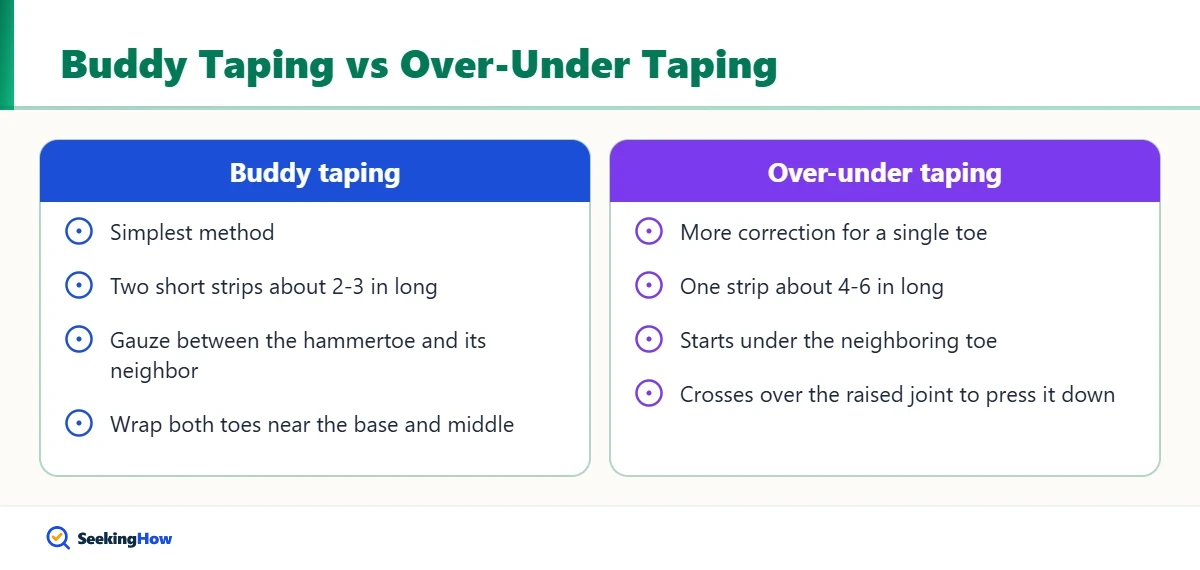
Choose one of the two methods below. Buddy taping is simplest; over-under taping gives more correction for a single toe.
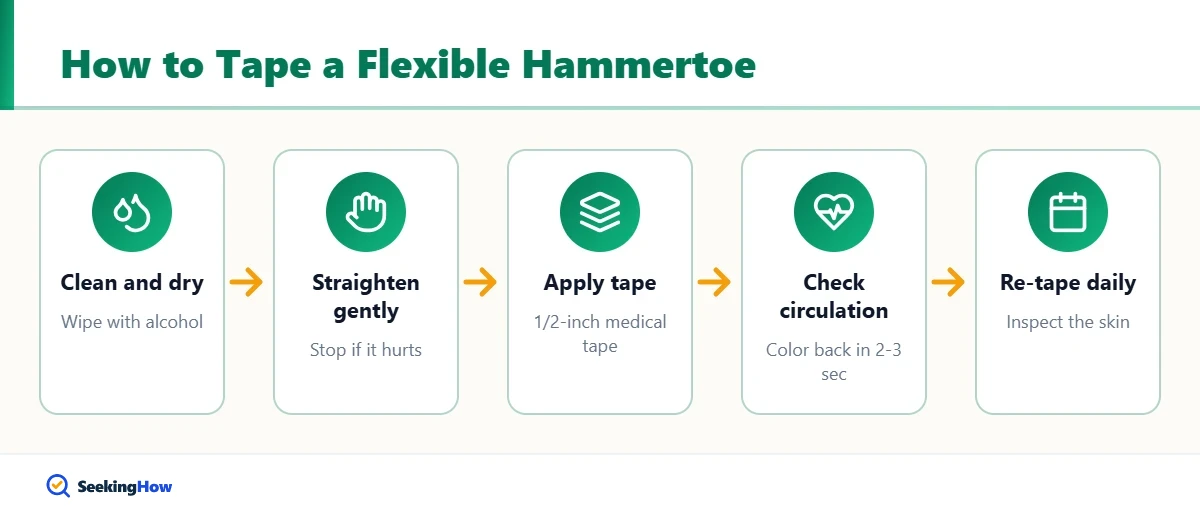
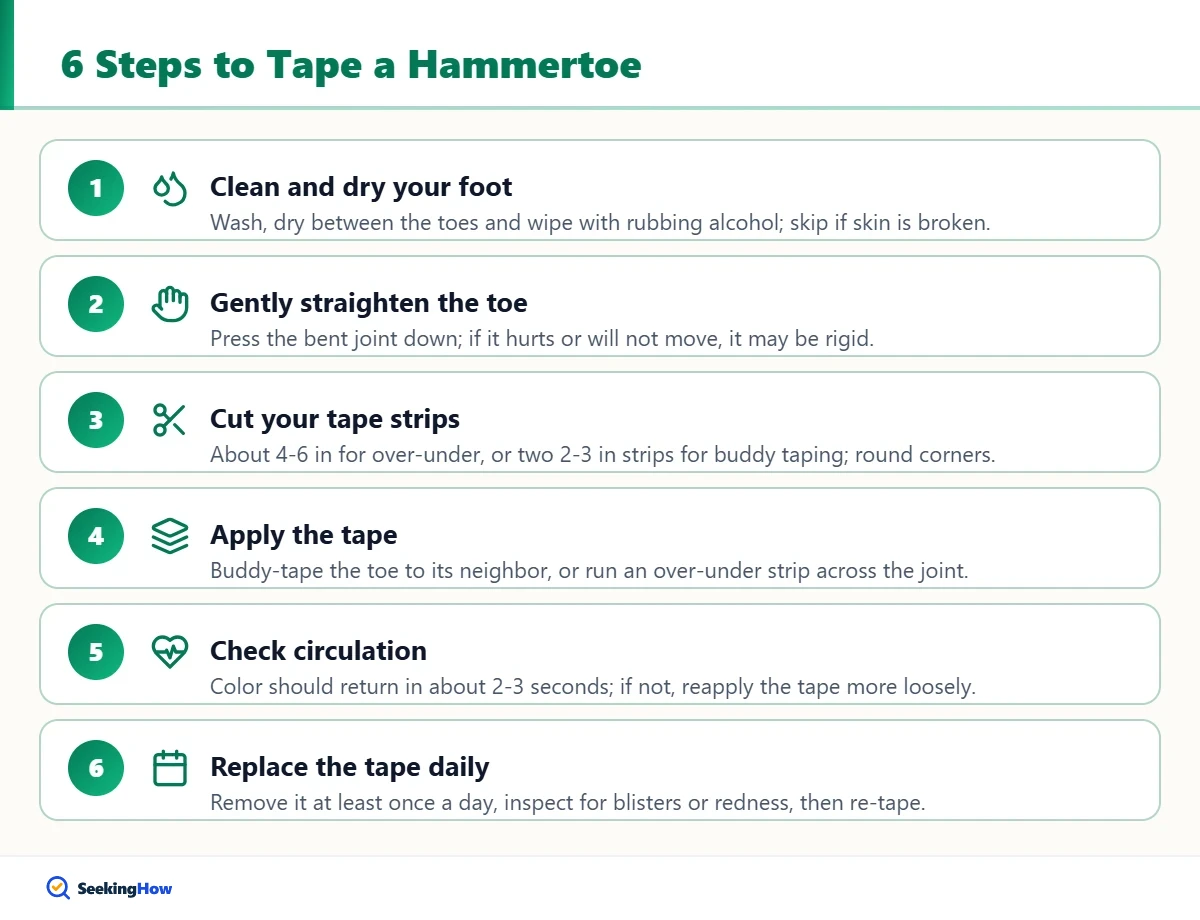
Step 1: Clean and Dry Your Foot
Wash your foot, dry it completely, especially between the toes, and wipe the skin with a little rubbing alcohol so the tape sticks. Trim your toenails if they are long. Skip taping if the skin is broken, red or irritated.
Step 2: Gently Straighten the Toe
Sit with your foot flat on the floor and gently press the bent joint down until the toe lies as flat as it comfortably goes. If this hurts or the toe will not move, stop: your hammertoe may be rigid and should be evaluated.
Step 3: Cut Your Tape Strips
Cut a strip about 4-6 inches long for over-under taping, or two short strips about 2-3 inches long for buddy taping. Round the corners with scissors so the edges do not peel.
Step 4: Apply the Tape
Buddy taping: place a small piece of gauze between the hammertoe and its straighter neighbor, then wrap one strip around both toes near the base and one near the middle, snug but not tight. Over-under taping: start the strip under the neighboring toe, cross over the top of the hammertoe’s raised joint to press it down, and finish under the toe on the other side, smoothing the tape onto the sole.
Step 5: Check Circulation and Comfort
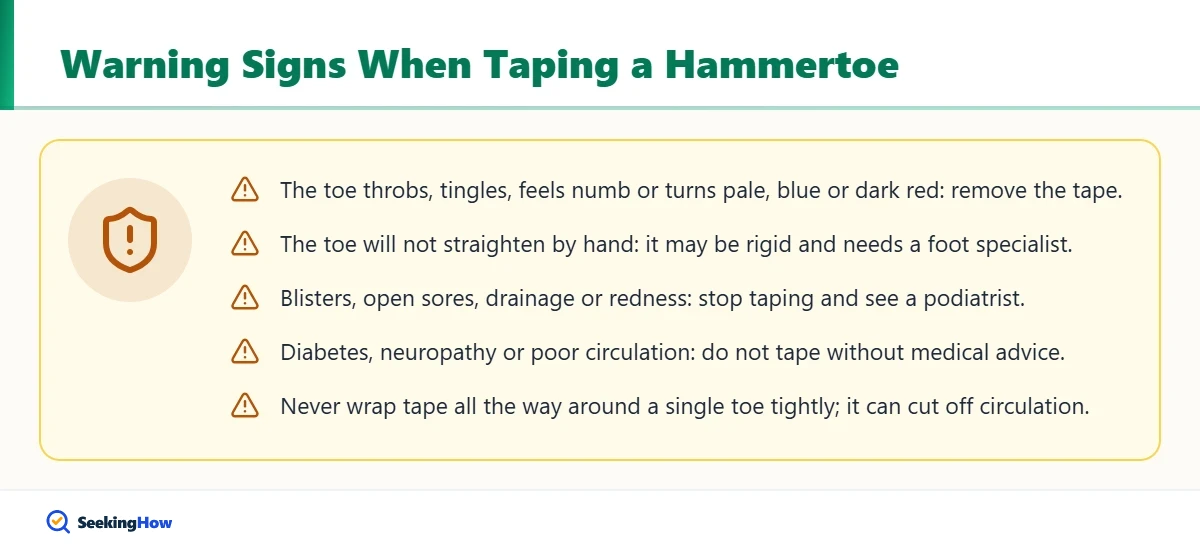
Press the tip of the toe; color should return within about 2-3 seconds. The toe should not throb, tingle, feel numb or turn pale, blue or dark red. If any of these happen, remove the tape and reapply it more loosely.
Step 6: Replace the Tape Daily
Remove the tape at least once a day, ideally after a shower when the adhesive is softer. Let the skin breathe, inspect it for blisters or redness, and reapply fresh tape. Many people tape during the day in shoes and leave toes free at night.
Safety: If you have diabetes or reduced feeling in your feet, you may not notice a blister or pressure sore forming under tape. Small wounds on diabetic feet can become serious infections. Ask your podiatrist before taping and check your feet daily.
What Else Helps a Hammertoe Besides Tape?
Taping works best as part of a broader routine. These conservative measures are commonly recommended by foot specialists for flexible hammertoes:
- Roomy shoes: choose a deep, wide toe box with about 1/2 inch of space beyond your longest toe, and keep heels low, ideally 2 inches or less.
- Padding: non-medicated gel or felt pads over the raised joint reduce rubbing. Avoid medicated corn pads containing salicylic acid, which can burn healthy skin.
- Toe splints and crest pads: reusable devices that sit under the toes and lift them, an alternative if tape irritates your skin.
- Orthotics: over-the-counter or custom inserts can rebalance pressure on the forefoot.
- Ice and over-the-counter pain relievers: for flare-ups, if they are safe for you.
Toe Exercises to Try Daily
- Towel curls: place a towel flat on the floor and scrunch it toward you with your toes, 10-15 times.
- Marble pickups: pick up 10-20 marbles one at a time with your toes and drop them in a cup.
- Manual toe stretch: gently pull the affected toe straight and hold for 20-30 seconds, 3-5 times.
- Toe spreads: spread all toes wide and hold for 5 seconds, 10 times.
Foot mechanics affect the whole chain above them. If long days on your feet also leave you sore higher up, our guide on how to reduce back pain covers posture and footwear habits that help.
What Mistakes Should You Avoid When Taping?
- Wrapping the tape all the way around a single toe tightly, which can cut off circulation.
- Taping over damp skin, which leads to maceration and blisters. If your shoes get wet, see our tips on drying shoes safely before wearing them again.
- Leaving the same tape on for several days.
- Forcing a stiff toe flat with tape.
- Taping and then squeezing into tight, pointed shoes, which undoes the benefit.
When Should You See a Podiatrist?
Book an appointment if the toe has become stiff, if pain keeps you from walking comfortably, if corns or calluses keep returning, or if you see open sores, drainage or redness. Seek care promptly if you have diabetes or poor circulation and notice any foot wound, since circulation problems are also linked to conditions like high blood pressure; our guide on how to reduce blood pressure covers healthy habits that support blood flow.
A podiatrist can confirm the type of toe deformity, recommend splints, custom orthotics or tendon stretching, and discuss surgical options such as tendon release or joint fusion for rigid hammertoes when conservative care is not enough.
Frequently Asked Questions
How long does it take to straighten a hammertoe with tape?
Tape does not permanently straighten a hammertoe, so there is no set timeline. It holds a flexible toe straighter while you wear it and can ease pain within days. Combined with roomy shoes and daily toe exercises over several weeks, it may help keep a flexible toe from stiffening.
Should I tape my hammertoe at night?
Many people tape during the day in shoes and leave the toes untaped at night so the skin can breathe. Some podiatrists recommend night splints instead. If you do tape overnight, keep it loose and check your skin and circulation each morning.
What kind of tape is best for hammertoe?
Hypoallergenic medical paper or cloth tape, or kinesiology tape, about half an inch wide, works well. Kinesiology tape is stretchy and comfortable for active days. Avoid duct tape or electrical tape, which can irritate and damage skin.
Do hammertoe straighteners and splints work?
Splints, crest pads and toe straighteners can relieve pressure and pain from flexible hammertoes, much like tape. They are reusable and may be gentler on sensitive skin. They do not correct a rigid toe, and they should never cause pain, numbness or skin breakdown.
Can a hammertoe go back to normal?
A flexible hammertoe caught early may improve in position and comfort with better shoes, exercises and splinting, but the tendency often remains. A rigid hammertoe will not return to normal on its own. A podiatrist can discuss surgery if pain persists.