Quick Answer
To fix the gap under a fence gate, first find the cause: a sagging gate, eroded ground, or a gate hung too high. Then close the gap by screwing a pressure-treated board or rubber gate sweep to the bottom, or raising the ground with compacted gravel, pavers or a concrete strip. Leave about 1-2 inches of clearance so the gate still swings. Most fixes take 1-3 hours.
Key Takeaways
- Diagnose before you fix: sagging, erosion and a high install each need a different repair.
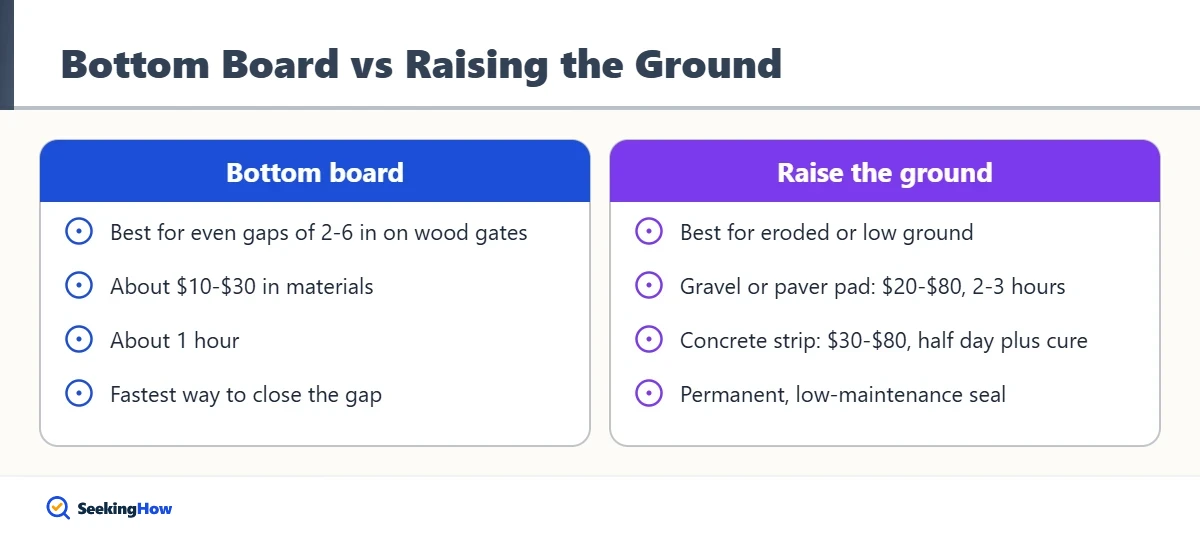
- A bottom board (kickboard) or flexible rubber sweep is the fastest way to close a gap of 2-6 inches.
- Raising the ground with gravel, pavers or a concrete threshold gives a permanent, low-maintenance seal.
- An anti-sag cable kit and hinge adjustment fix gates that drag on one side and gap on the other.
- Keep 1-2 inches of clearance so the gate clears ground swells, snow and seasonal wood movement.
A gap under a fence gate lets dogs slip out, invites rabbits, raccoons and stray animals in, and looks unfinished. The good news is that it is one of the easiest fence repairs you can do with basic tools. This guide walks you through diagnosing the gap, the main fix options, and a step-by-step repair for wood, vinyl and metal gates.
Why Is There a Gap Under My Fence Gate?
Most gate gaps come from one of three causes. Identifying yours keeps you from fixing the symptom while the real problem keeps getting worse.
- The gate was hung high on purpose. Installers often leave 2-4 inches so the gate clears uneven ground. On sloped walkways the gap can be much bigger on the low side.
- The ground eroded or settled. Rain runoff, foot traffic and digging pets wash soil away from the gate opening over time.
- The gate sagged. Loose hinge screws, a leaning hinge post or a gate without diagonal bracing makes the latch side drop, leaving a wedge-shaped gap on the hinge side.
Hold a level against the gate’s top rail and measure the gap at both ends. An even gap points to height or ground issues; an uneven, wedge-shaped gap points to sag.
What Is the Best Way to Fix a Gap Under a Gate?
Pick the method that matches your gap size and cause. Many homeowners combine two, such as fixing sag first and then adding a bottom board.
| Fix | Best for | Typical cost | Time |
|---|---|---|---|
| Bottom board (kickboard) | Even gaps of 2-6 in on wood gates | $10-$30 | 1 hour |
| Rubber or brush gate sweep | Uneven ground, gates that must clear bumps | $15-$40 | 30 min |
| Gravel or paver pad | Eroded or low ground | $20-$80 | 2-3 hours |
| Concrete threshold strip | Permanent seal, digging dogs | $30-$80 | Half day plus cure |
| Anti-sag kit and hinge adjustment | Wedge-shaped gaps from sagging | $15-$35 | 1 hour |
| Welded wire dig barrier | Pets digging under the gate | $20-$50 | 1-2 hours |
Costs are typical U.S. hardware-store prices for materials only and vary by region and gate size.
What Tools and Materials Do You Need?
- Tape measure, 2-foot level and pencil
- Cordless drill/driver with bits
- Circular saw or handsaw
- Pressure-treated board (1×6 or 1×8) or a composite board
- Exterior screws (coated deck screws or stainless steel), 1-1/4 to 2 inches
- Rubber gate sweep or brush strip, if using
- Anti-sag gate kit (steel cable and turnbuckle), if the gate sags
- Paver base or crushed gravel and a hand tamper, if raising the ground
How Do You Fix the Gap Under a Fence Gate Step by Step?
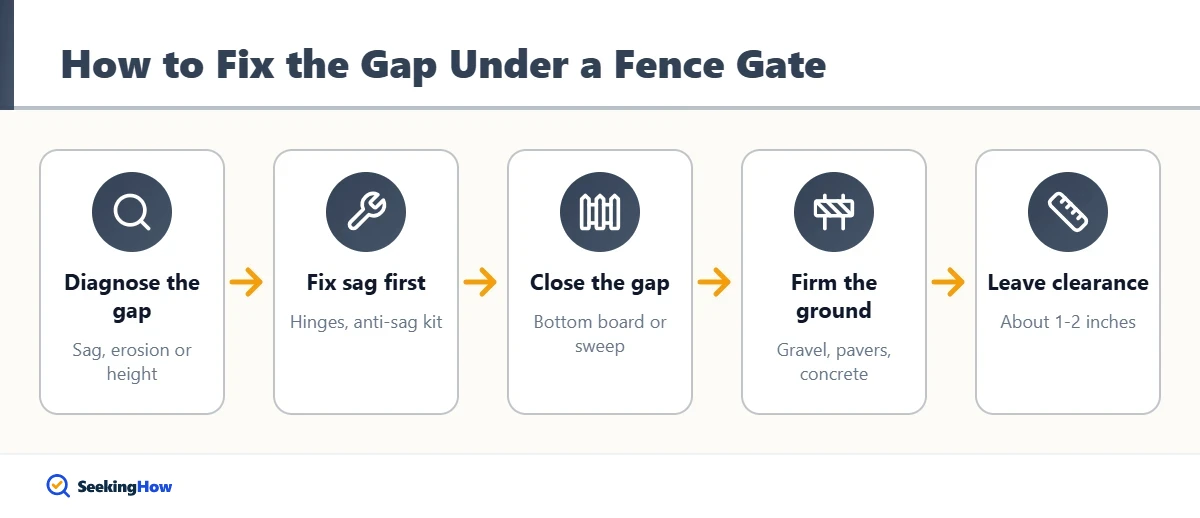
These steps cover the most common repair: correcting sag, then adding a bottom board and, if needed, building up the ground.
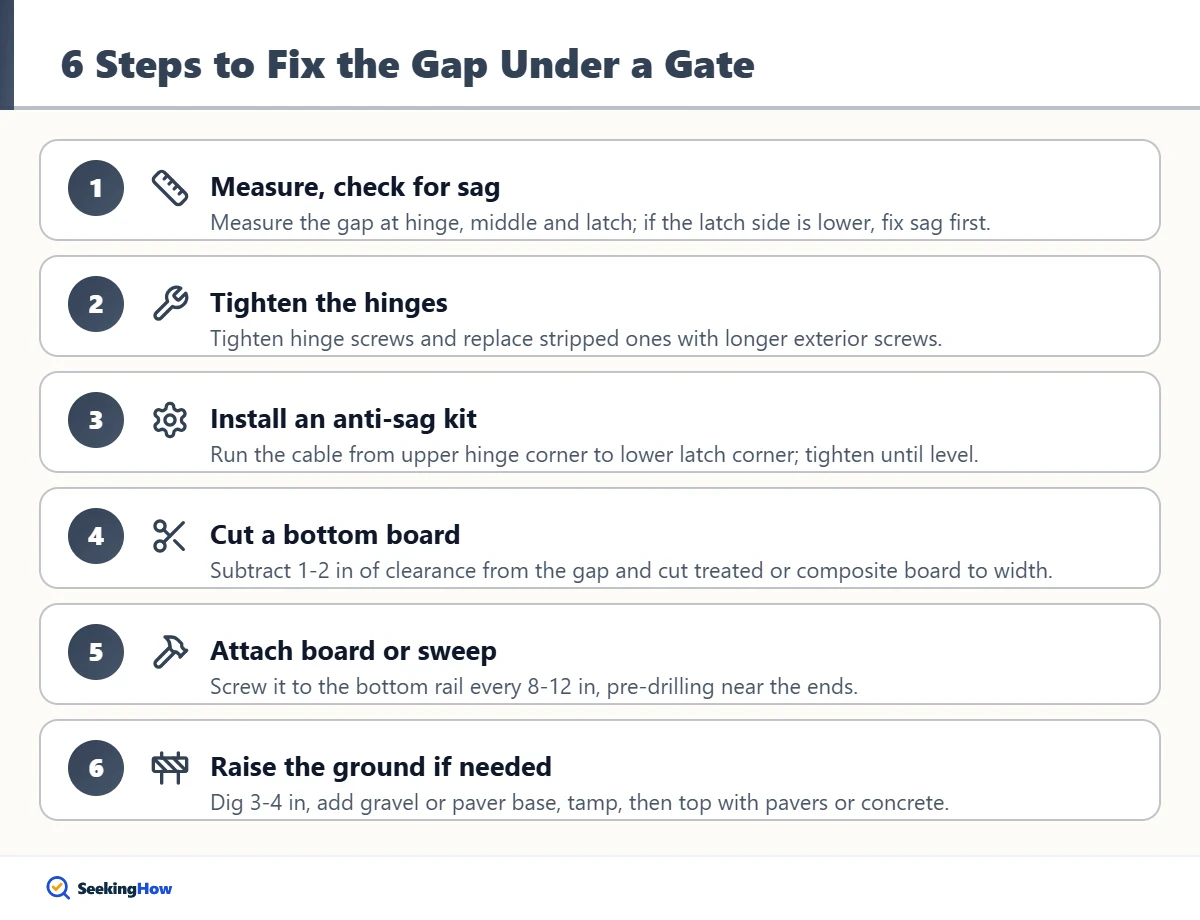
Step 1: Measure the Gap and Check for Sag
Close the gate and measure from the bottom of the gate to the ground at the hinge side, middle and latch side. Check the top rail with a level. If the latch side is lower, fix the sag first, because any board you add will otherwise drag.
Step 2: Tighten or Re-Set the Hinges
Tighten all hinge screws. Replace stripped ones with longer exterior screws (3 inches into the post is common) or move the hinge slightly to fresh wood. If the hinge post itself leans, it needs resetting in concrete before any other fix will last.
Step 3: Install an Anti-Sag Kit
Attach the cable kit’s top bracket at the upper hinge-side corner and the bottom bracket at the lower latch-side corner. Tighten the turnbuckle until the gate is level and the latch lines up. Do not overtighten, or you can rack the frame the other way.
Step 4: Cut a Bottom Board to Size
Subtract 1-2 inches of clearance from your measured gap to get the board height. Cut a pressure-treated or composite board to the full width of the gate, ripping it narrower if needed. On sloped ground, scribe the board to follow the slope at the gate’s swing path.
Step 5: Attach the Board or Sweep
Screw the board to the inside face of the gate’s bottom rail or pickets every 8-12 inches with exterior screws, pre-drilling near the ends to avoid splitting. For a sweep, screw the rubber or brush strip along the bottom so it just touches the ground. Swing the gate through its full arc to check clearance.
Step 6: Raise or Firm Up the Ground if Needed
If a gap remains or the soil keeps washing out, dig 3-4 inches deep under the gate’s closed position, add crushed gravel or paver base, and tamp it firm. Top with pavers or a narrow concrete strip set just below the gate. Slope it slightly so water runs away from the opening.
Tip: If runoff from a downspout is washing out the gate opening, redirect it. Our guide to unclogging an underground gutter drain pipe helps if a buried drain is backing up and spilling water there.
How Do You Stop a Dog From Getting Under a Gate?
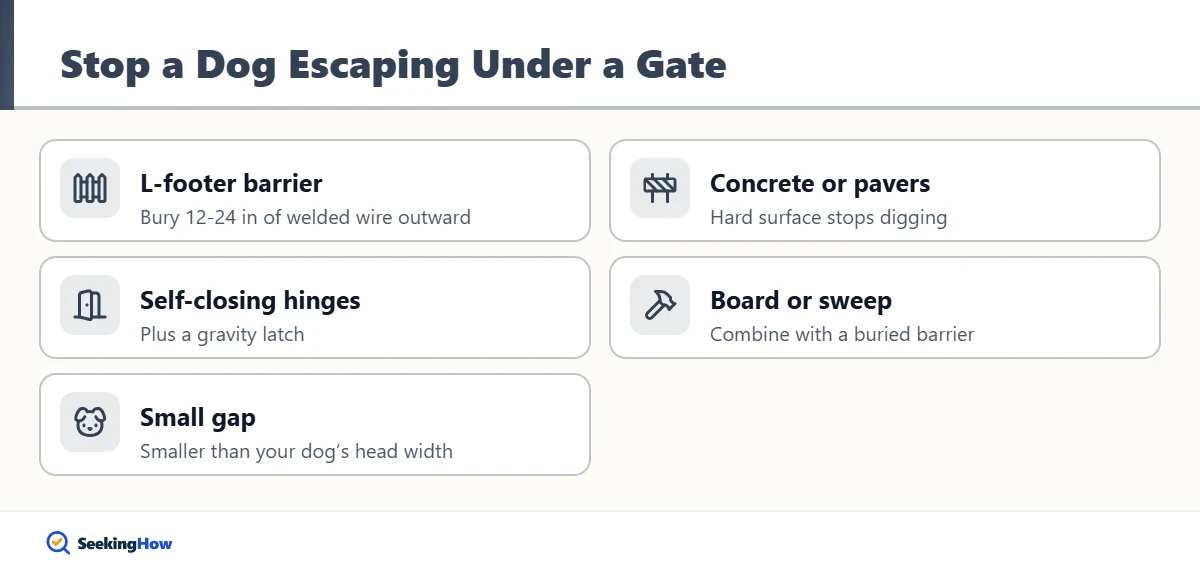
Dogs can squeeze through surprisingly small gaps and will dig to widen them. For a dog-proof gate, combine a bottom board or sweep with a buried barrier:
- L-footer barrier: bury 12-24 inches of galvanized welded wire flat under the soil, extending outward from the gate line, so digging hits wire.
- Concrete or pavers: a hard surface under the gate stops digging completely.
- Self-closing hinges and a gravity latch: a gate left ajar is a bigger escape risk than a gap.
As a general rule, keep the gap smaller than your dog’s head width; for small breeds that can mean 2 inches or less.
How Do You Fix the Gap on Vinyl or Metal Gates?
Vinyl gates usually have an aluminum-reinforced bottom rail. Avoid screwing boards directly to the vinyl face; instead, use a rubber sweep with adhesive and a few stainless screws into the rail, or fix the ground. Vinyl gate sag is usually corrected with the manufacturer’s adjustable hinges.
Metal and chain-link gates can take a rubber sweep fastened with stainless self-tapping screws or zip-tied through the mesh. Chain-link gates also accept tension bars and a bottom tension wire. For welded steel, a strip of flat bar can be bolted on, and adjustable hinges correct most sag.
If a hinge screw head strips while you work, see our guide on removing a stripped Allen screw for extraction techniques that also apply to stubborn hinge hardware.
What Mistakes Should You Avoid?
- Closing the gap completely. Wood swells and frost heaves ground; zero clearance means a gate that sticks.
- Using untreated wood near the ground. It rots within a few seasons. Use pressure-treated lumber rated for ground contact or composite.
- Adding weight to a sagging gate. A heavy bottom board makes sag worse unless the gate is braced.
- Ignoring drainage. Filling an eroding spot without redirecting water just washes away the new fill.
- Interior screws. Plain steel screws rust and stain; use coated or stainless exterior fasteners.
When Should You Call a Professional?
Call a fence contractor if the hinge post is rotted, cracked or leaning badly, if the gate is very large or a double drive gate, or if the opening needs a new concrete footing. If you plan to dig more than a few inches, call 811 in the U.S. a few days ahead so underground utilities are marked first.
Frequently Asked Questions
How much gap should be under a fence gate?
Most wood and vinyl gates need about 1 to 2 inches of clearance so they swing freely over uneven ground, frost heave and seasonal wood swelling. Gates on sloped ground or in snowy areas may need more on the low side; a flexible rubber sweep can seal that extra space.
Can I put a rubber seal under a gate?
Yes. Rubber or brush gate sweeps are designed for this. Screw them along the bottom of the gate so they just touch the ground. They flex over bumps, block small animals and work on wood, vinyl and metal gates, though digging dogs can still get under them.
Why does my gate drag on the ground on one side?
A gate that drags on the latch side is usually sagging. Common causes are loose hinge screws, a leaning hinge post, or a frame without diagonal bracing. Tighten or reposition the hinges, install an anti-sag cable kit, and reset the post in concrete if it leans.
What do you put under a gate to stop dogs digging?
Pavers, a concrete strip or a buried welded wire barrier stop digging most reliably. Lay galvanized wire flat under the soil, extending 12 to 24 inches outward, so digging hits metal. Large rocks or a gravel trench help too but are less secure for determined diggers.