Quick Answer
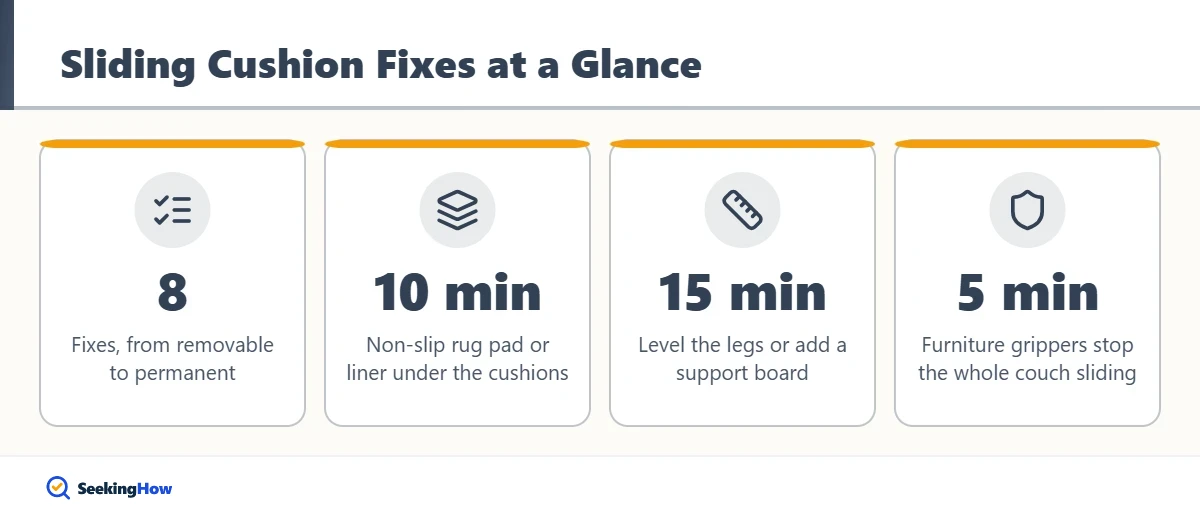
To stop couch cushions from sliding, cut a non-slip rug pad or rubber shelf liner to fit under each seat cushion, which adds grip in about 10 minutes. For stubborn slipping, add adhesive hook-and-loop strips between the cushion and the deck, or sew on upholstery ties. Also level the couch, fix a sagging or sloped seat deck, and stop the couch itself from sliding with rubber furniture grippers.
Key Takeaways
- Non-slip rug pad under the cushions is the cheapest, fastest and fully reversible fix.
- Hook-and-loop strips give the strongest hold on loose seat cushions.
- Slippery fabrics like leather, microfiber and polyester slide the most.
- A sagging deck or a couch tilted forward pushes cushions out; fix the cause, not just the symptom.
- Test adhesives on a hidden spot, especially on leather.
Few things are more annoying than tugging cushions back into place every time someone stands up. Cushions slide because of slick fabric, a smooth deck, gravity from a tilted seat, or worn support underneath. The fixes below start with quick, renter-friendly options and move to more permanent ones.
Why Do Couch Cushions Keep Sliding?
- Slick materials: leather, faux leather, microfiber and tightly woven polyester have little friction against the deck.
- Forward-sloping seat: many sofas pitch slightly back, but worn legs, uneven floors or a sagging frame can tilt the seat forward.
- Sagging deck or springs: when the middle sinks, cushions slide into the dip and out at the front.
- Compressed foam: flattened cushions are lighter and lose the snug fit against the arms and back.
- Movement: kids, pets and people flopping onto the couch push cushions forward.
Which Fix Is Right for Your Couch?
| Fix | Best for | Permanence | Time |
|---|---|---|---|
| Non-slip rug pad or shelf liner | Most fabric and leather couches | Removable | About 10 minutes |
| Hook-and-loop strips | Loose seat cushions that slide a lot | Semi-permanent | About 20 minutes plus cure time |
| Upholstery ties | Removable cushion covers | Semi-permanent | About 30 minutes |
| Cushion support board | Sagging decks | Removable | About 15 minutes |
| Level the legs | Tilted couches, uneven floors | Permanent | About 15 minutes |
| Furniture grippers | Whole couch sliding on hard floors | Removable | About 5 minutes |
How Do You Stop Couch Cushions From Sliding? 8 Fixes
Method 1: Put a Non-Slip Rug Pad Under the Cushions
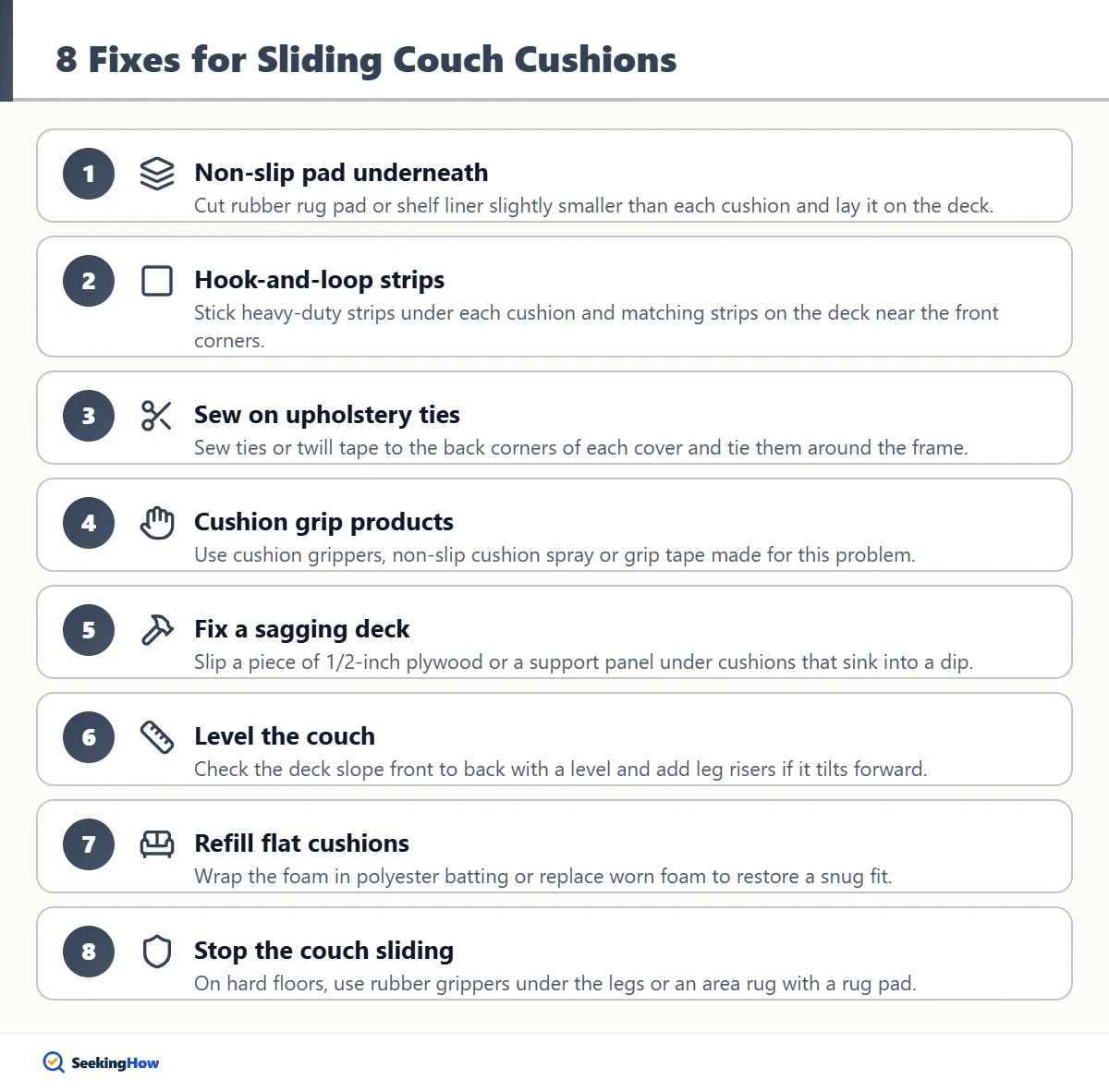
Buy a rubber or felt-and-rubber rug pad, or grippy shelf and drawer liner, and cut a piece slightly smaller than each seat cushion. Lay it on the deck and set the cushion on top. The grip between the two surfaces stops most sliding, it is invisible, and it comes out for cleaning.
Method 2: Add Hook-and-Loop Strips
Stick heavy-duty adhesive hook-and-loop strips to the underside of each cushion and matching strips to the deck, near the front corners. For removable cushion covers, sew-on strips last longer than adhesive ones. Let adhesive cure for the time on the package before sitting on the couch.
Method 3: Sew On Upholstery Ties
Sew fabric ties or twill tape to the back corners of each cushion cover and tie them around the frame or to loops stitched onto the deck. This is how many manufacturers secure cushions, and it works well on couches where adhesive will not stick.
Method 4: Use Cushion Grip Products
Couch cushion grippers, non-slip cushion spray and grip tape are sold specifically for this problem. Follow the instructions closely and test any spray or adhesive on a hidden spot, because some products can mark leather or delicate fabric.
Method 5: Fix a Sagging Seat Deck
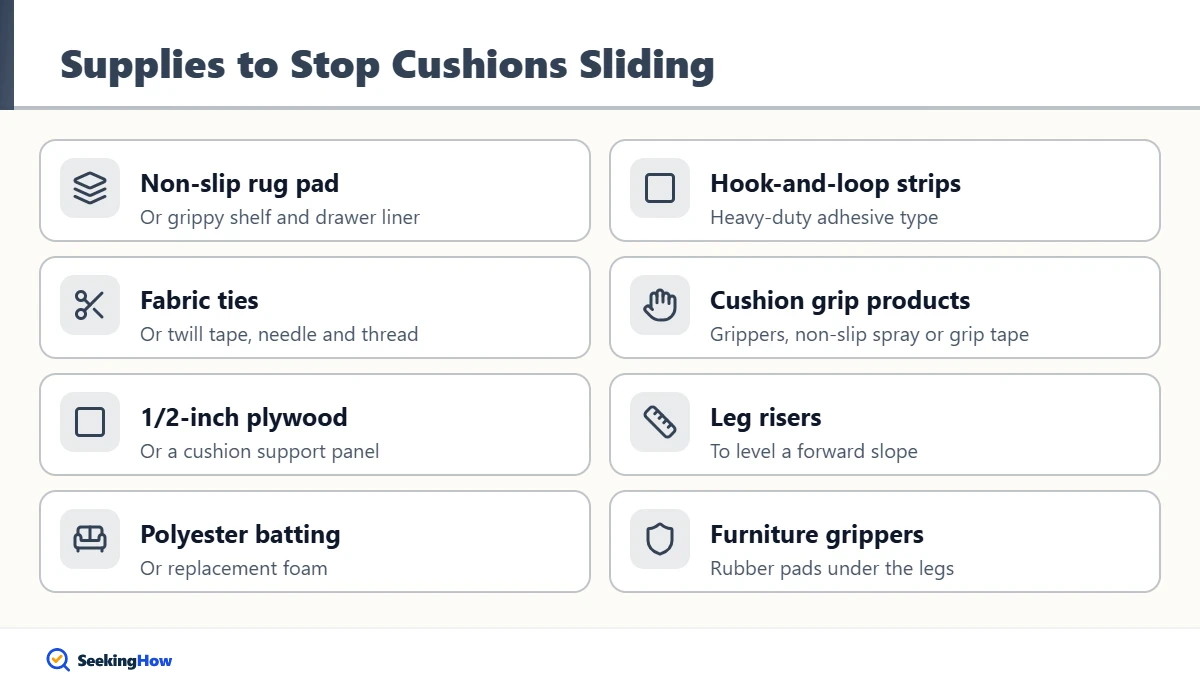
If cushions slide into a dip, slip a cut piece of 1/2-inch plywood or a sofa cushion support panel under the cushions to create a flat base. For broken springs or webbing, a furniture repair shop can retie or replace them. Rotating and flipping cushions regularly also slows sagging.
Method 6: Level the Couch
Set a level on the seat deck from front to back. If it slopes forward, add furniture leg risers or felt pads under the front legs, or tighten and replace worn legs. Check for a short leg the same way you would when fixing a wobbly chair.
Method 7: Refill or Replace Flat Cushions
Unzip cushion covers and add a layer of polyester batting around the foam, or replace worn foam with a higher-density insert. A fuller cushion fits snugly against the arms and back and has less room to move.
Method 8: Stop the Whole Couch From Sliding
On hardwood, tile or laminate, a sliding couch drags cushions with it. Put rubber furniture grippers or non-slip pads under the legs, or set the couch on an area rug with a rug pad underneath.
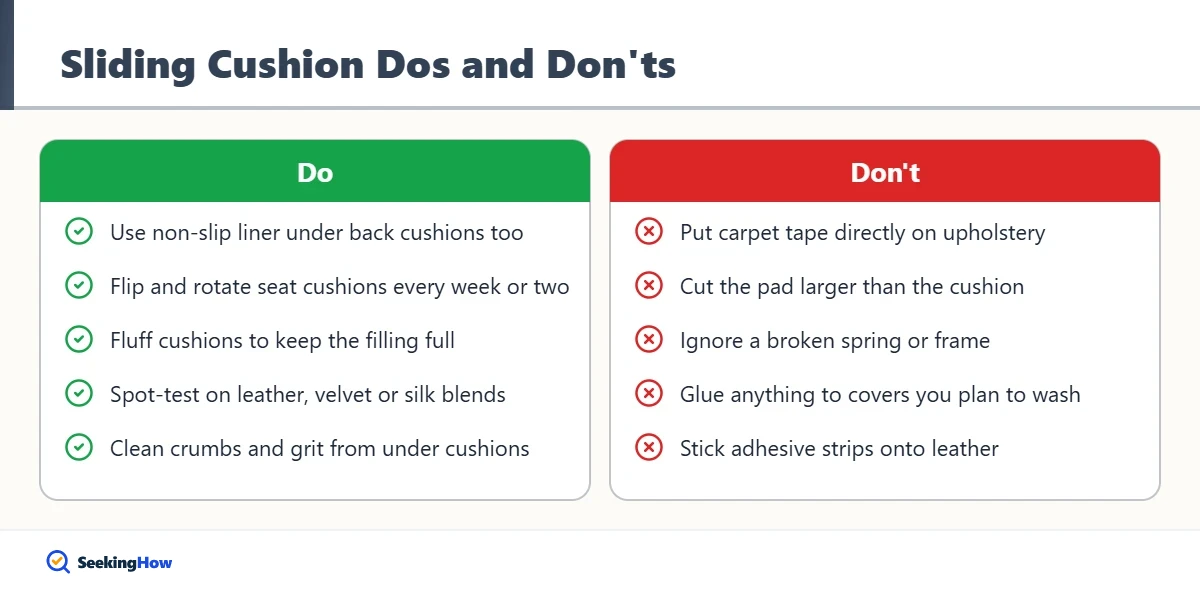
Tip: Use non-slip liner under back cushions too. Back cushions that slump forward push the seat cushions out with them.
Is It Safe to Use Adhesive on a Leather Couch?
Adhesive strips can leave residue or pull the finish off leather and faux leather. On leather, use a rubber non-slip pad first; it usually works well because the pad grips the deck. If you need more hold, attach hook-and-loop strips to the deck fabric only, or sew strips onto a removable cover rather than sticking them to the leather itself.
Common Mistakes to Avoid
- Using double-sided carpet tape directly on upholstery, which leaves sticky residue.
- Cutting the non-slip pad larger than the cushion so it shows at the front.
- Ignoring a broken spring or frame, which keeps getting worse.
- Gluing anything to cushion covers you plan to wash.
- Skipping a spot test on leather, velvet or silk blends.
How Do You Keep Cushions in Place Long Term?
- Flip and rotate seat cushions every week or two so they wear evenly.
- Fluff cushions regularly to keep the filling full.
- Discourage jumping and flopping, especially by kids and dogs.
- Clean under the cushions; crumbs and grit reduce grip and wear fabric. When you do, our guide on how to disinfect a fabric couch covers safe products.
- While the cushions are off, it is a good time to check for bed bugs along seams and the deck.
When Is It Time for Professional Repair?
Call an upholsterer or furniture repair shop if the frame is cracked, springs are broken or poking through, webbing has torn, or the seat sags even with a support board. For high-end furniture under warranty, contact the manufacturer first, because many warranties cover frames and springs for years and DIY repairs can void coverage.
Frequently Asked Questions
What can I put under couch cushions to stop sliding?
A rubber or felt-and-rubber rug pad or grippy shelf liner works best for most couches. Cut it slightly smaller than each cushion so it does not show. It adds friction between the cushion and the deck and can be removed anytime for cleaning.
Does Velcro work on couch cushions?
Yes. Heavy-duty hook-and-loop strips attached to the cushion underside and the seat deck give a strong hold. Sew-on strips last longer on fabric covers. Avoid sticking adhesive strips directly onto leather, which can be damaged when they are removed.
Why do leather couch cushions slide so much?
Leather and faux leather are smooth and have little friction, and many leather sofas have slick decks. A rubber non-slip pad under each cushion usually solves it without adhesives, which can mark or peel leather finishes.
How do you stop a couch from sliding on a wood floor?
Place rubber furniture grippers or non-slip pads under each leg, or put the couch on an area rug with a rug pad underneath. Stopping the couch from moving also helps keep the cushions in place.
Can a sagging couch make cushions slide?
Yes. When springs, webbing or the frame sag, cushions slip into the low spot and push forward. A support board under the cushions is a quick fix, but broken springs or frames should be repaired by an upholsterer.