Quick Answer
To disinfect a fabric couch, vacuum it thoroughly, check the cleaning code on the tag, spot-clean stains, then mist the fabric with an EPA-registered disinfectant labeled for soft surfaces or use a steam cleaner if the code allows water. Keep the surface wet for the label’s contact time, then let it air-dry completely with good ventilation, usually 2 to 6 hours.
Key Takeaways
- The cleaning code on the couch tag (W, S, W/S or X) decides which products are safe.
- Cleaning removes dirt; disinfecting kills germs. Do both, in that order.
- Only products that list soft surfaces or fabrics on the label are proven to sanitize upholstery.
- Contact time matters: the fabric must stay visibly wet for the time printed on the label.
- Always patch-test hidden fabric first and dry the couch fully to prevent mildew.
A fabric couch collects skin cells, pet dander, spills and germs from everyone who sits on it. After an illness, a pet accident or simply a few months of daily use, a proper sanitizing session makes a real difference. Here is how to do it without fading, shrinking or water-staining the upholstery.
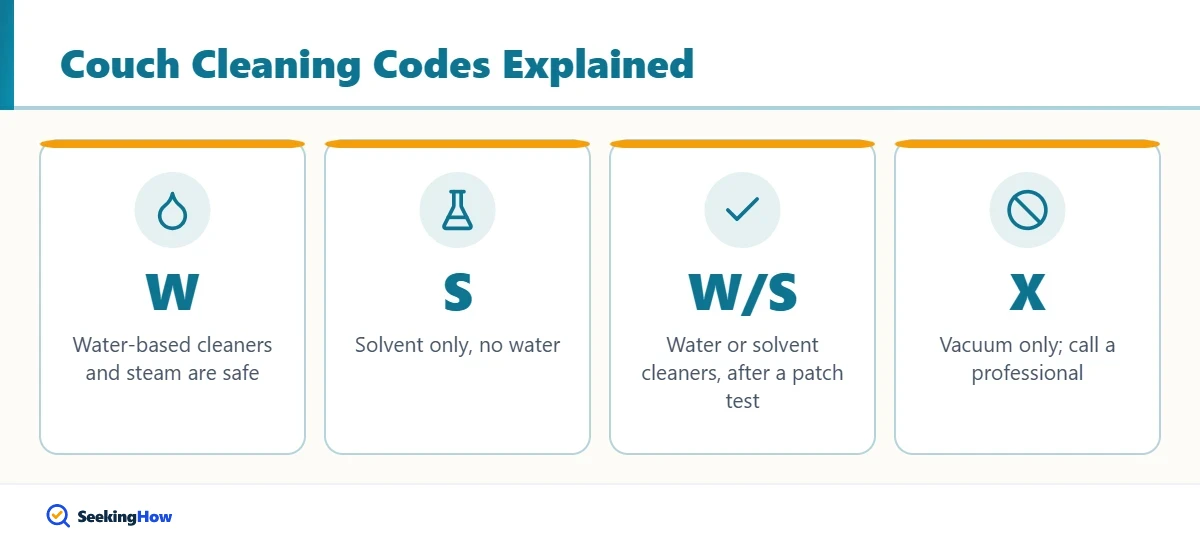
What Do the Couch Cleaning Codes Mean?
Look for a tag under the cushions or on the frame. Upholstery manufacturers use a standard letter code, and ignoring it is the fastest way to ruin a sofa.
| Code | Meaning | Disinfecting options |
|---|---|---|
| W | Water-based cleaners are safe | Fabric-safe disinfectant spray, upholstery steam cleaner |
| S | Solvent-only (no water) | Isopropyl alcohol test-spray, professional dry cleaning |
| W/S or SW | Water or solvent cleaners | Most disinfectant sprays and steam, after a patch test |
| X | Vacuum only, no liquids | Vacuum and call a professional upholstery cleaner |
If there is no tag, treat the couch as an S-code fabric and test every product on a hidden spot such as the back or the underside of a cushion.
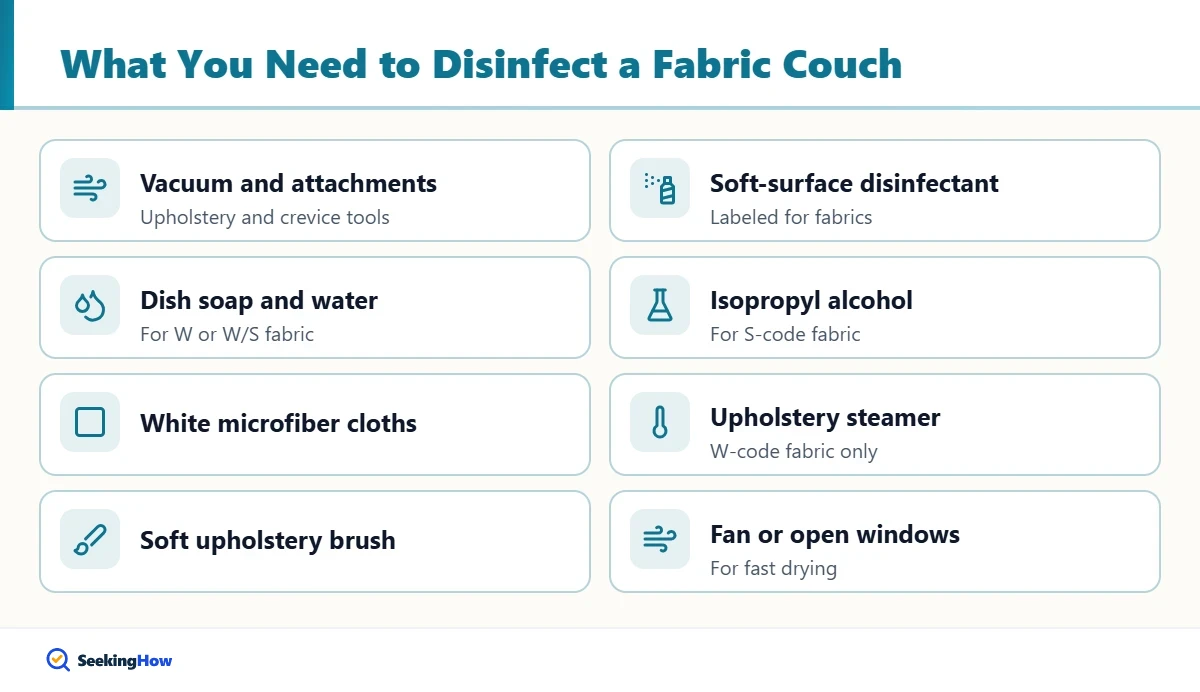
What You Need To Disinfect a Fabric Couch
How To Disinfect a Fabric Couch Step by Step
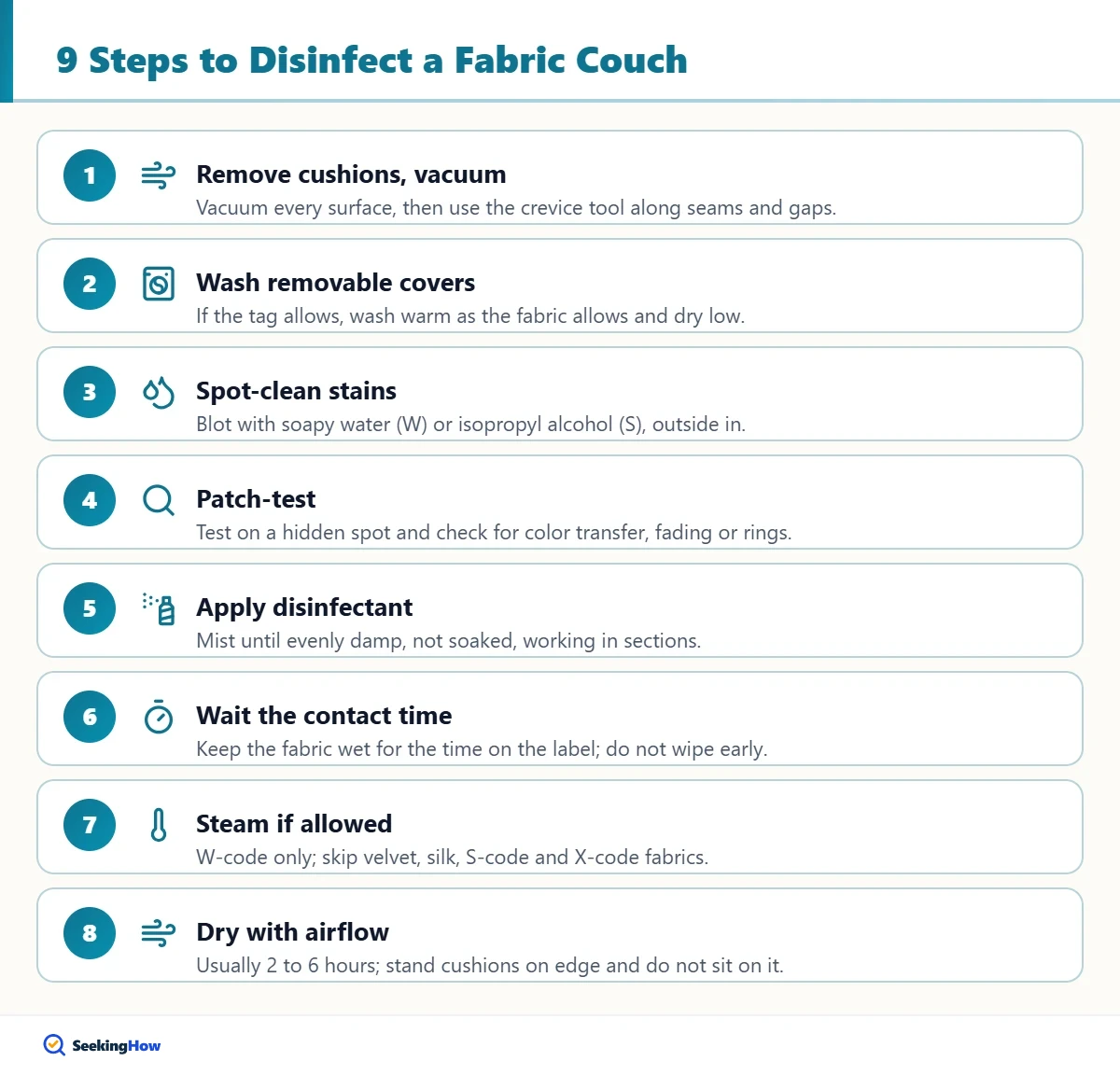
Step 1: Remove cushions and vacuum everything
Take off all cushions and throw pillows. Vacuum every surface with an upholstery attachment, then use the crevice tool along seams, tufting and the gaps where crumbs collect. Vacuuming first removes dust and debris that would otherwise turn into mud when sprayed.
Step 2: Wash removable covers
If the cushion covers have zippers and the tag says they are washable, launder them on the warmest setting the fabric allows and air-dry or tumble on low to avoid shrinking. Put covers back on while slightly damp so they stretch into shape.
Step 3: Spot-clean stains
For W or W/S fabric, mix a few drops of dish soap in warm water and blot stains with a white microfiber cloth. For S fabric, blot with isopropyl alcohol on a cloth. Work from the outside of the stain toward the center and never scrub, which spreads the stain and roughens the fibers.
Step 4: Patch-test your disinfectant
Spray or dab a small amount on a hidden area and let it dry fully. Check for color transfer on a white cloth, fading, rings or stiffness. Only proceed if the test spot looks unchanged.
Step 5: Apply the disinfectant evenly
Hold the can or bottle the distance the label states, often 6 to 8 inches, and mist the fabric until it is evenly damp but not soaked. Lysol Disinfectant Spray and similar products list soft-surface sanitizing directions on the label; our guide on how to use Lysol disinfectant spray covers the details. Work in sections so you cover the arms, back, seat deck and both sides of each cushion.
Step 6: Let it sit for the full contact time
Check the label for the contact or dwell time, the period the surface must stay wet to sanitize. Do not wipe the spray off early. Keep kids and pets away from the couch during this time.
Step 7: Steam-clean if the fabric allows it
For W-code fabric, a handheld upholstery steamer adds heat-based sanitizing without chemicals. Move slowly and keep the nozzle moving so no area gets saturated. Skip steam on velvet, silk, S-code and X-code fabrics.
Step 8: Dry completely with airflow
Open windows, run a fan or turn on the air conditioning to dry the couch quickly. Stand cushions on their edges so air circulates on all sides. Drying usually takes 2 to 6 hours; do not sit on or cover the couch until it is completely dry, or mildew can develop.
Step 9: Brush the fabric and reassemble
Once dry, brush the fabric with a soft upholstery brush to lift the pile, especially on microfiber and chenille. Put the cushions back and flip or rotate them to even out wear. If cushions keep slipping forward afterward, see how to stop couch cushions from sliding.
Safety: Never mix disinfectants, especially bleach with ammonia or vinegar, as this can release toxic gases. Do not use chlorine bleach on colored upholstery, ventilate the room, and keep sprays away from open flames.
Which Disinfecting Method Is Best for Your Couch?
Each method has strengths. Disinfectant sprays are quick and widely available. Steam uses only water and heat but needs a W-code fabric. Isopropyl alcohol (70%) evaporates fast with less risk of water rings on S-code fabrics, though it may lift some dyes, so test first. White vinegar deodorizes but is not registered as a disinfectant, so do not rely on it to kill germs; see our list of practical vinegar uses for where it does shine.
How Do You Disinfect a Couch After Someone Was Sick?
Wear disposable gloves and remove any solid matter with paper towels first. Clean the area with soapy water (or solvent for S fabric), then apply a disinfectant labeled for soft surfaces and follow the full contact time. Wash covers, throws and pillowcases on the warmest safe setting, and wash your hands well afterward.
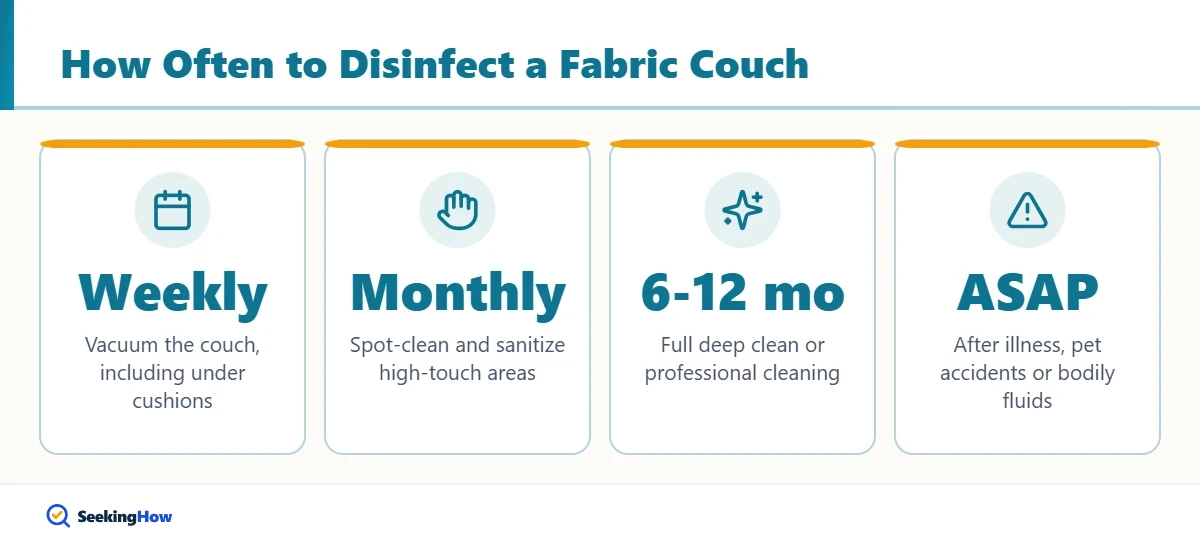
How Often Should You Disinfect a Fabric Couch?
- Weekly: vacuum the couch, including under cushions.
- Monthly: spot-clean and lightly sanitize high-touch areas such as armrests.
- Every 6 to 12 months: do a full deep clean or hire a professional upholstery cleaner.
- Immediately: after illness, pet accidents or spills involving raw food or bodily fluids.
If you notice small reddish-brown stains, shed skins or tiny dark spots along seams, disinfecting will not solve the problem; read how to check for bed bugs and contact a licensed pest professional if you confirm them.
When Should You Call a Professional Upholstery Cleaner?
Hire a pro for X-code or delicate fabrics such as silk, velvet and linen blends, for large urine or vomit stains that have soaked into the foam, and for persistent odors after DIY cleaning. Professionals use hot-water extraction or dry-cleaning methods matched to the fabric and can reach deeper into the padding than a household spray.
Frequently Asked Questions
Can I use Lysol spray on a fabric couch?
Many Lysol Disinfectant Spray products include soft-surface sanitizing directions on the label. Check that your fabric code allows water-based or solvent products, patch-test a hidden area, spray until damp, and let it air-dry for the time the label specifies.
Does vinegar disinfect a couch?
Vinegar can help remove odors and light grime, but it is not registered by the EPA as a disinfectant and should not be relied on to kill germs. Use a product labeled for soft surfaces, or steam if your fabric allows water.
Can you steam clean any fabric couch?
No. Steam is safe only for W or W/S code fabrics that tolerate water. Steam can shrink, water-stain or crush the pile on S-code, X-code, velvet and silk fabrics. Always check the tag and test a hidden area before steaming.
How long does a couch take to dry after cleaning?
Most fabric couches dry in about 2 to 6 hours with open windows, a fan or air conditioning. Thick cushions and humid rooms take longer. Make sure everything is fully dry before sitting on it to prevent mildew and odors.
How do you disinfect an S-code couch?
Use solvent-based methods only. Vacuum, then lightly dab or mist 70 percent isopropyl alcohol on the fabric after a patch test, and let it evaporate. For deep sanitizing or large stains, hire a professional upholstery cleaner who uses dry-cleaning methods.