Quick Answer
To stabilize a wobbly cabinet, empty it, find where it rocks, then level it with composite shims or adjustable feet, tighten or reglue loose joints, and add metal corner braces if the case racks. Finish by anchoring it to a wall stud with an anti-tip strap or 2.5-inch screws through the back rail. Most fixes take 30-60 minutes.
Key Takeaways
- Most cabinet wobble comes from an uneven floor, loose joints, or a cabinet that is not fastened to the wall.
- Composite shims under the low corner fix floor-related rocking in minutes.
- Racking (side-to-side sway) needs tightened hardware, fresh glue, or corner braces.
- Anchoring tall cabinets to a stud is the single most important tip-over prevention step.
- A wall-hung cabinet pulling away from the wall is a safety issue that needs immediate attention.
A cabinet that rocks or sways is more than an annoyance. Doors stop closing square, drawers bind, and a tall unit can tip when someone pulls on it. The good news is that almost every wobble traces back to a handful of causes you can diagnose and fix with basic tools.
What Causes a Cabinet to Wobble?
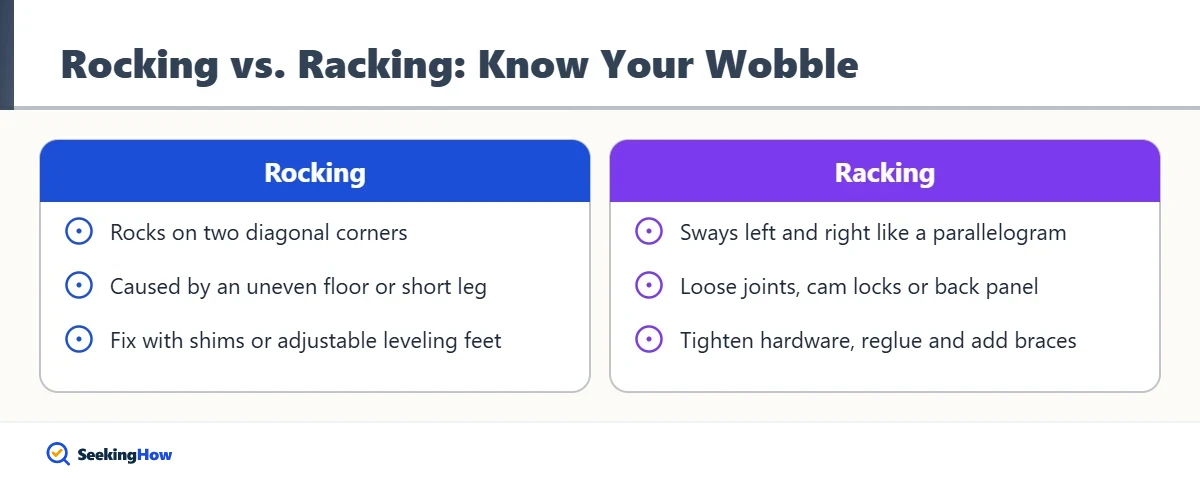
Before grabbing shims, figure out what kind of wobble you have. A cabinet that rocks corner to corner usually sits on an uneven floor. One that sways side to side like a parallelogram is racking, which means the joints or back panel have loosened.
| Symptom | Likely cause | Fix |
|---|---|---|
| Rocks on two diagonal corners | Uneven floor or one short leg | Shims or adjustable leveling feet |
| Sways left and right | Loose joints, cam locks or back panel | Tighten hardware, reglue, add braces |
| Leans forward when doors open | Top-heavy load, not anchored | Move heavy items low, anchor to stud |
| Wall cabinet shifts or gaps at top | Mounting screws loose or missed studs | Re-drive screws into studs |
| Base cabinet moves under countertop | Missing screws to adjacent cabinets or wall | Screw through face frames and rear rail |
What Do You Need to Fix a Wobbly Cabinet?
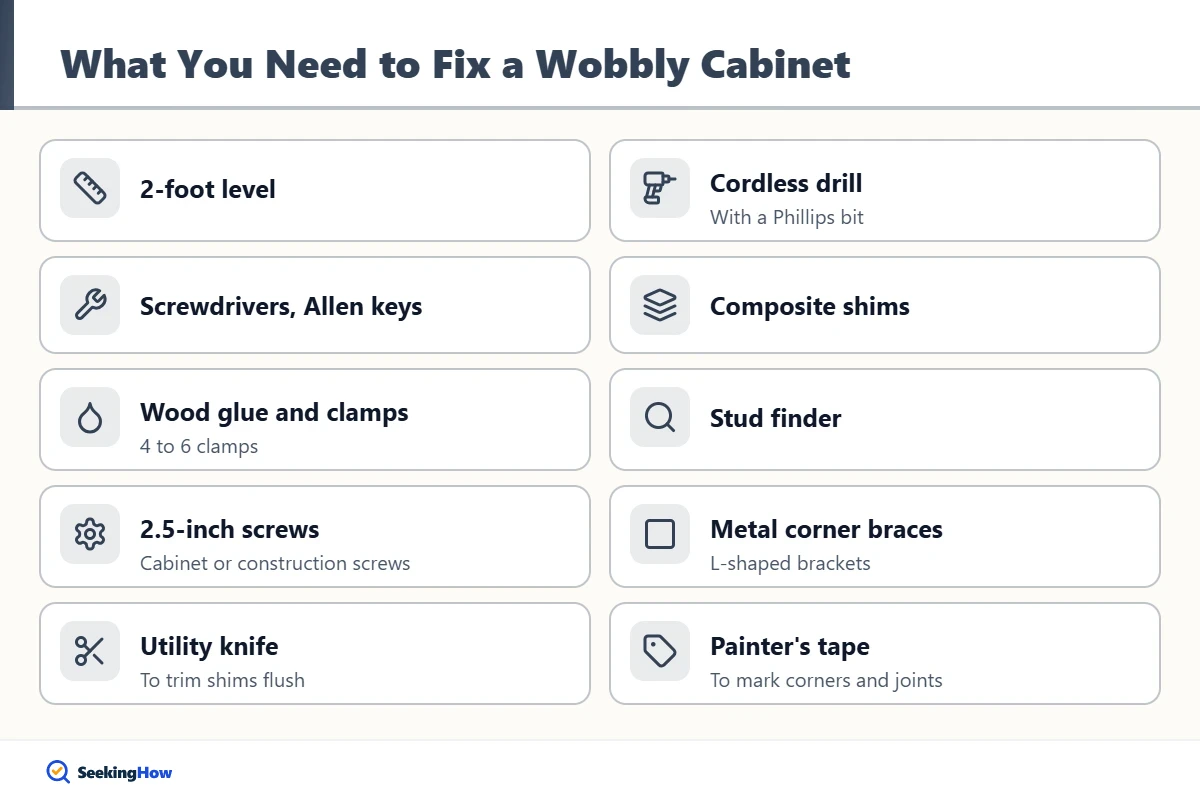
Gather a 2-foot level, a cordless drill with a Phillips bit, a screwdriver set and Allen keys, composite or plastic shims, wood glue, 4-6 clamps, a stud finder, 2.5-inch cabinet or construction screws, and metal L-shaped corner braces. A utility knife trims shims flush, and painter’s tape helps mark the high and low corners.
How Do You Stabilize a Wobbly Cabinet Step by Step?
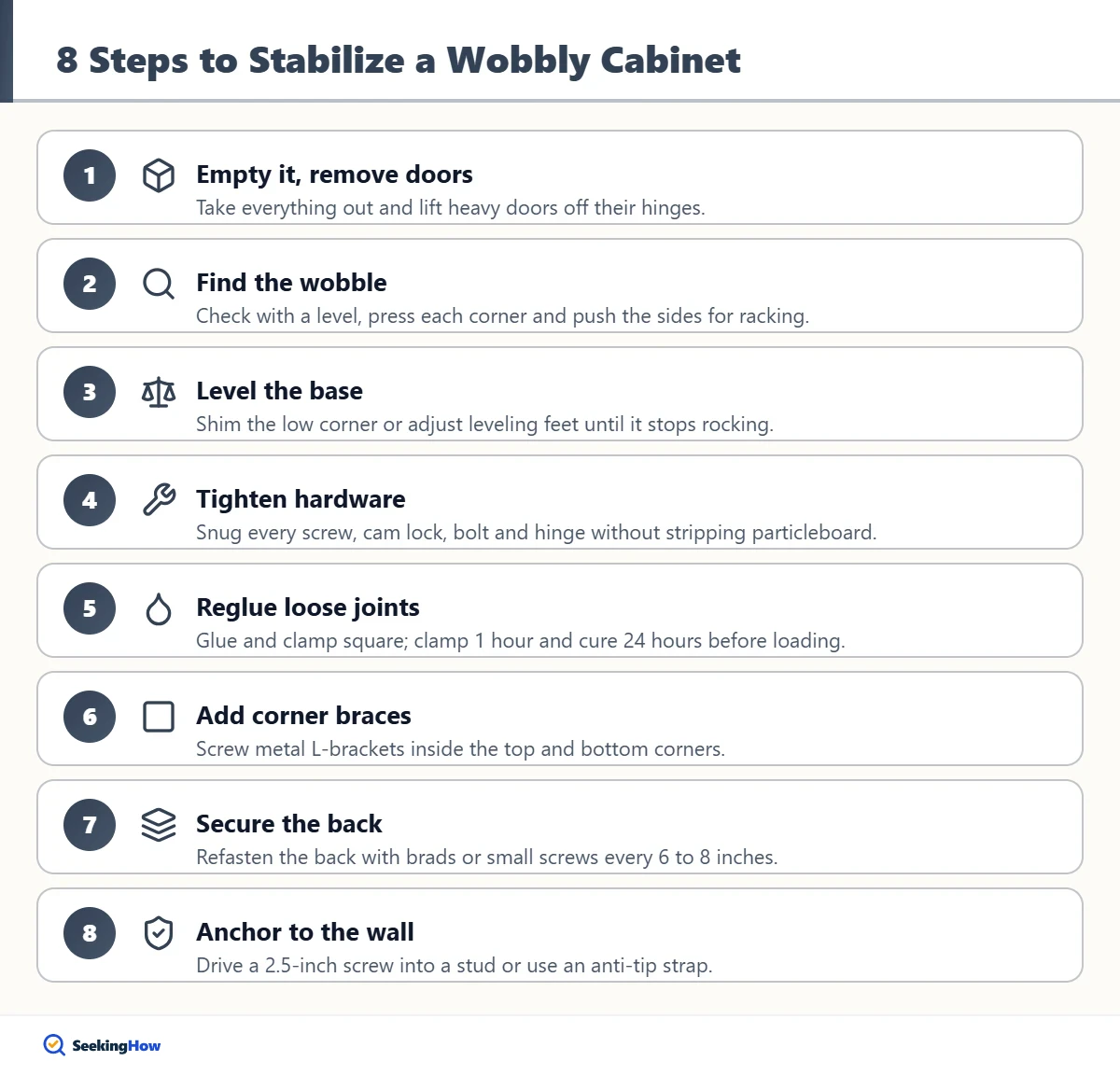
Step 1: Empty the Cabinet and Remove the Doors
Take everything out so you can see the frame and so nothing falls during the repair. If the doors are heavy, lift them off their hinges. An empty case also shows you how it behaves without load.
Step 2: Find the Source of the Wobble
Set a level across the top front to back and side to side. Press on each corner to see which one lifts, then push the side panel to check for racking. Mark the low corner and any loose joint with painter’s tape.
Step 3: Level the Base
Slide composite shims under the low corner until the cabinet stops rocking and reads level. Score the excess with a utility knife and snap it off. If the cabinet has threaded leveling feet, turn them instead; if it has none, screw-in adjustable glides cost a few dollars and make future adjustments easy.
Step 4: Tighten All Hardware
Go over every screw, cam lock, bolt and hinge. Ready-to-assemble cabinets rely on cam locks that loosen over time; turn them clockwise until snug, but do not overtighten particleboard. If a screw head is chewed up, our guide on removing a stripped Allen screw will help you swap it out.
Step 5: Reglue Loose Joints
For solid-wood cabinets, work fresh wood glue into any loose dado or dowel joint, then clamp the case square by measuring both diagonals until they match. Leave the clamps on for at least 1 hour and let the glue cure 24 hours before loading the cabinet.
Step 6: Reinforce With Corner Braces
Screw metal L-brackets inside the top and bottom corners where the sides meet the top and bottom panels. Use screws short enough not to poke through the outside. Braces stop racking even when the original joints are worn.
Step 7: Secure the Back Panel
A thin hardboard back is what keeps many cabinets square. If it has popped loose, push the case square and refasten the back with 3/4-inch brads or small screws every 6-8 inches along the edges.
Step 8: Anchor the Cabinet to the Wall
Use a stud finder to locate a stud behind the cabinet. Drive a 2.5-inch screw through the top back rail into the stud, or install an anti-tip strap or bracket kit. For base cabinets in a run, also screw adjoining cabinets together through the face frames.
How Do You Fix a Wobbly Wall-Mounted Cabinet?
Wall cabinets should hang from screws driven through a solid rail into wall studs, not just drywall. If a wall cabinet shifts, gaps at the top, or tilts forward, empty it immediately and support it from below with a helper or a padded prop.
Find the mounting screws inside the cabinet along the top and bottom back rails. If they spin without tightening, they have stripped the wood or missed the stud. Locate the studs and drive new 2.5- to 3-inch cabinet screws through the rail into them. Drywall anchors alone are not adequate for a loaded kitchen cabinet.
Safety: A loaded upper cabinet can weigh well over 100 pounds. If the cabinet has pulled the wall surface away, the rail is cracked, or you cannot find studs, stop using it and call a carpenter or cabinet installer.
How Do You Stop a Tall Cabinet From Tipping Over?
Tall pantry cabinets, curio cabinets and bookcase-style units are the most likely to tip, especially when a child opens a door or pulls a drawer. The CPSC recommends anchoring furniture such as dressers, bookcases and TVs to prevent tip-overs, and the same logic applies to freestanding cabinets.
- Load heavy items on the bottom shelves and light items up top.
- Use anti-tip straps or L-brackets screwed into studs.
- Do not rely on carpet; pad the floor with a shim so the cabinet leans slightly back toward the wall.
- In rentals, see our renter-friendly guide on how to stabilize a bookshelf without drilling.
Common Mistakes to Avoid
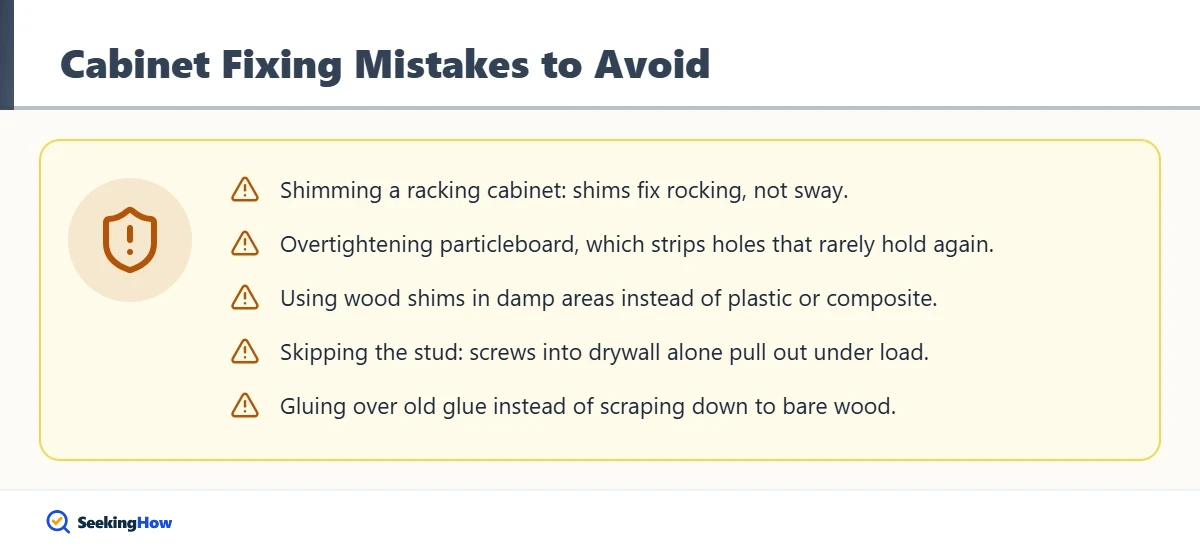
- Shimming a racking cabinet. Shims fix rocking, not sway. If the case leans like a parallelogram, fix the joints first.
- Overtightening particleboard. Stripped holes in particleboard rarely hold again. Fill them with wood glue and toothpicks or a dowel, let cure, then redrill.
- Using wood shims in damp areas. Under sinks and in bathrooms, use plastic or composite shims that will not rot or compress.
- Skipping the stud. Screws into drywall alone pull out under load.
- Gluing over old glue. Scrape away dried glue so new glue bonds to bare wood.
When Should You Call a Professional?
Call a carpenter or cabinet installer if a base cabinet floor is water-damaged and soft, the face frame is split, a wall cabinet is sagging away from the wall, or the floor itself is out of level by more than about 1/2 inch across the cabinet. A sloping floor can point to subfloor or foundation problems; if you also notice cracks in walls, read our guide on repairing foundation cracks in concrete walls.
The same leveling and bracing principles apply to other furniture. If your chairs rock too, see how to fix a wobbly chair.
Tip: After any fix, reload the cabinet gradually and recheck it with a level a week later. Wood glue joints and shims sometimes settle once the weight goes back in.
Frequently Asked Questions
Why does my new cabinet wobble?
New cabinets usually wobble because the floor is uneven or the cabinet has not been fastened to the wall or neighboring cabinets yet. Check it with a level, shim the low corner, then screw the back rail into a stud. Ready-to-assemble units may also need their cam locks retightened.
Can I use cardboard or folded paper as a shim?
Cardboard and paper compress and soak up moisture, so the wobble returns within weeks. Composite or plastic shims cost little, hold their thickness, and do not rot, which makes them a better choice especially under sinks and in bathrooms.
How do I anchor a cabinet without a stud behind it?
Use a heavy-duty toggle bolt or snap toggle rated for the load through the back rail, or add a horizontal cleat screwed into the nearest studs and fasten the cabinet to the cleat. Plastic drywall anchors are not strong enough for tall or loaded cabinets.
How do I fix a stripped screw hole in a cabinet?
Fill the hole with wood glue and a few toothpicks or a glued hardwood dowel, let it dry, trim flush, then redrill a pilot hole and drive the screw again. For particleboard, a slightly larger screw or a threaded insert also works.
Are adjustable cabinet legs better than shims?
Adjustable leveling legs make it easier to fine-tune height and readjust later, which helps on floors that shift seasonally. Shims are cheaper and faster for a one-time fix. Kitchen base cabinets often use adjustable legs hidden behind a removable toe kick.