Quick Answer
Rosemary is safe to eat in normal cooking amounts, typically a teaspoon to a tablespoon of fresh or dried herb in a dish. Traditional herbal references put medicinal intake at about 4-6 grams of dried leaf per day for adults. Avoid concentrated extracts and never swallow rosemary essential oil. Pregnant people, people with seizure disorders and those on blood thinners should avoid medicinal amounts.
Key Takeaways
- Culinary use of rosemary is considered safe for almost everyone, including during pregnancy.
- Medicinal doses of about 4-6 g of dried leaf daily are the upper range in traditional references; more is not better.
- Rosemary essential oil is far more concentrated and can be toxic if swallowed.
- Very large amounts have been linked to vomiting, kidney irritation, uterine bleeding and seizures.
- Talk to a doctor before using rosemary supplements if you take blood thinners, blood pressure drugs, diuretics, lithium or diabetes medication.
Rosemary (Salvia rosmarinus, formerly Rosmarinus officinalis) is one of the most widely used Mediterranean herbs, and it is also sold as teas, capsules and extracts. The safety question depends almost entirely on the form and the dose. Here is how much is reasonable, who should be careful, and what signs mean you have overdone it.
How Much Rosemary Is Safe to Eat Per Day?
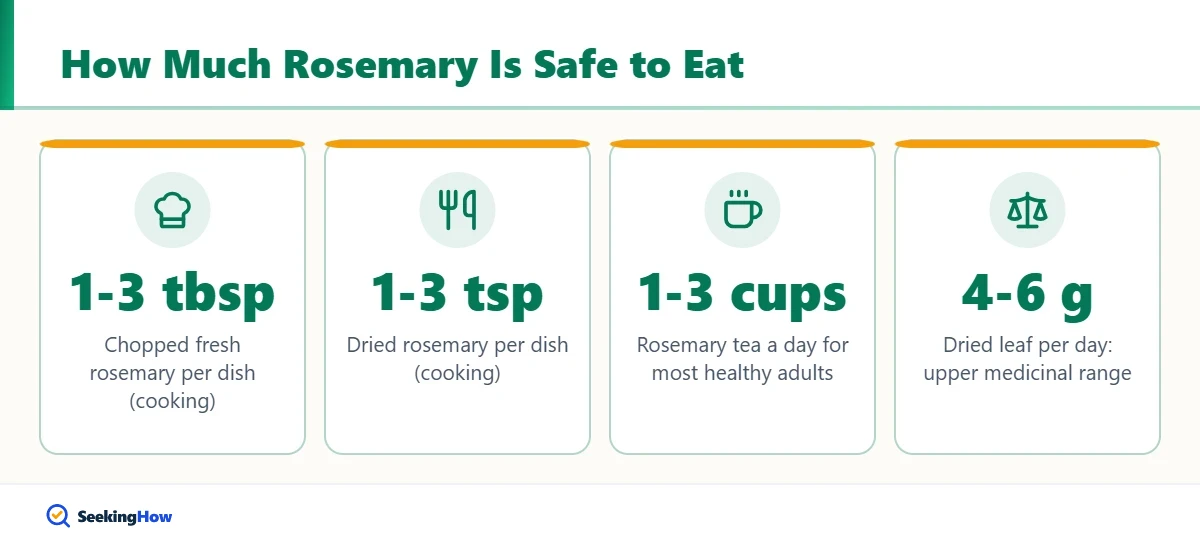
For cooking, there is no practical limit you are likely to hit. A roast, a pot of soup or a tray of potatoes usually uses 1-3 tablespoons of chopped fresh rosemary or 1-3 teaspoons dried, spread across several servings. That works out to well under a gram of dried herb per person.
For medicinal use, Germany’s Commission E monograph, a long-standing reference for herbal medicine, lists about 4-6 grams of dried rosemary leaf per day. That is roughly 1-2 tablespoons of dried leaf, usually taken as tea. Treat it as an upper range for short-term use, not a daily target.
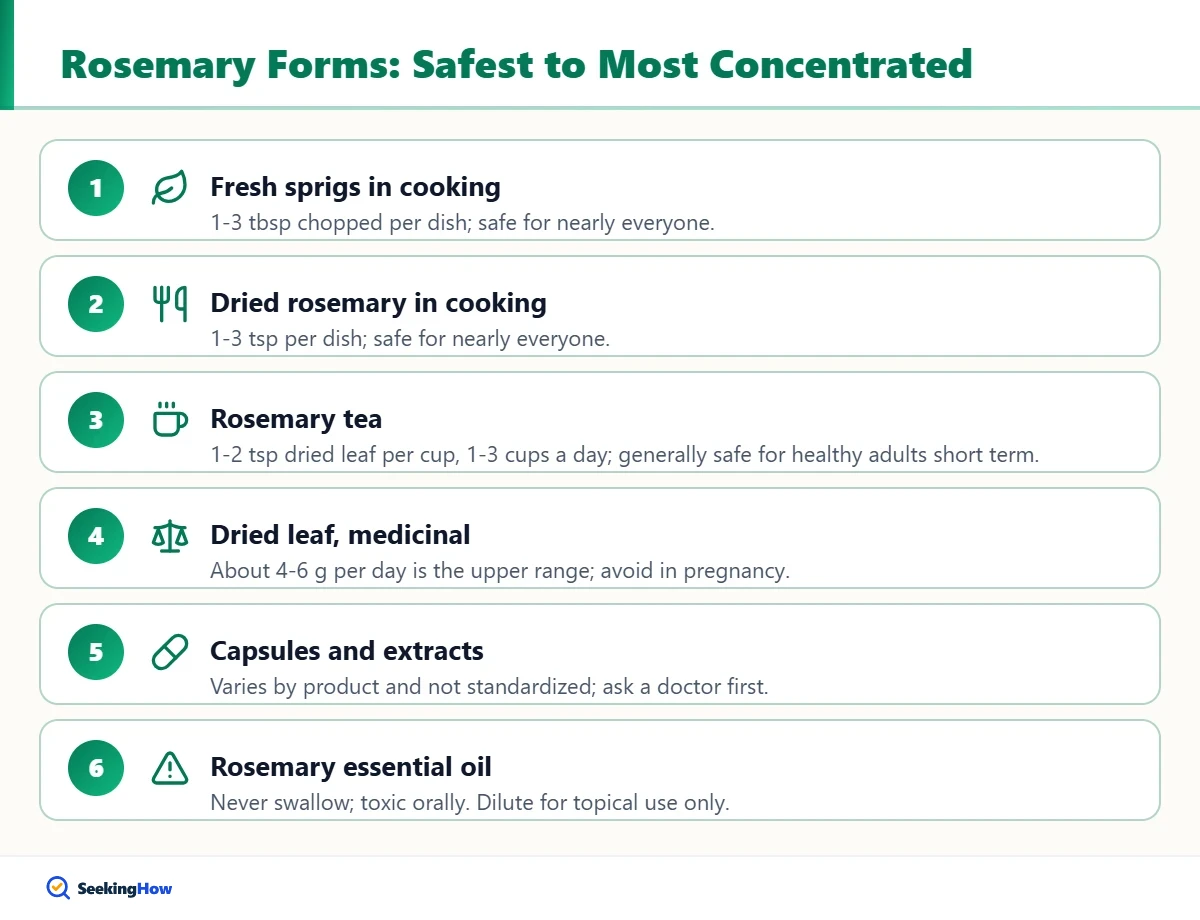
| Form of rosemary | Typical amount | Safety level |
|---|---|---|
| Fresh sprigs in cooking | 1-3 tbsp chopped per dish | Safe for nearly everyone |
| Dried rosemary in cooking | 1-3 tsp per dish | Safe for nearly everyone |
| Rosemary tea | 1-2 tsp dried leaf per cup, 1-3 cups a day | Generally safe for healthy adults short term |
| Dried leaf, medicinal | About 4-6 g per day | Upper range; avoid in pregnancy |
| Capsules and extracts | Varies by product | Not standardized; ask a doctor first |
| Rosemary essential oil | Never swallow | Toxic orally; dilute for topical use only |
Medical disclaimer: This article is for general information and is not medical advice. Talk to a doctor or pharmacist before using rosemary tea, capsules or extracts in medicinal amounts, especially if you are pregnant, breastfeeding, have a medical condition or take prescription medication.
Is Rosemary Tea Safe to Drink Every Day?
For most healthy adults, one to three cups of rosemary tea a day is considered reasonable. Make it by steeping 1-2 teaspoons of dried rosemary (or a 3-4 inch fresh sprig) in a cup of just-boiled water for 5-10 minutes, then strain.
Take breaks rather than drinking it indefinitely, and stop if you notice stomach upset. Rosemary tea is not a replacement for treatment of any condition, and claims that it lowers blood pressure, improves memory or prevents disease are based on limited or early research, much of it in animals or test tubes.
What Happens If You Eat Too Much Rosemary?
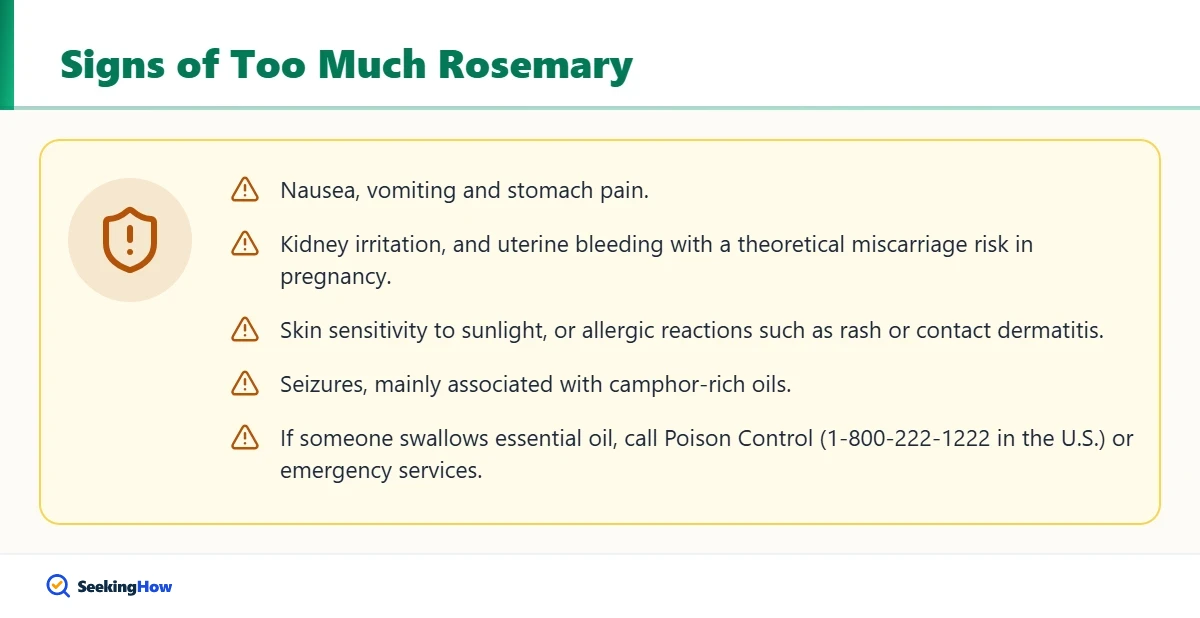
Rosemary contains camphor, 1,8-cineole and other aromatic compounds that are harmless in seasoning amounts but irritating at high doses. Reported effects of very large amounts or concentrated products include:
- Nausea, vomiting and stomach pain
- Kidney irritation
- Uterine bleeding and, in pregnancy, a theoretical risk of miscarriage
- Skin sensitivity to sunlight
- Seizures, mainly associated with camphor-rich oils
- Allergic reactions such as rash or contact dermatitis
These effects are almost never caused by food. They are linked to concentrated extracts, very strong teas taken in large quantities, or swallowing essential oil.
Safety: Rosemary essential oil should never be swallowed. Keep it out of reach of children and pets. If someone ingests essential oil, call Poison Control (1-800-222-1222 in the U.S.) or emergency services right away.
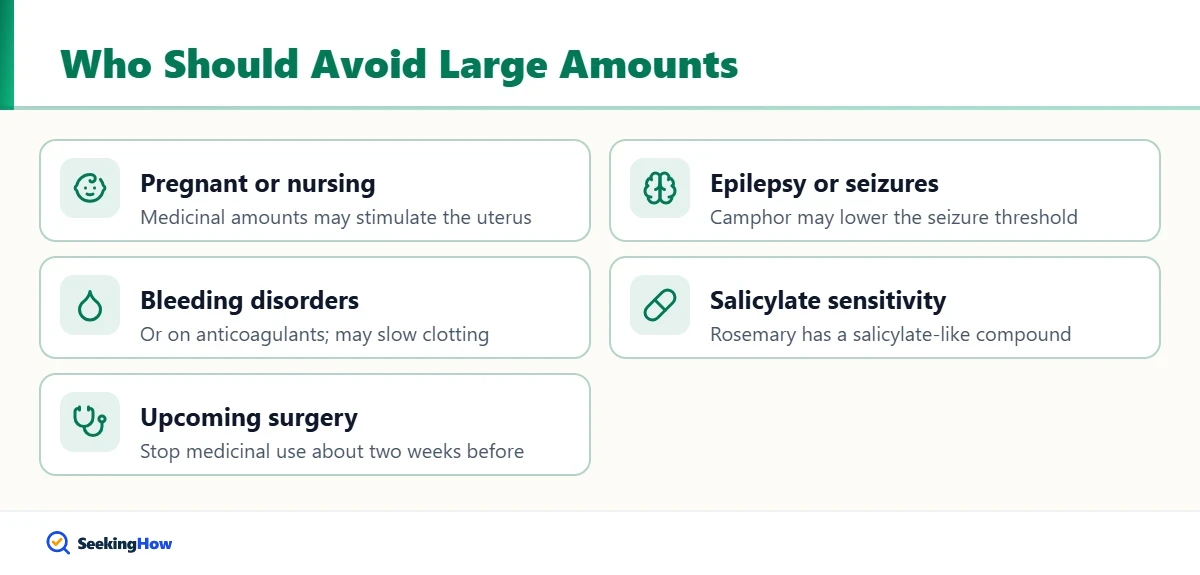
Who Should Avoid Large Amounts of Rosemary?
Cooking with rosemary is fine for these groups, but medicinal doses, supplements and teas taken regularly deserve a conversation with a clinician first.
- Pregnant or breastfeeding people: medicinal amounts may stimulate the uterus; safety data are lacking.
- People with epilepsy or seizure disorders: camphor in rosemary may lower the seizure threshold.
- People with bleeding disorders or on anticoagulants: rosemary may slow blood clotting.
- People with aspirin or salicylate sensitivity: rosemary contains a salicylate-like compound.
- Anyone scheduled for surgery: stop medicinal rosemary about two weeks before, as is commonly advised for herbs that affect clotting.
Does Rosemary Interact With Medications?
Drug-interaction references list several possible interactions with medicinal amounts of rosemary. Most are based on how rosemary acts in the body rather than large human studies, so caution is reasonable:
| Medication type | Possible concern |
|---|---|
| Anticoagulants and antiplatelets (warfarin, clopidogrel, aspirin) | Added bleeding or bruising risk |
| ACE inhibitors and other blood pressure drugs | May affect how well they work |
| Diuretics (water pills) | Rosemary may also act as a mild diuretic |
| Lithium | Diuretic effect could raise lithium levels |
| Diabetes medications | May affect blood sugar |
If you are managing blood pressure, focus on proven steps first. Our guide on how to reduce blood pressure covers the lifestyle changes with the strongest evidence.
Are Rosemary Supplements Regulated?
In the United States, rosemary capsules and extracts are sold as dietary supplements. The FDA does not approve dietary supplements for safety or effectiveness before they are sold, so strength and purity vary by brand. If you choose a supplement, look for third-party testing seals such as USP or NSF, follow the label dose, and tell your doctor and pharmacist you are taking it.
Rosemary extract is also used as a natural preservative in packaged foods. Those amounts are tiny and are not a concern for healthy people.
How Do You Cook With Rosemary Without Overpowering a Dish?
Rosemary is strong and resinous, so a little goes far. A few practical guidelines:
- Fresh to dried: use about 1 teaspoon dried for every tablespoon of fresh.
- Chop finely or use whole sprigs: whole sprigs can be removed before serving; tough leaves are unpleasant to chew.
- Pair it well: rosemary suits lamb, chicken, potatoes, white beans, focaccia, garlic and lemon.
- Add early: rosemary holds up to long cooking, unlike basil or parsley.
- Infuse: warm a sprig in olive oil or butter to flavor it gently, then remove it.
Rosemary also works in one-pot cooking. Toss a sprig into the pot when you make rice or grains, for example with an Oster rice cooker, and remove it before serving. For pickles and marinades, our comparison of white vinegar vs. distilled white vinegar helps you pick the right base.
How Do You Store Rosemary Safely?
Wrap fresh rosemary in a barely damp paper towel and refrigerate it in a bag for up to about two weeks. Dried rosemary keeps its flavor for roughly a year in an airtight jar away from heat and light. Homemade rosemary-infused oil should be refrigerated and used within a few days, because garlic or herbs in oil can support the growth of Clostridium botulinum at room temperature.
Frequently Asked Questions
Is it safe to eat rosemary every day?
Yes, using rosemary as a seasoning every day is considered safe for most people. The amounts used in food are small. Daily medicinal use, such as strong teas or capsules, is a different matter and is best limited and discussed with a doctor, especially if you take medications.
Can you eat rosemary leaves raw?
Yes. Fresh rosemary leaves are edible raw, but they are tough, needle-like and strongly flavored. Chop them very finely and use small amounts in dressings, butters or marinades. Avoid eating the woody stems, which are hard to chew and digest.
Is rosemary safe during pregnancy?
Rosemary in normal cooking amounts is generally considered safe during pregnancy. Medicinal amounts, concentrated extracts, supplements and essential oil taken by mouth should be avoided because they may stimulate the uterus. Ask your obstetrician or midwife before using any herbal remedy.
Is rosemary safe for dogs?
Small amounts of rosemary are generally considered non-toxic to dogs, and rosemary extract is used as a preservative in some pet foods. Large amounts can upset the stomach, and rosemary essential oil should not be given to pets. Ask your veterinarian, especially if your dog has seizures.
How much rosemary oil is safe to ingest?
None. Rosemary essential oil is highly concentrated and should not be swallowed. Small amounts can cause vomiting and, in larger amounts, seizures. For topical use, dilute it in a carrier oil and patch test first. If it is swallowed, contact Poison Control right away.