Quick Answer
To fix hair breakage at the crown, remove the cause first: loosen tight ponytails and buns, lower heat styling to about 300-350°F with a heat protectant, and pause bleach or relaxers. Then condition after every wash, use a weekly protein or bond-repair treatment, detangle gently with a wide-tooth comb, sleep on satin and trim split ends. New growth usually looks stronger within 2-3 months.
Key Takeaways
- Crown breakage is usually mechanical or chemical: tight styles, heat, bleach, rough brushing and friction from pillows or hats.
- Broken hair cannot be repaired back to full strength; the goal is to stop new damage and let healthy hair grow.
- Moisture, the right amount of protein and gentle handling work together.
- Short, frizzy, snapped hairs at the crown are breakage; a widening part or visible scalp suggests thinning or hair loss.
- Scalp scaling, itching, patches or rapid shedding call for a dermatologist.
The crown takes more wear than most people realize. It is where ponytails and buns are anchored, where hair rubs against your pillow every night, and where hair dryers and flat irons often linger. Short, uneven, flyaway pieces sticking up at the top of your head are a classic sign. This guide shows how to confirm you are dealing with breakage, the step-by-step repair routine and how long it takes.
Is It Hair Breakage or Hair Loss?
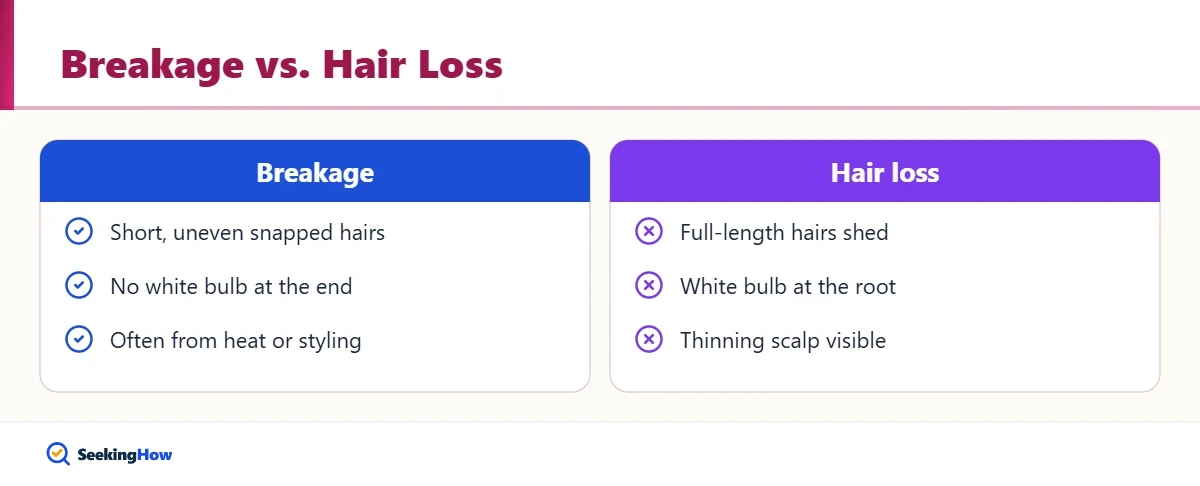
Breakage and hair loss need different approaches, so start by looking closely. Breakage means hair snaps somewhere along the shaft. Hair loss means the whole strand, including the root, falls out, or fewer hairs grow from the scalp.
| Sign | Breakage | Thinning or hair loss |
|---|---|---|
| Fallen hairs | Short pieces with no white bulb at the end | Full-length strands with a small white bulb at the root |
| Look at the crown | Short, frizzy flyaways at different lengths | Wider part, more visible scalp, less density |
| Texture | Rough, dry, split ends, tangles easily | Hair may feel normal but finer or sparser |
| Common causes | Heat, chemicals, tight styles, rough handling | Genetics, hormones, illness, stress, low iron, thyroid |
| Who to see | Hairstylist, home care routine | Dermatologist or doctor |
A simple stretch test helps: take a wet strand and gently stretch it. Healthy hair stretches a little and returns; hair that snaps immediately may need more protein, and hair that stretches a lot and feels mushy may be over-processed and need gentle care and bond repair.
What Causes Hair Breakage at the Crown?
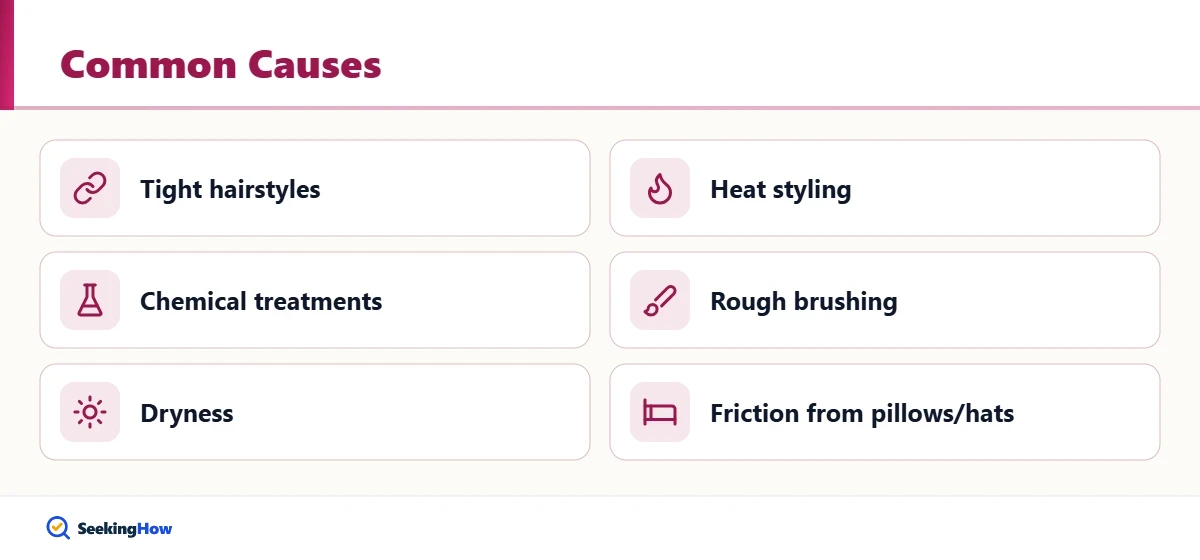
- Tight hairstyles: High ponytails, buns, braids and elastic bands put constant tension on the same spot, and repeated tension can also lead to traction alopecia.
- Heat styling: Flat irons, curling irons and hot blow-drying weaken the hair’s outer cuticle.
- Chemical processing: Bleach, highlights, relaxers and perms break internal bonds in the hair.
- Friction: Cotton pillowcases, hats, headphones and car headrests rub the crown.
- Rough detangling: Brushing wet hair hard or ripping through knots.
- Dryness: Over-washing with harsh shampoos, hard water and swimming in chlorinated pools.
- Nutrition and health: Very low-calorie diets, low protein, iron deficiency and thyroid problems can make hair weaker.
How Do You Fix Hair Breakage at the Crown?
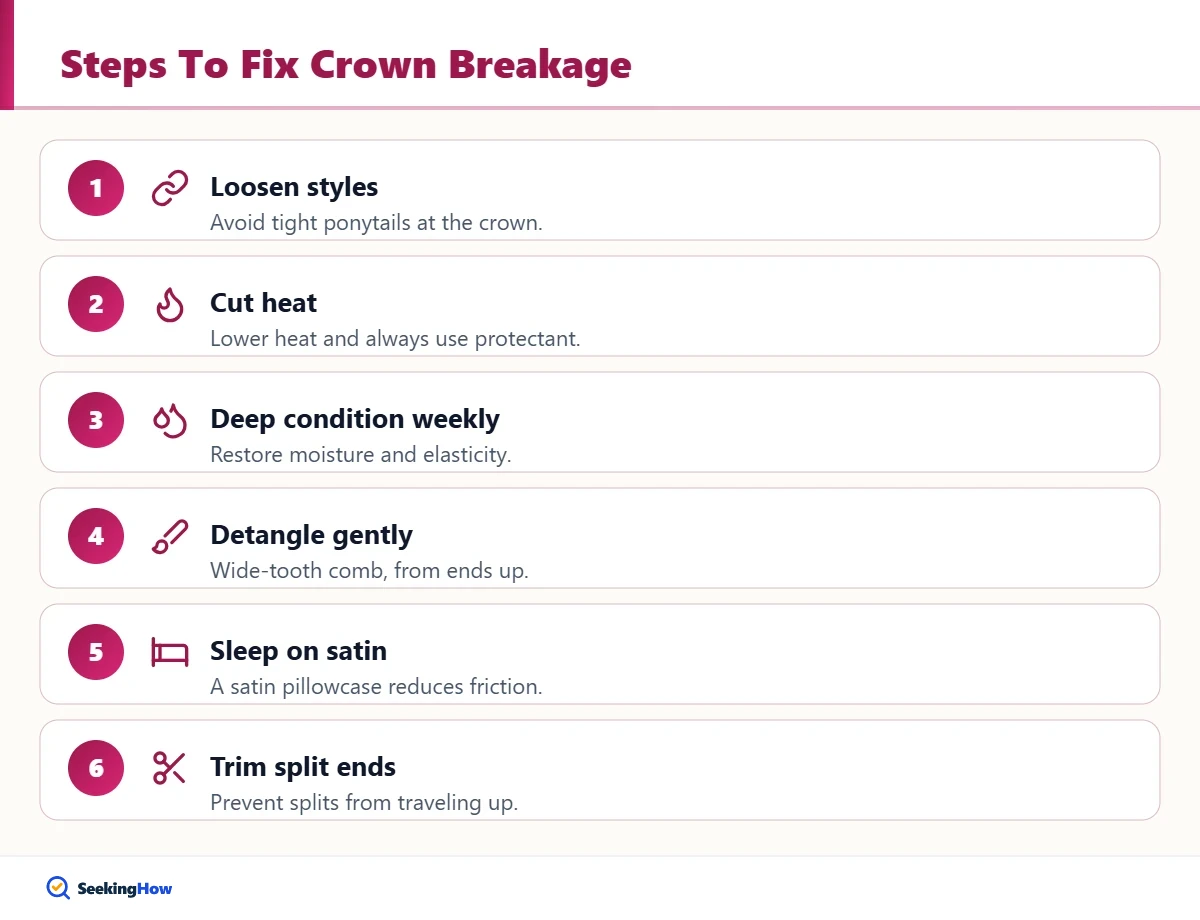
Step 1: Loosen Your Hairstyles
Switch to low, loose ponytails or buns and move the anchor point around so the crown is not stressed every day. Use fabric scrunchies or coil ties instead of elastics with metal joins. Avoid sleeping in tight styles.
Step 2: Cut Back on Heat
Air-dry when you can, or blow-dry on a medium setting while keeping the dryer moving. If you use hot tools, apply a heat protectant and keep the temperature around 300-350°F, or lower for fine or damaged hair. Limit hot tool use to a few times a week.
Step 3: Pause Chemical Treatments
Give your hair a break from bleach, relaxers and perms while it recovers. If you color, ask your stylist about gentler options, spacing appointments further apart and avoiding overlapping bleach on already-lightened hair.
Step 4: Wash Gently and Condition Every Time
Use a mild, sulfate-free shampoo focused on the scalp and let the suds rinse through the lengths. Condition after every wash, concentrating on the mid-lengths and ends, and use a deep conditioning mask once a week.
Step 5: Balance Moisture and Protein
Weak, gummy hair often benefits from a protein treatment or a bond-building product every one to two weeks. Hair that feels stiff and brittle may need more moisture and less protein. Follow product directions, since overusing protein can make hair feel straw-like.
Step 6: Detangle the Gentle Way
Detangle damp hair with conditioner or a leave-in spray, starting at the ends and working up with a wide-tooth comb or flexible brush. Be especially gentle at the crown, where knots tend to form.
Step 7: Reduce Friction at Night
Sleep on a silk or satin pillowcase, or wrap your hair in a satin scarf or bonnet. A loose braid or pineapple style can keep long hair from tangling overnight.
Step 8: Trim Split Ends
Split ends can travel up the hair shaft. A light trim every 8-12 weeks removes them. Your stylist can also blend short broken pieces at the crown so they look intentional while they grow.
Does Diet Help Hair Breakage?
Hair is mostly made of the protein keratin, so eating enough protein from foods such as eggs, fish, poultry, beans, dairy and nuts supports healthy growth. Iron, zinc, vitamin D and B vitamins also play roles. If you suspect a deficiency, ask your doctor for a blood test rather than taking high-dose supplements on your own. Biotin supplements rarely help people who are not deficient and can interfere with some lab tests, including certain thyroid and heart tests. Like all supplements, they are not approved by the FDA for safety or effectiveness before sale.
Common Mistakes That Keep Crown Breakage Going
- Pulling hair into the same tight high ponytail every day
- Using a flat iron at the highest heat setting
- Brushing soaking-wet hair from root to tip
- Skipping conditioner because hair is oily at the roots
- Rubbing hair with a rough towel; blot with a microfiber towel or cotton T-shirt instead
- Using too many protein treatments, which can leave hair stiff and brittle
Frizz and breakage often show up together. Our guide on how to get rid of frizzy hair covers more ways to smooth and protect the hair cuticle.
How Long Does It Take To Fix Crown Breakage?
Scalp hair grows roughly half an inch a month on average. Once you stop the damage, you should notice fewer new broken pieces within a few weeks, and new growth at the crown will look smoother over two to three months. Fully growing out short broken sections can take six months to a year, depending on your hair length.
When Should You See a Dermatologist?
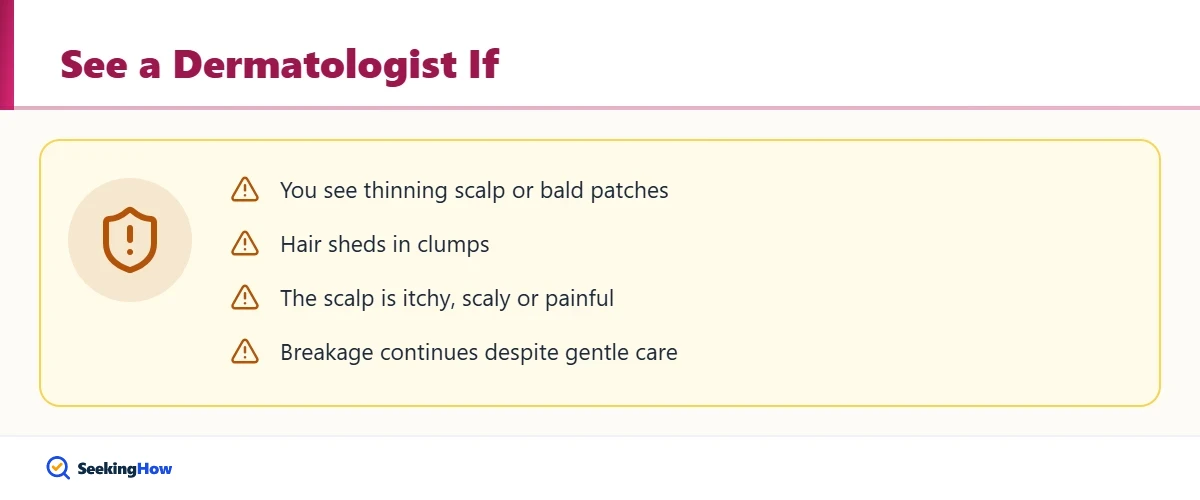
- You see more scalp at the crown, a widening part or bald patches
- Hair comes out in clumps or you shed noticeably more than usual
- Your scalp is itchy, scaly, red, painful or has bumps or pus
- Breakage continues despite several months of gentle care
- Hair changes come with fatigue, weight changes or irregular periods
A dermatologist can examine your scalp, order blood tests and identify conditions such as androgenetic alopecia, telogen effluvium, traction alopecia or scalp infections that need medical treatment.
Medical disclaimer: This article is for general information and is not medical advice. Talk to a dermatologist or doctor about ongoing hair loss, scalp symptoms or before starting supplements.
Frequently Asked Questions
Can broken hair be repaired?
Broken or split hair cannot be fully fused back together. Conditioners, protein treatments and bond-building products can temporarily strengthen and smooth damaged hair, reducing further breakage. Real repair comes from stopping the damage, trimming split ends and letting healthy new hair grow in.
Why is my hair breaking only at the crown?
The crown is where ponytails and buns are anchored, where hair rubs on pillows, hats and headphones, and where heat tools often focus. Repeated tension and friction in one spot weaken hair there first. Rotating hairstyles and sleeping on satin usually help reduce crown breakage.
Does biotin stop hair breakage?
Biotin supplements rarely help unless you have a true biotin deficiency, which is uncommon. They can also interfere with some lab tests, including thyroid and heart tests. Supplements are not FDA-approved for effectiveness before sale, so ask your doctor about testing for deficiencies before taking them.
How often should I use a protein treatment for breakage?
Many people do well with a protein or bond-building treatment every one to two weeks while repairing damage, then less often. Follow the product directions. If hair starts to feel stiff, straw-like or brittle, cut back on protein and focus on moisturizing conditioners.
Can stress cause hair breakage at the crown?
Stress is more often linked to shedding, called telogen effluvium, than to breakage. It can also lead to habits like twisting or pulling hair, which cause breakage. If you notice sudden heavy shedding a few months after a stressful event, see a doctor or dermatologist.