Quick Answer
To build free-standing wooden steps, measure the total rise, divide it into equal risers of about 7 inches (no more than 7 3/4 inches under common US residential code), and lay out 2×12 pressure-treated stringers with a framing square. Cut three stringers, join them with rim boards and bracing, set the frame on a level concrete or paver base, then screw on 2×6 or 5/4 deck board treads.
Key Takeaways
- Every riser in a set of steps must be the same height; uneven steps are the most common cause of trips.
- Use pressure-treated 2×12 lumber for stringers and space them no more than about 16 inches apart for 5/4 or 2x treads.
- A firm, level base of concrete, pavers on compacted gravel, or a poured pad keeps a free-standing unit from rocking or sinking.
- Most codes require a handrail once a stair has four or more risers; check your local building department before you build.
Free-standing steps sit on their own base rather than hanging from a deck or doorway, which makes them ideal for a shed, a camper, a raised patio or a low back door. A basic two- or three-step unit is a solid weekend project with standard lumber and tools. This guide covers the math, the stringer layout, the base and assembly.
How Do You Calculate Rise and Run for Steps?
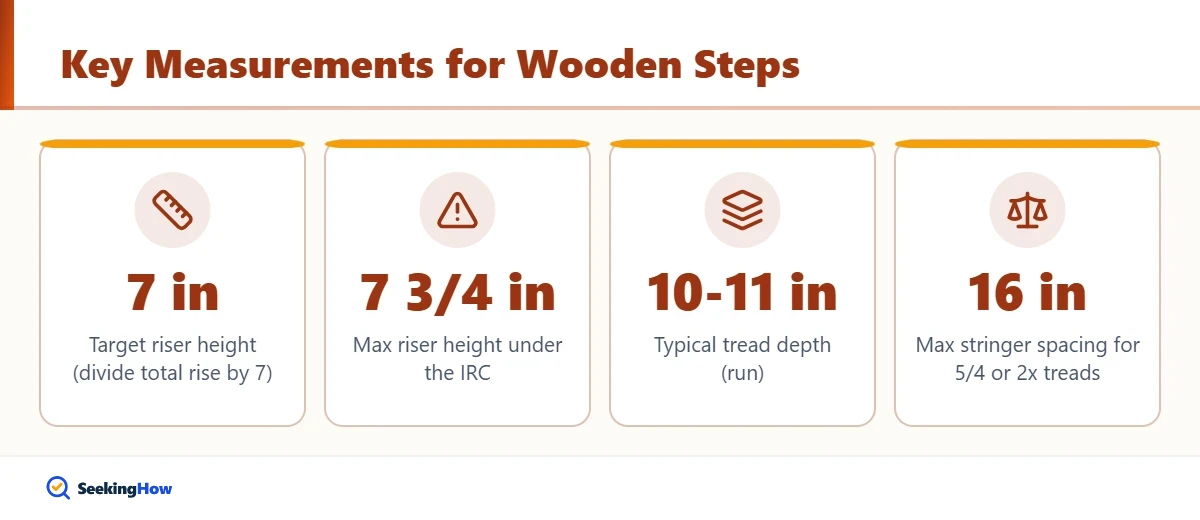
Start with the total rise: the vertical distance from the ground where the steps will land to the top surface you are stepping onto. Measure it with a level and tape, because the ground is rarely flat. Divide the total rise by 7 and round to the nearest whole number to get the number of risers, then divide the total rise by that number to get the exact riser height.
For example, a total rise of 21 inches divided by 7 gives 3 risers of exactly 7 inches. A rise of 23 inches also rounds to 3 risers, each 7 2/3 inches. The tread depth (run) is usually 10 to 11 inches; deeper treads feel more comfortable outdoors.
| Total rise | Number of risers | Riser height | Treads needed |
|---|---|---|---|
| 14 in | 2 | 7 in | 1 plus top landing |
| 21 in | 3 | 7 in | 2 plus top landing |
| 24 in | 4 | 6 in | 3 plus top landing |
| 28 in | 4 | 7 in | 3 plus top landing |
| 30 in | 4 | 7 1/2 in | 3 plus top landing |
In US residential code (the IRC), the maximum riser height is 7 3/4 inches and the minimum tread depth is 10 inches, and risers within a flight should not vary by more than 3/8 inch. Local rules can differ, so confirm with your building department.
What Materials and Tools Do You Need?
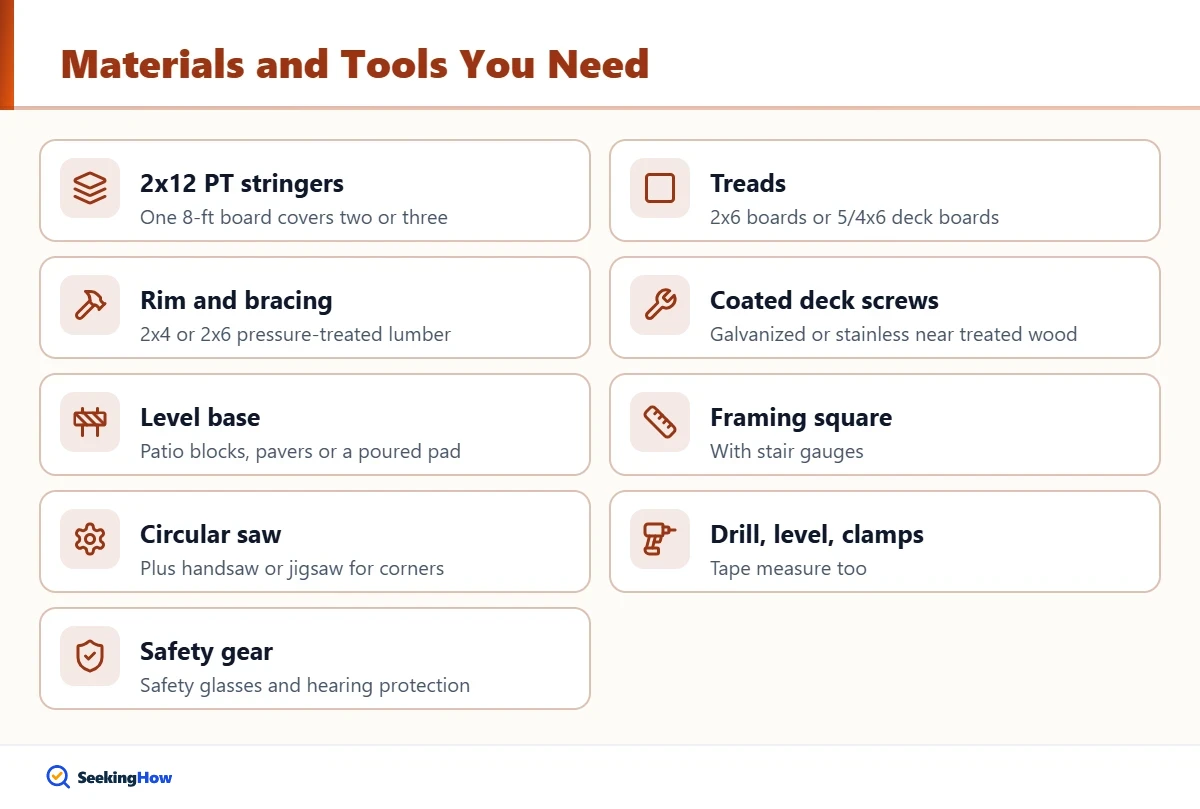
- Stringers: 2×12 pressure-treated lumber; one 8-foot board usually covers stringers for two or three steps.
- Treads: 2×6 boards (two per tread) or 5/4×6 deck boards.
- Rim and bracing: 2×4 or 2×6 pressure-treated lumber for the front kicker, back header and cross blocks.
- Fasteners: exterior-rated coated deck screws or structural screws; galvanized or stainless where lumber touches treated wood.
- Base: concrete patio blocks, pavers on compacted gravel, or a small poured pad.
- Tools: framing square with stair gauges, circular saw, handsaw or jigsaw, drill-driver, level, tape measure, clamps, safety glasses and hearing protection.
How Do You Build Free-Standing Wooden Steps?
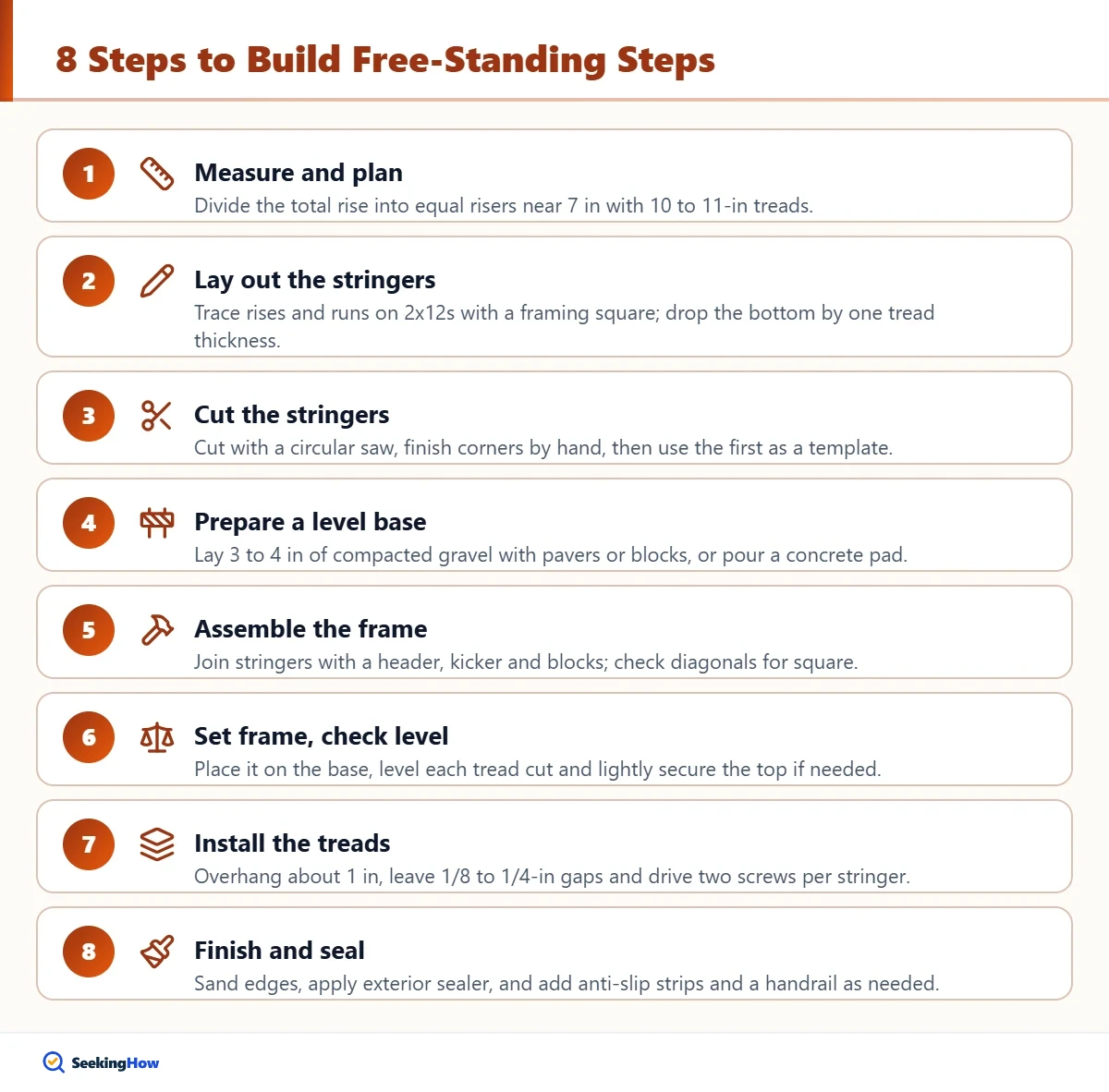
Step 1: Measure and Plan
Measure the total rise at the exact spot where the bottom step will land. Calculate the number of risers and riser height, choose a tread depth of 10 to 11 inches, and decide on the width. For steps up to about 36 inches wide, three stringers spaced about 16 inches apart work well.
Step 2: Lay Out the Stringers
Clamp stair gauges to a framing square at your riser height on the tongue and tread depth on the blade. Place the square on the 2×12 and trace one rise and run, slide it along, and repeat for each step. Mark the bottom cut so the first riser is reduced by the thickness of one tread, which keeps every finished step equal.
Step 3: Cut the Stringers
Cut along the lines with a circular saw, stopping just short of each inside corner, and finish the corners with a handsaw or jigsaw so you do not over-cut and weaken the stringer. Test the first stringer in place, then use it as a template to trace and cut the others.
Step 4: Prepare a Level Base
Remove sod and soft soil where the steps will sit. Lay 3 to 4 inches of compacted gravel and set pavers or concrete blocks on top, checking with a level in both directions. A poured concrete pad is the most stable option for steps that see daily use.
Step 5: Assemble the Frame
Stand the stringers upright and screw a 2×4 or 2×6 header across the back and a kicker across the bottom front. Add a block between stringers under each tread for extra stiffness. Check that the frame is square by measuring the diagonals; they should match.
Step 6: Set the Frame and Check Level
Place the frame on the base and push it against the top landing. Check each tread cut for level side to side and front to back, shimming with composite shims or adjusting the base if needed. If the steps meet a deck or shed, a couple of screws or brackets at the top keep them from shifting while still letting the base carry the load.
Step 7: Install the Treads
Cut treads so they overhang the stringers by about 1 inch on each side and the front of each step by about 1 inch. Leave a 1/8 to 1/4-inch gap between boards for drainage, and drive two screws into each stringer per board. Add riser boards if you want a closed look.
Step 8: Finish and Seal
Ease sharp edges with sandpaper, then apply an exterior stain or sealer once the treated lumber is dry enough to absorb it. Consider anti-slip strips or a grit additive on treads that get wet. Install a handrail if your stair has four or more risers or if anyone using it needs extra support.
What Base Works Best for Free-Standing Steps?
| Base option | Stability | Effort | Best for |
|---|---|---|---|
| Pavers on compacted gravel | Good | Moderate | Shed, garden and patio steps |
| Concrete deck blocks | Fair to good | Low | Light-use or portable steps |
| Poured concrete pad | Excellent | High | Daily-use entry steps |
| Bare soil | Poor | None | Not recommended; rots and sinks |
Safety: Wear safety glasses and hearing protection when cutting, and wear a dust mask when cutting pressure-treated lumber. Do not burn treated wood scraps. For tall stairs, entry stairs required for egress, or steps serving a rental property, get a permit and consider a licensed contractor.
Common Mistakes When Building Wooden Steps
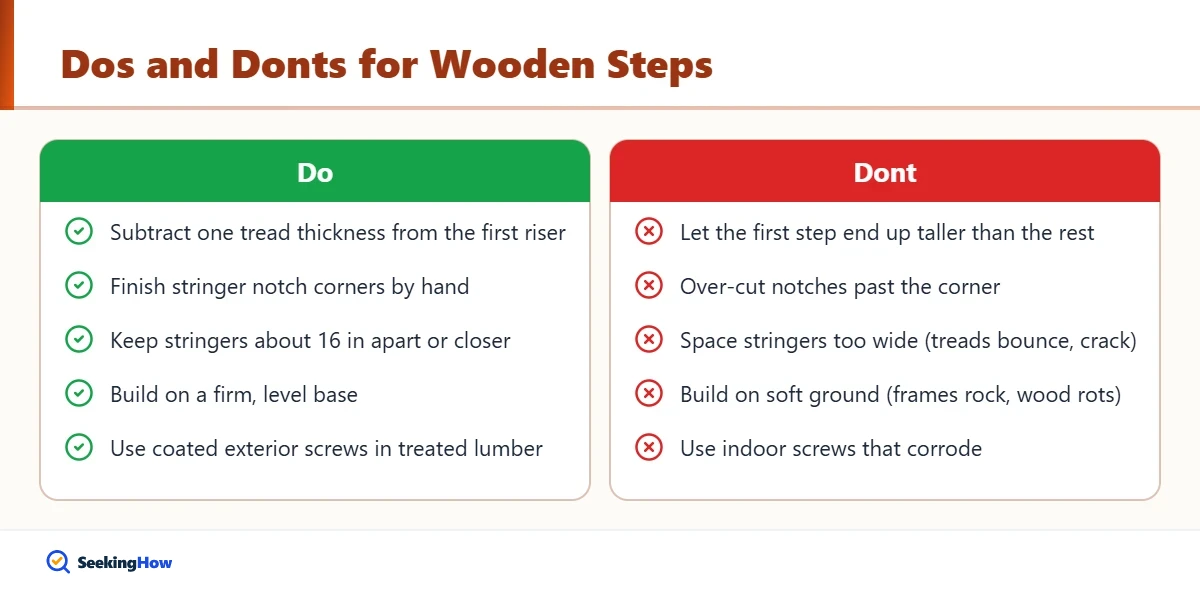
- Forgetting the tread thickness. If you do not drop the bottom of the stringer, the first step ends up taller than the rest.
- Over-cutting stringer notches. Saw kerfs past the corner weaken the stringer; finish by hand.
- Spacing stringers too wide. Treads bounce and crack; stay around 16 inches or closer.
- Building on soft ground. Frames rock and lumber rots; always build a base.
- Using indoor screws. Uncoated screws corrode in treated lumber.
How Long Do Wooden Steps Last and How Do You Maintain Them?
Pressure-treated steps on a good base can last many years with basic care. Reseal them every one to three years, depending on sun and weather exposure, and keep leaves and soil from piling up against the stringers. Check each spring for loose screws, soft spots and cracked treads, and replace damaged boards promptly.
If a screw head strips during repairs, see how to remove a stripped screw from wood. A slightly cupped tread board can sometimes be flattened using the method in our guide to straightening wood with water.
What Are the Alternatives to Building Steps From Scratch?
Home centers sell precut pressure-treated stair stringers in two-, three- and four-step sizes, which removes the hardest layout step. Prefabricated aluminum or plastic step units work well for mobile homes and RVs. For a permanent entry, poured concrete or masonry steps last longest but cost more. Planning a bigger outdoor project? Our guides on enclosing a porch and building an addition on piers cover the next level up.
Frequently Asked Questions
How many stringers do I need for 36-inch-wide steps?
Three stringers are standard for steps around 36 inches wide, which keeps spacing near 16 inches. Wider steps need more stringers so the gap stays at about 16 inches or less. Composite or thin 5/4 treads may need closer spacing, so check the tread manufacturer guidance.
Do free-standing steps need to be attached to the house?
Free-standing steps carry their load on their own base, so they do not need a structural connection. Many builders still fasten the top lightly to the deck rim or threshold area to stop shifting. Never attach steps in a way that traps water against house siding or framing.
Can I use regular lumber for outdoor steps?
Untreated lumber rots quickly outdoors, especially near the ground. Use pressure-treated lumber rated for exterior use, choosing ground-contact rated wood for any part close to soil. Cedar and other naturally durable woods also work for treads but cost more.
Do I need a permit to build wooden steps?
It depends on your local rules. Small steps to a shed or garden often do not need a permit, while entry stairs to a home, stairs above a certain height, or work on rental property often do. Call your local building department before you start.
How long does it take to build free-standing steps?
A simple two- or three-step unit typically takes a day for a DIYer with basic tools, including layout, cutting, base prep and assembly. A poured concrete pad adds curing time before you can set the steps. Staining usually waits until the treated lumber has dried.