Quick Answer
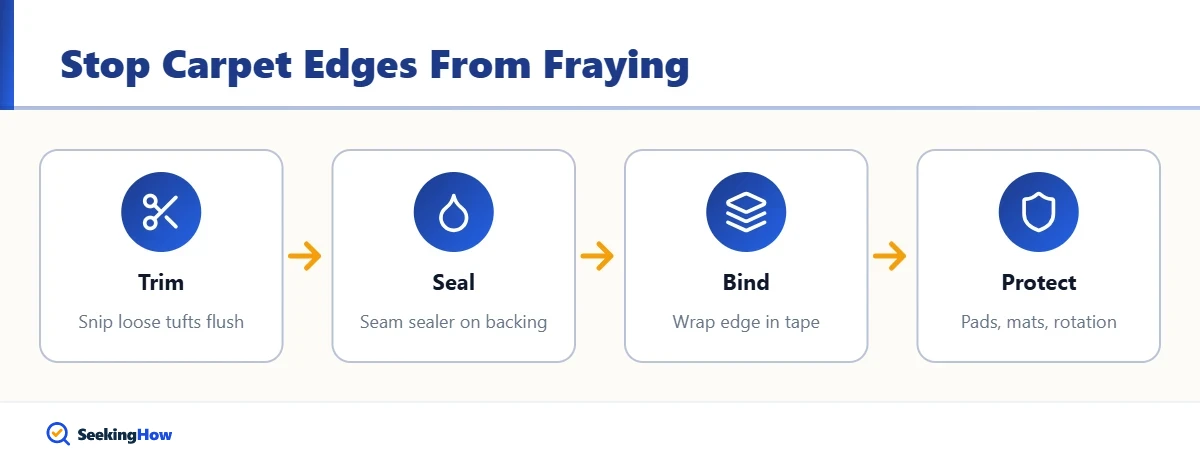
To keep carpet edges from fraying, trim loose yarns flush with sharp scissors (never pull them), seal the cut edge with latex carpet seam sealer, then cover it with self-adhesive or hot-melt carpet binding tape. For wall-to-wall carpet at doorways, lock the edge under a metal or wood transition strip. A rug pad and regular low-suction vacuuming prevent new fraying.
Key Takeaways
- Cut loose tufts flush; pulling a yarn can unravel a whole row.
- Latex seam sealer locks the backing so yarns cannot work loose.
- Binding tape is the best DIY finish; serging is the most durable professional finish.
- Transition strips protect wall-to-wall carpet edges at doorways and hard floors.
- Rug pads and gentle vacuum settings stop fraying before it starts.
Frayed carpet edges look bad, catch toes and vacuum brushes, and get worse every time they are disturbed. The good news is that most fraying can be stopped in an afternoon with inexpensive supplies from a hardware store. The right fix depends on whether you are dealing with an area rug, a carpet remnant, or installed wall-to-wall carpet.
What Causes Carpet Edges to Fray?
Carpet is made of yarn tufts held in a primary backing and glued to a secondary backing with latex. When an edge is cut and left unfinished, nothing holds the outer row of tufts, so friction slowly works them loose.
- Unfinished cut edges: remnants and DIY-cut rugs have raw backing exposed.
- Foot traffic and furniture: doorways, stair noses and chair paths get the most wear.
- Vacuum beater bars: a spinning brush roll set too low can grab and pull loops, especially on Berber.
- Rugs that shift: a rug sliding on hard flooring rubs its edges every time someone walks on it.
- Pets: cats and dogs scratch and chew at loose loops, especially near doors.
- Age and moisture: old latex backing becomes brittle and stops gripping the yarns.
What You Need
You will not need every item below. Pick the supplies that match the method you choose.
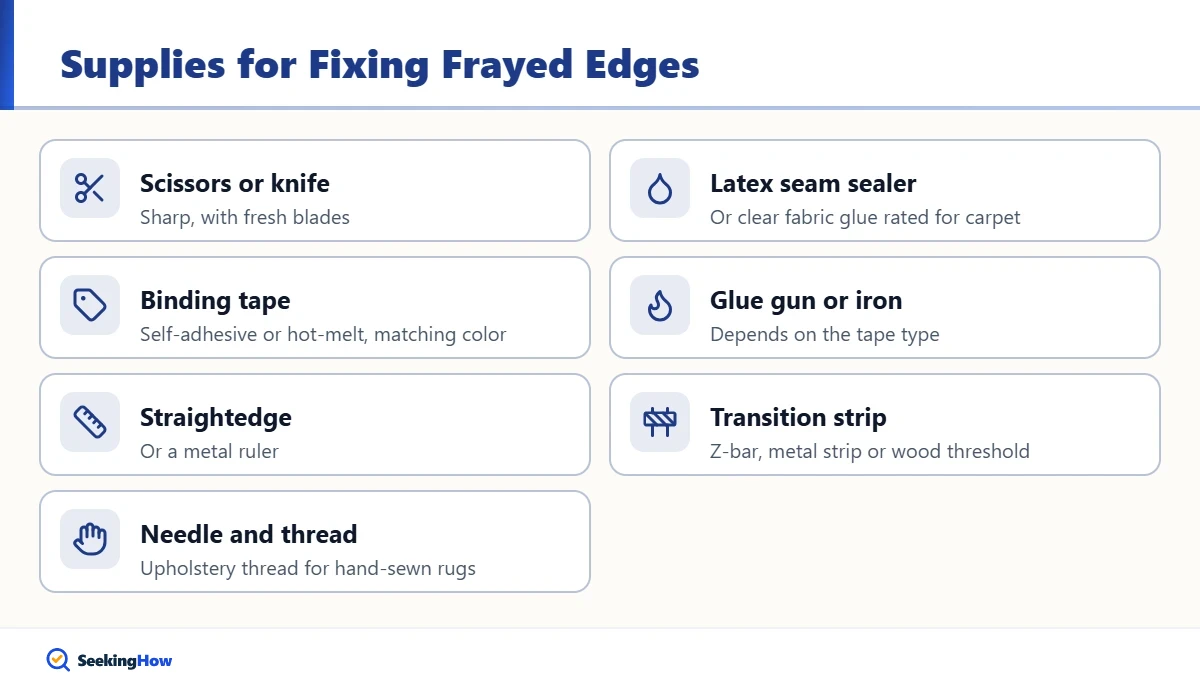
- Sharp carpet scissors or a utility knife with fresh blades
- Latex carpet seam sealer or a clear fabric glue rated for carpet
- Carpet binding tape (self-adhesive or hot-melt) in a matching color
- Hot glue gun or a household iron, depending on the tape type
- Straightedge or metal ruler
- Transition strip (Z-bar, metal edge strip or wood threshold) for wall-to-wall carpet
- Heavy-duty needle and upholstery thread for hand-sewn rug edges
How Do You Bind a Frayed Carpet Edge Yourself?
Binding is the most practical DIY fix for rugs and carpet remnants. It wraps the raw edge in a fabric tape so the yarns are both glued and covered.
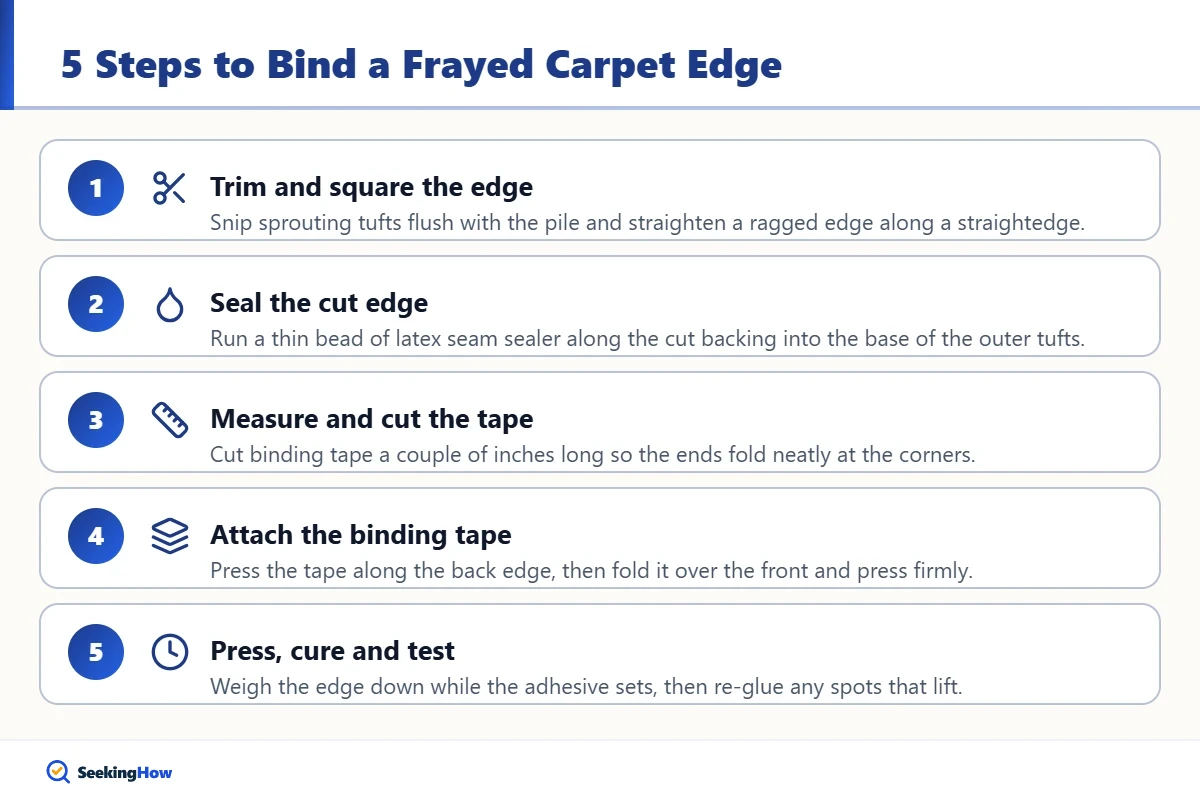
Step 1: Trim Loose Yarns and Square the Edge
Snip any sprouting tufts flush with the pile using sharp scissors. If the edge is ragged, lay a straightedge along it and cut through the backing from the back side with a utility knife, removing as little carpet as possible. Never yank a loose yarn, because on loop carpet one pull can run the length of the row.
Step 2: Seal the Cut Edge
Run a thin bead of latex seam sealer along the cut backing so it soaks into the base of the outer row of tufts. Keep the sealer off the face of the pile. Let it dry according to the label, usually until it is clear and no longer tacky.
Step 3: Measure and Cut the Binding Tape
Measure the edge and cut the tape a couple of inches long so you can fold the ends neatly at corners. Choose a color that matches the border of the carpet; dark brown, black, gray and beige suit most rugs.
Step 4: Attach the Binding Tape
For self-adhesive tape, peel the liner and press the tape along the back edge, then fold it over the front and press firmly. For hot-melt tape, heat the glue strip with a glue gun or an iron set as the instructions direct, then press the tape in place a short section at a time. Miter or fold the corners so they lie flat.
Step 5: Press, Cure and Test
Weigh the bound edge down with books or a board while the adhesive sets. After it cures, run your hand along the edge and tug gently. Re-glue any lifting spots before the rug goes back into traffic.
Tip: Test any sealer or glue on a scrap or a hidden corner first. Some adhesives darken light-colored wool or leave a stiff ridge.
Which Edge Finish Should You Choose?
Every finish has a place. The table compares the common options so you can match cost, skill and durability to your carpet.
| Method | Best for | Skill level | Durability |
|---|---|---|---|
| Latex seam sealer only | Small cut edges, hidden edges | Easy | Fair; edge stays exposed |
| Self-adhesive binding tape | Area rugs, remnants, low traffic | Easy | Good |
| Hot-melt binding tape | Remnant rugs, medium traffic | Easy to moderate | Very good |
| Hand-sewn whipstitch | Wool and handmade rugs | Moderate | Very good |
| Professional binding or serging | Large rugs, stairs, high traffic | Done by a carpet shop | Excellent |
| Transition strip | Wall-to-wall carpet at doorways | Moderate | Excellent |
How Do You Stop Wall-to-Wall Carpet From Fraying at a Doorway?
Installed carpet usually frays where it meets tile, vinyl or hardwood. The fix is to tuck the edge and lock it under hardware rather than taping it.
- Z-bar or tack strip: the carpet is stretched over a metal Z-bar and its edge tucked into the lip, hiding the cut completely.
- Metal carpet edge strip: a strip with pins grips the carpet and a flange is hammered down over it, ideal for carpet-to-tile joints.
- Wood or vinyl threshold: a reducer or T-molding covers the joint and protects the edge from shoes.
Seal the cut edge with seam sealer before you install the strip. If the carpet has come loose from its tack strip or has wrinkles, it may need to be re-stretched with a power stretcher, a job most homeowners rent equipment for or hand to an installer. The same doorway area often needs attention when you install baseboard molding on an uneven floor, so it is worth planning both jobs together.
How Do You Fix Fraying on a Wool or Handmade Rug?
Handwoven and hand-knotted rugs have structural edges called the selvedge (sides) and fringe (ends). Glue can stain natural fibers and lower the value of a good rug, so stitching is the better approach.
- Use a curved upholstery needle and strong cotton or wool thread close to the rug color.
- Whipstitch over the side edge, wrapping each stitch around the outer warp threads.
- At the fringe, tie off loose knots or stitch across the last row of knots so they cannot open further.
- For antique or valuable rugs, take them to a rug restoration specialist rather than attempting repairs.
Common Mistakes That Make Fraying Worse
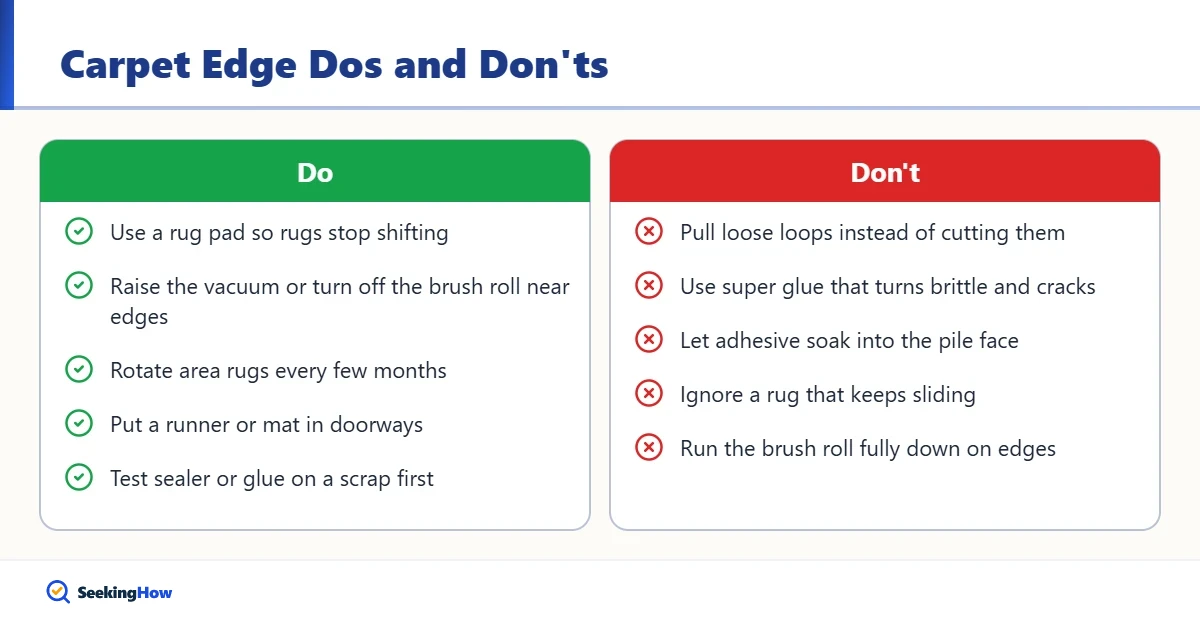
- Pulling loose loops instead of cutting them.
- Using super glue, which turns brittle and cracks in a stiff line.
- Letting adhesive soak into the pile face, which leaves hard, shiny spots.
- Ignoring a sliding rug, which keeps rubbing the edge on the floor.
- Running a vacuum with the brush roll fully down on loop or shag carpet edges.
How Do You Prevent Carpet Edges From Fraying Again?
Once the edge is finished, a few habits keep it that way.
- Use a rug pad: a felt-and-rubber pad stops rugs from shifting and rubbing on hard floors.
- Adjust the vacuum: raise the height setting or turn off the brush roll near edges, and avoid running over fringe.
- Rotate rugs: turn area rugs every few months so wear spreads evenly.
- Protect high-traffic edges: put a runner or mat in doorways.
- Deter pets: offer scratching posts and chew toys, and cover tempting edges while training.
Keeping carpet clean also matters, because grit acts like sandpaper on fibers. If accidents happen, clean them promptly using methods like those in our guide to cleaning dog poop out of carpet, and blot rather than scrub near edges.
When Should You Call a Carpet Professional?
Call a flooring installer or carpet shop if the carpet has pulled away from the tack strip, if fraying runs along a seam in the middle of the room, if stairs are involved, or if the rug is large, valuable or antique. Carpet shops can bind or serge custom edges, re-stretch loose carpet and hot-melt seams with professional seaming irons, which gives a more invisible and durable result than tape.
Frequently Asked Questions
Can you use hot glue to stop carpet from fraying?
Hot glue can hold a short frayed section on a low-traffic rug, but it hardens into a stiff ridge and can crack. Hot-melt binding tape is a better choice because the glue is spread evenly under a fabric strip that covers and protects the edge.
What is the difference between carpet binding and serging?
Binding wraps a fabric tape around the edge and glues or sews it down. Serging wraps yarn tightly around the edge with a special machine, creating a hand-finished look. Both are done by carpet shops; binding tape is the DIY-friendly version.
Will fabric glue work on carpet edges?
A flexible fabric or carpet glue can seal small frayed spots on synthetic rugs. Apply it only to the backing and the base of the tufts, keep it off the pile surface, and test first because some glues darken or stiffen fibers.
How do you fix a frayed carpet edge on stairs?
Trim loose yarns and apply seam sealer to stop the damage from spreading, but stair edges take heavy wear and are a tripping hazard. A carpet installer can re-tuck, re-staple or re-bind the stair nose so it is secure and safe.
Can you cut a carpet without it fraying?
Yes. Cut from the back with a sharp utility knife along a straightedge, cutting between rows of tufts, then immediately seal the cut edge with latex seam sealer and bind it or tuck it under a transition strip.