Quick Answer
Most doctors advise not swimming with stitches until they are removed and the wound has fully closed, usually about 1-3 weeks depending on location. Soaking softens the wound and pools, lakes and the ocean carry germs. If your doctor approves a short swim, cover the stitches with a fully sealed waterproof film dressing, keep it brief, then dry and re-dress the wound right away.
Key Takeaways
- Showering is usually allowed 24-48 hours after stitches; soaking in baths, pools, hot tubs and open water is not.
- Waterproof dressings reduce water contact but are not a guarantee, especially during active swimming.
- Lakes, rivers, oceans and hot tubs carry a higher infection risk than a well-chlorinated pool.
- Always follow the specific instructions from the doctor who placed your stitches.
- Redness spreading from the wound, pus, fever or a wound that opens needs prompt medical care.
Getting stitches right before a vacation, swim season or team practice is frustrating. Water itself is not the enemy, since gentle showering helps keep a wound clean, but soaking is a different story. This guide explains the risks, how long to wait, how to seal a wound if your doctor approves a swim, and the signs of trouble to watch for.
Can You Swim With Stitches?
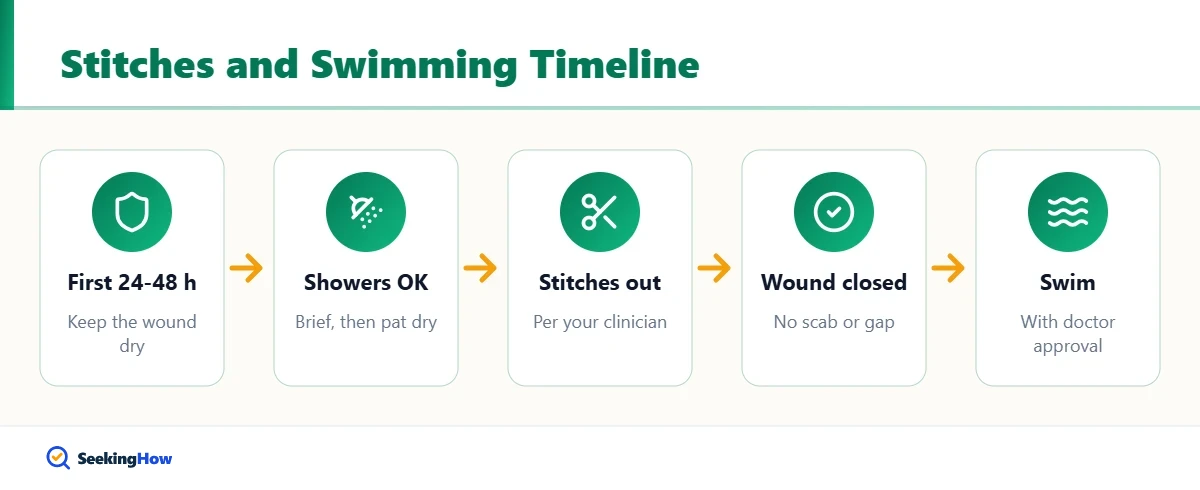
In most cases, no. Standard wound-care advice is to avoid soaking a stitched wound in a bath, pool, hot tub, lake or the ocean until the stitches are out and the skin has sealed. Prolonged soaking softens the wound edges and the skin around them, which can slow healing and make it easier for the wound to reopen. Water in pools and especially natural bodies of water also contains bacteria that can cause infection.
Some doctors may allow a brief swim in a well-maintained, chlorinated pool for a small wound that is healing well, if it is completely sealed under a waterproof dressing. That is a judgment call for your clinician, not a general rule. Surgical wounds, wounds on hands, feet or joints, and stitches in people with diabetes or weakened immune systems usually call for more caution.
How Long After Stitches Can You Swim?
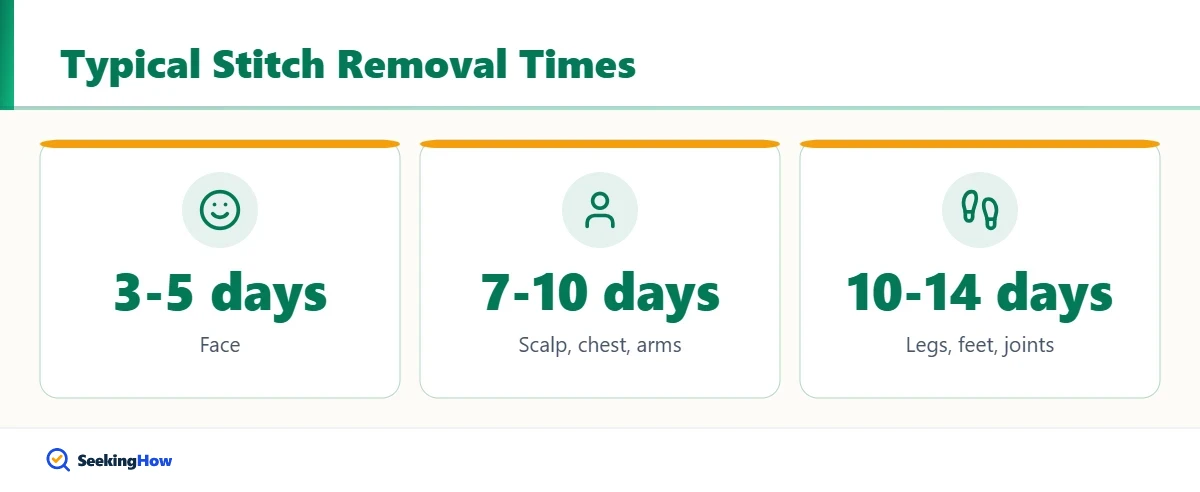
Stitches stay in for different lengths of time depending on where they are, because skin heals at different speeds around the body. The timelines below are typical ranges; your doctor’s instructions take priority.
| Wound location | Typical time until stitch removal | Swimming |
|---|---|---|
| Face | About 3-5 days | Usually after removal and once the wound is closed |
| Scalp | About 7-10 days | After removal and closure |
| Arms, chest, abdomen | About 7-10 days | After removal and closure |
| Back, legs | About 10-14 days | After removal and closure |
| Hands, feet, over joints | About 10-14 days | After removal and closure; ask your doctor |
| Dissolvable stitches | Dissolve over 1-several weeks | Ask your doctor; usually wait about 2 weeks or more |
| Surgical incisions | Varies | Follow your surgeon’s timeline, often several weeks |
Even after stitches come out, the new skin is fragile for a few weeks. Many clinicians suggest waiting until there is no scab, no open area and no drainage before swimming.
How Do You Keep Stitches Dry in the Shower?
For the first 24-48 hours, keep the wound dry unless told otherwise. After that, most people can shower normally. Let water run over the wound briefly rather than aiming the spray directly at it, wash around it gently with mild soap, and avoid scrubbing. Pat the area dry with a clean towel, then apply any ointment and fresh bandage your doctor recommended. If your doctor wants the wound kept fully dry, cover it with plastic wrap sealed with medical tape or use a reusable waterproof cast or wound protector.
How To Protect Stitches If Your Doctor Approves a Swim
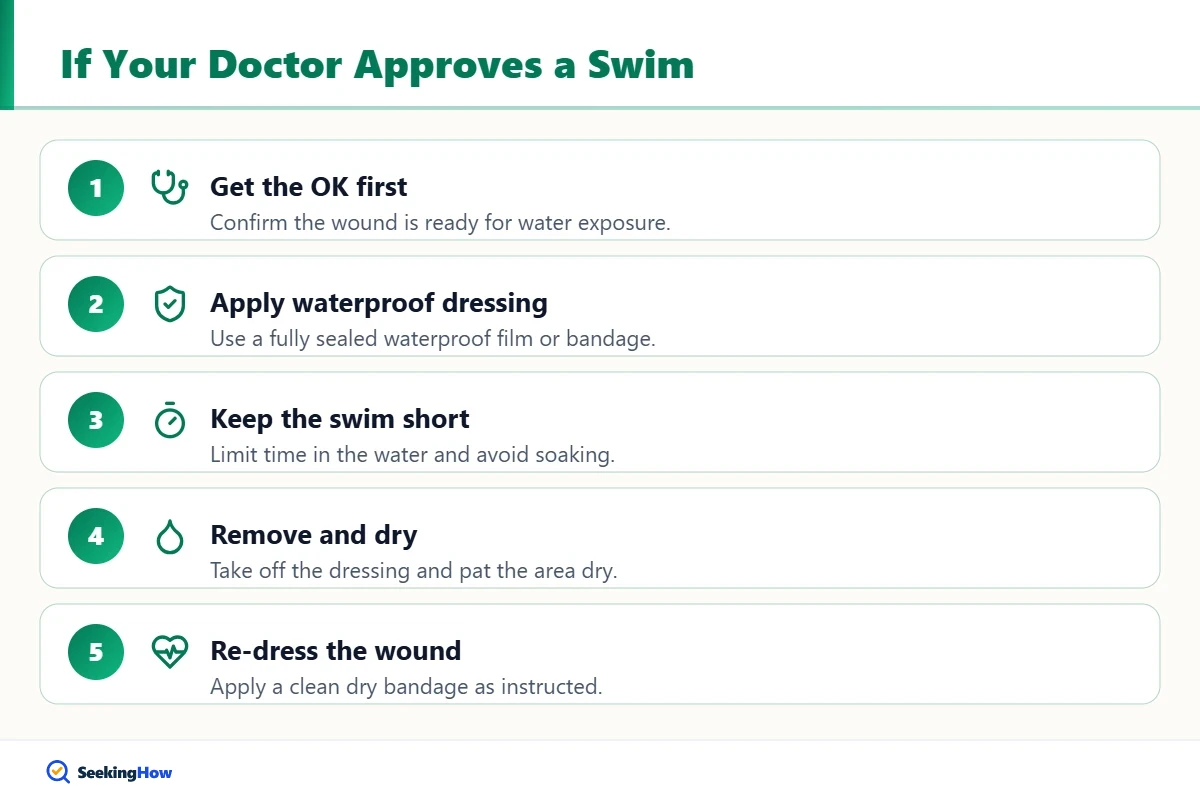
Step 1: Get Clearance First
Ask the doctor or nurse who placed your stitches whether swimming is acceptable, how long to wait and which type of water is allowed. Mention the setting, such as a chlorinated pool versus a lake or ocean.
Step 2: Choose a Fully Waterproof Dressing
Use a waterproof transparent film dressing or waterproof bandage large enough to leave at least 1-2 cm of adhesive on clean, dry skin on every side of the wound. Small strip bandages and fabric bandages are not waterproof.
Step 3: Apply It to Clean, Dry Skin
Wash your hands, make sure the skin around the stitches is completely dry and free of lotion or ointment where the adhesive will sit, and press the edges down firmly with no wrinkles or gaps. Ointment under the adhesive area will stop it sealing.
Step 4: Keep the Swim Short and Gentle
Limit time in the water, avoid diving, contact games and strokes that stretch the wound, and stay out of hot tubs, lakes, rivers and the ocean. Check the dressing between activities and get out if water seeps underneath.
Step 5: Dry and Re-Dress Right Away
After swimming, rinse off with clean tap water, carefully peel off the waterproof dressing, pat the wound dry and inspect it. Apply a fresh, clean dressing as your doctor advised. Do not leave a wet dressing on the wound.
Why Are Lakes, Oceans and Hot Tubs Riskier?
Natural water is not disinfected and can carry bacteria that cause wound infections; for example, the CDC warns that Vibrio bacteria in warm coastal and brackish water can cause serious infections in open wounds. Hot tubs are warm, which helps some bacteria grow, and the heat and soaking soften skin. Even chlorinated pools are not sterile. If you have a fresh wound, these settings are best avoided until it has healed.
Safety: If a wound has been in ocean, lake or river water and becomes red, swollen, painful or blistered, or you develop a fever, seek medical care promptly and mention the water exposure.
Common Mistakes With Stitches and Water
- Taking baths or soaking in a hot tub in the first days after stitches
- Using ordinary fabric bandages and assuming they are waterproof
- Applying ointment where the waterproof dressing needs to stick
- Leaving a damp dressing on the wound after swimming or showering
- Scrubbing the wound or picking at scabs and stitch ends
- Assuming dissolvable stitches mean you can swim right away
If you are recovering from a leg injury as well as a cut, our guide on how to reduce leg pain covers safe recovery basics. And if a wound involved glue rather than stitches, see our guide on removing super glue from skin for everyday glue mishaps; medical skin glue should be left to fall off on its own.
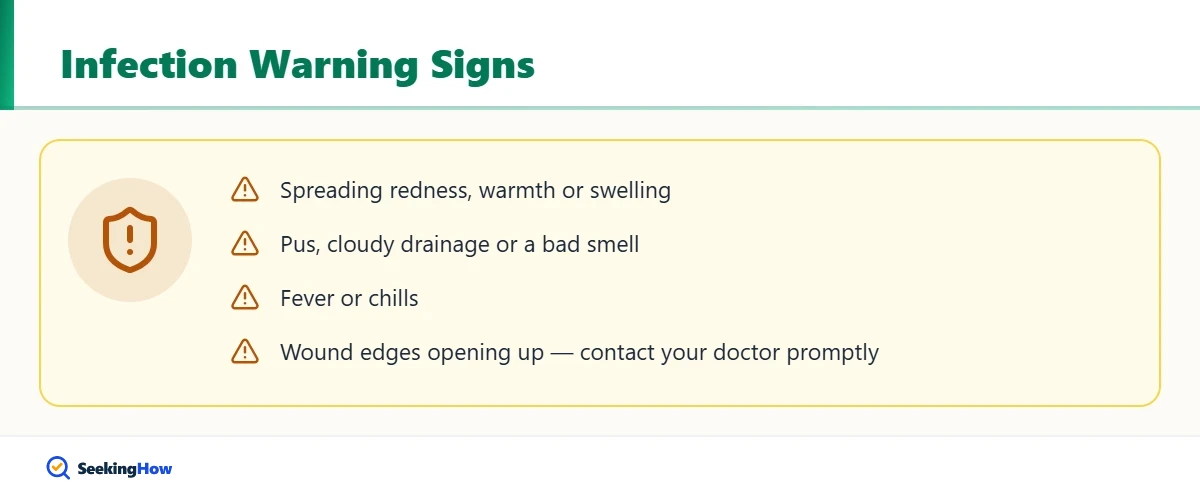
When Should You Call a Doctor About Your Stitches?
- Redness, warmth or swelling that spreads beyond the wound edges
- Pus, cloudy drainage or a bad smell
- Increasing pain after the first couple of days
- Fever or chills
- Red streaks spreading from the wound
- The wound opens, or a stitch breaks or comes out early
- Numbness or trouble moving a nearby finger or joint
Also check whether your tetanus vaccination is up to date; a booster may be recommended for some wounds if it has been five or more years since your last dose.
Medical disclaimer: This article is for general information and is not medical advice. Always follow the wound care instructions from the doctor or nurse who treated you, and ask them before swimming, bathing or using hot tubs with stitches.
Frequently Asked Questions
Can I swim with dissolvable stitches?
Dissolvable stitches still mean the wound is healing, so most doctors advise against swimming until the skin has fully closed, often around two weeks or more. Soaking can soften the wound and raise infection risk. Ask the clinician who placed them for a specific timeline.
Can I go in the ocean with stitches?
It is best to avoid the ocean until your wound has healed. Seawater is not disinfected and can contain bacteria, including Vibrio in warm coastal water, that cause serious wound infections. Salt water does not sterilize a wound. Wait until stitches are out and the skin has closed.
Are waterproof bandages really waterproof for swimming?
Transparent film dressings designed to be waterproof can keep out water for showering and short swims when applied correctly to clean, dry skin. Movement, stretching and long swims can loosen the edges and let water in, so they reduce risk rather than eliminate it.
What happens if my stitches get wet?
Brief wetting, such as in the shower after the first 24 to 48 hours, is usually fine. Gently pat the area dry and apply a fresh dressing. If stitches are soaked for a long time, keep them dry afterward and watch for signs of infection or the wound opening.
Can I use a hot tub after stitches are removed?
Wait until the wound is fully closed, with no scab or drainage, before using a hot tub. Fresh skin is fragile for a few weeks, and warm water can harbor bacteria. If in doubt, ask your doctor, especially for surgical incisions or wounds on the legs or feet.