Quick Answer
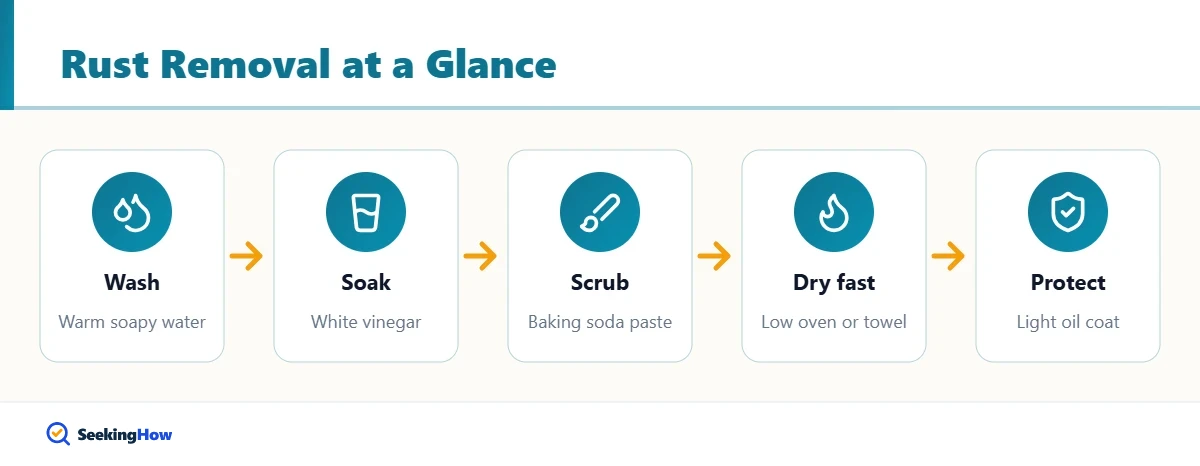
To remove rust from cookie cutters, scrub light rust with a baking soda paste and a soft brush, or soak rusty tinplate cutters in white vinegar for 10 to 30 minutes, then scrub, rinse, and dry them immediately with a towel and a few minutes in a warm 200°F oven. Hand-wash and store them bone-dry to stop rust coming back.
Key Takeaways
- Most rusting cookie cutters are tin-plated steel; the thin tin coating wears off and exposes steel that rusts.
- Baking soda paste is gentlest; white vinegar works faster on heavier rust but should not soak for hours.
- Drying is the most important step: towel-dry, then warm the cutters briefly in a low oven.
- Keep tinplate cutters out of the dishwasher, which strips the coating and leaves them wet.
- Replace cutters with deep pitting, holes or flaking rust, since they touch food.
A rusty cookie cutter is frustrating, especially if it is a vintage shape or holiday favorite. The good news is that surface rust usually comes off with pantry staples in under an hour. The key is to remove the rust gently, protect what is left of the tin coating, and dry the cutters so thoroughly that moisture has nowhere to hide.
Why Do Cookie Cutters Rust?
Many classic metal cookie cutters are made from tinplate: thin steel coated with an even thinner layer of tin. Tin resists corrosion, but scratches, dishwasher detergent and age wear it away. Once bare steel is exposed to water and air, it oxidizes into reddish-brown iron oxide, which is rust.
The seams and rolled top edges rust first because water collects there. Stainless steel, copper and plastic cutters do not rust in the same way, so if you are buying new cutters for frequent use, stainless steel is the lowest-maintenance metal option.
| Cutter Material | Rusts? | Dishwasher Safe? | Care Notes |
|---|---|---|---|
| Tin-plated steel | Yes, when coating wears | No | Hand-wash and dry right away |
| Stainless steel | Rarely | Usually (check the maker) | May spot if left wet |
| Copper | No (tarnishes instead) | No | Hand-wash; polish tarnish gently |
| Plastic | No | Often top rack | Can warp from heat |
What Do You Need To Remove Rust From Cookie Cutters?
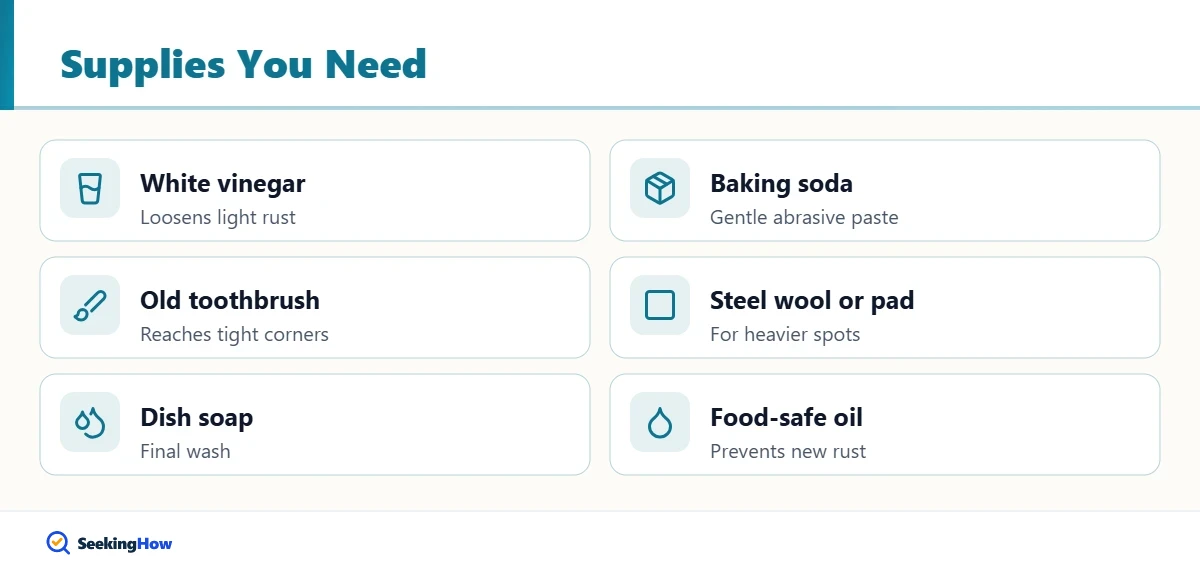
- Baking soda
- Distilled white vinegar (standard 5% acidity)
- Mild dish soap
- A soft toothbrush or small nylon scrub brush
- A non-scratch scrub sponge
- Cotton swabs or a toothpick for seams
- A bowl or shallow glass dish for soaking
- Clean, dry kitchen towels
- A baking sheet and your oven (for drying)
How To Remove Rust From Cookie Cutters Step by Step
Start with the gentle baking soda method for light spotting. Move to the vinegar soak only if the rust does not budge, because acid also attacks the remaining tin coating.
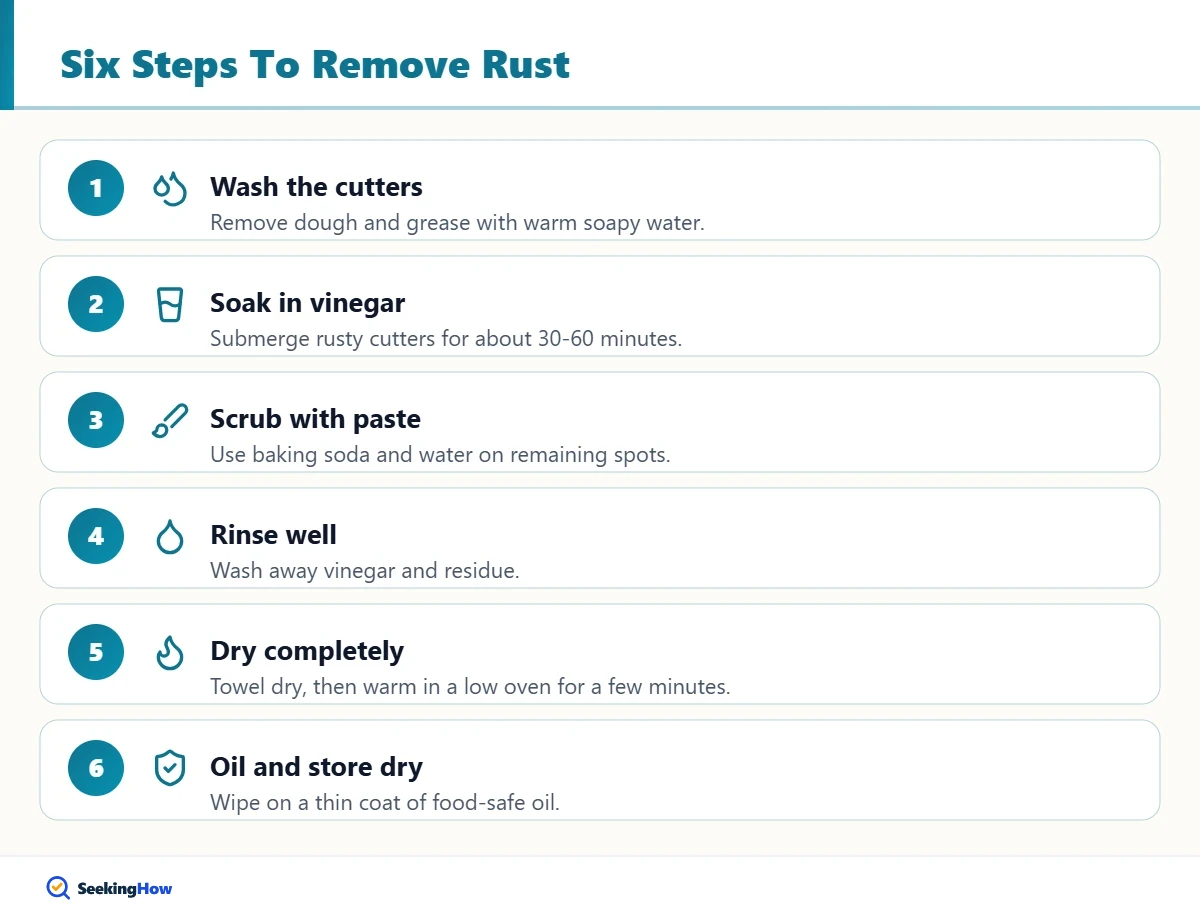
Step 1: Wash Off Dough and Grease
Wash the cutters in warm, soapy water to remove dried dough, butter and dust. Rust removers work better on a clean surface. Rinse and check how much rust is left once the grime is gone.
Step 2: Scrub Light Rust With Baking Soda Paste
Mix about 2 tablespoons of baking soda with enough water to make a thick paste. Spread it over rusty spots, wait 10 to 15 minutes, then scrub with a soft toothbrush, working into seams and corners. Many light rust spots lift completely at this stage.
Step 3: Soak Stubborn Rust in White Vinegar
For heavier rust, submerge the cutters in white vinegar for 10 to 30 minutes, checking every 10 minutes. The acetic acid loosens and dissolves iron oxide. Avoid overnight soaks, which can etch the metal and strip more tin.
Step 4: Scrub and Neutralize
Scrub the softened rust with the brush or a non-scratch sponge, using a toothpick or swab in tight curves. Then dip the cutters in a baking soda and water solution or wash them in soapy water to neutralize any leftover vinegar. Expect a little fizzing, which is normal.
Step 5: Rinse and Dry Immediately
Rinse in clean water and towel-dry right away, paying attention to seams and rolled edges. Then place the cutters on a baking sheet in a 200°F oven for 5 to 10 minutes, or in a cooling oven after baking, to drive out hidden moisture.
Step 6: Inspect and Store Dry
Once cool, check each cutter for remaining rust, pits or holes. Store them in a dry, airtight container, ideally with a food-safe silica gel packet, away from the sink and dishwasher steam.
Is It Safe To Use a Rusty Cookie Cutter?
A small amount of surface rust is not considered seriously dangerous, but you do not want rust flakes in your dough, and rough rusty edges can harbor food residue that is hard to clean. Remove the rust before using the cutter. If the cutter has deep pits, holes, crumbling edges or rust that returns right after cleaning, it is time to replace it.
Safety: Do not use chemical rust removers, naval jelly or strong acids on cookie cutters unless the product label states it is safe for food-contact items. Never mix vinegar with bleach, which can release toxic chlorine gas.
Which Rust Removal Method Should You Use?
| Method | Strength | Time | Best For |
|---|---|---|---|
| Baking soda paste | Gentle | 10-15 min | Light spots, worn tinplate |
| White vinegar soak | Moderate | 10-30 min | Heavier surface rust |
| Lemon juice and salt | Moderate | 15-30 min | Small spots; mild abrasive action |
| Oxalic acid cleanser (powdered) | Strong | A few minutes | Stainless cutters only; rinse very well |
Curious why vinegar and baking soda fizz when you neutralize? Our explainer on why vinegar and baking soda react covers the chemistry. For tools and hardware with heavier corrosion, see the fastest way to remove rust from metal.
Common Mistakes When Cleaning Rusty Cookie Cutters
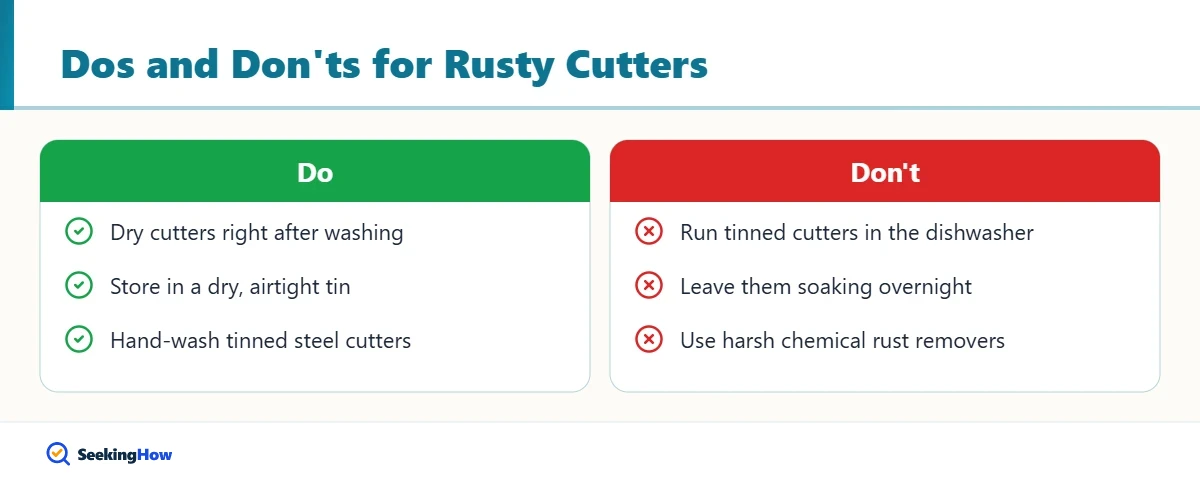
- Using steel wool on tinplate. It removes rust and tin, exposing more bare steel that rusts again.
- Soaking for hours. Long acid soaks pit the steel and dull the finish.
- Air-drying in a dish rack. Water trapped in seams starts new rust overnight.
- Running tinplate in the dishwasher. Hot water, detergent and long wet cycles are the top cause of rusty cutters.
How Do You Keep Cookie Cutters From Rusting?
Prevention is mostly about water. Hand-wash tinplate cutters quickly in warm soapy water, never leave them soaking, and dry them by hand right away. A few minutes in the cooling oven after a baking session is an easy habit that dries every crevice.
Store cutters in a dry tin or plastic box rather than an open drawer near the sink, and add a silica gel packet to absorb humidity. Some bakers wipe a very thin film of neutral cooking oil on tinplate before long-term storage; if you do, wash them before the next use so the oil does not turn sticky. If you collect decorative metal cutters, the gentle methods in how to clean nickel silver also help keep display pieces bright.
Frequently Asked Questions
Can you put rusty cookie cutters in the dishwasher?
Not if they are tin-plated. Dishwasher detergent, heat and long wet cycles wear away the tin coating and leave water in the seams, which makes rust worse. Stainless steel and some plastic cutters are dishwasher safe, but check the manufacturer label first.
Does vinegar damage cookie cutters?
Short soaks of 10 to 30 minutes are generally fine for removing rust, but long soaks can etch the steel and strip more of the tin coating. Neutralize with soapy or baking soda water afterward and dry the cutters immediately.
Can I use rusty cookie cutters for baking?
Remove the rust first. Rust flakes can transfer to dough and rough rusty areas are hard to clean. If a cutter has deep pitting, holes or rust that quickly returns, replace it rather than using it on food.
Why do my cookie cutters rust after washing?
Water trapped in rolled edges and seams sits against exposed steel where the tin coating has worn off. Towel-drying alone often misses these spots. Placing the cutters in a warm 200 degree oven for a few minutes after washing removes the hidden moisture.
What are the best rust-proof cookie cutters?
Stainless steel cutters are the most rust-resistant metal option and hold sharp edges well. Copper cutters do not rust but tarnish, and plastic cutters cannot rust but may warp with heat. Tin-plated cutters are inexpensive but need the most careful drying.