Quick Answer
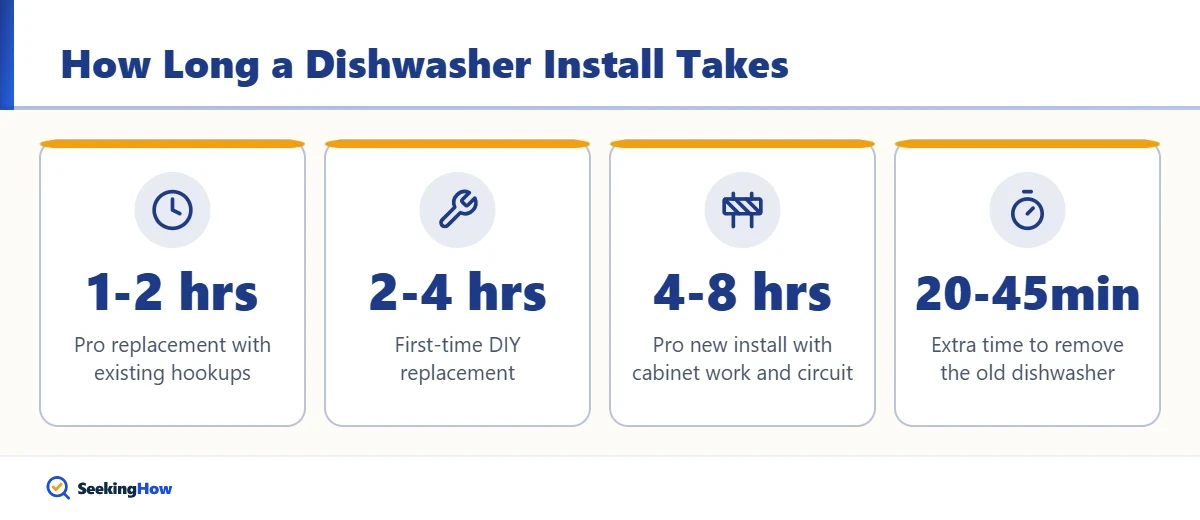
Installing a dishwasher usually takes 1 to 2 hours when you are swapping a new unit into the same space with existing water, drain and power hookups. A first-time installation, where you must cut a cabinet, run a new water line, add a drain connection and wire a dedicated 15- or 20-amp circuit, can take 4 to 8 hours or more.
Key Takeaways
- A like-for-like replacement takes a pro about 1 to 2 hours and a careful DIYer 2 to 4 hours.
- New installations take longer because they need plumbing, electrical and sometimes cabinet work.
- Removing the old dishwasher adds roughly 20 to 45 minutes.
- Most dishwashers need a standard 24-inch wide opening and about 34 to 35 inches of height under the counter.
- Hire a plumber or electrician if you need a new circuit or new supply line.
The real answer depends on what is already under your counter. If the old machine had working hookups, installation is mostly unbolting, connecting three lines and leveling. If the kitchen never had a dishwasher, you are really doing three small projects: carpentry, plumbing and electrical. Here is how the time breaks down so you can plan your day or your budget.
How Long Does Dishwasher Installation Take?
Time varies most with the type of job. The table below gives typical ranges for a standard 24-inch built-in dishwasher.
| Installation scenario | Professional | DIY (first time) |
|---|---|---|
| Replacement with existing hookups | 1 to 2 hours | 2 to 4 hours |
| Replacement plus new supply line and valve | 1.5 to 2.5 hours | 3 to 5 hours |
| New install, cabinet already open, hookups nearby | 2 to 4 hours | 4 to 6 hours |
| New install needing cabinet removal and new circuit | 4 to 8 hours (often 2 trades) | A full day or more |
| Compact or 18-inch model in existing space | 1 to 2 hours | 2 to 3 hours |
Delivery-and-install services from big-box retailers typically book a single visit for replacements. If the installer finds a missing shutoff valve, corroded fittings or a cabinet opening that is too small, the job can be rescheduled, so check your space before the delivery day.
What Affects How Long the Installation Takes?
Existing hookups
A dishwasher needs three connections: a hot water supply, a drain line to the sink drain or garbage disposal, and power. When all three are already in place and in good shape, most of the job is mechanical. When any one is missing, add time for plumbing or electrical work.
Removing the old unit
Pulling out an old dishwasher means shutting off the water and power, disconnecting the lines, removing the mounting screws under the countertop lip and sliding it out. That alone usually takes 20 to 45 minutes. Old units that were installed before new flooring was laid can get trapped, which can add an hour or more.
Cabinet opening and countertop
Standard dishwashers need an opening about 24 inches wide, 24 inches deep and 34 to 35 inches high. If you are converting a base cabinet, you have to remove the cabinet box, the face frame section and sometimes adjust the toe kick. Stone countertops also need side-mount brackets instead of the top-mount screws used under laminate or wood.
Electrical requirements
Most dishwashers are either hardwired into a junction box or plugged into an outlet under the sink, depending on the model and local code. Manufacturers generally call for a dedicated 15- or 20-amp, 120-volt circuit. Running a new circuit from the panel is the single biggest time adder in a new installation.
Your experience level
A professional has done the job hundreds of times and carries the right fittings. A first-time DIYer will spend extra time reading the manual, making a parts run for a 3/8-inch compression adapter or a dishwasher elbow, and leveling the machine.
What Do You Need to Install a Dishwasher?
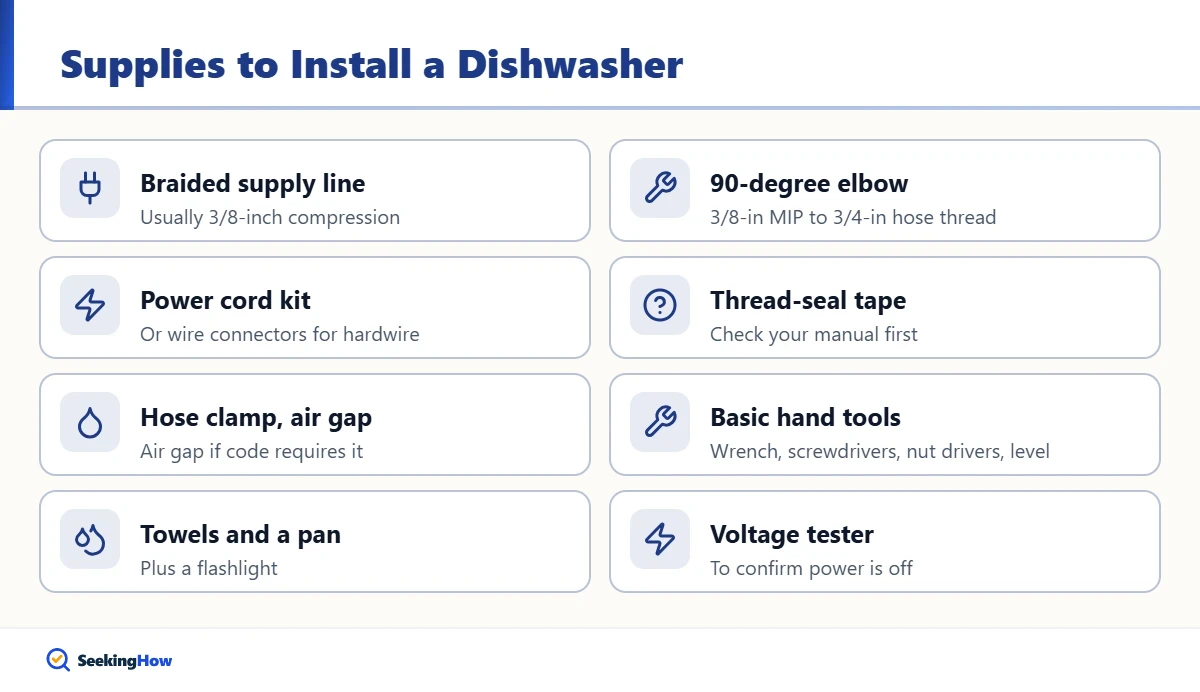
Gather everything before you start. Most dishwashers do not include the water supply line, the 90-degree elbow fitting or the power cord kit, and missing parts are the most common reason a two-hour job turns into a four-hour job.
- Braided stainless water supply line (usually 3/8-inch compression on the valve end), often sold as a dishwasher installation kit
- Dishwasher 90-degree elbow (3/8-inch MIP to 3/4-inch garden-hose thread on most models)
- Power cord kit or wire connectors, depending on whether you plug in or hardwire
- Thread-seal tape for the elbow threads (check your manual first)
- Drain hose clamp and, if your code requires it, an air gap
- Tools: adjustable wrench, Phillips and flat screwdrivers, nut driver set, level, flashlight, towels and a shallow pan or bucket
- Voltage tester to confirm the power is off
How Do You Install a Dishwasher Step by Step?
These steps cover a typical replacement of a built-in dishwasher. Always follow your model’s installation guide, because bracket styles, drain heights and electrical box locations differ by brand.
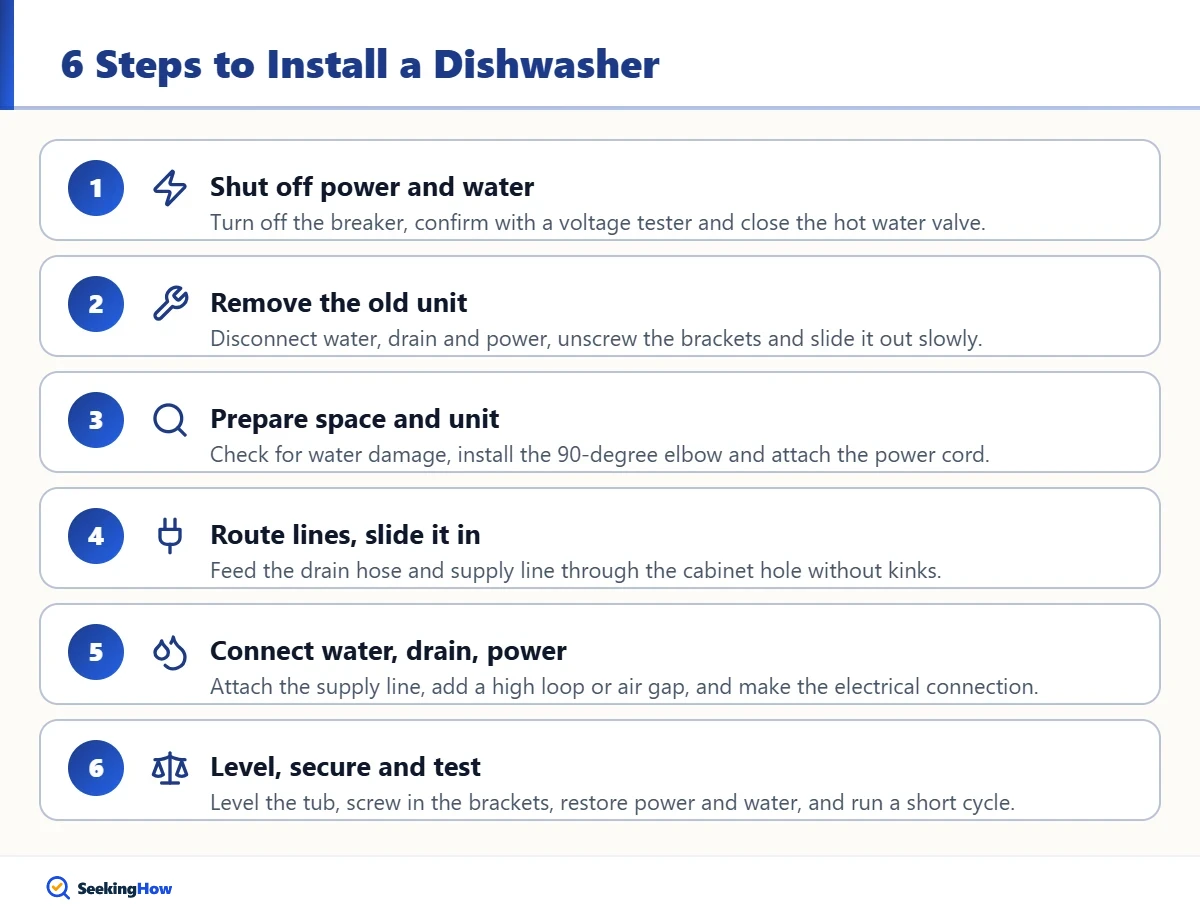
Step 1: Shut Off Power and Water
Turn off the dishwasher breaker at the panel and confirm the power is dead with a voltage tester. Close the hot water shutoff valve under the sink. Place towels and a shallow pan under the connections to catch leftover water.
Step 2: Remove the Old Dishwasher
Remove the lower kick panel, then disconnect the water line, the drain hose at the sink or disposal, and the electrical connection. Unscrew the mounting brackets from the underside of the counter, lower the leveling legs and slide the unit out slowly while feeding the lines through the cabinet hole.
Step 3: Prepare the Space and New Unit
Clean the opening, check the floor for water damage and confirm the hookups reach the front of the space. Lay the new dishwasher on its back on cardboard, install the 90-degree elbow on the water inlet valve and attach the power cord or junction box wiring according to the manual.
Step 4: Route the Lines and Slide It In
Feed the drain hose and supply line through the cabinet hole toward the sink. Slide the dishwasher into place slowly, pulling the slack under the sink so no hose gets kinked or pinched behind the unit.
Step 5: Connect Water, Drain and Power
Attach the supply line to the elbow and the shutoff valve, snug but not overtight. Connect the drain hose to the disposal inlet or sink tailpiece with a high loop or air gap to prevent backflow. Make the electrical connection with the correct wire connectors and close the junction box cover.
Step 6: Level, Secure and Test
Adjust the leveling legs until the tub is level front to back and side to side, and the door opens and closes without rubbing. Screw the mounting brackets to the countertop or cabinet sides. Restore water and power, run a short cycle and check every connection for leaks before reinstalling the kick panel.
Tip: If you have a garbage disposal and this is its first dishwasher hookup, knock out the plastic plug inside the disposal’s dishwasher inlet before connecting the drain hose. A forgotten plug is a classic reason a new dishwasher will not drain.
Should You Install It Yourself or Hire a Pro?
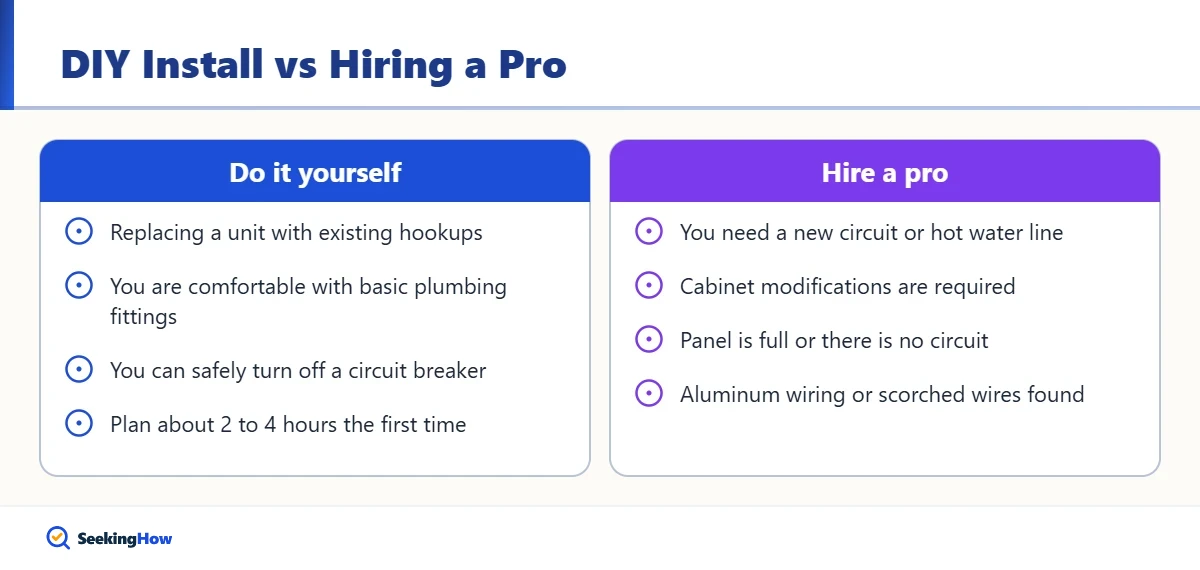
Replacing a dishwasher with existing hookups is a reasonable DIY project if you are comfortable with basic plumbing fittings and turning off a circuit breaker. If you need a new circuit, a new hot water branch line, or cabinet modifications, hiring professionals saves time and keeps the work up to code.
Many retailers offer haul-away and basic installation when you buy the appliance. Those packages usually cover only a straight replacement; extra parts and any new plumbing or wiring are typically quoted separately. Ask exactly what is included before you pay.
Safety: Never work on dishwasher wiring with the breaker on. If there is no existing circuit, the panel is full, or you see aluminum wiring or scorched wires, call a licensed electrician.
Common Installation Problems That Add Time
- Leaking elbow or valve: Usually a cross-threaded fitting or a missing washer. Shut off the water, remove and reseat the fitting.
- Dishwasher will not drain: Check for a kinked drain hose, the disposal knockout plug, or a clogged sink drain.
- Door rubs or will not latch: The unit is out of level or the mounting brackets pulled it out of square.
- Unit sits too high: Lower the legs fully; if new flooring raised the floor, you may need to trim or shim.
- Old shutoff valve will not close: Replace it with a quarter-turn valve, which can add 30 to 60 minutes.
Small plumbing mistakes are where most delays happen. If you also plan to update the sink, see our guide on how to replace a kitchen faucet so you can do both jobs while the cabinet is empty. If a connection keeps weeping, our walkthrough on fixing a leaking PVC joint without cutting covers drain-side leaks.
How Do You Know the Installation Was Done Right?
Run a full cycle and watch the first fill and the first drain. There should be no drips at the valve, elbow or drain connection, no water on the floor, and no gurgling backflow into the sink. The door should seal evenly and the unit should not rock when you open the lower rack.
Check under the sink again the next day; slow weeps at compression fittings sometimes show up only after a few heat cycles. Once it is running well, keep it that way with routine care like cleaning the dishwasher filter, and if the control panel ever locks up, try a dishwasher reset before calling for service.
How to Speed Up Your Dishwasher Installation
- Measure the opening and compare it with the spec sheet before buying.
- Buy an installation kit with the supply line, elbow and power cord in one package.
- Test that the shutoff valve actually closes the day before.
- Clear out the sink base cabinet so you can reach the connections.
- Read the installation manual once from start to finish before touching a tool.
Frequently Asked Questions
Can I install a dishwasher myself?
Yes, if you are replacing a unit with working water, drain and electrical hookups. You need basic tools, an installation kit and a careful approach to leveling and leak testing. If you need a new circuit or plumbing line, hire a licensed electrician or plumber.
Does a dishwasher need its own circuit?
Most manufacturers recommend a dedicated 15- or 20-amp, 120-volt circuit for a dishwasher, and many local codes require it. Sharing a circuit with a garbage disposal is allowed in some areas only if the circuit is rated for both. Check your manual and local code.
Do dishwashers come with the hoses needed for installation?
Most dishwashers include an attached drain hose but not the water supply line, the 90-degree elbow fitting or a power cord. Buy a dishwasher installation kit or the individual parts before installation day so the job is not held up.
How much does dishwasher installation cost?
Costs vary by region and retailer. A basic replacement with existing hookups is the least expensive option, while new installations that require plumbing, wiring or cabinet work cost considerably more because they involve extra labor and sometimes multiple trades. Get written quotes.
How long should I wait to use a new dishwasher?
You can usually run it right away once all connections are checked. Many installers run a short empty cycle first to confirm there are no leaks and that it fills and drains properly before you load dishes.