Quick Answer
The best time to sell a house in Ohio is usually spring, from about March through June, when buyer activity peaks, days are longer and yards look their best. List in late March to May to close before the school year. Fall can work well with less competition, while December through February is typically slowest because of holidays and snow.
Key Takeaways
- Spring is traditionally Ohio’s busiest selling season, with families aiming to move over summer break.
- Winter weather, especially lake-effect snow in Northeast Ohio, tends to reduce showings from December to February.
- Your personal timing, such as equity, a job move or a new home purchase, often matters more than the calendar.
- Ohio sellers must generally give buyers a Residential Property Disclosure Form and pay a county conveyance fee.
- Start preparing 6 to 8 weeks before you list so the house is ready when the market is.
Timing a home sale in Ohio means balancing seasonal buyer demand, local market conditions and your own finances. This guide breaks down each season, how to read your local market, Ohio-specific costs and rules, and a practical timeline for listing.
What Is the Best Month To Sell a House in Ohio?
Nationally, housing research firms consistently find that homes listed in spring tend to sell faster and for stronger prices than homes listed in winter, and Ohio follows that seasonal pattern. Late spring is often the sweet spot: buyers are active, inventory has not yet peaked, and there is time to close before summer moves.
That said, the “best” month varies by city and by year. Columbus, Cincinnati, Cleveland, Dayton, Toledo and Akron each have their own inventory levels and price trends, and interest rates can shift demand more than the season does.
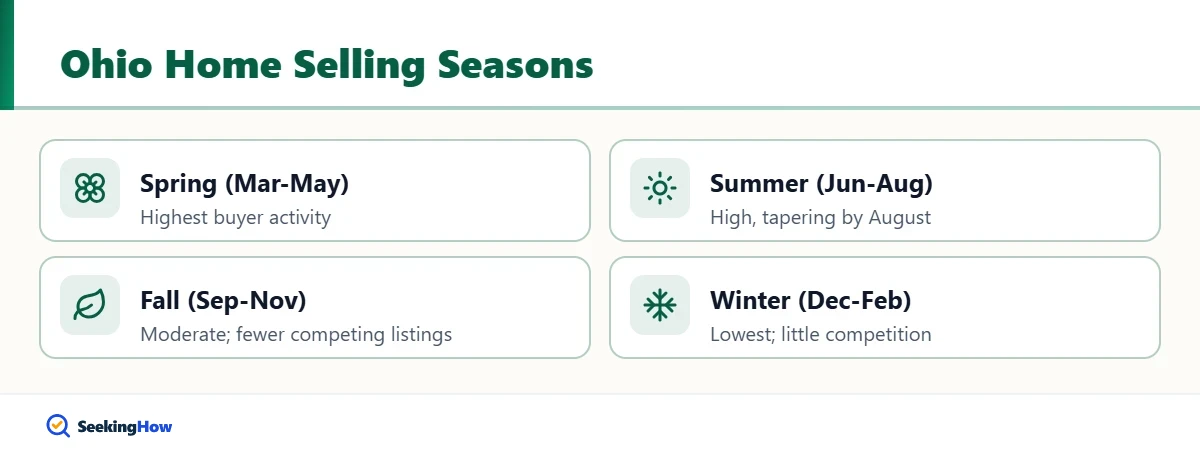
| Season | Buyer activity | Pros for sellers | Cons for sellers |
|---|---|---|---|
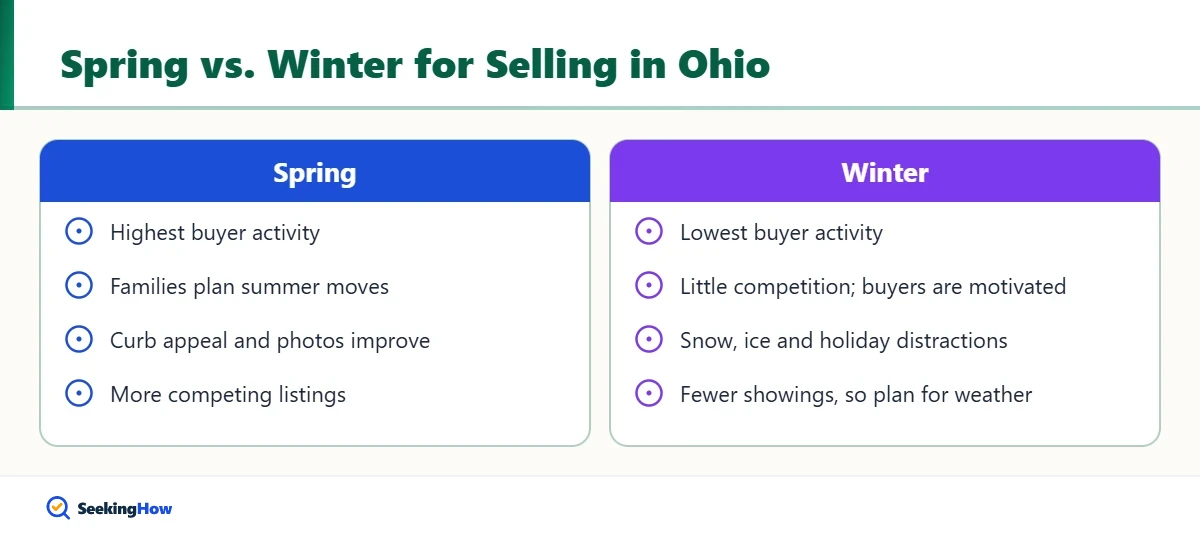
| Spring (Mar-May) | Highest | Most buyers, curb appeal improving, families planning summer moves | More competing listings; spring rain can expose drainage issues |
| Summer (Jun-Aug) | High, tapering by August | Long days for showings, gardens at peak | Vacations thin out buyers; heat and humidity |
| Fall (Sep-Nov) | Moderate | Serious buyers, fewer competing listings, attractive foliage | Pace slows before holidays; shorter days |
| Winter (Dec-Feb) | Lowest | Little competition; buyers are usually motivated | Snow and ice, holiday distractions, fewer showings |
Why Does Spring Usually Work Best in Ohio?
- School calendars: Families prefer to buy in spring and move in summer to avoid changing schools mid-year.
- Curb appeal returns: Lawns green up and trees leaf out, which helps listing photos and first impressions.
- Tax refunds and bonuses: Some buyers use refunds or year-end bonuses toward down payments and closing costs.
- Easier logistics: Inspections, appraisals and moves are simpler without snow, ice and frozen ground.
Is It a Bad Idea To Sell a House in Ohio in Winter?
Not necessarily. Fewer homes are listed in winter, so a well-priced house can stand out to buyers who need to move, such as people relocating for work. Expect fewer showings and plan for weather.
- Keep driveways and walkways cleared and salted for every showing.
- Use warm interior lighting and keep the thermostat comfortable.
- Use photos of the home in warmer months if they are accurate and recent.
- Have the furnace serviced so buyers and inspectors see it in good working order.
Tip: In Northeast Ohio’s snow belt, east of Cleveland, lake-effect snow can arrive suddenly. Build flexibility into showing schedules and have a snow-removal plan before you list.
How Do You Decide When To Sell Your Ohio Home?
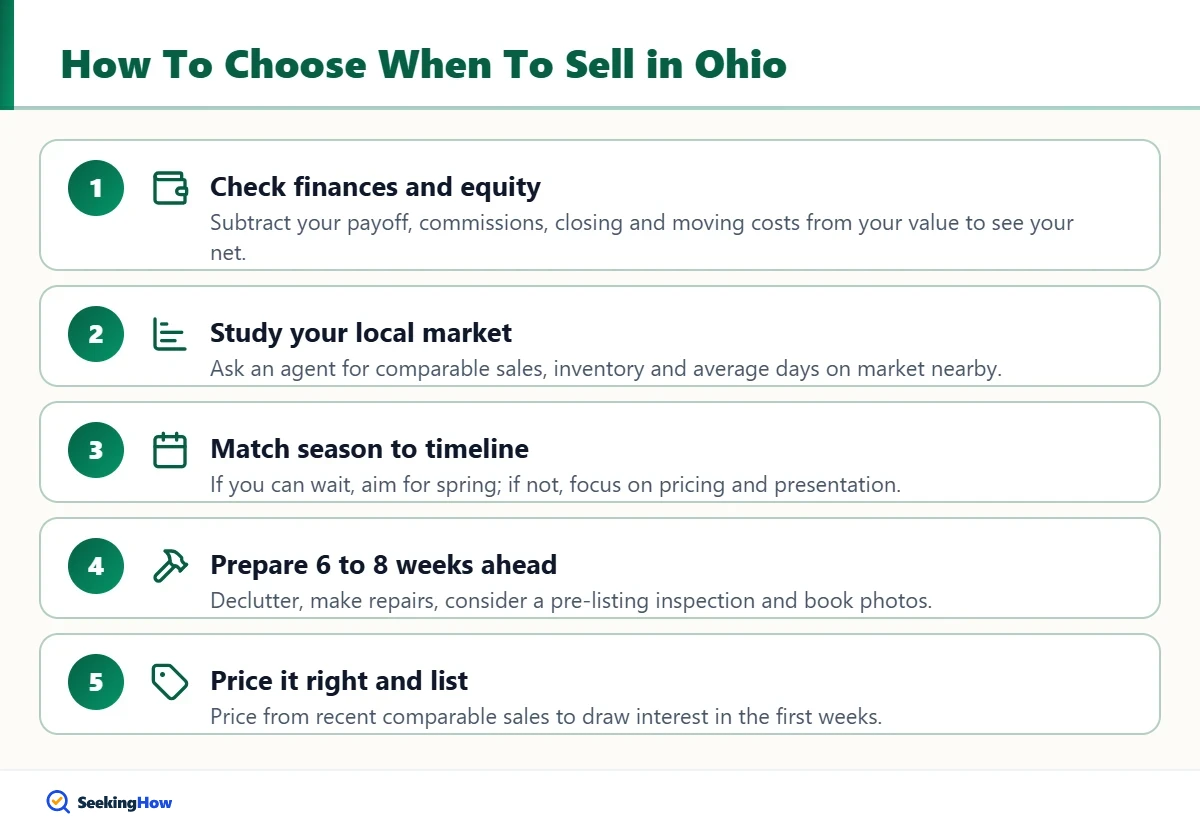
Step 1: Check your finances and equity
Get your mortgage payoff amount and estimate your home’s value. Subtract your payoff, agent commissions, closing costs and moving costs to see what you would net. Selling within two years of buying can also affect your capital gains tax exclusion.
Step 2: Study your local market
Ask a local agent for recent comparable sales, current inventory and average days on market in your neighborhood. Rising inventory and longer market times point to a buyer’s market, while low inventory favors sellers.
Step 3: Match the season to your timeline
If you can wait, aim to list in spring. If you must move sooner, focus on pricing and presentation rather than holding out for a better season.
Step 4: Prepare 6 to 8 weeks ahead
Declutter, make repairs, consider a pre-listing inspection and schedule professional photos. Work that addresses moisture, such as checking for hidden water leaks, helps you avoid surprises during the buyer’s inspection.
Step 5: Price it right and list
Price based on recent comparable sales, not the price you hope to get. Homes priced well from day one tend to attract more interest during the first weeks on the market, when buyer attention is highest.
What Costs and Rules Do Ohio Home Sellers Face?
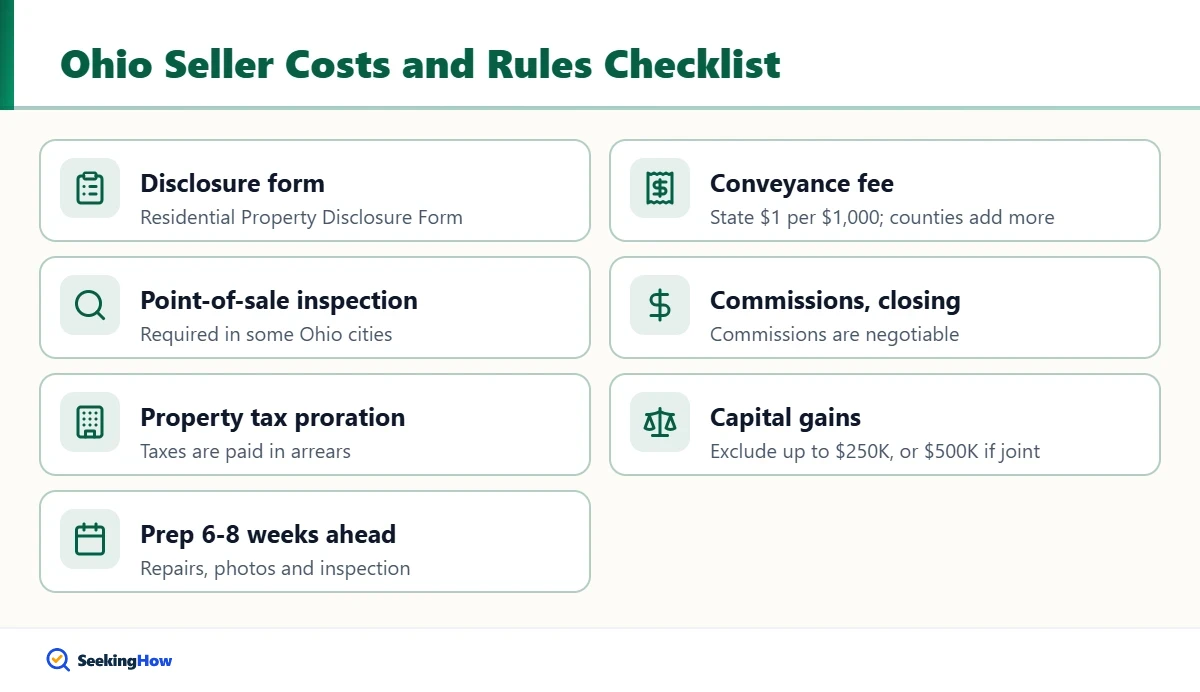
- Residential Property Disclosure Form: Ohio law (Ohio Revised Code 5302.30) generally requires sellers of residential property to give buyers a disclosure form covering known material defects, such as water leaks, roof problems and structural issues. Some transfers are exempt.
- Conveyance fee: Ohio counties collect a real property conveyance fee when a deed is recorded. The state portion is $1 per $1,000 of value, and counties may add more, so the total varies by county. Ask your title company for the exact amount.
- Agent commissions and closing costs: Commissions are negotiable. Sellers also commonly pay for items such as deed preparation, title-related costs and prorated property taxes, depending on the contract.
- Property taxes: Ohio property taxes are paid in arrears, so expect a proration credit to the buyer at closing.
- Capital gains: If the home was your primary residence for at least two of the last five years, federal law generally lets you exclude up to $250,000 of gain ($500,000 for married couples filing jointly). Consult a tax professional for your situation.
Ohio cities also have local requirements. Some municipalities require a point-of-sale inspection or certificate before a home can be transferred, which is common in parts of Northeast Ohio. Check with your city or ask your agent early.
Which Upgrades Help an Ohio Home Sell?
Focus on condition and maintenance over big renovations. Fresh neutral paint, repaired leaks, a serviced furnace and a dry basement matter to Ohio buyers. If your basement has had water issues, a working sump pump is a strong selling point; see our guide to installing a sump pump. Usable outdoor space also helps in spring and summer, and an enclosed porch can extend that appeal into cooler months.
What Are Your Options If You Need To Sell Fast?
If the calendar is not on your side, you can still sell. Pricing slightly under recent comparable sales draws attention quickly. Cash buyers and iBuyers offer speed and certainty in exchange for a lower price. Our guide on how to find legitimate cash home buyers explains how to vet offers and avoid scams, and the same checks apply in Ohio.
Common Mistakes When Timing a Sale
- Waiting for a perfect market: Rates and prices are hard to predict; personal readiness usually matters more.
- Listing before the house is ready: Poor photos and visible repairs cost you in the most valuable first weeks.
- Overpricing in spring: High demand does not rescue a price well above comparable sales.
- Ignoring local rules: Missing a point-of-sale inspection or disclosure can delay closing.
- Forgetting your next home: Coordinate the sale with your purchase or rental to avoid two mortgages or a gap in housing.
Disclaimer: This guide is general information, not legal, tax or financial advice. Talk to a licensed Ohio real estate agent, attorney or tax professional about your specific sale.
Frequently Asked Questions
What is the slowest month to sell a house in Ohio?
December and January are typically the slowest months in Ohio because of holidays, cold weather and snow. Fewer buyers are shopping, but there is also less competition, so well-priced homes can still sell to motivated buyers such as job relocators.
How long does it take to sell a house in Ohio?
It depends on the local market, price and condition. A well-priced home in a busy market may go under contract within weeks, while closing after an accepted offer often takes 30 to 45 days with a mortgage. Cash sales can close faster.
Do I need a lawyer to sell a house in Ohio?
Ohio does not generally require an attorney for a residential sale; title companies usually handle closings. Many sellers still hire a real estate attorney for complex situations, such as estates, liens, divorces or for-sale-by-owner transactions.
Do Ohio sellers have to disclose problems with the house?
Yes, in most cases. Ohio Revised Code 5302.30 generally requires sellers of residential property to complete a Residential Property Disclosure Form describing known material defects, such as leaks or structural issues. Certain transfers, such as some estate sales, are exempt.
Is fall a good time to sell a house in Ohio?
Fall can be a good time. Buyers are often serious, competition is lower than in spring, and early fall weather and foliage show homes well. Aim to list by September or early October to close before the holiday slowdown.