Quick Answer
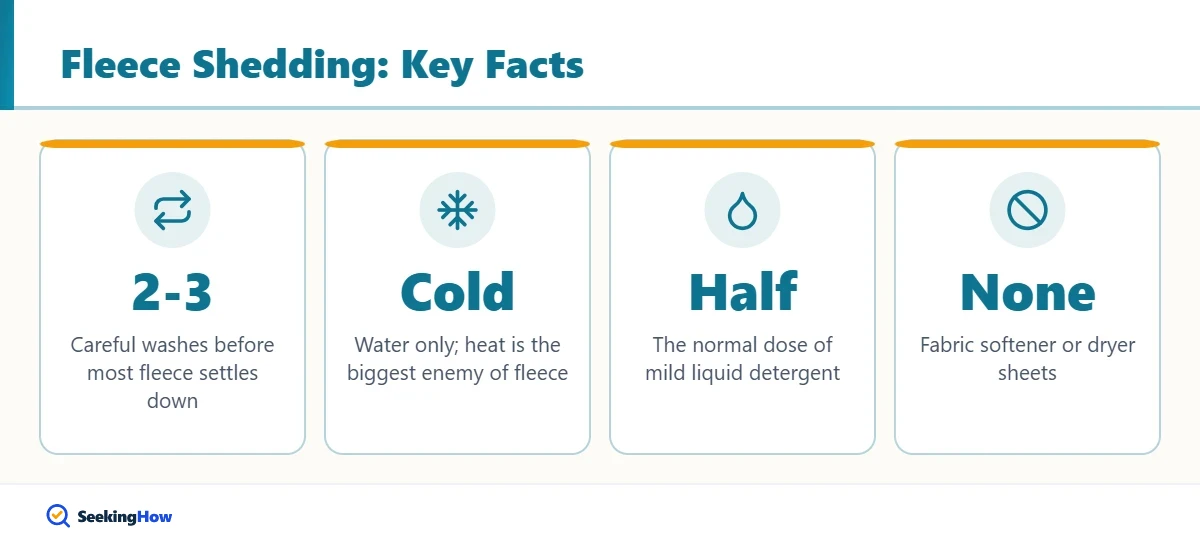
To stop a fleece blanket from shedding, shake it outdoors, then wash it alone or with other fleece in cold water on a gentle cycle with a small dose of liquid detergent and no fabric softener. Tumble dry on low or no heat with a clean lint trap, or air-dry. Repeat for two or three washes and loose fibers usually stop coming off.
Key Takeaways
- Most shedding on new fleece is loose surface fiber left from manufacturing, and it fades after a few washes.
- Heat is the biggest enemy of polyester fleece: use cold water and low or no dryer heat.
- Wash fleece alone or with similar synthetics, never with towels or cotton that create lint.
- Skip fabric softener and dryer sheets; they coat fibers and make pilling and matting worse.
- A lint roller, fabric shaver and inside-out washing keep an older blanket looking new.
Fleece is a brushed polyester knit, so its soft surface is made of millions of raised fiber ends. Some of those ends break loose, especially in the first washes or when the blanket gets hot or rubbed hard. The good news is that shedding is almost always a care problem you can fix at home in an afternoon.
Why Do Fleece Blankets Shed?
Fleece is made by knitting polyester yarn and then brushing the surface to raise a soft nap. That brushing leaves short, loose fibers clinging to the fabric. When you first wash or use the blanket, those fragments work free and end up on your clothes, couch and dryer screen.
Shedding that continues after several washes usually has a different cause. Friction from rough fabrics, high dryer heat, overloaded washers and harsh detergent all break fibers or melt the tips together. Cheaper fleece with a loose knit and a short, low-density pile also sheds and pills faster than tighter, higher-weight fleece.
Common causes at a glance
- Manufacturing residue: loose brushed fibers on brand-new blankets.
- Heat damage: hot water or high dryer settings soften polyester, causing fibers to snap and mat.
- Friction: washing with jeans, towels or items with zippers and hook-and-loop fasteners.
- Overloading: a crowded drum rubs fabric against itself for the whole cycle.
- Residue buildup: too much detergent or softener makes fibers sticky so they grab lint and clump.
What You Need
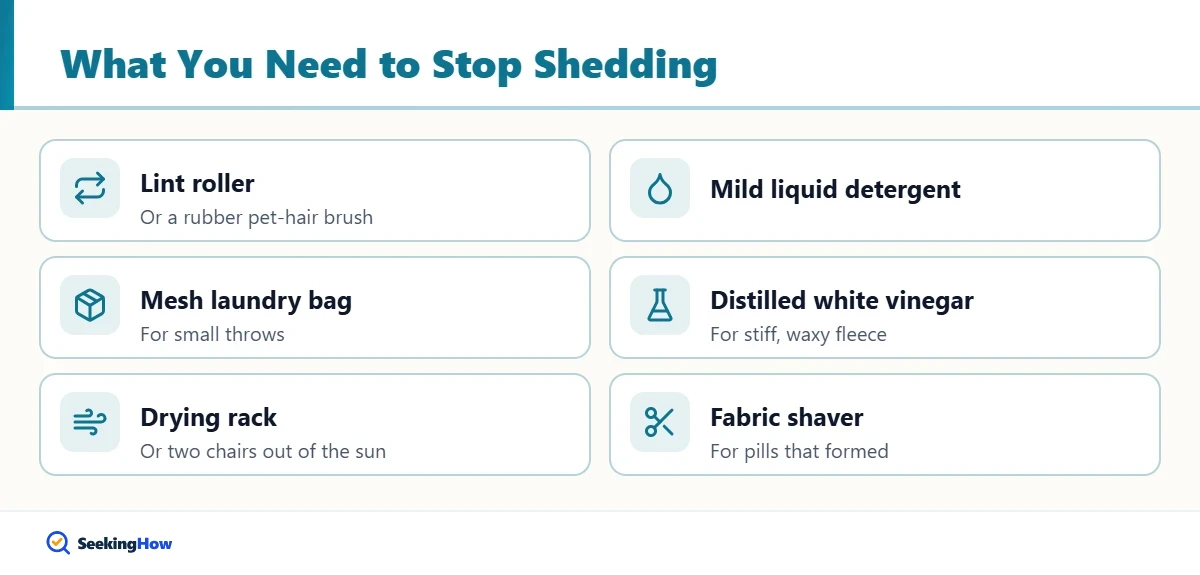
You do not need special products. A few household basics handle almost every shedding blanket.
How Do You Stop a Fleece Blanket From Shedding?
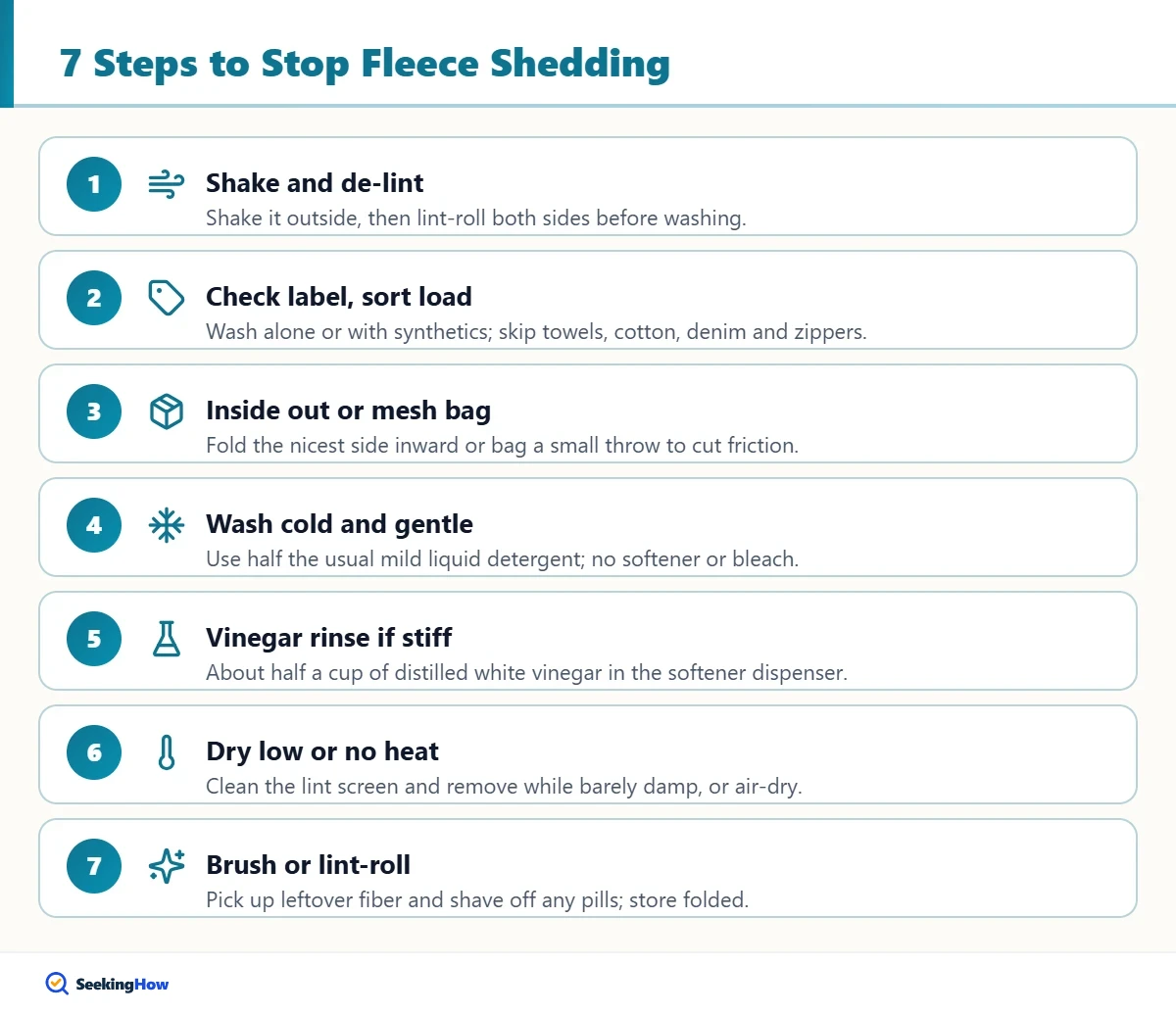
Follow these steps the first time you wash a new blanket, and repeat them for any older fleece that keeps dropping fibers. Most blankets improve noticeably after the first cycle and settle down completely within two or three.
Step 1: Shake and de-lint the blanket first
Take the blanket outside and shake it hard for a minute to release loose surface fibers. Then run a sticky lint roller or a rubber pet-hair brush over both sides. Removing loose fiber before washing keeps it from redepositing all over the blanket in the drum.
Step 2: Check the care label and sort the load
Most fleece is 100% polyester and machine washable, but sherpa-lined, printed or weighted fleece can have specific limits. Wash the blanket alone or with other fleece and synthetics. Keep it away from towels, cotton sheets, denim and anything with zippers or hook-and-loop tape.
Step 3: Turn it inside out or use a mesh bag
For two-sided or printed blankets, fold the nicest side inward. A small throw fits in a large mesh laundry bag, which cuts friction against the drum. This one change noticeably reduces pilling over time.
Step 4: Wash cold on a gentle cycle
Choose the delicate, gentle or hand-wash cycle with cold water. Use about half the normal amount of a mild liquid detergent, since powder can leave grainy residue in the pile. Do not add fabric softener or bleach.
Step 5: Add a vinegar rinse if the fleece feels stiff
If an older blanket feels waxy or clumpy, put about half a cup of distilled white vinegar in the softener dispenser. Vinegar helps rinse away detergent and softener residue that traps lint. Our guide to white vinegar vs. distilled white vinegar explains which bottle to use.
Step 6: Dry on low or no heat
Clean the dryer lint screen, then tumble dry on the lowest heat or air-fluff setting, removing the blanket while it is barely damp. Alternatively, drape it over a drying rack or two chairs out of direct sun. Never use high heat; it melts fiber tips and leaves a matted, rough texture.
Step 7: Finish with a brush or lint roller
Once dry, roll or brush the surface to pick up any remaining loose fiber. If pills have formed, glide a fabric shaver lightly across the surface. Store the blanket folded on a shelf rather than stuffed in a tight bin.
Washing Settings for Different Fleece Types
Not all fleece behaves the same. Use this table as a quick reference, and always defer to the care label when it differs.
| Fleece type | Water | Cycle | Drying |
|---|---|---|---|
| Polar fleece (standard) | Cold | Gentle | Low heat or air-dry |
| Microfleece / micro plush | Cold | Delicate | Air-fluff or air-dry |
| Sherpa-lined fleece | Cold | Gentle, mesh bag if it fits | Air-dry, brush sherpa side when dry |
| Minky / printed plush | Cold | Delicate, inside out | Low heat only |
| Weighted fleece blanket | Per label (often cold) | Gentle, large-capacity washer | Usually air-dry flat |
Tip: Fleece dries fast because polyester absorbs little water. Air-drying a throw indoors often takes only a few hours, and it is the gentlest option of all.
How Do You Fix a Fleece Blanket That Is Already Pilled or Matted?
Pills are tiny balls of tangled fiber, and they do not wash out on their own. A battery-powered fabric shaver is the fastest fix: lay the blanket flat, hold the fabric taut and move the shaver in light circles. A sweater comb or a new disposable razor used very gently also works on small areas.
Matting from heat damage is harder to reverse. Lightly dampen the matted area with a spray bottle, then brush the pile in one direction with a soft pet slicker brush or a clean wire brush. This can lift partially flattened fibers, but fleece that was truly melted by high heat will stay rough, which is why prevention matters.
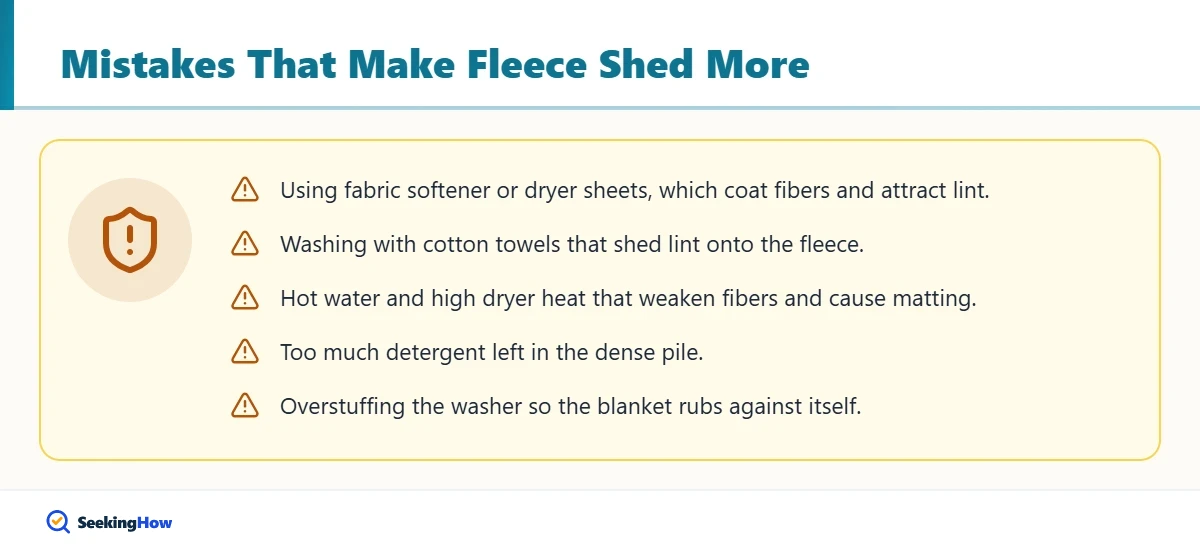
Common Mistakes That Make Fleece Shed More
- Using fabric softener or dryer sheets. They coat polyester fibers, reduce softness over time and attract lint.
- Washing with towels. Cotton towels shed heavily, and that lint sticks to fleece like a magnet.
- Hot water and high heat. Polyester softens with heat, which weakens fibers and causes pilling and matting.
- Too much detergent. Excess soap stays in the dense pile and makes fibers clump.
- Overstuffing the washer. A blanket needs room to move freely so it is not scrubbed against itself.
How Often Should You Wash a Fleece Blanket?
A throw used daily on the couch generally needs washing every two to four weeks, while a decorative blanket can go longer. Wash sooner after spills, illness or heavy pet use. Washing less often, but correctly, is one of the best ways to reduce long-term shedding.
Between washes, shake the blanket out and roll it with a lint roller. If you share the couch with pets, a quick vacuum with an upholstery tool helps too. For a deeper sanitizing routine on the furniture underneath, see our guide on how to disinfect a fabric couch.
Is Fleece Shedding Bad for the Environment?
Synthetic fabrics such as polyester fleece release microfibers in the wash, and some of those fibers pass through water treatment into rivers and oceans. Cold, gentle, full-but-not-crowded loads and less frequent washing all reduce fiber release. Some people also use a microfiber-catching laundry bag or an add-on washer filter for synthetic items.
When Is It Time to Replace a Fleece Blanket?
Replace a blanket when it has thin, bald patches, when shedding continues after several careful washes, or when heat damage has left large rough areas. When you buy a new one, look for a higher fabric weight, a dense, even pile and anti-pill finishing listed on the label. If an old blanket is clean and intact, many donation centers accept it; check what items Goodwill accepts before you drop it off.
Frequently Asked Questions
Will a new fleece blanket stop shedding?
Yes, in most cases. New fleece sheds loose fibers left from the brushing process. Shaking it out, lint-rolling it and washing it cold on a gentle cycle two or three times removes most of that loose fiber, after which shedding drops to a minimum with normal use.
Can you put a fleece blanket in the dryer?
Yes, on the lowest heat or air-fluff setting. Clean the lint screen first and remove the blanket while it is barely damp. High heat can melt polyester fiber tips, which causes matting, pilling and a rough feel that is hard to reverse.
Does fabric softener help fleece?
No. Fabric softener and dryer sheets coat polyester fibers, which reduces their softness over time and makes them attract lint. If your fleece feels stiff, use a half-cup distilled white vinegar rinse instead and use less detergent.
Why does my fleece blanket get little balls on it?
Those balls are pills, formed when friction tangles loose fibers into knots on the surface. Washing with rough fabrics, overloading the machine and high heat all speed it up. Remove pills with a fabric shaver and wash gently to prevent new ones.
Can I wash a fleece blanket with towels?
It is best not to. Cotton towels shed a lot of lint, and fleece grabs and holds that lint. The rough towel surface also rubs the fleece and causes pilling. Wash fleece alone or with other synthetic fabrics.