Quick Answer
The small hole in an interior bedroom or bathroom doorknob is an emergency release for a privacy lock. Look inside it: if you see a smooth hole, push a straight, thin tool like the lockset’s release key or an unbent paper clip straight in until it presses a button and the knob turns. If you see a slot, insert a small flat tool and turn it.
Key Takeaways
- Privacy knobs and levers on bathrooms and bedrooms are designed to be opened from outside in an emergency.
- There are two main release types: push-button (press straight in) and turn-slot (insert and rotate).
- Most locksets come with a small metal emergency key; keep it on the door frame trim.
- The hole method only works on interior privacy locks, not on keyed exterior locks or deadbolts.
- If the release does not work, remove the hinge pins only on an inward-swinging door you own, or call a locksmith.
A child locks the bathroom door, or a bedroom door latches by accident, and you notice a tiny hole in the outside knob. That hole is there on purpose. This guide shows you how to use it safely on interior doors in your own home.
What Is the Hole in a Doorknob For?
Interior privacy locksets, the kind with a push button or turn button on the inside, include an emergency release on the outside so a parent, caregiver or anyone in an emergency can open the door. Building safety practice calls for bathroom and bedroom privacy locks to be openable from outside for exactly this reason.
The hole connects to the locking mechanism inside. Pressing or turning the right part releases the lock so the knob or lever can turn normally.
Which Type of Privacy Lock Do You Have?
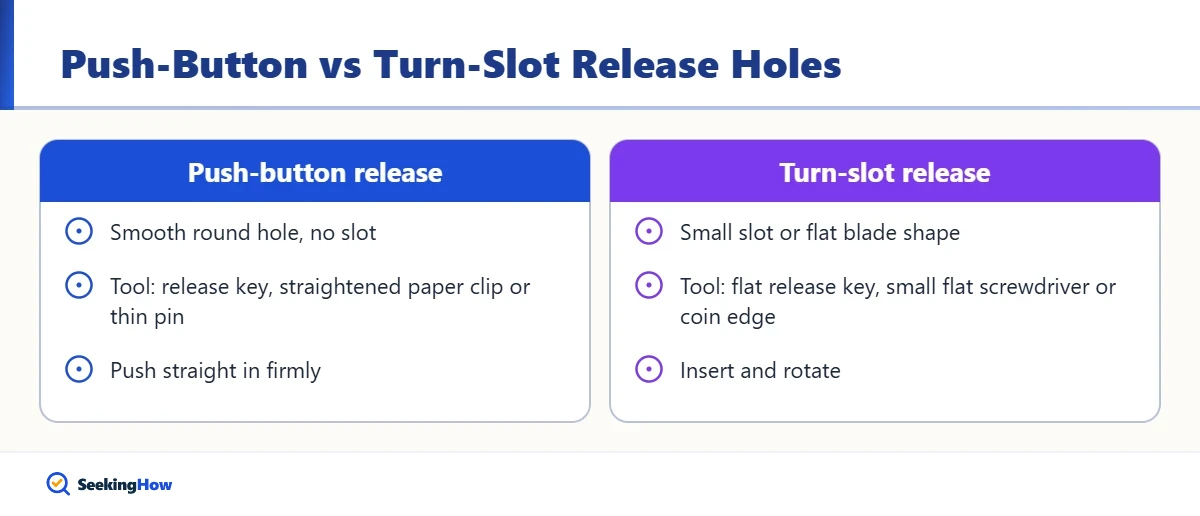
| What You See in the Hole | Release Type | Tool | Action |
|---|---|---|---|
| Smooth round hole, no slot | Push-button release | Release key, straightened paper clip, thin pin | Push straight in firmly |
| Small slot or flat blade shape | Turn-slot release | Flat release key, small flat screwdriver, thin coin edge | Insert and rotate |
| Slot on the face of the knob, no hole | Turn-button exterior slot | Small flat screwdriver or coin | Turn like a screw |
| Keyhole with pins | Keyed entry lock | Correct key | Not a privacy lock; use the key |
How Do You Unlock a Door With a Hole in the Knob?
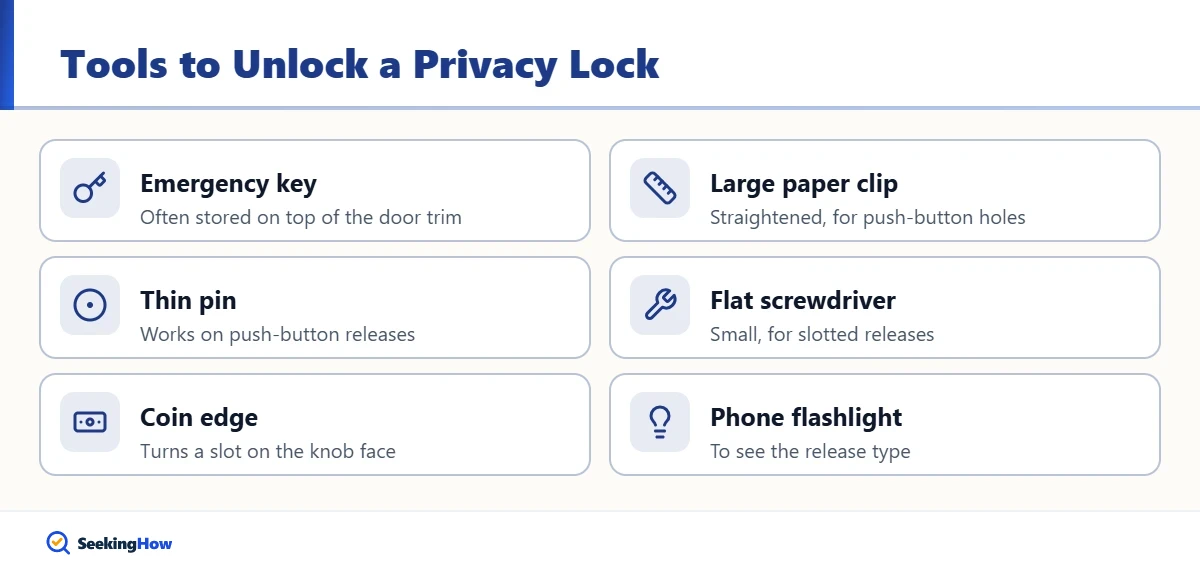
Step 1: Check on the Person Inside
If someone is inside, especially a child or an older adult, talk to them calmly first. If you suspect a medical emergency and cannot open the door quickly, call 911.
Step 2: Find the Right Tool
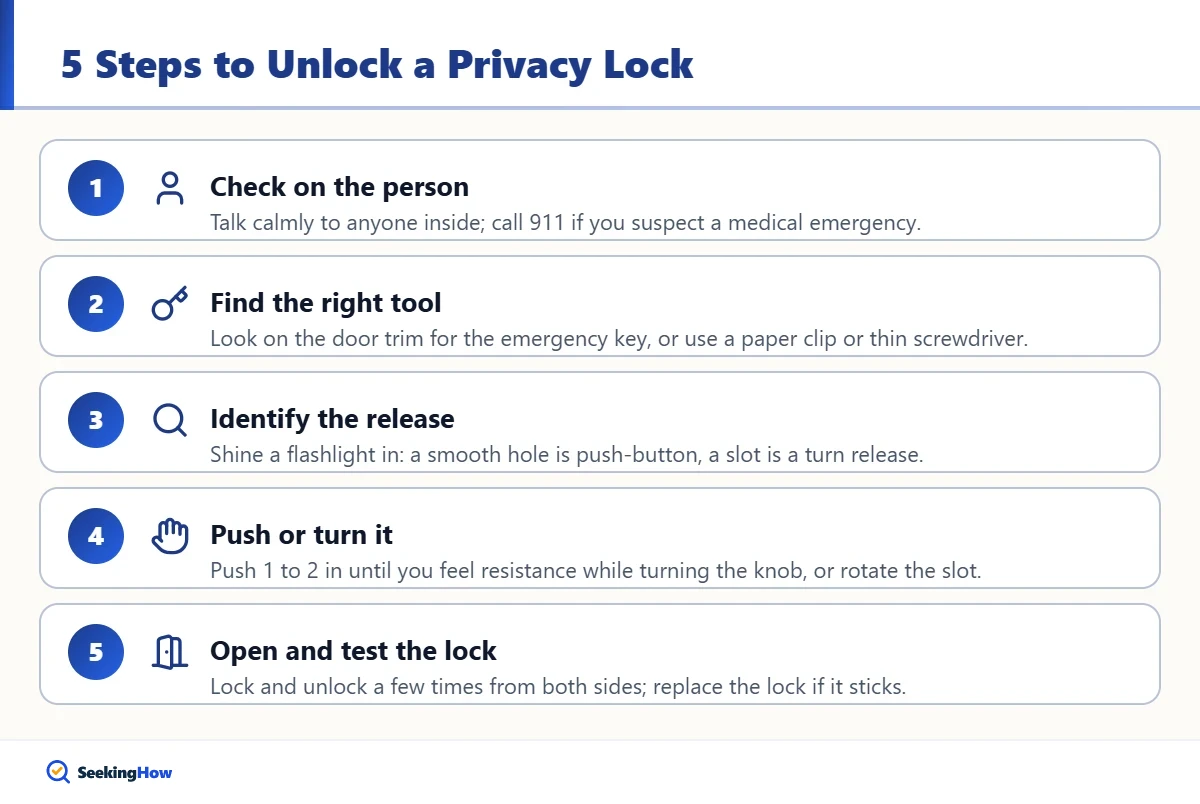
Look on top of the door frame trim, where many people store the small metal emergency key that came with the lockset. If you do not have one, straighten a large paper clip, or use a thin flat-blade screwdriver for slotted releases.
Step 3: Identify the Release Type
Shine a phone flashlight into the hole. A smooth hole means a push-button release; a slot means a turn release.
Step 4: Push or Turn the Release
For push-button types, insert the tool straight in, about 1 to 2 inches, until you feel resistance, then press firmly while turning the knob. For slot types, insert the tool until it seats in the slot, then rotate it until the knob turns freely.
Step 5: Open the Door and Test the Lock
Open the door, then lock and unlock it a few times from both sides to make sure it is working. If it sticks, plan to replace the lockset.
Tip: Keep the emergency key on the door trim above each privacy door, or tape one inside a nearby closet, so you never have to hunt for a paper clip.
What If the Release Does Not Work?
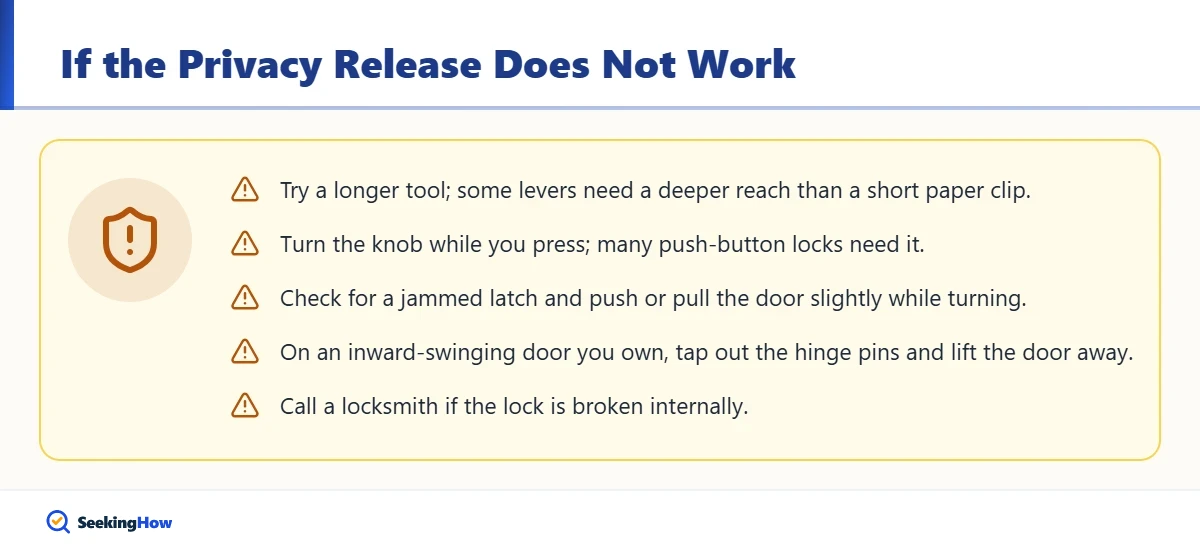
- Try a longer tool. Some levers need a deeper reach than a short paper clip.
- Turn while you press. On many push-button locks the knob must be rotated as you push.
- Check for a jammed latch. If the lock releases but the door still will not open, the latch may be binding; push or pull the door slightly while turning the knob.
- Remove the hinge pins. On an inward-swinging door in your home where the hinges face you, tap the pins up and out with a nail set and hammer and lift the door away.
- Call a locksmith. If the lock is broken internally, a locksmith can open and replace it.
Can You Use This on Exterior Doors?
No. Front and back doors use keyed entry knobs and deadbolts that do not have an emergency release hole. If you are locked out of your home, use a spare key, call your landlord or a licensed locksmith. See our guides on options when you lose your house key and what to do when you are locked out of your house.
Childproofing Interior Doors
- Install doorknob covers or lever locks on rooms young kids should not enter.
- Use top-of-door flip locks that only adults can reach for rooms that must stay closed.
- Teach older kids how the bathroom lock works and how to unlock it from inside.
- Choose privacy locksets with simple push-button releases for kids’ bathrooms.
Replacing a Faulty Privacy Lock
Privacy knobs and levers are inexpensive and usually install with a screwdriver in under 30 minutes. Measure the backset (commonly 2-3/8 or 2-3/4 inches) and the door thickness (often 1-3/8 inches for interior doors) before buying. If a screw strips during removal, our guide on removing a stripped screw from wood can help.
Frequently Asked Questions
Why is there a hole in my bathroom doorknob?
It is an emergency release for the privacy lock. It lets someone outside unlock the door if a child or someone who needs help is locked inside. Pushing or turning a thin tool in the hole releases the lock.
What can I use instead of the emergency door key?
A straightened paper clip, bobby pin or thin nail works on push-button releases. For slotted releases, use a small flat screwdriver or the edge of a thin coin if it fits. Keep the original key on the door trim for next time.
Does every interior door lock have a release hole?
Most privacy knobs and levers have either a hole or an exterior slot. Passage knobs have no lock at all. Keyed entry locks have a keyhole instead and need the correct key, not a pin.
Can a privacy lock break and stay locked?
Yes. Worn or cheap privacy locks can jam so the release does not work. If that happens, remove the hinge pins on your own inward-swinging door or call a locksmith, then replace the lockset.