
Quick Answer
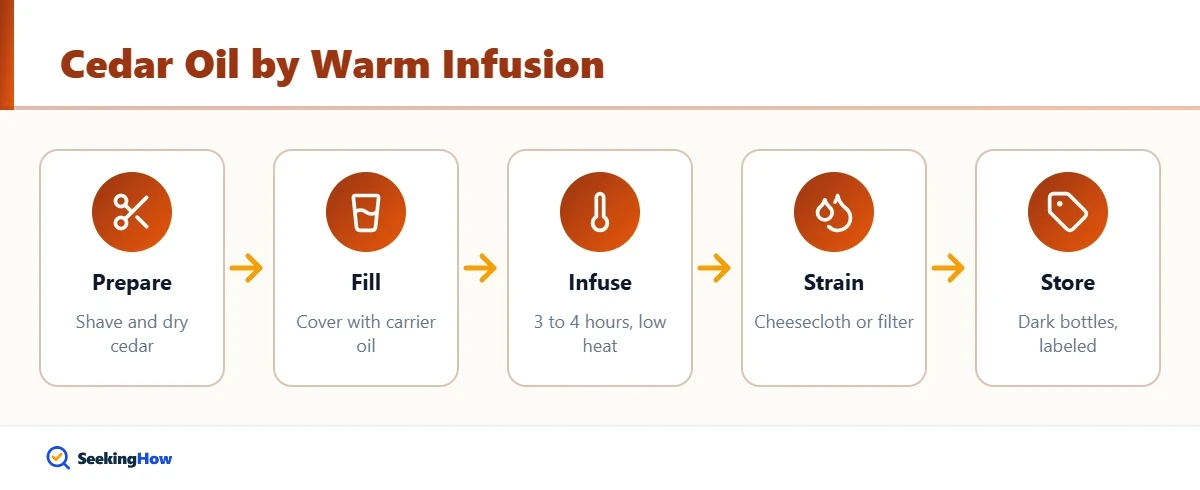
The easiest way to make cedar oil at home is an infusion: fill a glass jar about two-thirds with fine, dry cedar shavings, cover them with a carrier oil such as jojoba or fractionated coconut oil, and warm the jar in a water bath on low heat for 3 to 4 hours (or steep it 4 to 6 weeks). Strain, bottle in dark glass and label. True cedarwood essential oil requires steam distillation.
Key Takeaways
- Homemade cedar oil is usually an infused oil, which is milder than store-bought essential oil.
- Eastern red cedar (Juniperus virginiana) is the classic aromatic “closet cedar.”
- Low, gentle heat preserves aroma; high heat scorches the oil and is a fire risk.
- Cedar oil is for external and household use only; never swallow it.
- Patch-test on skin and keep essential oils away from cats, pets and children.
Cedar oil smells warm and woody and is popular for refreshing cedar closet blocks, conditioning wood, and scenting drawers. You can make a pleasant, useful version at home with shavings and a carrier oil. This guide covers which cedar to use, two infusion methods, how real essential oil is distilled, and how to use and store it safely.
What Is Cedar Oil?
“Cedar oil” can mean two different products. Knowing which you are making avoids disappointment.
- Cedarwood essential oil: a concentrated aromatic oil extracted by steam distillation of wood, chips or sawdust. Commercial versions are labeled by source, such as cedarwood Virginian (Juniperus virginiana), cedarwood Texas (Juniperus ashei) and cedarwood Atlas (Cedrus atlantica).
- Infused cedar oil: a carrier oil that has absorbed aromatic compounds from cedar wood. It is far less concentrated and easy to make in a kitchen.
Which Cedar Should You Use?
| Wood | Common name | Aroma | Notes |
|---|---|---|---|
| Juniperus virginiana | Eastern red cedar, aromatic cedar | Sweet, pencil-shaving scent | Best choice; used in cedar closets and chests |
| Juniperus ashei | Texas cedar, Ashe juniper | Smoky, woody | Widely distilled commercially |
| Cedrus atlantica | Atlas cedar | Warm, slightly balsamic | A true cedar; wood less commonly available |
| Thuja plicata | Western red cedar | Sharp, spicy | Contains thujone; skip for skin products |
Use clean, untreated, unfinished wood only. Never use pressure-treated lumber, stained or sealed boards, or painted scraps, because chemicals in them can leach into the oil.
What Do You Need to Make Cedar Oil?
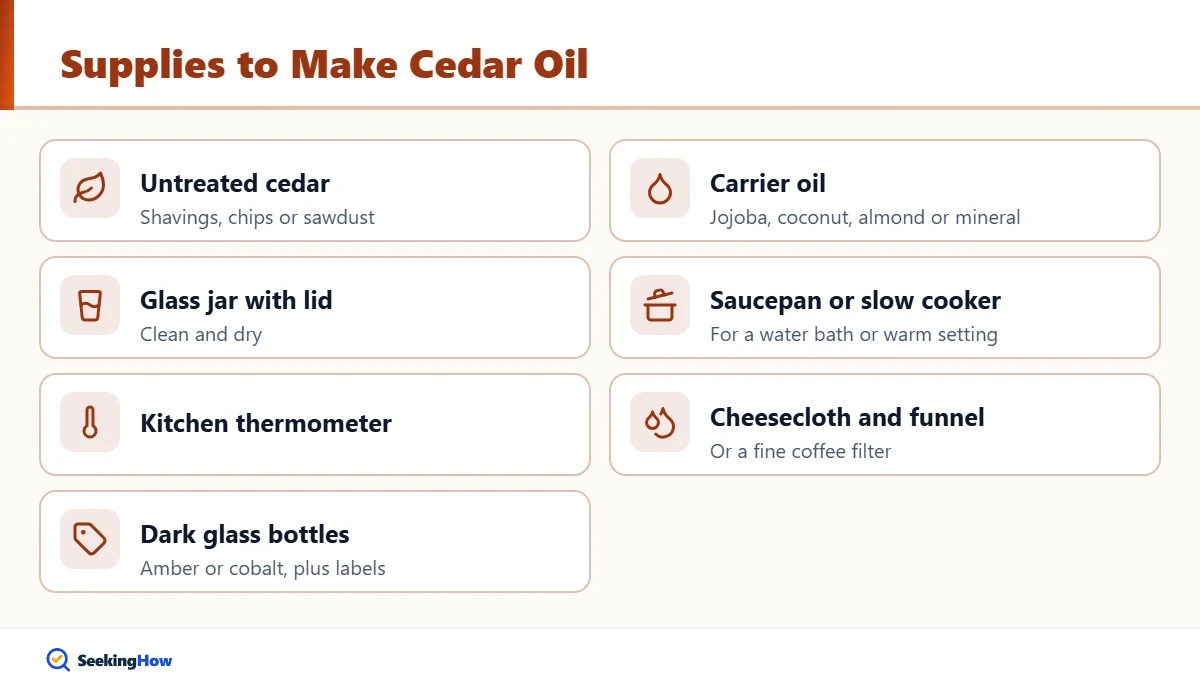
- Untreated aromatic cedar shavings, chips or sawdust (fresh shavings from a block plane or a closet-block refresh are ideal)
- Carrier oil: jojoba, fractionated coconut, sweet almond or grapeseed for personal use; mineral oil for wood and household use
- Clean, dry glass jar with a lid
- Saucepan for a water bath, or a slow cooker with a “warm” setting
- Kitchen thermometer
- Cheesecloth or a fine coffee filter, and a funnel
- Amber or cobalt glass bottles and labels
How Do You Make Cedar Oil at Home?
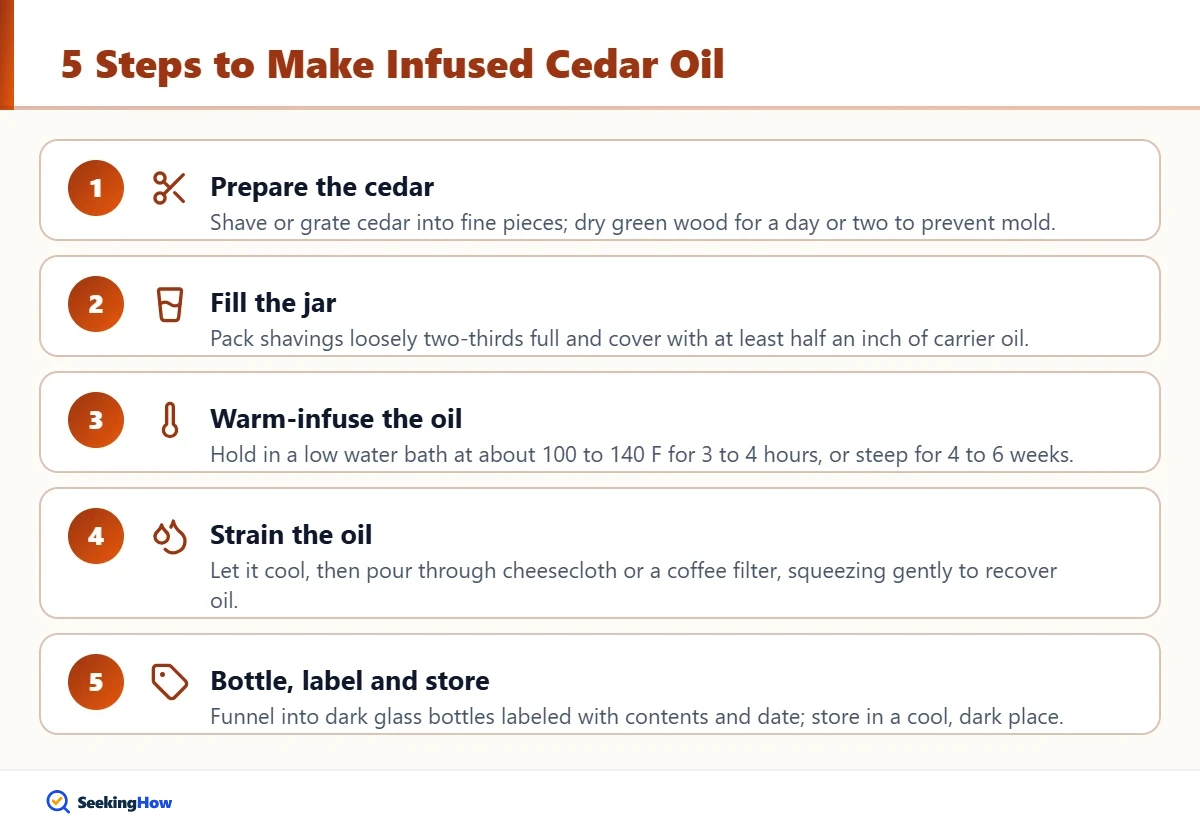
Step 1: Prepare the Cedar
Shave or grate the cedar into thin, fine pieces; more surface area releases more aroma. Spread the shavings out to dry for a day or two if the wood is green, because moisture in the jar can lead to mold and rancid oil.
Step 2: Fill the Jar
Pack the jar loosely about two-thirds full with shavings. Pour carrier oil over them until the wood is fully covered by at least half an inch of oil. Stir with a clean utensil to release air bubbles.
Step 3: Warm-Infuse the Oil
Set the open jar in a saucepan of water and heat on the lowest setting, keeping the oil warm but well below a simmer, around 100 to 140 degrees Fahrenheit. Hold it there for 3 to 4 hours, topping up the water as needed. Alternatively, cap the jar and let it steep in a warm spot for 4 to 6 weeks, shaking every few days.
Step 4: Strain the Oil
Let the oil cool, then pour it through cheesecloth or a coffee filter into a clean container. Squeeze the cloth gently to recover oil from the shavings. For a stronger oil, repeat the infusion with fresh shavings in the same oil.
Step 5: Bottle, Label and Store
Funnel the oil into dark glass bottles, label them with the contents and date, and store them in a cool, dark place. Shelf life depends on the carrier oil; jojoba, fractionated coconut and mineral oil keep much longer than almond or grapeseed oil.
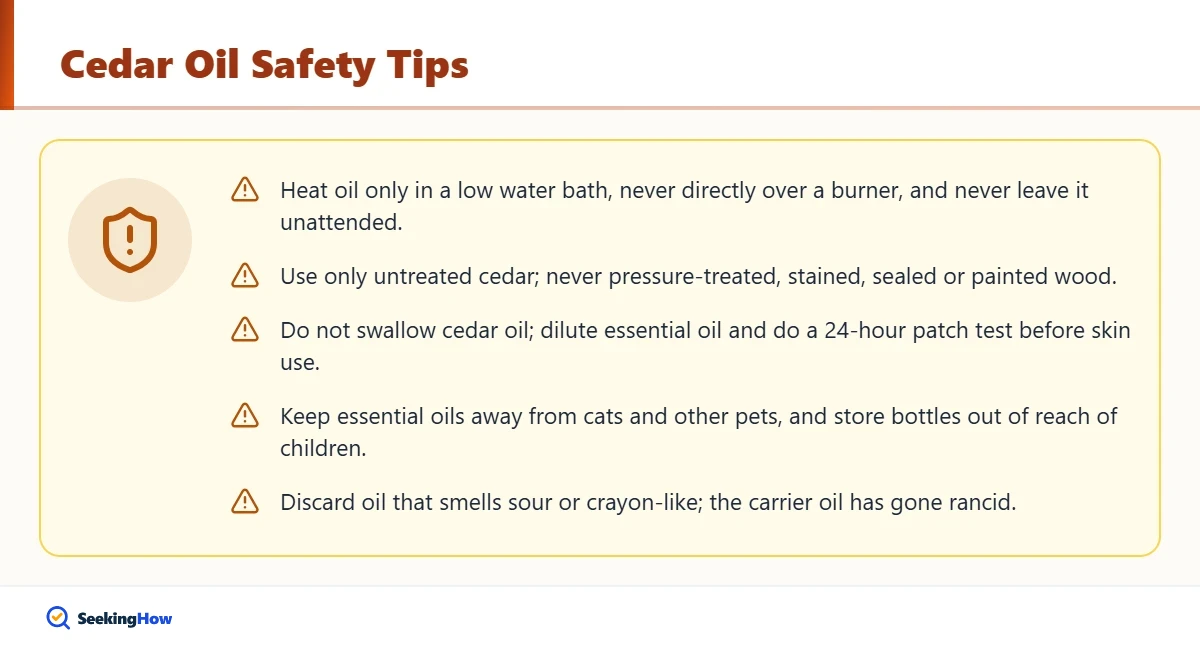
Safety: Heat oil only in a water bath on low, never directly over a burner, and never leave it unattended. Oils can ignite if overheated. Keep a lid nearby to smother a fire, and never use water on an oil fire.
Can You Make Cedarwood Essential Oil at Home?
Yes, but it takes specialized equipment. Steam distillation passes steam through cedar chips; the steam carries volatile oils into a condenser, and the cooled liquid separates into a thin layer of essential oil floating on hydrosol (aromatic water).
- You need a purpose-built still, usually copper or stainless steel, sized for wood chips.
- Yields from wood are low, so you need a large volume of chips for a small amount of oil.
- The process runs for hours and requires attention to pressure, heat and cooling water.
For most people, buying a reputable cedarwood essential oil and using homemade infused oil for everyday uses is more practical.
How Can You Use Cedar Oil?
- Refresh cedar blocks and closet panels: lightly sand cedar to open the surface, then apply a few drops of oil. Cedar is traditionally used to deter clothes moths, though it works best alongside regular cleaning and airtight storage.
- Condition unfinished wood: a mineral-oil based cedar infusion gives unfinished boxes, drawers and decor a pleasant scent. Do not use it on food-contact surfaces unless the carrier is food-safe and there is no essential oil added.
- Scent sachets and drawers: add oil to cotton balls or wool dryer balls.
- Personal care: a skin-safe carrier infusion can be used as a body or beard oil after a patch test.
Cedar oil sprays are marketed for pests, but they are not a dependable fix for infestations. If you suspect bed bugs, follow a proven inspection routine like our guide on how to check for bed bugs and use a licensed pest professional. If you are refinishing cedar furniture before oiling it, see how to change wood color from dark to light for prep methods.
Is Cedar Oil Safe?
Infused cedar oil is mild, but concentrated cedarwood essential oil needs care.
- Do not swallow cedar oil or use it in food.
- Dilute essential oil heavily in a carrier before skin use and do a 24-hour patch test.
- Avoid use on infants and young children, and talk to a doctor before using essential oils if you are pregnant, nursing or have a skin condition or asthma.
- Keep essential oils away from cats and other pets; many are toxic to animals, and diffusing them in small rooms can affect pets.
- Store bottles out of reach of children and away from heat and flames.
Tip: If your oil smells sour, crayon-like or “off,” the carrier has gone rancid. Discard it and make a fresh batch with a longer-lasting carrier oil.
Common Mistakes When Making Cedar Oil
- Using treated or finished lumber.
- Overheating the oil, which scorches the scent.
- Leaving damp shavings in the jar, which encourages mold.
- Storing oil in clear bottles in sunlight.
- Expecting an infusion to be as strong as distilled essential oil.
Frequently Asked Questions
What is the best carrier oil for cedar oil?
For skin, jojoba and fractionated coconut oil are good choices because they resist rancidity and absorb well. For wood conditioning and household uses, mineral oil is inexpensive and very stable. Almond and grapeseed oils work but have a shorter shelf life.
How long does homemade cedar oil last?
Shelf life depends mostly on the carrier oil. Mineral, jojoba and fractionated coconut oil infusions can last a year or more when stored cool and dark, while almond or grapeseed versions may turn rancid within months. Discard any oil that smells sour.
Does cedar oil repel moths?
Cedar has long been used to help deter clothes moths, and refreshing cedar blocks with oil restores their scent. It works best as one part of moth prevention along with cleaning clothes before storage and using sealed containers, not as a cure for an active infestation.
Can you use cedar oil on your skin?
A mild infused oil made with a skin-safe carrier can be used on skin after a patch test. Concentrated cedarwood essential oil must be heavily diluted. Avoid oils from Thuja species, and ask a doctor first if you are pregnant or have sensitive skin.
Is cedar oil safe for dogs and cats?
Use caution. Many essential oils can be harmful to pets, and cats are especially sensitive. Do not apply cedar oil to pets or diffuse it around them without asking your veterinarian, and store bottles where animals cannot reach them.