Quick Answer
You cannot safely remove skin tags in one night at home. Cutting, tying off with floss, or using acids and unapproved creams can cause bleeding, infection, scarring and burns, and may hide a growth that is not a skin tag. The safe route is a quick dermatologist visit: snip excision, freezing (cryotherapy) or cautery usually takes minutes in a single appointment with local numbing.
Key Takeaways
- Skin tags (acrochordons) are harmless, soft growths that do not need treatment unless they bother you.
- A dermatologist can remove most skin tags in one short office visit, which is the closest safe option to “overnight.”
- The FDA has warned consumers against unapproved mole and skin tag removal creams and ointments, which can cause scarring.
- Home cutting, string tying, apple cider vinegar and black salve carry real risks of infection, burns and scars.
- Any growth that bleeds, changes, grows quickly or looks unusual should be examined before anyone removes it.
Skin tags are common on the neck, armpits, eyelids, groin and under the breasts, and they often catch on jewelry or clothing. It is natural to want them gone fast, and social media is full of overnight hacks. This guide explains why those shortcuts are risky, what professional removal involves, and how to deal with a skin tag safely in the meantime.
What Are Skin Tags?
Skin tags are small, soft, flesh-colored or slightly darker growths that hang from the skin on a thin stalk. They are made of loose collagen fibers and blood vessels covered by skin, and they are benign (not cancerous). They range from the size of a pinhead to about the size of a grape.
They are more common in middle age, in people with overweight or obesity, with insulin resistance or type 2 diabetes, during pregnancy and in areas where skin rubs against skin. Some people simply inherit a tendency to get them. Having many skin tags can be a reason to ask your doctor about checking blood sugar.
Can You Remove Skin Tags in One Night?
Not safely at home. Overnight hacks either physically cut or strangle the tag, or apply a chemical to burn it off, and each has drawbacks:
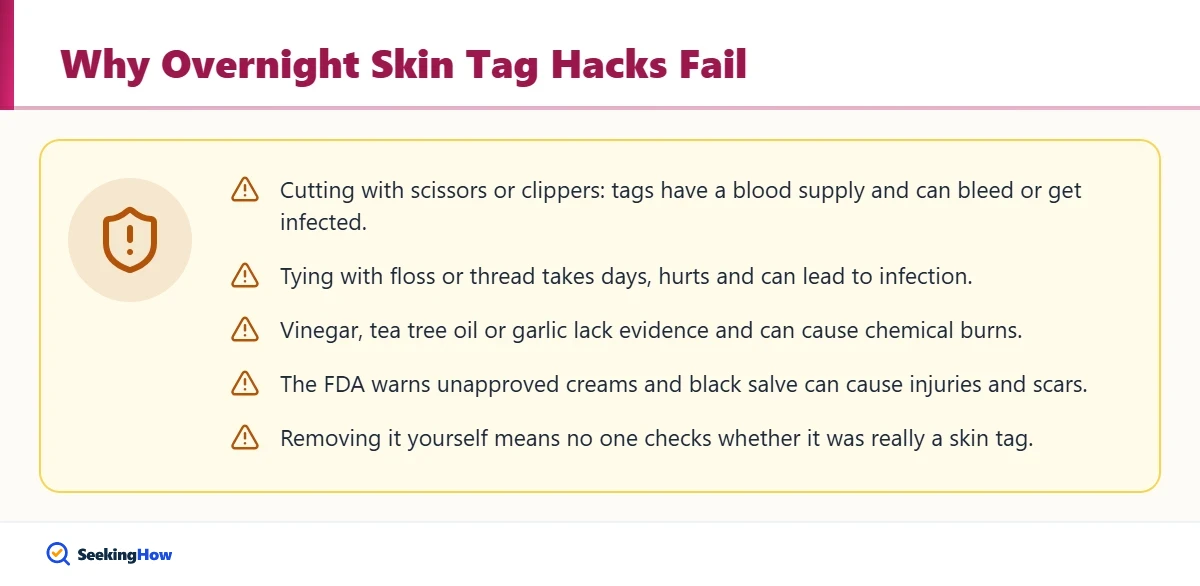
- Cutting with scissors or nail clippers: Skin tags have their own blood supply, so they can bleed more than you expect. Non-sterile tools raise infection risk.
- Tying with dental floss or thread: Cutting off blood flow can take days, is painful and can lead to infection if tissue dies and stays attached.
- Apple cider vinegar, tea tree oil or garlic: There is no good evidence these remove skin tags, and acidic or concentrated applications can cause chemical burns and dark marks.
- Unapproved creams and black salve: The FDA has warned that products marketed to remove moles and skin tags without approval can cause injuries, scars and skin damage. Black salve (made with bloodroot) can destroy healthy tissue.
- Removing it yourself without a diagnosis: Some skin cancers, warts and moles can look like skin tags. Removing a growth at home means no one checks what it was.
Safety: Never try to remove a growth near your eyes, on your eyelids, or in the genital area at home. These areas need a doctor.
How Do Dermatologists Remove Skin Tags?
Professional removal is quick, usually done in the office and often takes only minutes for a few tags. Your doctor will first look at the growth to confirm it is a skin tag. Common methods include:
| Method | How it works | Best for | Aftercare |
|---|---|---|---|
| Snip excision | Sterile surgical scissors or a scalpel cut the tag at its base, often after a numbing injection | Larger or stalked tags | Small wound, may get a bandage; heals in about 1-2 weeks |
| Cryotherapy | Liquid nitrogen freezes the tag, which falls off over 1-2 weeks | Small tags | Possible blister; may lighten skin color in some people |
| Electrocautery | A heated electrical tool burns through the stalk and seals blood vessels | Small to medium tags | Small scab that falls off within days to weeks |
| Ligation | The doctor ties off the base under sterile conditions | Selected tags | Tag falls off over several days |
Because skin tag removal is usually considered cosmetic, insurance may not cover it unless the tag is irritated, bleeding or causing symptoms. Ask the office for a price before your appointment. Your dermatologist may send a tag to a lab if it looks unusual.
What To Expect at a Skin Tag Removal Appointment
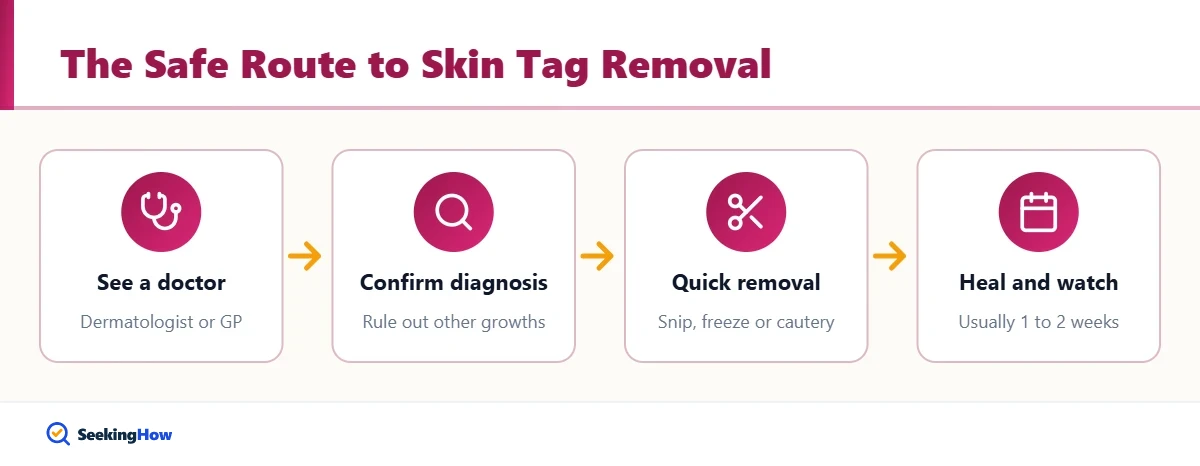
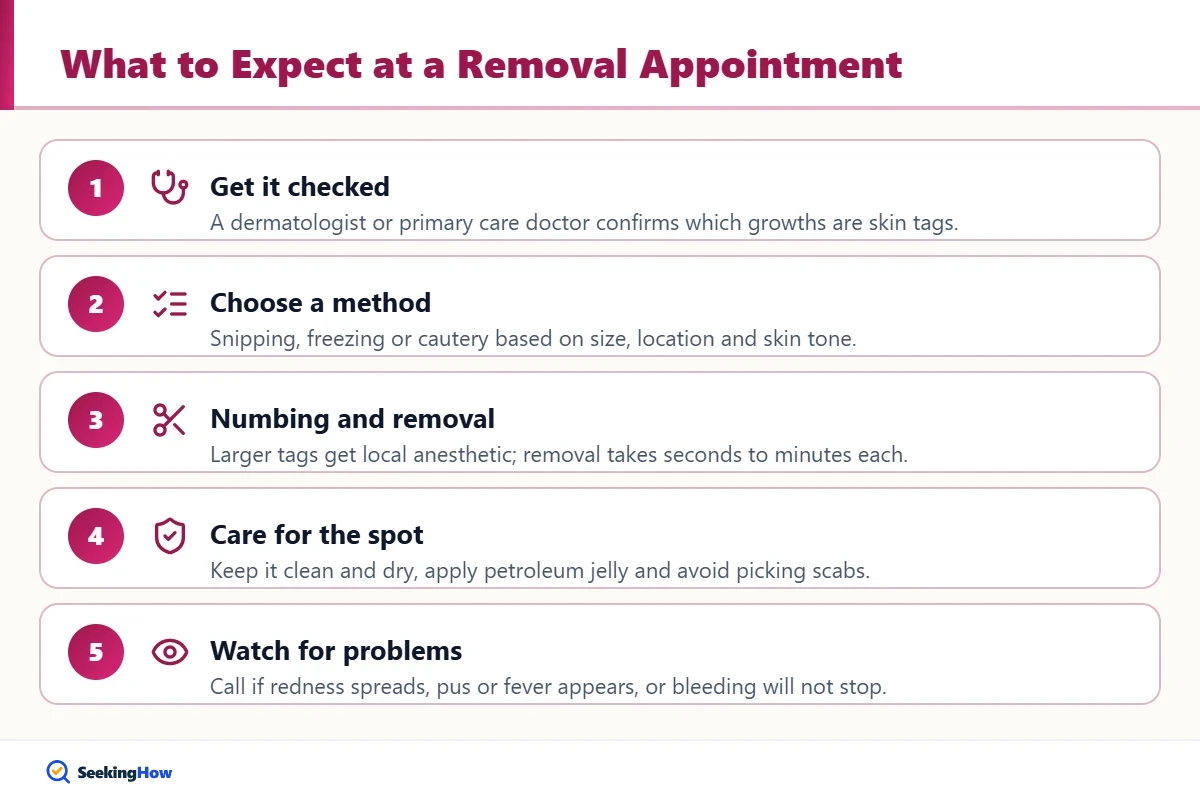
Step 1: Get the Growth Checked
Book with a board-certified dermatologist or your primary care doctor. Point out every growth that bothers you and mention any that have changed, bled or itched. The doctor confirms which ones are skin tags.
Step 2: Choose a Removal Method
Your doctor will recommend snipping, freezing or cautery based on size, location and your skin tone. Ask about scarring and skin color changes, especially if you have darker skin, where freezing can sometimes leave lighter spots.
Step 3: Numbing and Removal
Larger tags are usually numbed with a small injection of local anesthetic. Removal itself typically takes seconds to minutes per tag, and several can often be treated in one visit.
Step 4: Care for the Spot Afterward
Keep the area clean and dry for the first day, then wash gently with soap and water. Apply petroleum jelly and cover with a bandage if it rubs on clothing. Follow your doctor’s instructions and avoid picking scabs.
Step 5: Watch for Problems
Call your doctor if you notice spreading redness, warmth, pus, fever or bleeding that does not stop with 10-15 minutes of firm pressure. Most spots heal within one to two weeks.
Are Over-the-Counter Skin Tag Removers Safe?
Pharmacies sell freezing kits and banding devices for skin tags. These are different from the unapproved creams the FDA warns about, but they still have limits. Home freezing products do not reach temperatures as low as the liquid nitrogen doctors use, so they may not work on larger tags and can cause blisters or skin damage if misused. Banding devices take days rather than one night.
If you are considering an OTC product, have the growth diagnosed first, read the instructions carefully, never use it on the face, eyelids, genitals or a growth that has changed, and stop if the area becomes painful, red or infected. People with diabetes or poor circulation should check with a doctor before using any home removal product.
How Can You Make a Skin Tag Less Irritating for Now?
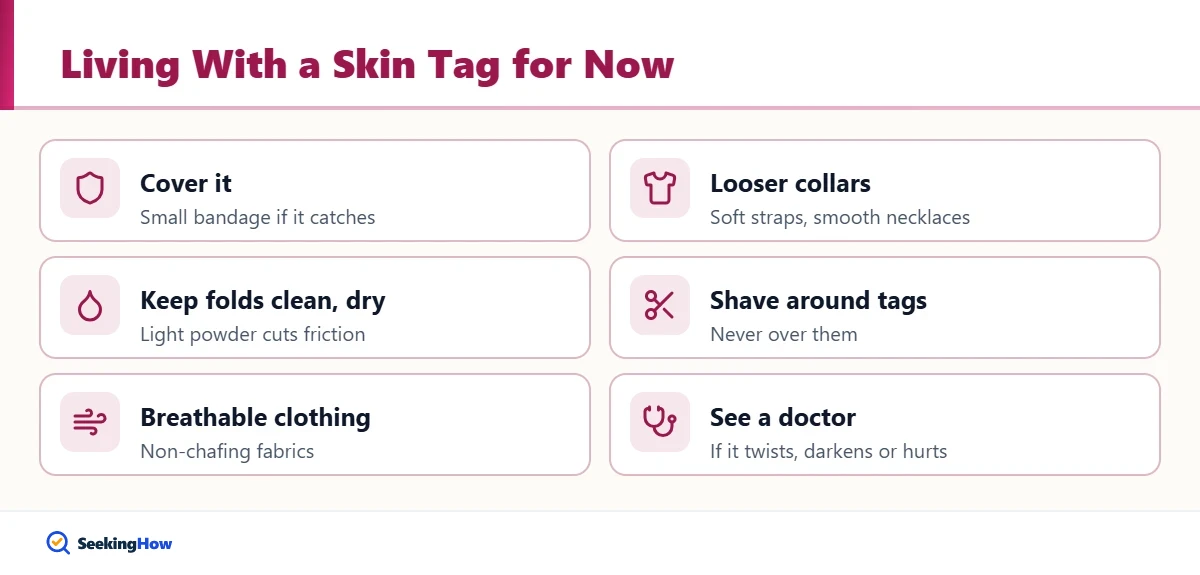
- Cover a tag that catches on clothing or jewelry with a small bandage.
- Choose looser collars, soft bra straps and smooth necklaces.
- Keep skin folds clean and dry; a light dusting of powder can reduce friction.
- Avoid shaving over tags; shave carefully around them.
- If a tag twists, turns dark or becomes painful, see a doctor, since its blood supply may be cut off.
Can You Prevent Skin Tags?
You cannot fully prevent skin tags, but reducing friction and managing related health factors may help. Maintaining a healthy weight, staying active and keeping blood sugar in a normal range reduce skin folds and insulin-related growth. Wearing breathable, non-chafing clothing helps too. If you are dealing with other skin concerns, our guides on reducing oily skin and safely removing super glue from skin cover gentle care for other everyday problems.
When Should You See a Doctor About a Skin Tag?
- The growth bleeds, itches, hurts or changes in size, shape or color
- It is firm, rough, flat or does not hang on a stalk
- It appeared quickly or you have many new ones in a short time
- It is near your eye, on your eyelid or in the genital area
- You are not sure whether it is a skin tag, wart or mole
Medical disclaimer: This article is for general information and is not medical advice. Talk to a dermatologist or doctor before removing any skin growth or using an over-the-counter removal product.
Frequently Asked Questions
Does apple cider vinegar remove skin tags?
There is no reliable evidence that apple cider vinegar removes skin tags. Applying it under a bandage can cause chemical burns, irritation and dark marks on the surrounding skin. A dermatologist can remove a skin tag safely in a short office visit instead.
Is it safe to cut off a skin tag yourself?
Dermatologists advise against it. Skin tags have a blood supply, so they can bleed heavily, and non-sterile tools raise the risk of infection and scarring. You also lose the chance to have the growth checked, since some skin cancers can look like skin tags.
Do skin tags grow back after removal?
A skin tag that is fully removed usually does not regrow in the same spot. However, new skin tags can form elsewhere, especially in friction areas or if you have risk factors like insulin resistance. Reducing friction and managing weight and blood sugar may help.
Does insurance cover skin tag removal?
Often not, because removing harmless skin tags is usually considered cosmetic. Insurance may cover removal when a tag is irritated, bleeding, painful or needs testing. Ask your dermatologist office and insurer about coverage and the self-pay price before your visit.
Are skin tags a sign of diabetes?
Skin tags alone do not mean you have diabetes, but having many of them has been associated with insulin resistance, type 2 diabetes and obesity. If you have numerous skin tags, especially with other risk factors, ask your doctor whether a blood sugar test makes sense.