
Quick Answer
To raise a bed frame without risers, the best fix is replacing the legs with taller screw-in furniture legs that match your frame’s threads, usually 5/16-inch or 3/8-inch. Other options are adding a box spring or bunkie board, building a low plywood platform under the frame, or switching a metal frame to its higher setting. Most methods take under 2 hours.
Key Takeaways
- Taller replacement legs are the most stable way to raise a bed frame without plastic risers.
- Many platform beds and upholstered frames use screw-in legs with 5/16-inch or 3/8-inch threaded bolts.
- A box spring or bunkie board raises the mattress itself and adds no wobble to the frame.
- A plywood and 2×4 platform under the frame spreads weight evenly and can add 4 to 6 inches.
- Stacked books, bricks or loose blocks can slide or crack and are not safe long-term supports.
A higher bed is easier to get in and out of, frees space for under-bed storage and makes a low frame look more substantial. If you want to know how to raise a bed frame without risers, whether because you dislike their look or they wobble on your floor, there are four sturdier options. Here is how each works and which to pick for your frame.

What You’ll Need
- Tape measure and level
- Replacement furniture legs in your target height, with matching thread size (leg method)
- Hanger bolts or T-nuts, and a leg mounting plate (only if your frame lacks threaded inserts)
- Box spring or 2- to 3-inch bunkie board sized to your mattress (foundation method)
- 3/4-inch plywood, 2×4 lumber, 2-1/2-inch screws and felt pads (platform method)
- Drill, wrenches and a helper to lift the frame
- Furniture felt pads or rubber grips for every new contact point
How To Raise a Bed Frame Without Risers: Step-by-Step (Taller Legs)
Step 1: Measure the Target Height
Measure from the floor to the top of the mattress. Most adults find a total height of about 20 to 25 inches comfortable, roughly knee height when sitting on the edge. For under-bed storage, measure the tallest bin you plan to use and add 1 inch of clearance.
Step 2: Remove the Mattress and Check the Legs
Strip the bed, lift off the mattress and tip the frame on its side with a helper. Unscrew one leg and check the bolt diameter and thread pitch with a ruler or by taking it to the hardware store. Most screw-in furniture legs use 5/16-inch or 3/8-inch bolts.
Step 3: Buy Matching Taller Legs
Choose solid wood or metal legs with the same thread size, at the height you need, and a load rating that covers the bed, mattress and sleepers. Buy a center support leg too if your frame has one. Tapered legs look lighter, while square legs carry more weight.

Step 4: Install the New Legs
Screw each new leg in by hand until it seats firmly against the frame, without cross-threading. If your frame has no threaded inserts, attach a steel leg mounting plate or install T-nuts first. Add felt pads to the feet to protect the floor.
Step 5: Level and Test
Stand the frame up, place a level on the side rails and check for rocking. Adjust leveling feet if your legs have them. Sit and lie on the bed and shift your weight; any creaking or rocking means a leg is not fully seated.
Bottom line: if your frame has screw-in legs, taller matching legs are the cleanest and sturdiest way to raise it.
Other Ways To Raise a Bed Frame Without Risers
Add a Box Spring or Bunkie Board
A standard box spring adds about 7 to 9 inches, a low-profile foundation about 4 to 5 inches, and a bunkie board about 2 to 3 inches. Check your mattress warranty first, because some foam and hybrid mattresses specify a solid or slatted foundation with a maximum slat gap. This is the best choice for metal frames with no removable legs, and you can also make a box spring out of plywood for a firm, budget foundation.
Build a Low Plywood Platform
Build a rectangle of 2x4s set on edge, slightly smaller than the frame footprint, with cross supports every 16 inches, and screw 3/4-inch plywood on top. Set the bed frame on it so each leg rests fully on the plywood. In practice, a platform is the best option for heavy beds or wobbly floors, because it spreads load across the whole footprint.
Use the Frame’s Height Settings
Many adjustable metal bed frames have two or three height positions for the legs or side rails. Check the assembly manual; moving to a higher setting can add a few inches with no purchases at all.
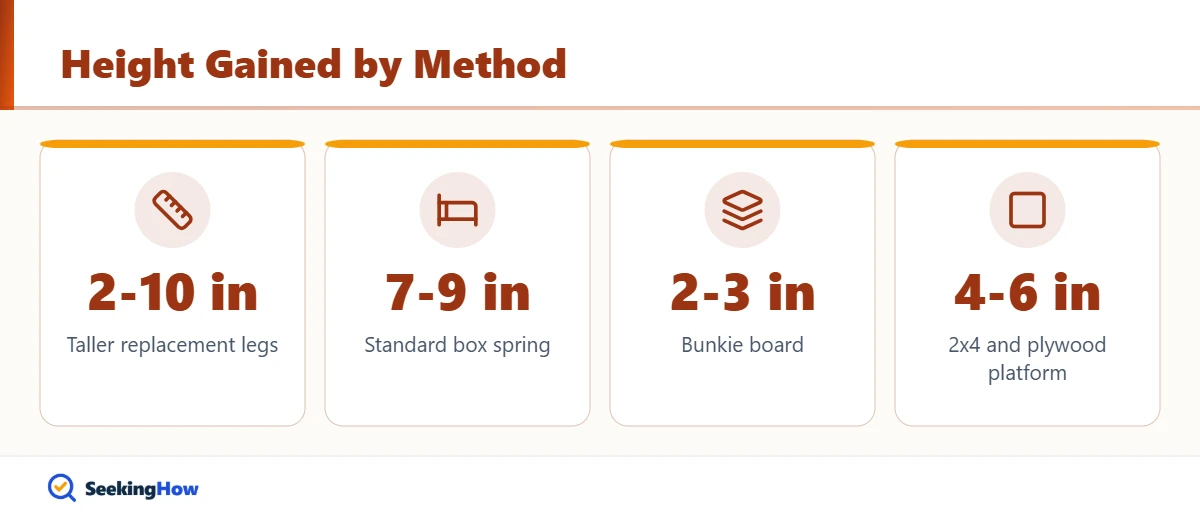
| Method | Height gained | Stability | Cost | Best for |
|---|---|---|---|---|
| Taller replacement legs | 2 to 10 inches | High | Low to moderate | Platform and upholstered frames with screw-in legs |
| Box spring or bunkie board | 2 to 9 inches | Very high | Moderate | Metal frames, mattress-on-frame setups |
| Plywood platform | 4 to 6 inches | Very high | Moderate | Heavy beds, uneven floors |
| Adjustable frame setting | 1 to 4 inches | High | Free | Adjustable metal frames |
If That Didn’t Work
Problem: The bed wobbles after raising it. Cause: Taller legs increase leverage on the joints. Fix: Tighten all frame bolts, add a center support leg and use corner brackets or a platform.
Problem: New legs will not thread in. Cause: Thread size or pitch mismatch. Fix: Return them for the right size, or use a thread adapter rated for furniture legs.
Problem: The mattress sags in the middle. Cause: No center support after raising the frame. Fix: Add an adjustable center support leg cut to the new height, and repair any cracked bed slats.
Problem: The headboard now sits too low. Cause: The mattress rose but the headboard did not. Fix: Re-drill the headboard brackets higher or follow our guide on how to make a headboard taller.
Safety and When To Call a Pro
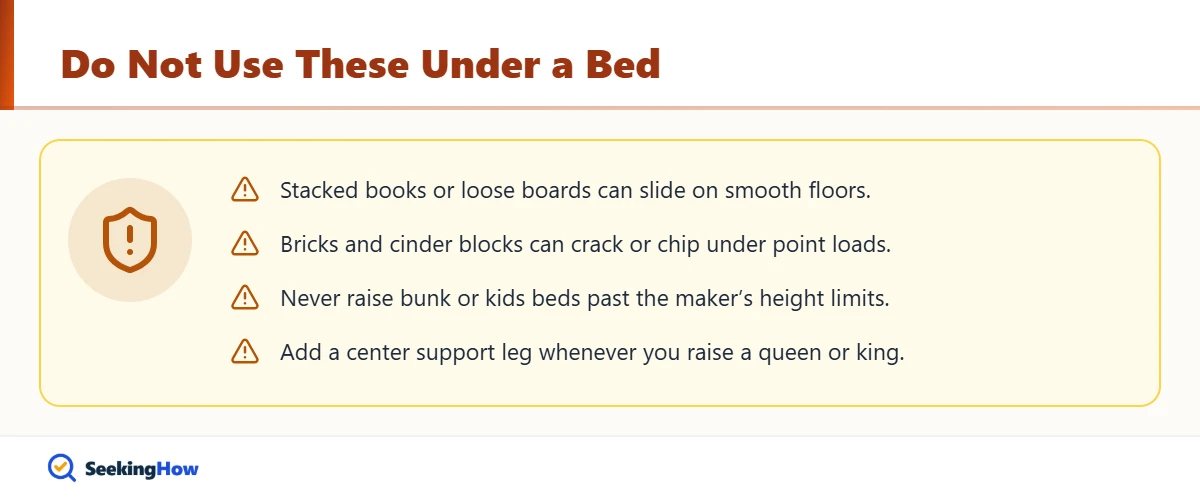
Avoid stacking books, bricks, cinder blocks or loose lumber under bed legs. They can shift, crack or slide on smooth floors and drop the bed suddenly. Do not raise children’s beds or bunk beds beyond the manufacturer’s height limits, and keep guardrails at the specified height above the mattress.
Get help from a carpenter or the bed manufacturer if the frame is antique, has cracked rails, uses glued-in legs you cannot remove, or needs to carry a heavy adjustable base. Always use a helper when lifting a frame and keep fingers clear of hinge and rail joints.
Related Guides
- How to make a box spring out of plywood
- How to attach a headboard to a metal bed frame
- How to fix a broken bed slat
- How to make a headboard taller
Sources
- U.S. Consumer Product Safety Commission: bunk bed and furniture safety (cpsc.gov)
- OSHA: safe lifting and material handling basics (osha.gov)
- American Wood Council: lumber span and fastener guidance (awc.org)
Frequently Asked Questions
What can I use instead of bed risers?
The best alternatives are taller replacement legs, a box spring or bunkie board, a plywood and 2×4 platform under the frame, or a higher setting on an adjustable metal frame. All of these spread weight better than plastic risers. Avoid stacked books, bricks or loose blocks.
Can you put longer legs on any bed frame?
Many platform and upholstered beds use screw-in legs that are easy to swap. Frames with welded, glued or bracketed legs may need a mounting plate or T-nut installed first, or may not be suitable. Check the thread size and the frame construction before buying legs.
How tall should a bed be from the floor?
Most adults find a total bed height of about 20 to 25 inches from floor to mattress top comfortable, with feet flat on the floor when sitting on the edge. Taller people often prefer more. Older adults may want a lower bed for safer transfers.
Does a box spring make a bed higher?
Yes, a standard box spring adds about 7 to 9 inches, while low-profile versions add about 4 to 5 inches. A bunkie board adds only 2 to 3 inches. Confirm your mattress warranty allows the foundation type, since some foam mattresses require solid or closely spaced slats.
Is it safe to put a bed on cinder blocks?
It is not recommended. Cinder blocks are hollow, can crack under concentrated leg loads and can scratch or slide on finished floors. If you want a significant height increase, build a 2×4 and plywood platform or install taller legs rated for the load instead.
How do I raise a metal bed frame without risers?
First check whether the frame has adjustable height settings. If not, add a box spring or low-profile foundation, or set the frame on a plywood platform. Some metal frames accept screw-in leg extensions designed for that model, which the manufacturer may sell.