Quick Answer
To attach a headboard to a metal bed frame, slide the frame against the headboard, line up the slotted brackets on the frame with the holes in the headboard legs, and fasten them with bolts (often 5/16-inch), washers and nuts. Tighten with a wrench. If the holes do not line up or the frame has no brackets, add a headboard bracket kit.
Key Takeaways
- Most standard metal frames have vertical slotted plates at the head end made for bolt-on headboards.
- The slots let you adjust headboard height; set it so the mattress top sits a few inches above the bottom edge of the panel.
- Use washers on both sides and finish with lock washers or nylon lock nuts to stop rattles.
- Platform and bed-in-a-box frames often need an adapter or bracket kit.
- No compatible holes? A wall-mounted headboard is a clean alternative.
Bolting a headboard to a metal frame takes about 20 to 30 minutes with basic tools. The tricky part is usually not the bolting but matching the headboard leg spacing and hole positions to the frame. This guide covers standard bolt-on frames, frames without brackets, and fixes for wobbles and squeaks.
Will Your Headboard Fit Your Metal Bed Frame?
Before you start, check three things. First, look at the head end of the frame for vertical steel plates with long slots; these are the headboard brackets. Second, look at the headboard legs for pre-drilled holes or threaded inserts. Third, measure the distance between the leg holes and compare it to the bracket spacing on the frame.
Many adjustable metal frames have brackets that slide or have several slot positions so they fit headboards for different mattress sizes. If the spacing is off by more than the adjustment range, you will need adapter plates or a different mounting method.
| Your setup | Best attachment method | What to buy |
|---|---|---|
| Standard metal frame with slotted brackets, headboard with holes | Bolt directly through brackets into headboard legs | Bolts, washers and nuts (often included) |
| Frame brackets do not line up with headboard holes | Add adapter plates or drill new holes in wooden legs | Headboard adapter or extension plates |
| Platform or bed-in-a-box metal frame with no brackets | Bolt-on headboard bracket kit made for that frame | Manufacturer kit or universal bracket kit |
| Headboard with no legs or no holes | Mount the headboard on the wall | French cleat or wall-mount brackets, anchors |
| Upholstered headboard with threaded inserts | Use bolts sized to the inserts | Matching machine bolts (check the manual) |
What Do You Need to Attach a Headboard?
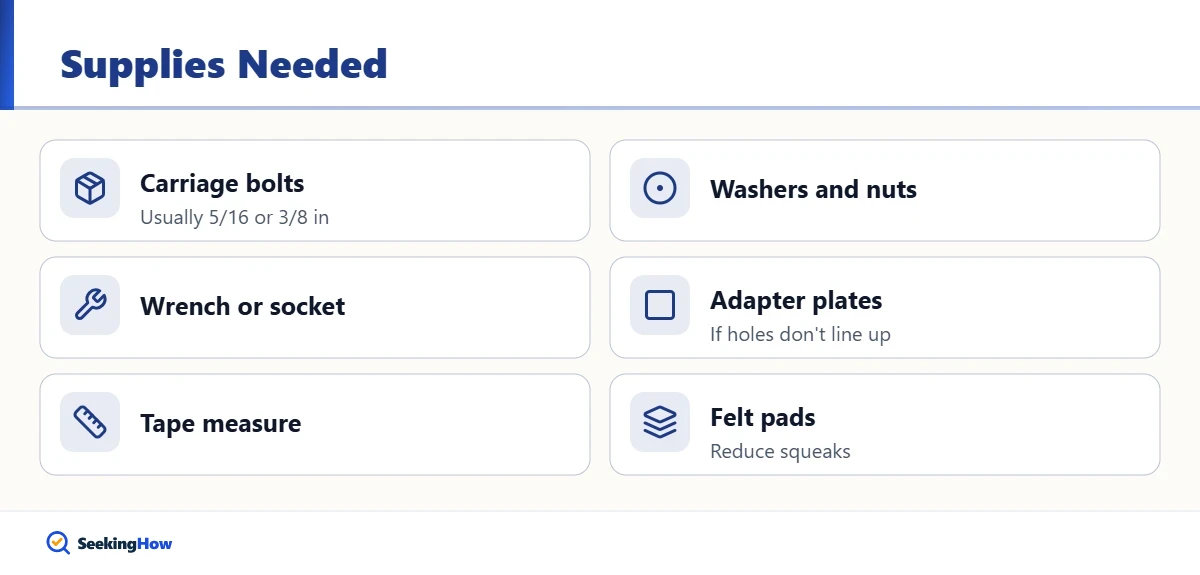
- Bolts that fit your headboard holes and frame slots (5/16-inch bolts about 1.5 to 2 inches long are common; check your manual)
- Flat washers, lock washers or nylon-insert lock nuts
- Adjustable wrench or a socket set, plus a screwdriver if your headboard uses screws
- Tape measure and pencil
- Drill and bits, only if you need new holes in wooden legs
- Felt pads or rubber washers to reduce squeaks
- A helper, especially for heavy or tall headboards
How to Attach a Headboard to a Metal Bed Frame
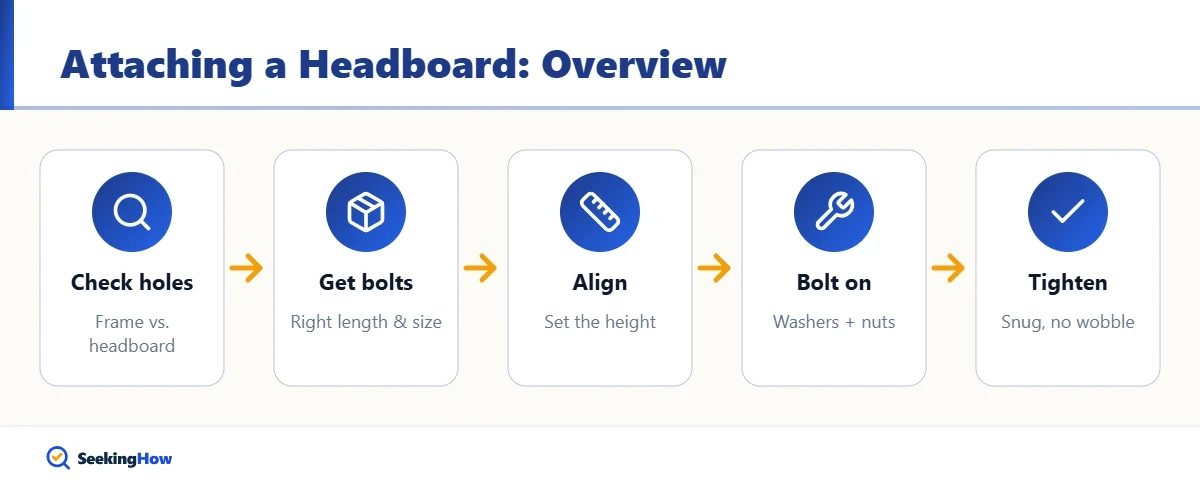
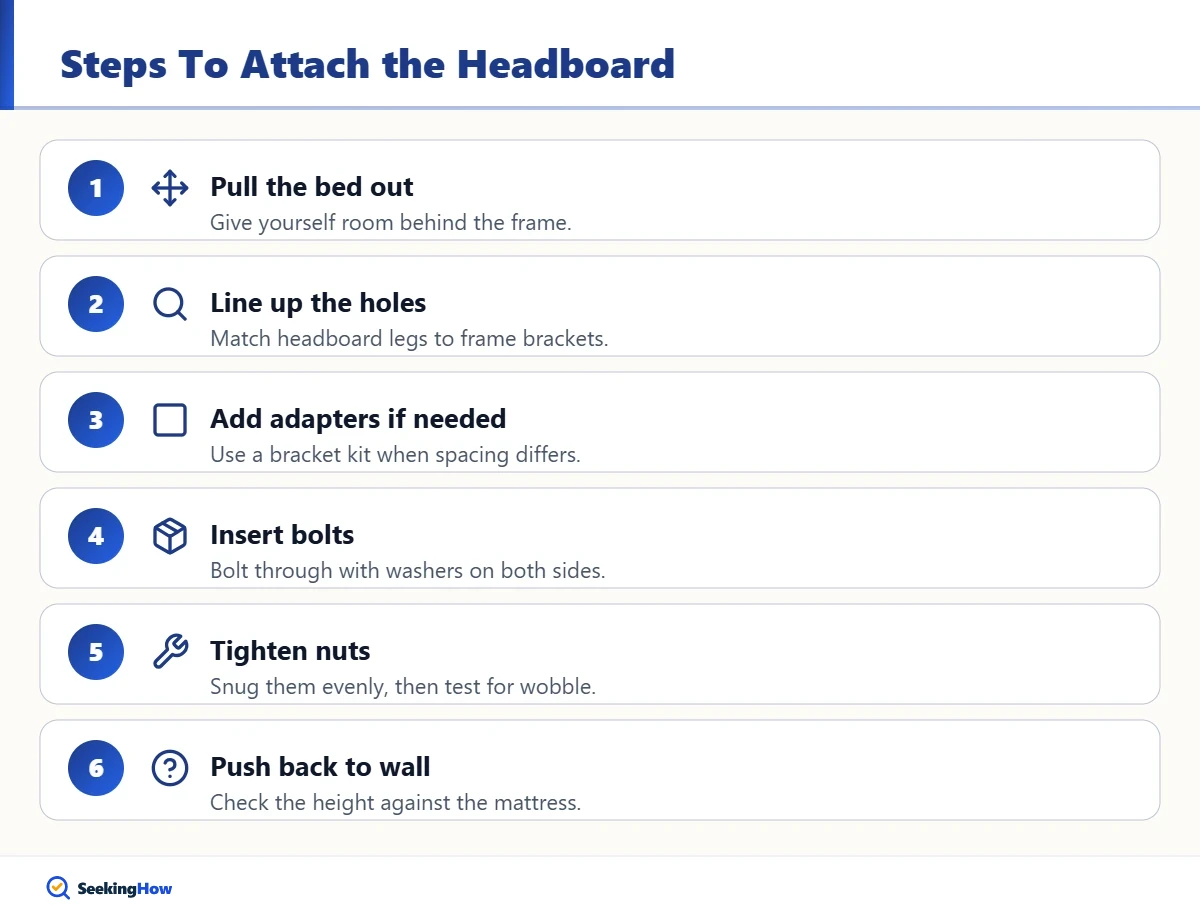
Step 1: Remove the Mattress and Box Spring
Strip the bed and lift off the mattress and any box spring or foundation. Working on an empty frame lets you see the brackets clearly and keeps you from straining your back. Lean the mattress against a wall out of the way.
Step 2: Position the Headboard Against the Wall
Stand the headboard against the wall where the bed will go, centered on the space. Lay a towel or cardboard on the floor so the legs do not scratch it while you work. Hardwood floors benefit from felt pads under the legs.
Step 3: Move the Frame Into Place
Slide the head end of the metal frame up to the headboard so the brackets sit against the back or front of the legs, depending on your frame design. Make sure the frame is square to the headboard and centered between the legs.
Step 4: Set the Headboard Height
Choose which slot or hole on the bracket lines up with the headboard holes. A common target is having the top of the mattress sit a few inches above the bottom edge of the headboard panel so there is no gap behind your pillows. Mark the height if you need to drill.
Step 5: Insert the Bolts
Push a bolt with a flat washer through the headboard leg hole and then through the frame bracket slot. On some frames the bolt goes from the frame side instead; either works as long as both sides have a washer. Insert all bolts loosely before tightening any of them.
Step 6: Add Washers and Nuts
Thread a washer, a lock washer and a nut onto each bolt, or use a nylon-insert lock nut. Finger-tighten them first so you can still nudge the headboard level and centered.
Step 7: Tighten Everything
Hold the nut with a wrench and turn the bolt head, or vice versa, until snug. Work side to side so the headboard stays even. Stop when the joint is firm; overtightening can crush wood or strip threaded inserts.
Step 8: Test for Wobble and Replace the Mattress
Push the headboard gently side to side. If it shifts, tighten again or add a second bolt per side if the bracket allows. Put the box spring and mattress back and check the height one more time.
What If the Headboard Holes Do Not Line Up With the Frame?
Misalignment is the most common problem. Try these fixes in order:
- Use a different slot: many brackets have several slots or a long channel. Shift the frame up, down or sideways.
- Adjust frame width: some frames have sliding rails that change the bracket spacing for twin, full and queen headboards.
- Add adapter plates: metal extension or adapter plates bolt to the frame and offer new hole positions.
- Drill new holes: on solid wood legs, mark the bracket slot location, drill a hole the same diameter as the bolt, and fasten through it. Do not drill into upholstered panels or particleboard near edges.
Tip: Hold the bracket against the leg and mark the hole center with a pencil through the slot before drilling. Drilling slightly undersized and enlarging is easier than fixing a hole in the wrong place.
How Do You Attach a Headboard to a Platform Frame Without Brackets?
Many folding platform frames and bed-in-a-box frames ship without headboard brackets. Check the frame manufacturer for an official headboard bracket kit first, because it is designed to bolt to existing holes in the frame. Universal bracket kits are another option and typically bolt to the frame legs or rails.
If no kit fits, mount the headboard to the wall with a French cleat or mounting brackets screwed into studs, then push the bed against it. A freestanding headboard is another option that skips the frame entirely.
Why Does a Headboard Squeak or Wobble?
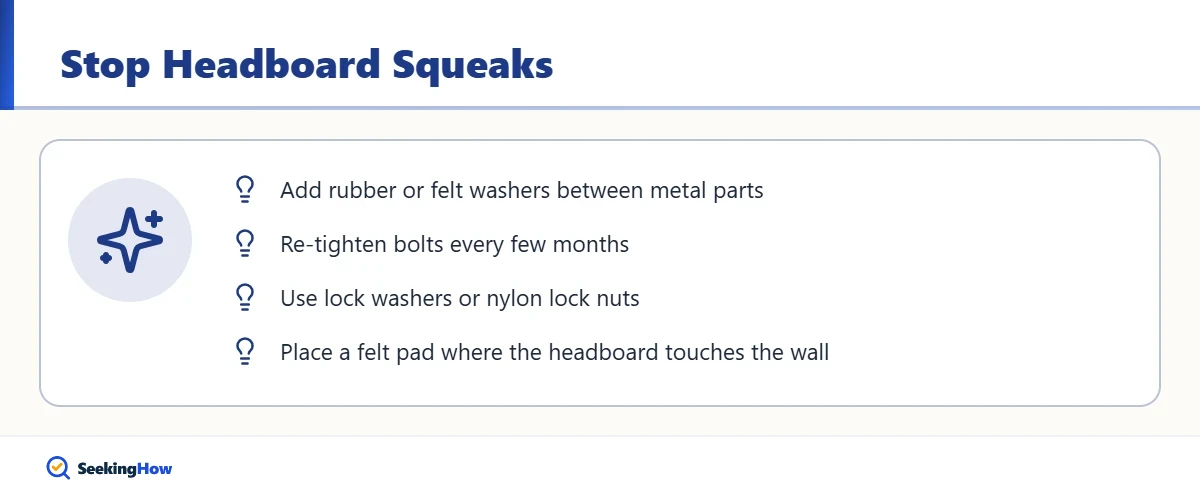
- Loose bolts: metal frames flex as you move, so nuts loosen over time. Re-tighten every few months and use lock nuts.
- Metal-on-wood contact: a felt pad or rubber washer between the bracket and the leg absorbs vibration.
- Bolts too thin: a bolt that rattles in an oversized hole moves. Use the largest bolt that fits, or add a fender washer.
- Headboard hitting the wall: stick felt bumpers on the back of the headboard.
- Weak slats or center support: movement in the bed can come from the base. See how to fix a broken bed slat.
Common Mistakes to Avoid
- Tightening one side fully before the other, which twists the headboard out of square.
- Using wood screws instead of machine bolts in threaded inserts.
- Leaving out washers, which lets the bolt head pull through the slot.
- Setting the headboard too low so it disappears behind the mattress.
- Moving the bed by dragging it by the headboard, which loosens the joint.
Safety: Tall or heavy headboards can tip during installation. Have a helper hold the headboard until at least two bolts are snug, and keep children away from the work area.
If you are building your own headboard to fit, our guide to making a padded headboard explains how to add sturdy legs with mounting holes that suit a standard metal frame.
Frequently Asked Questions
What size bolts attach a headboard to a metal bed frame?
Many headboards and metal frames use 5/16-inch bolts about 1.5 to 2 inches long, but sizes vary. Check the headboard manual or take one bolt hole measurement to a hardware store. Bolts must pass through the leg and bracket with room for a washer and nut.
Can you attach any headboard to a metal bed frame?
Most headboards with legs and bolt holes can attach to a standard metal frame with headboard brackets. Platform frames and some bed-in-a-box frames lack brackets and need a bracket kit. Headboards without legs or holes are usually better mounted to the wall.
How high should a headboard be above the mattress?
Set the headboard so the top of the mattress sits a few inches above the bottom edge of the headboard panel. That closes the gap where pillows fall and leaves plenty of panel visible. The slotted brackets on most frames let you adjust this easily.
Do I need to drill holes to attach a headboard?
Usually not. Most headboards have pre-drilled holes that match standard frame brackets. You only need to drill if the holes do not line up and the legs are solid wood. Avoid drilling into upholstered panels or close to the edges of particleboard.
How do you stop a headboard from hitting the wall?
Stick felt or rubber bumpers to the back of the headboard where it touches the wall, and tighten the frame bolts so the headboard cannot rock. For a permanent fix, mount the headboard to the wall studs and leave a small gap between it and the frame.