Quick Answer
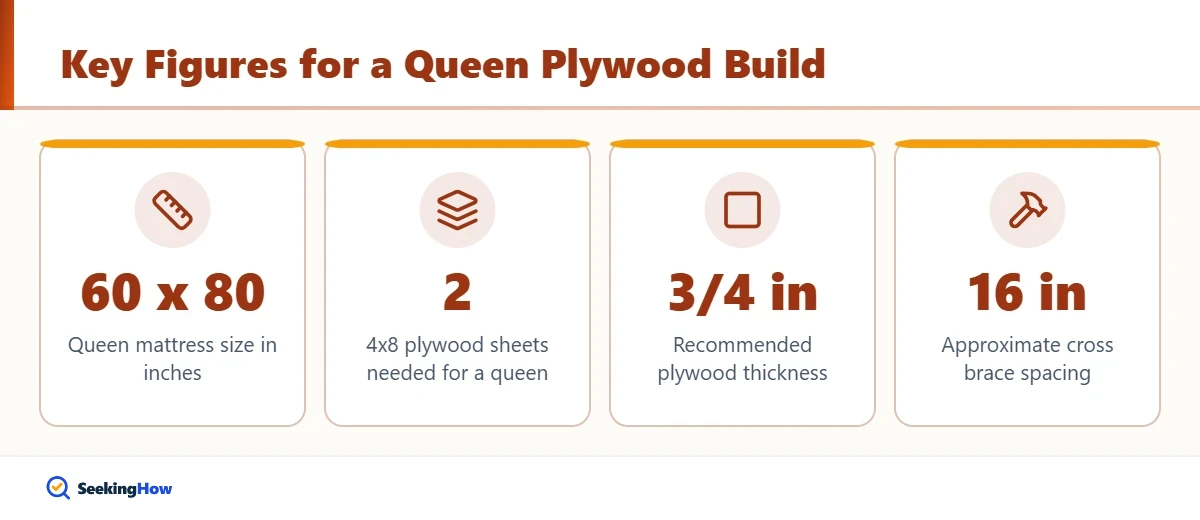
To make a box spring out of plywood, build a rectangular frame of 2×4 or 2×6 lumber to your mattress size, add a center rail and cross braces about every 16 inches, then screw a 3/4-inch plywood top to it. Drill ventilation holes, sand the edges and wrap it in fabric. A queen takes two plywood sheets and about 3 to 4 hours.
Key Takeaways
- A plywood “box spring” is really a rigid foundation, which suits foam and hybrid mattresses well.
- Use 3/4-inch plywood and support it at least every 16 inches so it cannot sag.
- Lumber width sets the height: 2×4 on edge gives about 4 inches, 2×6 about 6 inches.
- Ventilation holes help moisture escape from under the mattress.
- Check your mattress warranty for its foundation requirements before you build.
A sagging or squeaky box spring makes even a good mattress feel worn out, and a new foundation can be surprisingly expensive. Building one from plywood and dimensional lumber is a straightforward weekend project that gives firm, even support. Here is exactly how to size, build and finish it.
Can You Use Plywood Instead of a Box Spring?
Yes. Traditional box springs contain coils that flex, but most modern memory foam, latex and hybrid mattresses are designed for a firm, flat foundation instead. A plywood foundation gives that support and lasts for years if built correctly.
There are two caveats. First, a solid plywood top reduces airflow, so moisture from your body can collect under the mattress; ventilation holes or a slatted design reduce that risk. Second, some mattress warranties specify the type of foundation or maximum slat spacing, so read the warranty before you build.
What Size Should a Plywood Box Spring Be?
Match the foundation to standard US mattress dimensions so the edges line up with your bed frame.
| Mattress size | Dimensions (inches) | 4×8 plywood sheets needed |
|---|---|---|
| Twin | 38 x 75 | 1 |
| Twin XL | 38 x 80 | 1 (full 8-foot sheet length covers 80 in) |
| Full | 54 x 75 | 2 |
| Queen | 60 x 80 | 2 |
| King | 76 x 80 | 2, or build two twin XL foundations |
| California King | 72 x 84 | 2 (each cut to 36 x 84) |
Remember that a 2×4 actually measures 1.5 x 3.5 inches and a 2×6 measures 1.5 x 5.5 inches. Standard box springs are roughly 9 inches tall and low-profile ones about 5 inches, so choose 2×6 or 2×8 lumber if you want a taller foundation.
What Materials and Tools Do You Need?
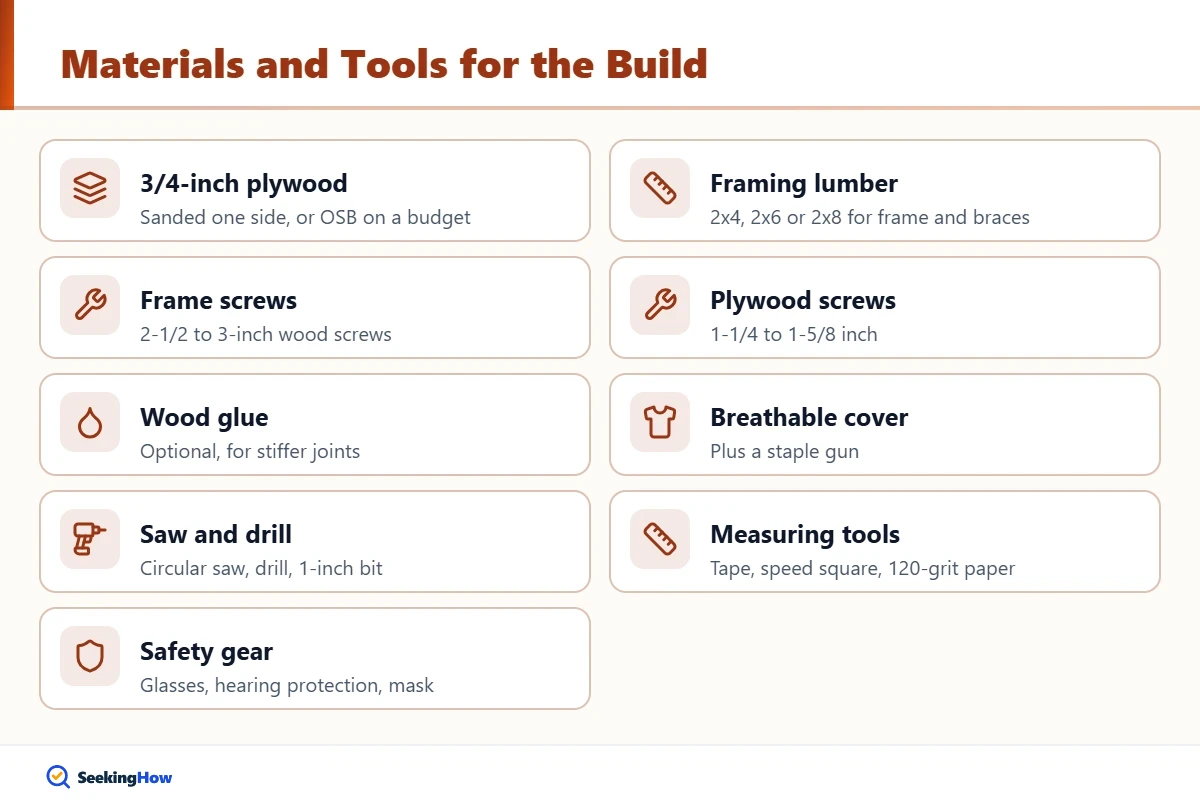
- 3/4-inch plywood (sanded one side, or OSB for a budget build)
- 2×4, 2×6 or 2×8 lumber for the frame and braces
- 2-1/2 to 3-inch wood or construction screws for the frame
- 1-1/4 to 1-5/8-inch screws to attach the plywood
- Wood glue (optional, for stiffer joints)
- Upholstery fabric or breathable mattress-foundation cover and a staple gun
- Circular saw or track saw, drill-driver, 1-inch spade or Forstner bit
- Tape measure, speed square, sandpaper (120 grit)
- Safety glasses, hearing protection and a dust mask
Many home centers will make straight cuts on plywood sheets for you, which also makes them easier to fit in a car.
How Do You Build a Plywood Box Spring?
Step 1: Measure Your Mattress and Bed Frame
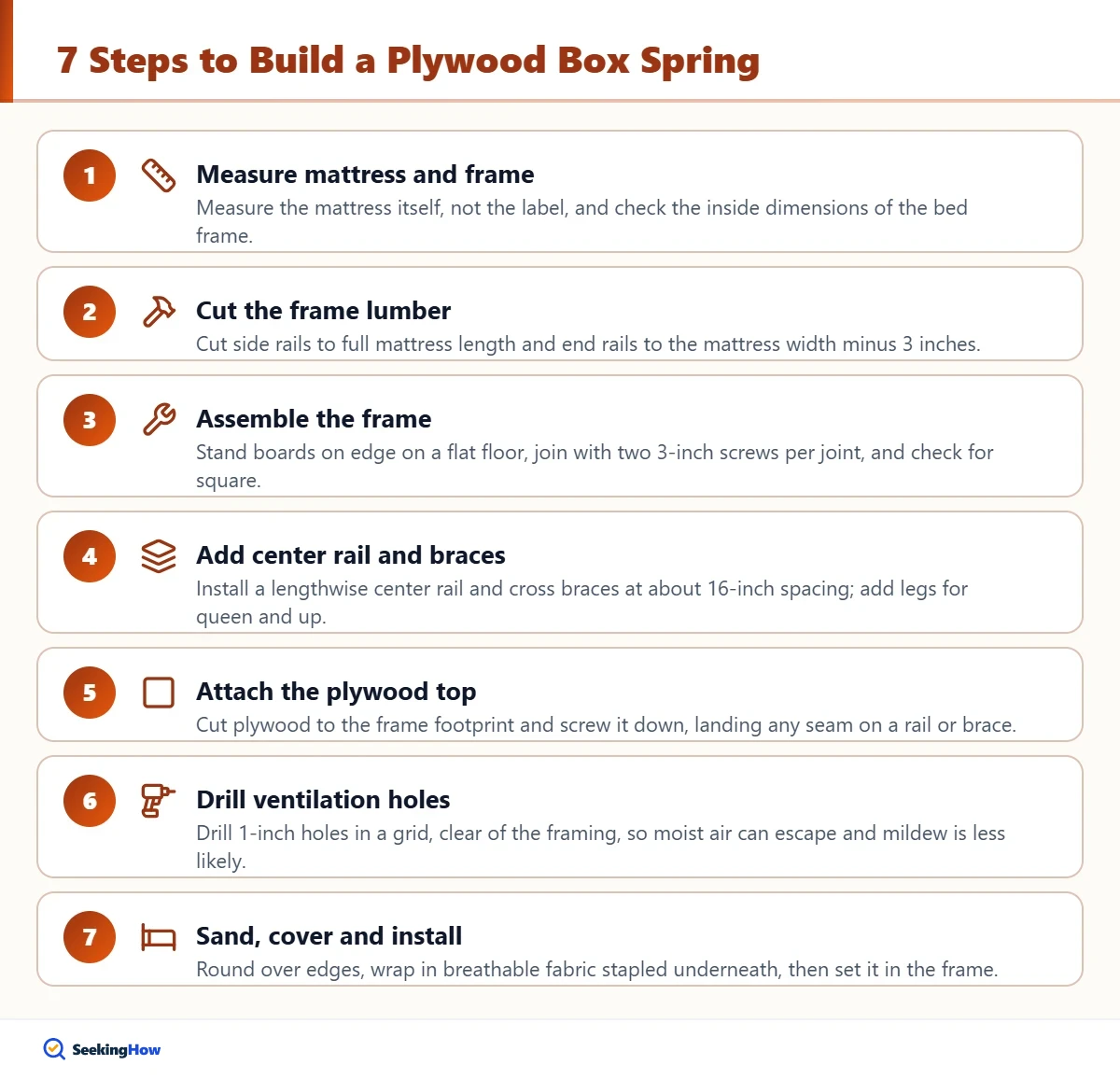
Measure the mattress itself rather than relying on the label, and check the inside dimensions of your bed frame. The foundation should match the mattress footprint and fit inside or on top of the frame without overhanging rails.
Step 2: Cut the Frame Lumber
Cut two side rails to the full mattress length. Cut the two end rails to the mattress width minus 3 inches, so they fit between the side rails. Cut a center rail and cross braces to fit inside the frame, enough to place a brace about every 16 inches.
Step 3: Assemble the Frame
Stand the boards on edge on a flat floor and drive two 3-inch screws through the side rails into each end rail. Check that the frame is square by measuring both diagonals; they should match. Add glue to joints for extra stiffness.
Step 4: Add the Center Rail and Cross Braces
Install the center rail lengthwise, then screw cross braces between the rails at roughly 16-inch spacing. For queen and larger sizes, add short legs or blocks under the center rail if your bed frame has a center support. This prevents the middle sag that ruins many mattresses.
Step 5: Cut and Attach the Plywood Top
Cut the plywood to the frame footprint. On two-sheet builds, make sure the seam lands on the center rail or a cross brace. Screw the plywood down every 8 to 10 inches along every rail and brace, keeping screw heads flush.
Step 6: Drill Ventilation Holes
Drill 1-inch holes in a grid across the top, spaced several inches apart and clear of the framing. These let warm, moist air escape and help prevent mildew on the underside of the mattress.
Step 7: Sand, Cover and Install
Round over the plywood edges and corners with sandpaper so they cannot snag the mattress or bedding. Wrap the foundation in breathable fabric, stapling it on the underside, then set it in the bed frame with the mattress on top.
Safety: Wear eye and hearing protection when cutting, keep hands clear of the blade, and support plywood fully so it does not pinch the saw. Use a dust mask, especially with OSB or MDF.
Solid Plywood Top vs. Slats: Which Is Better?
Both designs work. The right choice depends on your mattress, climate and budget.
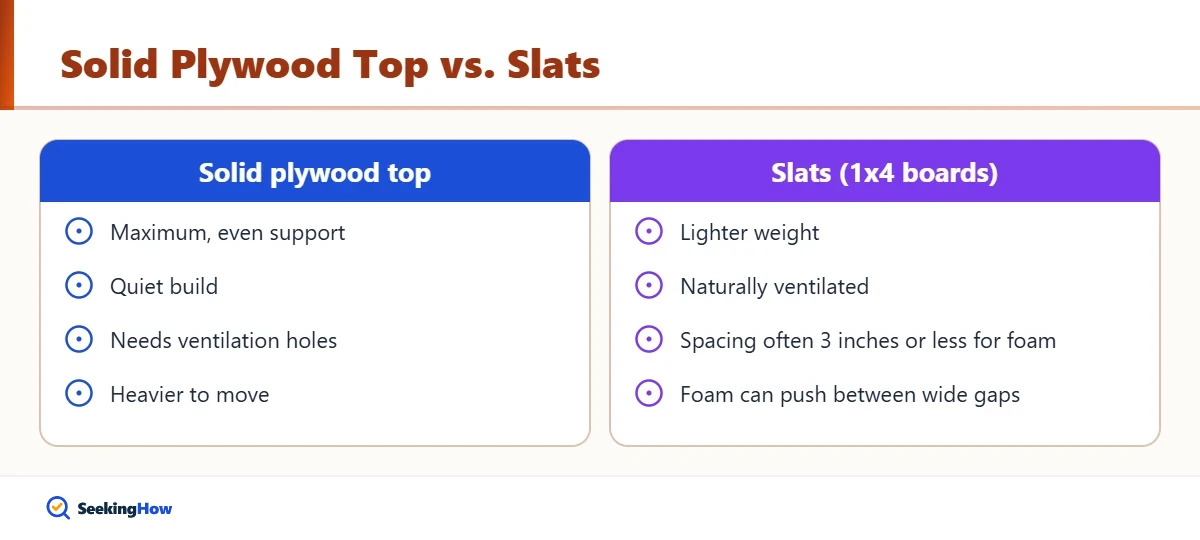
- Solid plywood top: maximum, even support and a quiet build. It needs ventilation holes and is heavier.
- Slats (1×4 boards): lighter and naturally ventilated. Spacing must be tight, often 3 inches or less for foam mattresses, or the foam can push between slats.
- Hybrid approach: slats with a thin breathable sheet or plywood strips on top balances support and airflow.
If you only need to fix a broken support in an existing frame, our guide on how to fix a broken bed slat may save you the full build.
Common Mistakes to Avoid
- Using thin 1/2-inch plywood, which flexes between supports.
- Leaving the seam between two sheets unsupported.
- Skipping the center support on queen and king beds.
- Leaving screw heads proud or edges sharp.
- Sealing the top with a non-breathable cover and no vent holes.
- Building the foundation too tall, so the mattress top ends up awkwardly high for getting in and out of bed.
How Do You Finish and Customize Your Foundation?
A covered foundation looks tidy under a bed skirt, but you can also paint or stain the frame if it shows. A matching headboard pulls the project together; see our guides to making a headboard for a king-size bed and making a headboard stand on its own.
Before you lay the mattress down, vacuum the foundation and inspect the old mattress seams. Moving a bed is a good moment to check for bed bugs, since they often hide in box spring fabric and frame joints.
When Should You Buy a Foundation Instead?
Buying makes more sense if your mattress warranty requires a specific foundation, if you need a split king that must fit up narrow stairs, or if you lack a saw and a flat workspace. Adjustable bases are another option for people who want to raise the head or feet; they replace the box spring entirely.
Frequently Asked Questions
Is plywood under a mattress bad?
Plywood is not bad for support, but a solid sheet traps moisture under the mattress. Drilling ventilation holes, using a breathable cover, and airing the mattress occasionally reduce the risk of mildew. Many people use slats or vented plywood for this reason.
What thickness of plywood do you need for a bed foundation?
Use 3/4-inch plywood for a solid top supported every 16 inches or so. Thinner 1/2-inch plywood can flex and develop a dip, especially in the middle of full, queen and king beds where two people sleep.
Can you put plywood on top of an old box spring?
Yes, a sheet of plywood on top of a sagging box spring can firm it up temporarily. It will not fix broken internal framing, though, and the mattress may still dip if the box spring underneath continues to collapse.
How much does it cost to make a plywood box spring?
The cost depends on local lumber prices and the size you build. A queen needs two sheets of 3/4-inch plywood, several 2×4 or 2×6 boards, screws and fabric. Price the list at your local home center before you start.
Does a DIY foundation void a mattress warranty?
It can. Some mattress warranties require a specific type of support, such as a solid surface or slats no more than a set distance apart. Read the warranty terms and build your foundation to meet them.