Quick Answer
To attach a headboard to a wooden bed frame, line up the headboard legs with the head end of the frame, mark and drill pilot or bolt holes, and fasten them with carriage bolts, washers and nuts, or with metal bed rail brackets or headboard mounting plates. Use two fasteners per side, tighten evenly, and check that the headboard sits plumb and does not wobble.
Key Takeaways
- Through-bolts (carriage bolts with washers and nuts) make the strongest, quietest connection.
- Hook-in bed rail brackets let you take the bed apart without tools, which helps when moving.
- Headboard mounting plates or L-brackets work when bolt holes do not line up.
- Drill pilot holes and keep fasteners at least about an inch from board edges to avoid splitting.
- A wall-mounted headboard is a clean alternative for platform beds.
Wooden bed frames give you more attachment options than metal ones because you can drill, screw and bolt exactly where you need to. The right method depends on whether your frame already has hardware, how heavy the headboard is, and whether you will ever need to take the bed apart. Most installs take 30 to 45 minutes.

Which Method Should You Use?
| Method | Best for | Strength | Tools |
|---|---|---|---|
| Carriage bolts through legs and frame | Headboards with legs, solid wood frames | Very strong | Drill, spade or brad-point bit, wrench |
| Hook-in bed rail brackets | Traditional rail beds you may move | Strong | Drill, chisel, screwdriver |
| Headboard mounting plates | Holes that do not line up | Strong | Drill, wrench |
| Heavy-duty L-brackets | Platform frames, headboards without legs | Moderate | Drill/driver |
| Wood screws only | Light headboards, temporary fixes | Fair; can loosen | Drill/driver |
| Wall mount (French cleat) | Platform beds, floating look | Strong when in studs | Stud finder, level, drill |
What Do You Need?

- Carriage bolts or hex bolts (often 5/16 or 3/8 inch) long enough to pass through the leg and frame with room for a washer and nut
- Flat washers, lock washers or nylon lock nuts
- Drill/driver with wood bits matched to the bolt diameter and a smaller bit for pilot holes
- Wrench or socket set
- Tape measure, pencil, square and level
- Clamps (helpful to hold parts while drilling)
- Optional: bed rail brackets, headboard mounting plates, L-brackets, felt pads
How to Attach a Headboard to a Wooden Bed Frame
Step 1: Clear and Prepare the Bed
Remove bedding, the mattress and any box spring or slats near the head end. Pull the frame a couple of feet from the wall so you can reach the back of the headboard. Lay down a blanket to protect the floor and the headboard finish.
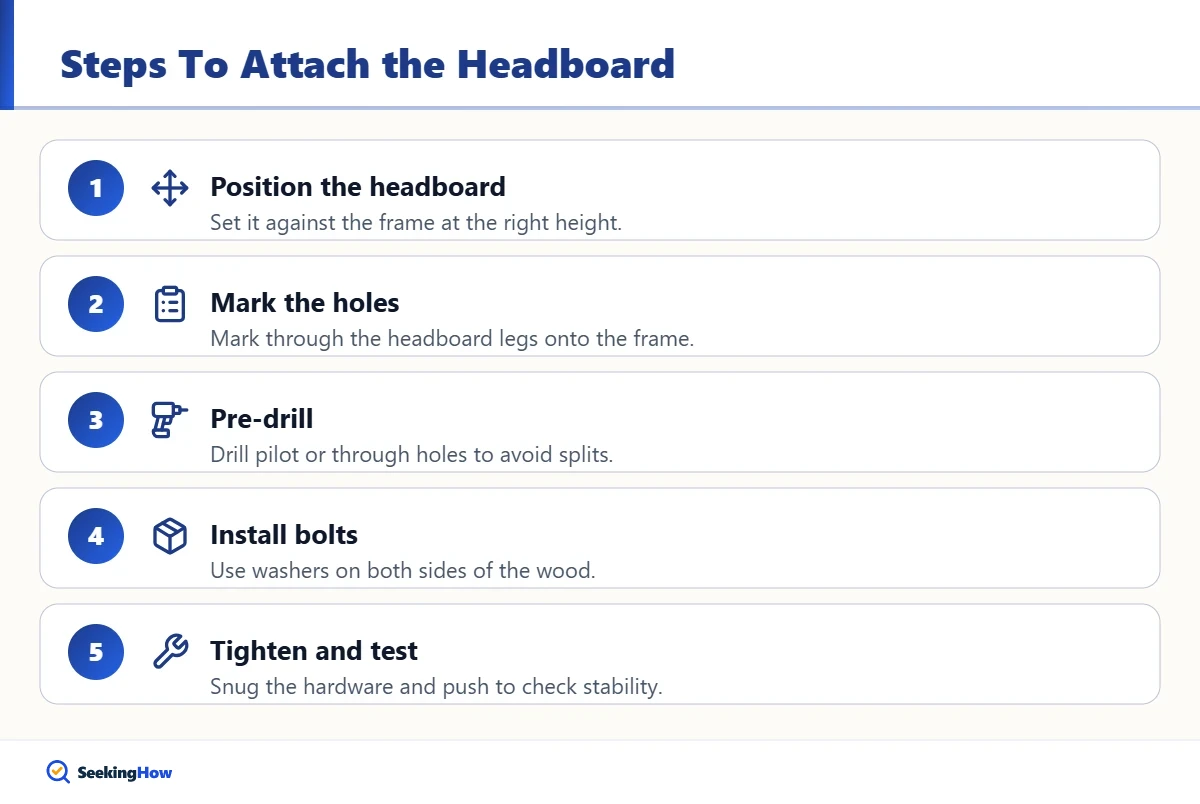
Step 2: Position the Headboard
Stand the headboard against the head end of the frame, centered side to side. Decide the height: a common target is having the top of the mattress sit a few inches above the bottom edge of the headboard panel. Use blocks or a helper to hold it at that height.
Step 3: Clamp and Check for Square
Clamp each headboard leg to the frame so nothing shifts while you drill. Check that the headboard is plumb with a level and that the frame is square to it. Adjust before you mark any holes.
Step 4: Mark the Bolt Holes
Mark two hole locations per side through the leg and frame, spaced a few inches apart vertically. Keep holes at least about an inch from edges and away from existing screws, knots and joints. If the headboard already has holes, mark through them onto the frame.
Step 5: Drill Straight Through
Drill a hole the same diameter as your bolt straight through the leg and frame together. Drill a small pilot first if you are worried about wandering, and back the exit side with scrap wood to prevent tear-out. Keep the drill level so the bolt passes cleanly.
Step 6: Insert the Bolts and Tighten
Push carriage bolts through from the headboard side so the smooth heads face out, then add washers and nuts on the frame side. Tighten evenly side to side until the square neck of each carriage bolt pulls into the wood and the joint is snug. Do not crush the wood.
Step 7: Test, Reassemble and Add Pads
Remove the clamps and rock the headboard gently. It should feel solid with no gaps. Replace the slats and mattress, push the bed back toward the wall, and add felt bumpers where the headboard touches the wall.
Tip: If you might take the bed apart later, use threaded inserts in the frame and machine bolts instead of nuts. Inserts tolerate repeated assembly much better than wood screws, which strip their holes over time.
How Do You Use Bed Rail Brackets?
Hook-in bed rail fasteners have two halves: a plate with slots that mounts to the headboard post and a plate with hooks that mounts to the end of the side rail. Mortise the post plate flush with a chisel or router, screw both plates in place, and drop the rail hooks into the slots. Gravity and the weight of the mattress keep the joint tight, and the bed comes apart without tools.
What If the Headboard Has No Legs?
Panel-style headboards without legs can attach to the frame with heavy-duty L-brackets or headboard mounting plates screwed into the back of the panel and the frame. Use screws long enough to bite deeply but short enough not to poke through the front. For a heavier headboard, mounting it to the wall on a French cleat screwed into studs is sturdier and lets you slide the bed out for cleaning. See how to make a headboard stand on its own for freestanding options.
Safety: Tall, heavy headboards can tip during installation. Have a helper hold it until bolts are in, wear eye protection when drilling, and check for wiring behind the wall before drilling for a wall mount.
Why Is My Headboard Wobbly or Squeaky?
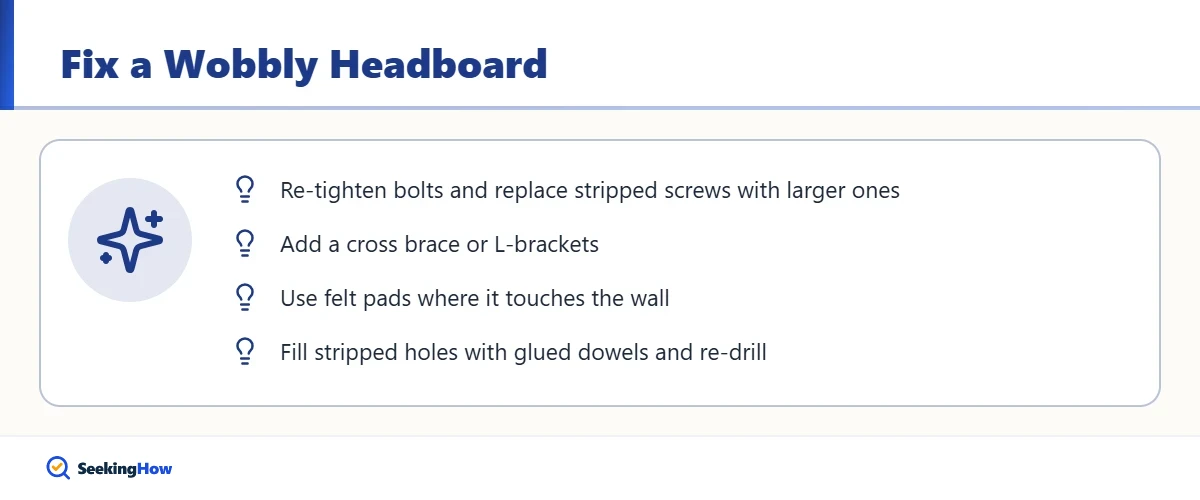
- Single fastener per side: one bolt acts as a pivot. Add a second bolt a few inches above or below.
- Loose nuts: wood shrinks seasonally, so recheck and tighten twice a year. Lock nuts help.
- Stripped screw holes: fill with glued toothpicks or a dowel and redrill, or switch to through-bolts. Our guide on removing a stripped screw from wood covers extraction and repair.
- Wood rubbing wood: a thin felt pad between the leg and the frame quiets creaks.
- Weak frame joints: if the frame itself racks, add corner braces or check the slats; see how to fix a broken bed slat.
Common Mistakes to Avoid
- Drilling without clamping, which leads to misaligned holes.
- Using drywall screws, which are brittle and snap under side loads.
- Placing holes too close to edges and splitting the leg.
- Overtightening and crushing soft pine.
- Forgetting to account for mattress height before drilling.
Using a metal frame instead? Follow our guide on how to attach a headboard to a metal bed frame. Building your own? Try our padded headboard project.
Frequently Asked Questions
Can you screw a headboard directly into a wooden bed frame?
Yes, for light headboards, using long wood screws into pre-drilled pilot holes. Screws can loosen as the bed flexes, though, so through-bolts with washers and nuts or headboard mounting plates hold better over time. Avoid brittle drywall screws for furniture joints.
What bolts do you use to attach a headboard to a wood frame?
Carriage bolts or hex bolts around 5/16 or 3/8 inch in diameter are common. Choose a length that passes through the headboard leg and the frame with room for a washer and nut. Carriage bolts leave a smooth rounded head on the visible side.
How do you attach a headboard without holes?
Clamp the headboard in position and drill matching holes through the legs and frame, or use headboard mounting plates or heavy L-brackets screwed to both parts. For panel headboards without legs, mounting to the wall with a French cleat into studs is a sturdy option.
How do bed rail brackets work?
Bed rail brackets have a slotted plate on the headboard post and a hooked plate on the end of the side rail. The hooks drop into the slots and the weight of the bed keeps them locked. They allow the bed to be taken apart and reassembled without tools.
How do you stop a headboard from wobbling on a wood frame?
Use at least two fasteners per side, tighten them evenly and recheck them periodically. Replace screws in stripped holes with through-bolts, add felt pads between surfaces, and brace the frame corners if the frame itself racks.