Quick Answer
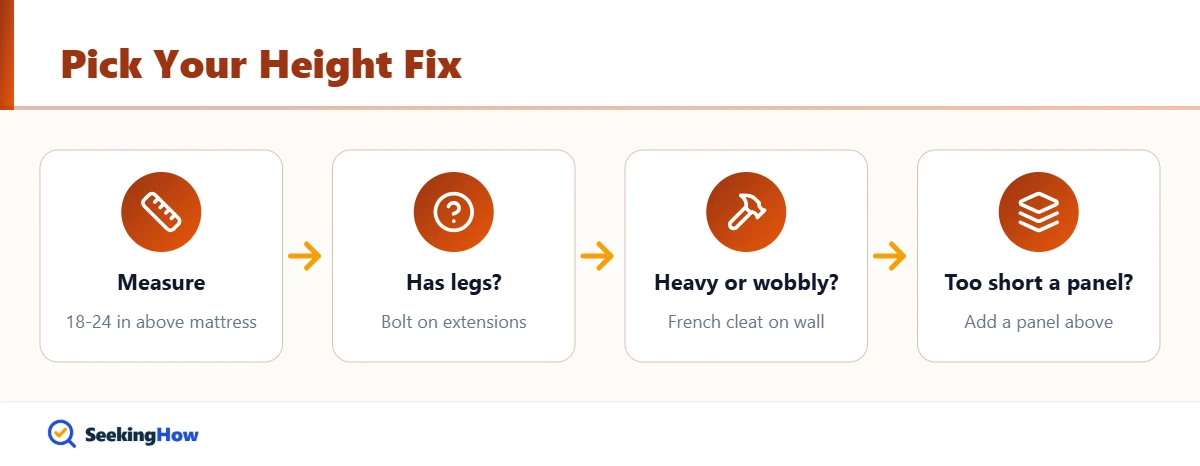
To make a headboard taller, the easiest fix is bolting longer legs or 2×4 extensions to the headboard posts so it sits higher on the bed frame brackets. Other options are mounting it on the wall with a French cleat at a new height, or adding an upholstered or wood panel above it. Most projects take 1 to 3 hours with a drill and carriage bolts.
Key Takeaways
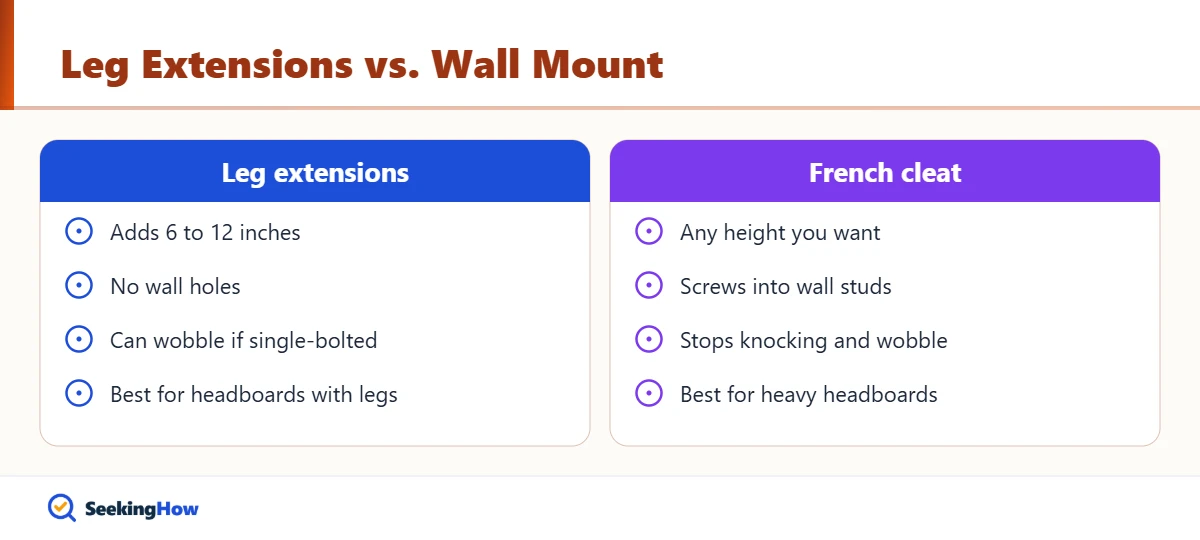
- Bolting 2×4 or 1×4 leg extensions to a headboard is the fastest, cheapest way to raise it 6 to 12 inches.
- Wall-mounting with a French cleat lets you set any height and removes wobble at the same time.
- An upholstered or plank panel above the existing headboard adds height without moving it.
- Aim for at least 18 to 24 inches of headboard showing above the mattress for a balanced look.
- Always use two carriage bolts per extension; a single bolt lets the headboard pivot.
A new, thicker mattress or a bed riser can make a once-perfect headboard look stubby, or leave you leaning against bare wall when you sit up to read. Here is how to make a headboard taller using four proven methods, from 30-minute leg extensions to a full panel add-on, and how to choose the right one for your frame.
What You’ll Need
- Tape measure, pencil and level
- Drill with wood bits and a driver
- Two 2×4 or 1×4 boards for leg extensions (length based on your target height)
- 3/8-inch carriage bolts, washers and nuts (two per extension, plus bed-bracket bolts)
- Construction adhesive or wood glue
- Clamps
- Heavy-duty French cleat rated for your headboard’s weight (wall method)
- Stud finder and 3-inch wood screws (wall method)
- Plywood, foam, batting and fabric, or shiplap boards (panel method, optional)
- Paint or stain to match (optional)
How To Make a Headboard Taller: Step-by-Step (Leg Extension Method)
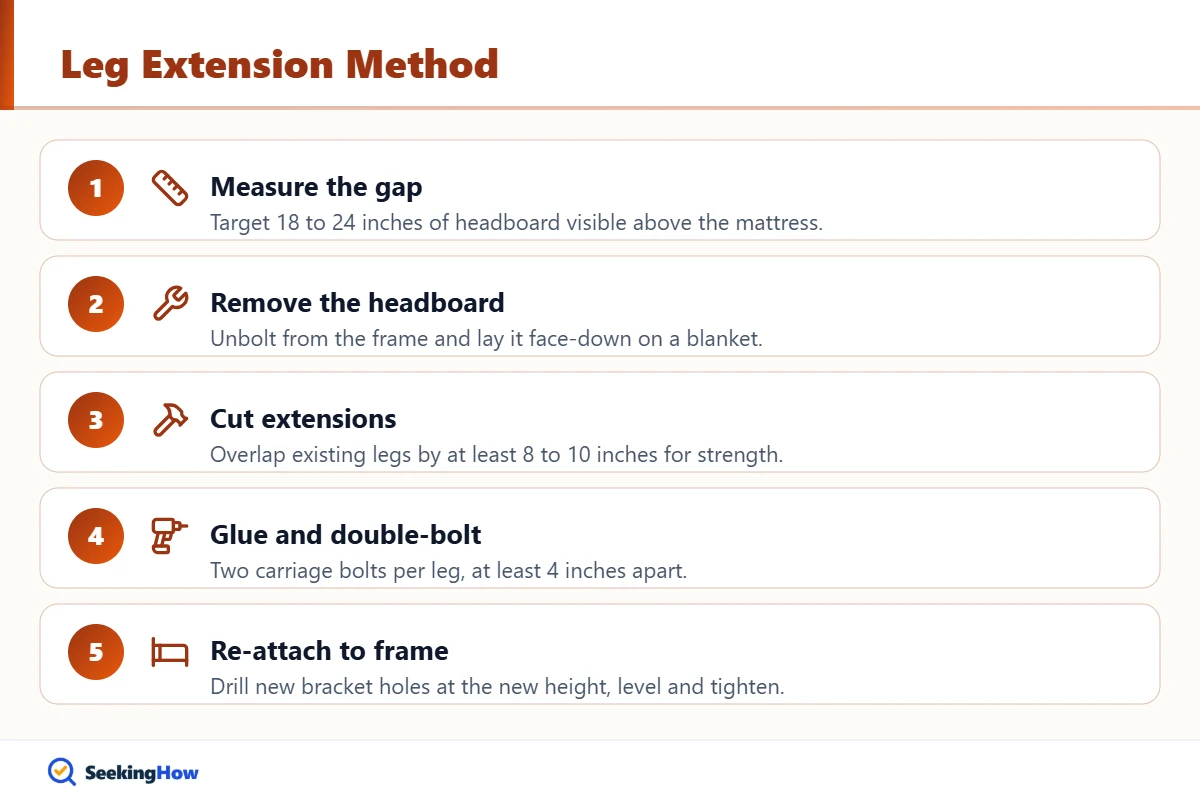
Step 1: Measure Your Target Height
Measure from the floor to the top of your mattress and decide how much headboard you want visible above it, usually 18 to 24 inches for sitting up comfortably. Subtract the current visible height to find how many inches to add. Mark the target on the wall with painter’s tape to preview it.
Step 2: Remove the Headboard
Pull the bed away from the wall and unbolt the headboard from the frame brackets. Lay it face-down on a blanket so the finish does not scratch. Keep the original hardware in a labeled bag. If your frame is metal, see how to attach a headboard to a metal bed frame.
Step 3: Cut the Extensions
Cut two boards long enough to overlap the existing legs by at least 8 to 10 inches and extend down to the frame bracket at the new height. That overlap is what gives the joint its strength. Paint or stain the boards now if they will be visible.
Step 4: Bolt the Extensions to the Headboard Legs
Glue and clamp each extension to the back of a headboard leg, then drill two holes through both pieces, at least 4 inches apart. Insert carriage bolts from the front with washers and nuts on the back. The most common mistake is using one bolt, which lets the headboard swing.
Step 5: Drill New Bracket Holes
Hold the extended headboard against the bed frame at the new height and mark where the frame’s bracket slots line up on the extensions. Drill those holes and bolt the headboard to the frame. Check with a level and tighten everything.
Bottom line: for most beds, bolt-on leg extensions are the simplest fix; switch to a wall-mounted cleat if the headboard wobbles or has no legs.
Other Ways To Make a Headboard Taller
Wall-Mount It Higher With a French Cleat
Remove the legs or detach the headboard from the frame and screw half of a French cleat into at least two wall studs at the new height. Attach the matching half to the headboard’s back and hang it. This is the best choice for heavy wood headboards and also stops the knocking noise against the wall.
Add an Upholstered or Wood Panel Above
Cut a plywood panel the same width as the headboard, then upholster it with foam, batting and fabric, or clad it with shiplap. Mount it on the wall or bolt it to the headboard top so the seam lines up. In practice, a contrasting fabric panel looks intentional, while trying to match old fabric rarely works. Our padded headboard guide walks through the upholstery steps.
Paint a Faux Extension
For zero carpentry, paint a rectangle or arch on the wall behind the headboard in a darker color, extending 12 to 24 inches above it. It reads as a taller headboard from across the room, though it adds no physical back support.
| Method | Height gained | Time | Cost | Best for |
|---|---|---|---|---|
| Leg extensions | 6 to 12 inches | 1 to 2 hours | Low | Headboards with legs that bolt to a frame |
| French cleat wall mount | Any height | 1 hour | Low | Heavy or wobbly headboards |
| Panel above | 12 to 24 inches or more | 3 to 5 hours | Moderate | Low upholstered or slatted headboards |
| Faux painted extension | Visual only | 2 hours | Very low | Renters and quick refreshes |
If That Didn’t Work
Problem: The taller headboard wobbles. Cause: Longer legs act as a lever on the brackets. Fix: Add a second bolt per bracket, or add a French cleat at the top to tie it to the wall.
Problem: The frame bracket slots do not line up with the extensions. Cause: Extensions mounted off-center. Fix: Use adjustable headboard bracket plates, sold at hardware stores, between the frame and the extension.
Problem: The headboard bangs the wall when you sit back. Cause: Gap between headboard and wall. Fix: Add felt bumpers or a spacer block behind the top edge.
Problem: The added panel looks mismatched. Cause: Fabric or stain does not match the original. Fix: Re-cover or repaint both pieces together, or choose a deliberate contrast.
Safety and When To Call a Pro
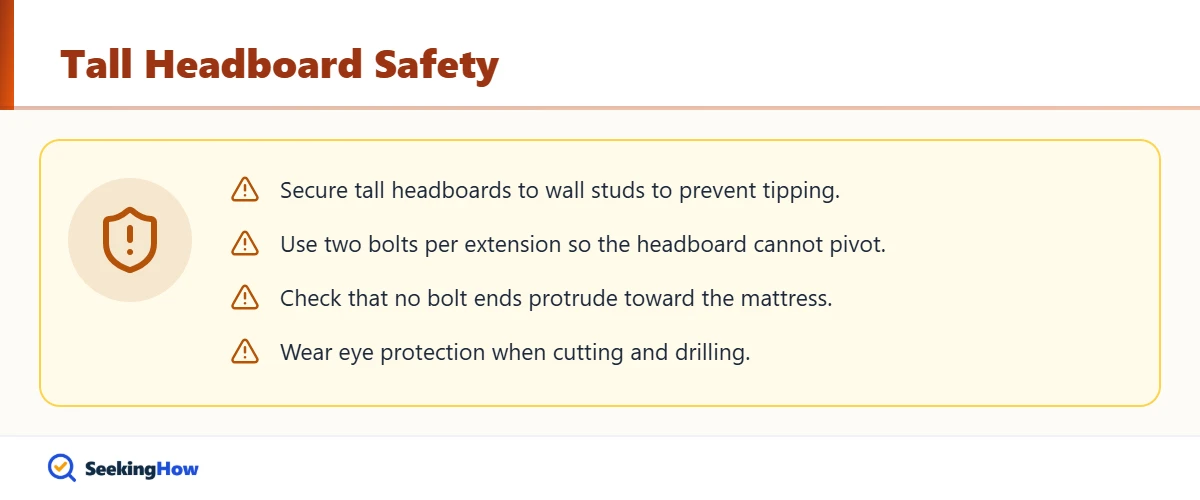
A tall headboard that is only attached at the bottom can tip if someone leans on it, especially with children in the room. Secure tall headboards to wall studs, not just drywall anchors, and wear eye protection when cutting and drilling. Use the correct bolt length so nothing protrudes toward the mattress.
Call a carpenter or handyman if the headboard is antique or veneered and you do not want to drill it, if your walls are plaster or masonry, or if the bed frame is a cast or welded metal design without bolt brackets.
Related Guides
- How to make a headboard for a king size bed
- How to attach a headboard to a wooden bed frame
- How to attach a headboard to a metal bed frame
- How to make a padded headboard
- How to make a headboard from an old door
Sources
- U.S. Consumer Product Safety Commission: furniture tip-over prevention (anchorit.gov)
- OSHA: eye protection and safe use of hand and power tools (osha.gov)
- American Wood Council: wood fastener and connection basics (awc.org)
Frequently Asked Questions
How can I make my headboard taller without buying a new one?
Bolt 2×4 or 1×4 extensions to the headboard legs so it sits higher on the frame, or remove it from the frame and mount it on the wall at a new height with a French cleat. Both methods use inexpensive hardware-store materials and take about one to two hours.
How tall should a headboard be above the mattress?
Most people find 18 to 24 inches of headboard above the mattress comfortable for sitting up and visually balanced. Taller headboards of 30 inches or more suit high ceilings and king beds. Measure after any mattress or topper change, since thicker mattresses hide more headboard.
Can you raise a headboard on a metal bed frame?
Yes, most metal frames have slotted headboard brackets. Bolt wood extensions to the headboard legs and drill new holes that line up with the slots at your target height. If they do not align, use adjustable headboard bracket plates or wall-mount the headboard instead.
How do you extend an upholstered headboard?
Build a matching or contrasting upholstered panel from plywood, foam, batting and fabric, and mount it on the wall directly above the headboard, or raise the whole headboard with leg extensions. Matching old fabric is difficult, so a deliberate contrast or full re-cover often looks better.
Will a taller headboard be less stable?
It can be, because longer legs act as a lever on the frame brackets. Use two bolts at each connection and consider anchoring the top to a wall stud with a French cleat or bracket. That keeps it from wobbling or tipping when someone leans back.
Can I wall-mount a headboard that came with legs?
Yes, many headboards can be wall-mounted by removing or shortening the legs and attaching a French cleat to the back. Screw the wall half into at least two studs. Check the headboard frame is solid enough to hold screws; thin veneered panels may need a backer board first.