
Quick Answer
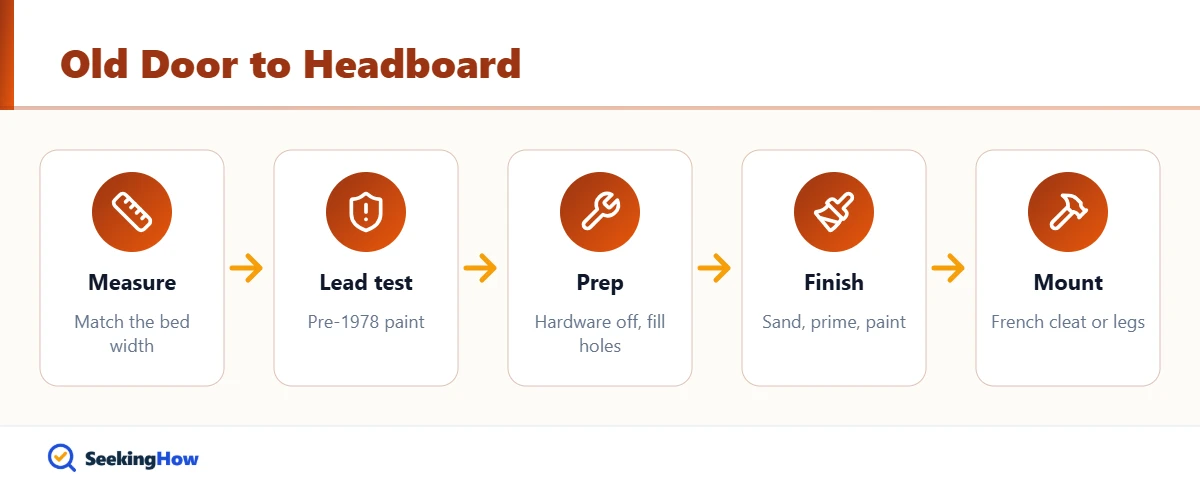
To make a headboard from an old door, turn a standard 80-inch door on its side, remove the hardware, fill the knob holes, sand and paint or seal it, then mount it to wall studs with a heavy-duty French cleat or bolt 2×4 legs to the bed frame. It takes a weekend. Test old painted doors for lead before sanding.
Key Takeaways
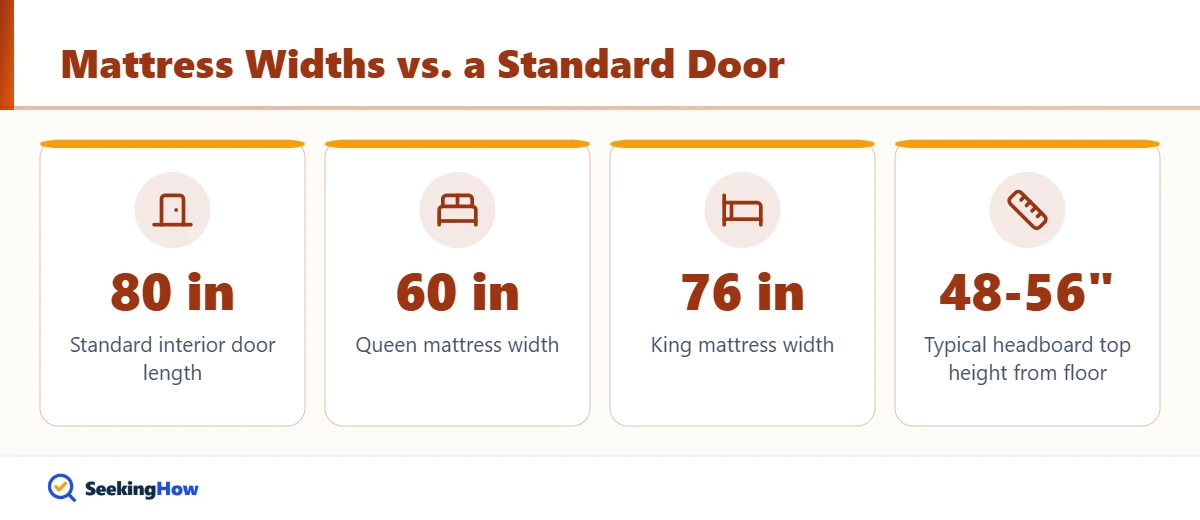
- A standard 80-inch interior door laid sideways spans a queen (60 inches) or king (76 inches) mattress.
- Paneled solid-wood doors make the most attractive headboards, and hollow-core doors are the lightest to hang.
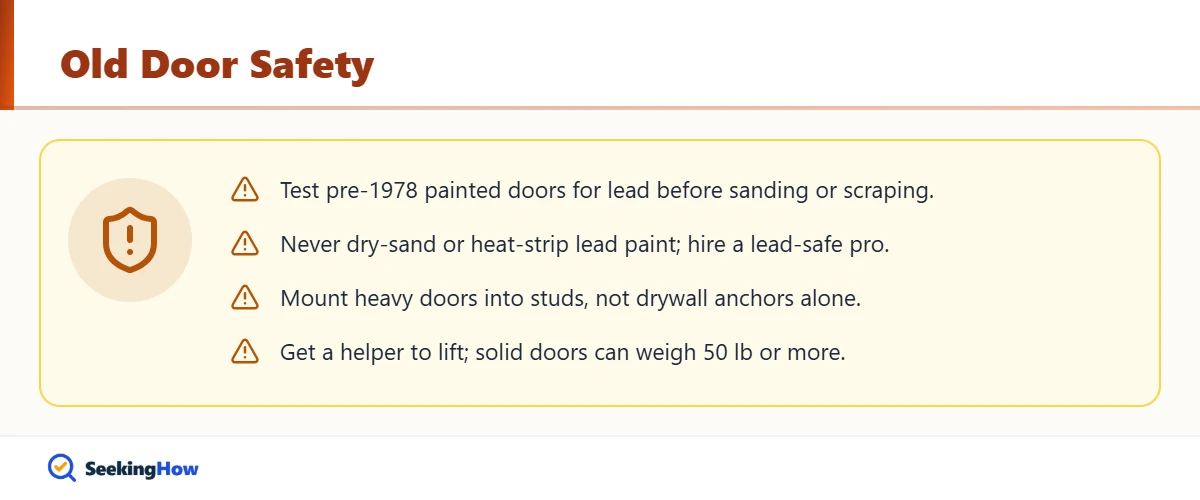
- Homes and doors built before 1978 may carry lead paint, so test before sanding or scraping.
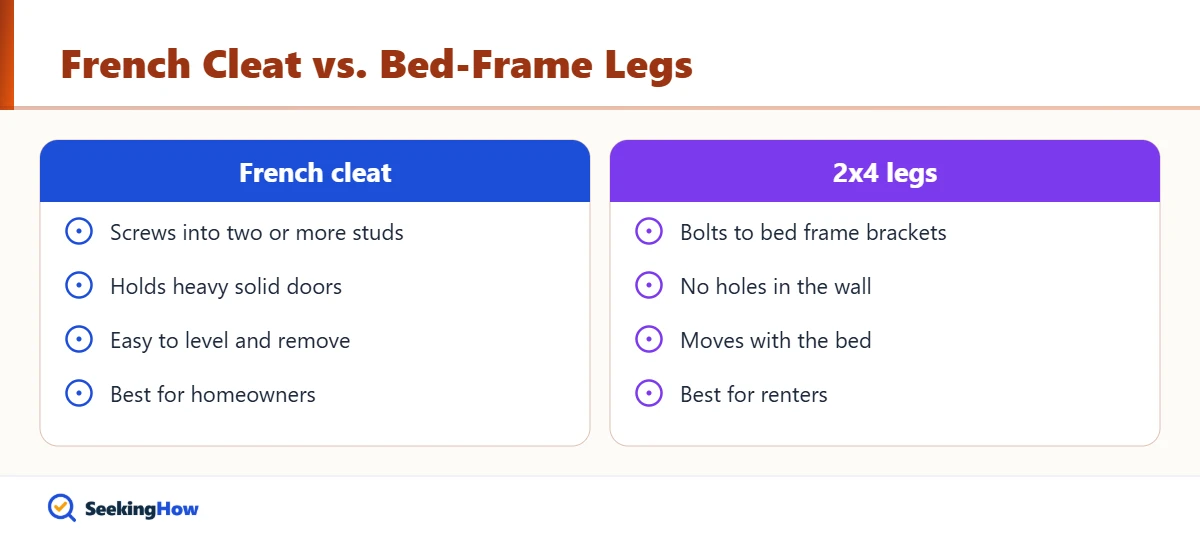
- A French cleat screwed into at least two wall studs is the strongest, simplest way to mount a heavy door.
- Leg-mounted door headboards bolt to the bed frame and are best for renters who cannot drill into walls.
Salvaged doors have the paneling, molding and patina that store-bought headboards try to imitate. Learning how to make a headboard from an old door is a beginner-friendly weekend project that needs only basic tools, and the result can look farmhouse, coastal or modern depending on the finish. This guide covers sizing, prep, finishing and the two safest ways to mount it.
What You’ll Need
- Old door: standard 80 inches long; 30 to 36 inches wide works for most beds
- Lead test kit (EPA-recognized) for any painted door from before 1978
- Screwdriver and pry bar for removing hinges, knobs and strike plates
- Wood filler or a wood plug and glue for the knob hole
- Random orbit sander with 80-, 120- and 220-grit discs
- Primer, paint or stain, and a water-based polyurethane topcoat
- Heavy-duty aluminum French cleat rated for at least 100 lb, or a 1×4 board ripped at 45 degrees
- Stud finder, level, drill and 3-inch wood screws
- Two 2×4 boards, carriage bolts, washers and nuts (for leg mounting, optional)
- Decorative trim or crown molding for a top shelf (optional)
How To Make a Headboard From an Old Door: Step-by-Step
Step 1: Choose and Measure the Door
Measure your mattress width: twin 38 inches, full 54, queen 60 and king 76. A headboard should be at least as wide as the mattress and ideally 2 to 4 inches wider on each side. An 80-inch door laid horizontally fits a queen or king; for twins and fulls, cut it down or use a narrower door upright. For extra-wide beds, see how to make a headboard for a king size bed.
Step 2: Test for Lead and Clean the Door
Use a lead test kit on any old painted door before you sand. If it tests positive, do not dry-sand or heat-strip it; either seal it under a fresh coat of paint after wet-wiping, or choose another door. Then scrub the surface with warm, soapy water and let it dry fully.
Step 3: Remove Hardware and Fill Holes
Remove hinges, knobs, latches and strike plates. Fill screw holes with wood filler, and glue a wood plug or dowel into the knob bore before filling the rest. Many people keep an old glass knob or a hinge as a deliberate vintage accent instead.
Step 4: Sand, Repair and Cut to Size
Sand flat areas with 80 grit to remove loose finish, then smooth with 120 and 220 grit. Sand panel edges by hand so you do not round the details. If you need a shorter headboard, cut the door with a circular saw along a straight-edge guide, then glue and clamp a filler strip into any exposed hollow-core cavity.
Step 5: Paint, Stain or Seal
Prime bare wood and fill, then apply two thin coats of paint, or stain and seal with water-based polyurethane. For a distressed finish, sand edges lightly after the paint cures. Let the finish cure for at least 24 hours before handling to avoid fingerprints and dents.
Step 6: Add Optional Trim or a Shelf
Glue and nail a 1×4 cap board and crown molding along the top edge for a ledge that holds books or a phone. Keep the shelf shallow, about 3 to 4 inches, so you do not bump your head.
Step 7: Mount the Door Securely
For wall mounting, screw one half of a French cleat into at least two studs with 3-inch screws and attach the other half to the back of the door, then lower the door onto the cleat and check it with a level. For a freestanding look, bolt two 2×4 legs to the back of the door and to the bed frame brackets with carriage bolts. Our guides on attaching a headboard to a wooden bed frame and making a headboard stand on its own cover the hardware in detail. Plan the top edge at roughly 48 to 56 inches above the floor for most beds.
Bottom line: pick a solid paneled door for looks, test for lead before sanding, and hang it on a stud-anchored French cleat.
| Mounting method | Strength | Difficulty | Best for |
|---|---|---|---|
| French cleat into studs | Very high | Easy | Heavy solid-wood doors, homeowners |
| 2×4 legs bolted to bed frame | High | Moderate | Renters, metal or wood frames with headboard brackets |
| Freestanding with feet | Medium | Moderate | Platform beds without brackets |
| Leaning against the wall | Low | Very easy | Not recommended; doors can slide or tip |
If That Didn’t Work
Problem: The door rattles or bangs the wall. Cause: Gap at the bottom of the cleat-mounted door. Fix: Add a spacer strip the same thickness as the cleat at the bottom back edge, plus felt bumpers.
Problem: Paint is peeling soon after finishing. Cause: Glossy old finish was not scuffed or primed. Fix: Sand to dull the surface and use a bonding primer before repainting.
Problem: The headboard leans or twists on leg mounts. Cause: Only one bolt per leg. Fix: Use two carriage bolts per leg into the door frame and two at the bed bracket.
Problem: The door looks too short above the mattress. Cause: Mounted too low or a thick mattress. Fix: Raise the cleat so at least 18 to 24 inches of door shows above the mattress.
Safety and When To Call a Pro
Lead dust is a serious hazard, especially for children and pregnant people. If an old door tests positive and you want it stripped, hire an EPA Lead-Safe Certified renovator or a professional stripping shop. Wear a dust mask or respirator, eye protection and hearing protection while sanding and cutting.
Solid wood doors can weigh 50 pounds or more, so always mount into studs, not drywall anchors alone, and get a helper to lift. Call a handyman if you cannot locate studs, your walls are plaster or masonry, or the bed sits under a window where wall mounting is not practical.
Related Guides
- How to make a padded headboard
- How to make a headboard stand on its own
- How to make a headboard for a king size bed
- How to attach a headboard to a wooden bed frame
Sources
- U.S. EPA: lead-safe renovation practices and recognized lead test kits (epa.gov/lead)
- CDC: lead exposure prevention in the home (cdc.gov)
- OSHA: eye, hearing and respiratory protection basics (osha.gov)
Frequently Asked Questions
What size door do I need for a queen headboard?
A standard 80-inch door turned sideways works well for a queen bed, which is 60 inches wide, leaving about 10 inches on each side. Door width becomes the headboard height, so a 30 to 36 inch door shows roughly 18 to 24 inches above a typical mattress when mounted correctly.
Can you use a hollow-core door as a headboard?
Yes, hollow-core doors are light and easy to hang, but they dent easily and cannot be cut without adding a filler strip. They suit painted modern styles. Paneled solid-wood doors look richer and resist dents, but they need sturdier mounting into wall studs.
How do you attach a door headboard to the wall?
The best method is a French cleat: screw one beveled strip into at least two wall studs and attach the matching strip to the back of the door, then hang the door on it. Add a spacer at the bottom so it sits flush. Use a level before tightening.
Is it safe to use an old door with lead paint?
It can be, if the paint is intact and you seal it rather than sanding it. Never dry-sand, scrape or heat-strip lead paint, which releases toxic dust. Test old doors first, and hire a lead-safe certified professional if the door needs stripping.
How high should a door headboard be?
Most door headboards look balanced with the top edge about 48 to 56 inches above the floor, showing at least 18 to 24 inches above the mattress. Taller placements suit high ceilings. Mount it low enough that wall lights or windows above the bed stay clear.
Can I make a door headboard without drilling into the wall?
Yes, bolt two vertical 2×4 legs to the back of the door and attach them to your bed frame headboard brackets with carriage bolts. This keeps walls hole-free and moves with the bed. Add a felt pad where the door touches the wall to prevent scuffs.
Where can I find an old door for a headboard?
Architectural salvage yards, Habitat for Humanity ReStores, estate sales, online marketplaces and demolition contractors are good sources. Look for a flat, unwarped door with intact panels. Check for rot, insect damage and lead paint before buying.