Quick Answer
There is no lawn spray that reliably kills whipworm eggs, which can survive in soil for years. To get whipworms out of your yard, pick up dog feces daily, treat every dog with a vet-prescribed dewormer, keep dogs on a monthly preventive that covers whipworms, and remove or cover contaminated soil in dog areas with fresh soil, gravel or concrete.
Key Takeaways
- Dog whipworms (Trichuris vulpis) spread when dogs swallow eggs from contaminated soil, not directly from fresh feces.
- The eggs are extremely hardy; veterinary sources describe them staying infective in the environment for years.
- Breaking the cycle depends on treating the dog and stopping reinfection, not on killing every egg in the lawn.
- Replacing the top several inches of soil or paving the dog run is the most effective way to clean a heavily contaminated area.
- Several monthly heartworm preventives also control whipworms; ask your veterinarian which fits your dog.
If your dog keeps testing positive for whipworms, the yard is usually why. Each time an infected dog defecates, eggs land on the ground, mature over a few weeks and wait to be swallowed during sniffing, digging or chewing grass. This guide explains the realistic ways to clean up your yard and protect your dogs from reinfection.
Veterinary disclaimer: This article is general information and is not veterinary advice. Whipworm diagnosis and treatment should be handled by your veterinarian, who can choose the right dewormer and schedule for your dog.
How Do Whipworms Get Into Your Yard?
Adult whipworms live in a dog’s cecum and large intestine and lay eggs that pass out in the stool. Unlike some parasites, the eggs are not infective right away. They need time in soil, typically a few weeks depending on temperature and moisture, to develop. After that, a dog that swallows an egg becomes infected, and the worms take roughly three months to mature and start laying eggs of their own.
That long cycle explains two frustrating facts: a single fecal test can miss an infection, and dogs often seem to get reinfected right after treatment. Shaded, moist soil is the most favorable place for eggs, while direct sunlight and drying are hard on them.
What Are the Signs of Whipworms in Dogs?
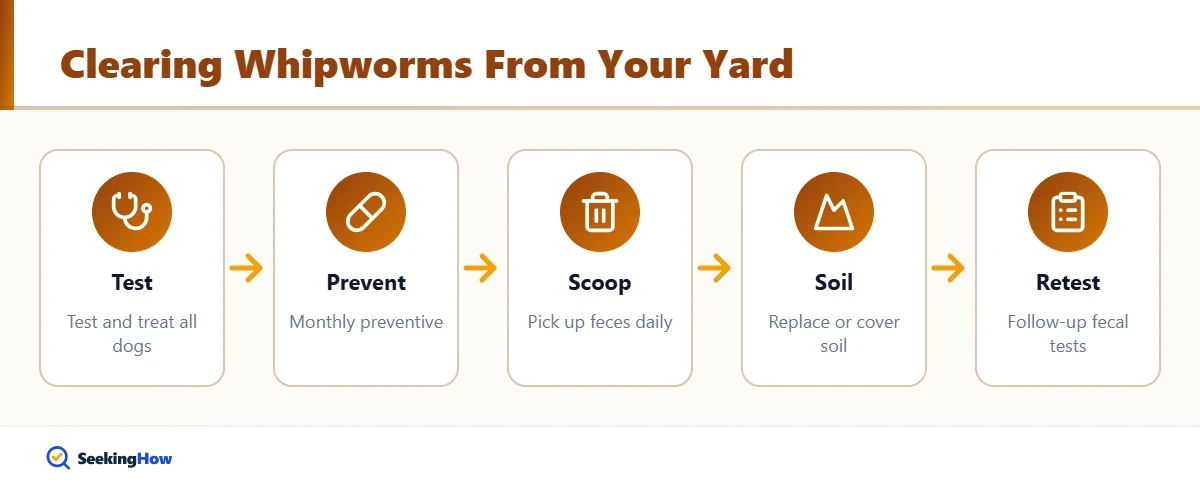
- Chronic or recurring diarrhea, often with mucus
- Fresh blood in the stool
- Weight loss or poor coat
- Straining to defecate
- Dehydration or anemia in severe cases
Many lightly infected dogs show no signs. Your veterinarian will diagnose whipworms with a fecal test, sometimes repeated, since eggs are shed intermittently.
How Do You Get Whipworms Out of Your Yard Step by Step?
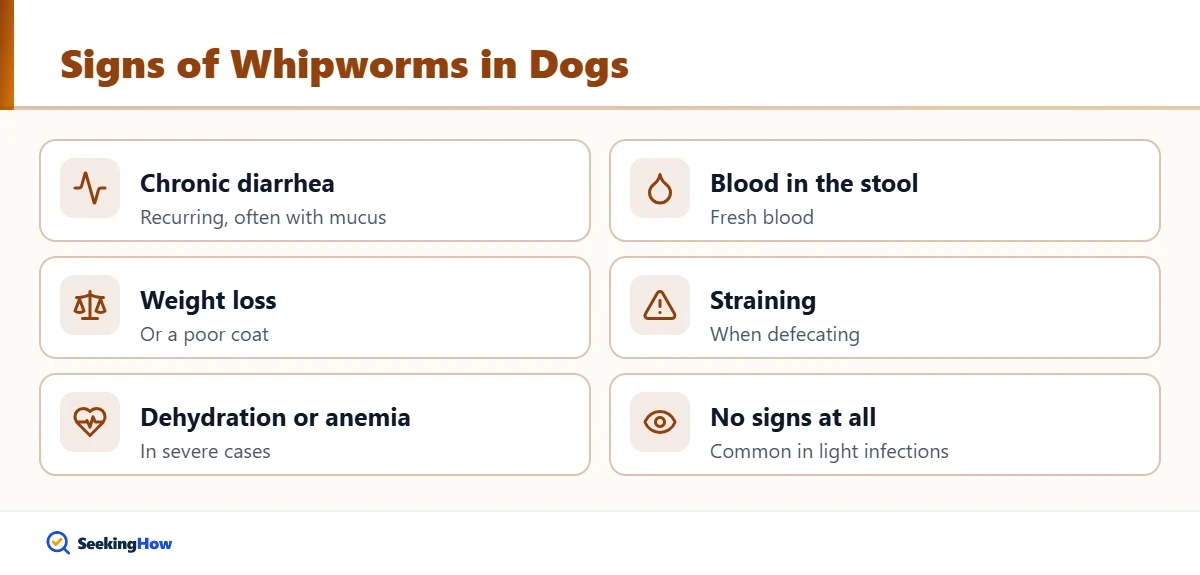
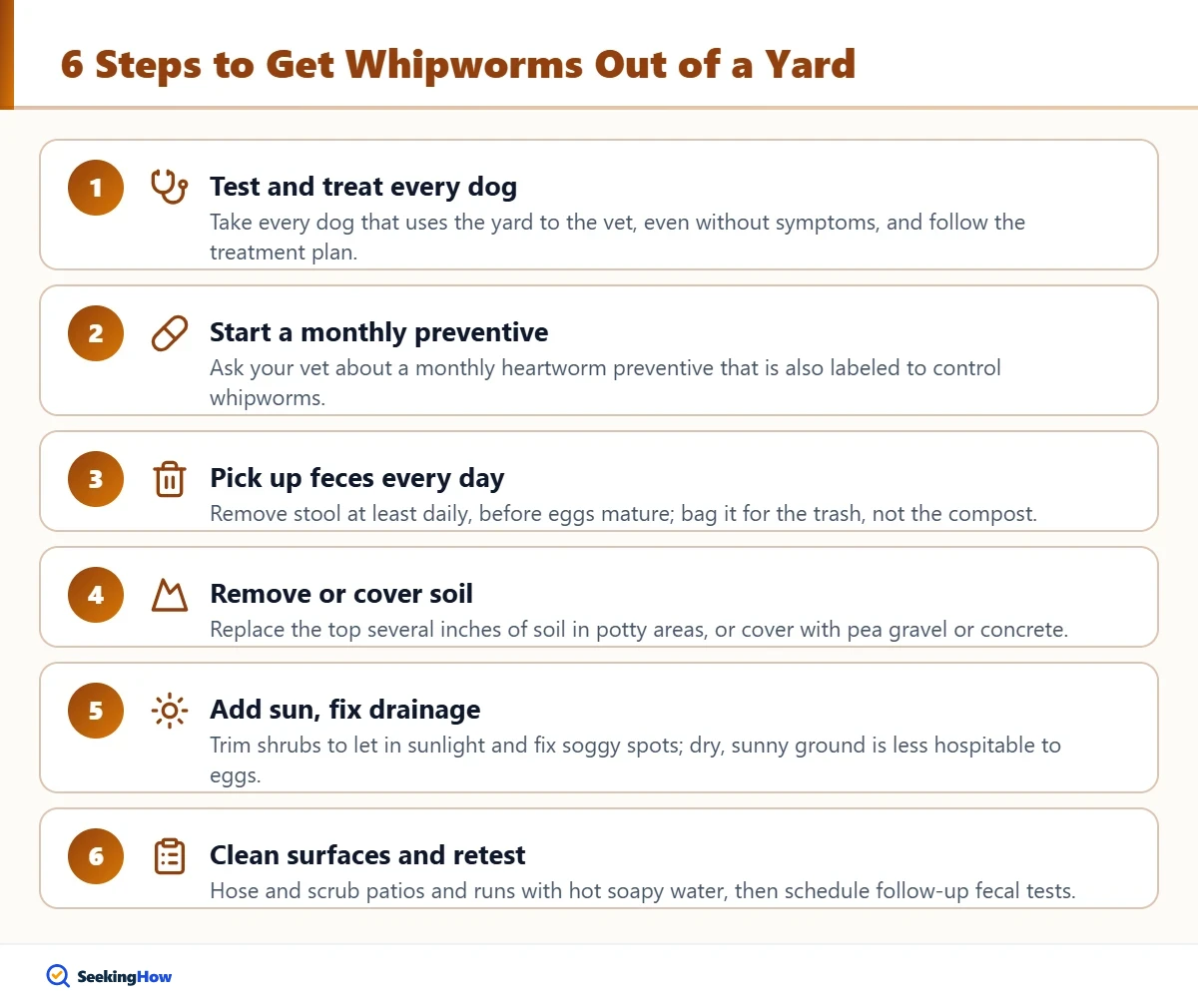
Step 1: Get Every Dog Tested and Treated
Take all dogs that use the yard to the vet, even ones without symptoms. Common whipworm treatments include fenbendazole and some prescription combination products. Because of the long life cycle, vets usually repeat treatment on a schedule, so follow the exact plan you are given.
Step 2: Start a Monthly Preventive
Ask your vet about a monthly heartworm preventive that is also labeled to control whipworms. Several products containing milbemycin oxime or moxidectin carry that label claim. Year-round use helps clear any new infections before worms start producing eggs.
Step 3: Pick Up Feces Every Day
Remove stool at least daily, and immediately after the dog goes if possible, before eggs have time to mature and wash into the soil. Bag it and put it in the trash, not the compost. This single habit prevents most new contamination.
Step 4: Remove or Cover Contaminated Soil
In a small dog run or favorite potty area, dig out the top several inches of soil and replace it with fresh soil or sod. Alternatively, cover it with a thick layer of pea gravel or pour concrete, which can be cleaned and dries out quickly. This is the only practical way to get rid of an established egg load.
Step 5: Let in Sun and Improve Drainage
Trim back shrubs and low branches to bring sunlight to shady areas, and fix soggy spots where water pools. Dry, sunny ground is far less hospitable to eggs. A dedicated potty area in a sunny, well-drained spot makes cleanup easier.
Step 6: Clean Hard Surfaces and Retest
Hose patios, kennel floors and concrete runs, scrub them with hot soapy water and let them dry completely. Then schedule follow-up fecal tests with your vet to confirm the infection has cleared.
What Kills Whipworm Eggs in Soil?
Unfortunately, very little that is practical or safe. Here is how common options compare.
| Option | Effect on whipworm eggs | Practical for yards? |
|---|---|---|
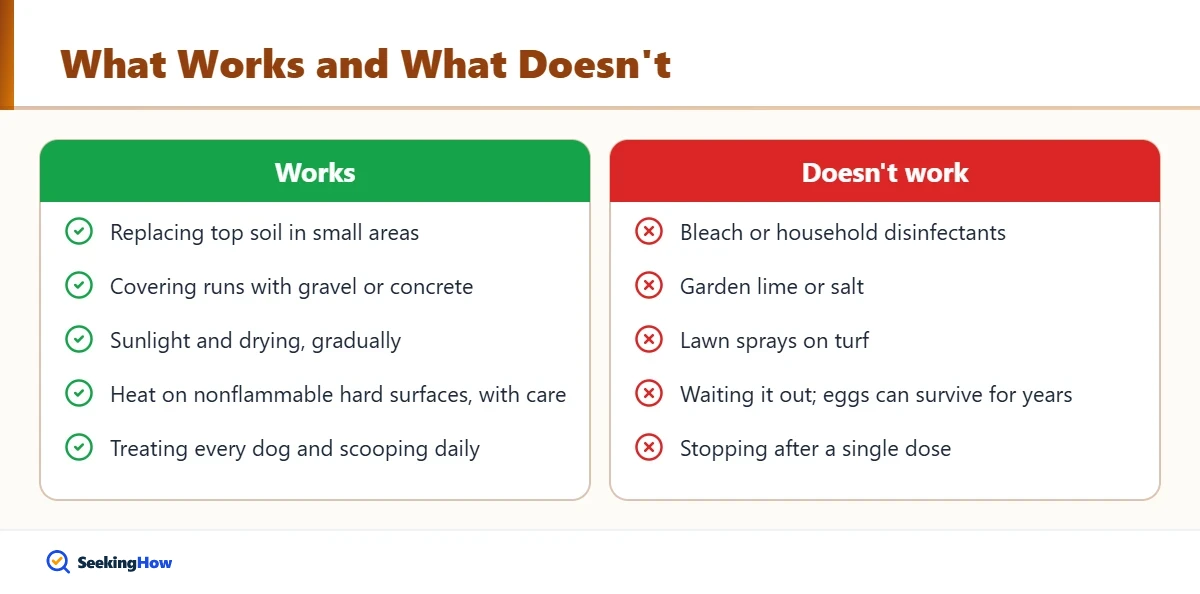
| Removing top soil and replacing it | Physically removes eggs | Yes, for small areas |
| Covering with gravel or concrete | Buries eggs; surface easy to clean | Yes, for runs |
| Sunlight and drying | Shortens egg survival over time | Yes, helps gradually |
| Bleach or household disinfectants | Not reliable against hardy eggs, harms lawn | No |
| Garden lime or salt | Not proven to clear eggs; can damage soil | No |
| Flaming or steam on concrete | Heat can destroy eggs on hard surfaces | Only on nonflammable surfaces, with care |
| Waiting it out | Eggs can survive for years | Not on its own |
Disinfectants like those covered in our guide to using Lysol disinfectant spray are useful for indoor surfaces and germs, but don’t count on them to destroy parasite eggs in soil.
Safety: Don’t pour bleach, salt or chemical mixtures on your lawn to fight whipworms. They are unlikely to work and can poison soil, plants and pets. If you use a weed torch on concrete or gravel, follow local fire rules and never use it on dry grass, mulch or near structures.
Can Humans Get Whipworms From Dogs?
Dog whipworm (Trichuris vulpis) mainly infects dogs, and human infection is considered rare. People are more commonly affected by their own whipworm species, which spreads in places with poor sanitation. Still, wash hands after gardening and handling dog waste, wear gloves when digging in dog areas, and keep children from playing in the potty zone.
What Mistakes Lead to Reinfection?
- Treating only one dog: untreated housemates keep reseeding the yard.
- Stopping after one dose: a single treatment doesn’t catch worms that were still maturing.
- Leaving feces for days: eggs mature and wash into the soil.
- Relying on lawn sprays: no household product reliably clears eggs from turf.
- Skipping follow-up tests: intermittent shedding can hide an ongoing infection.
How Do You Prevent Whipworms Long Term?
Keep dogs on a year-round preventive that covers whipworms if your vet recommends one, scoop the yard daily and check stool samples at annual exams. Set up a designated potty spot with gravel or another surface you can rinse. At dog parks, kennels and daycare, which are common sources of exposure, pick up after your dog and discourage eating grass or digging in shared potty areas.
If you are regrading or resurfacing a run, make sure water drains away rather than pooling; the same drainage principles apply when you install a sump pump outside for a soggy yard.
When Should You Call the Vet?
Call your veterinarian right away if your dog has bloody diarrhea, repeated vomiting, lethargy, signs of dehydration or rapid weight loss. Puppies and small dogs can become seriously ill from heavy infections. Also book a visit if your dog keeps testing positive despite treatment; your vet may adjust the medication, treat all pets in the home or recommend more frequent retesting.
Frequently Asked Questions
How long do whipworm eggs live in soil?
Whipworm eggs are very resistant and veterinary sources describe them remaining infective in the environment for years, especially in cool, moist, shaded soil. Sunlight and drying shorten their survival, but you cannot count on waiting them out.
Does bleach kill whipworm eggs in the yard?
Bleach is not a reliable way to kill whipworm eggs in soil, and it damages grass, plants and soil life. Daily feces removal, treating your dogs and replacing or covering contaminated soil are far more effective.
Can my dog get whipworms again after treatment?
Yes. If eggs remain in the yard, dogs can be reinfected soon after treatment. That is why vets repeat doses, recommend monthly preventives that cover whipworms, and advise daily cleanup and follow-up fecal tests.
Does sunlight kill whipworm eggs?
Direct sunlight and drying are harmful to whipworm eggs and help reduce contamination over time, which is why shady, damp areas tend to stay problematic. Sunlight alone will not clear a heavily contaminated yard quickly.
Should I replace my lawn because of whipworms?
Replacing the entire lawn is rarely necessary. Focus on the areas your dog uses most for potty breaks, removing the top several inches of soil there or converting them to gravel or concrete, and keep up with treatment and cleanup.