
Quick Answer
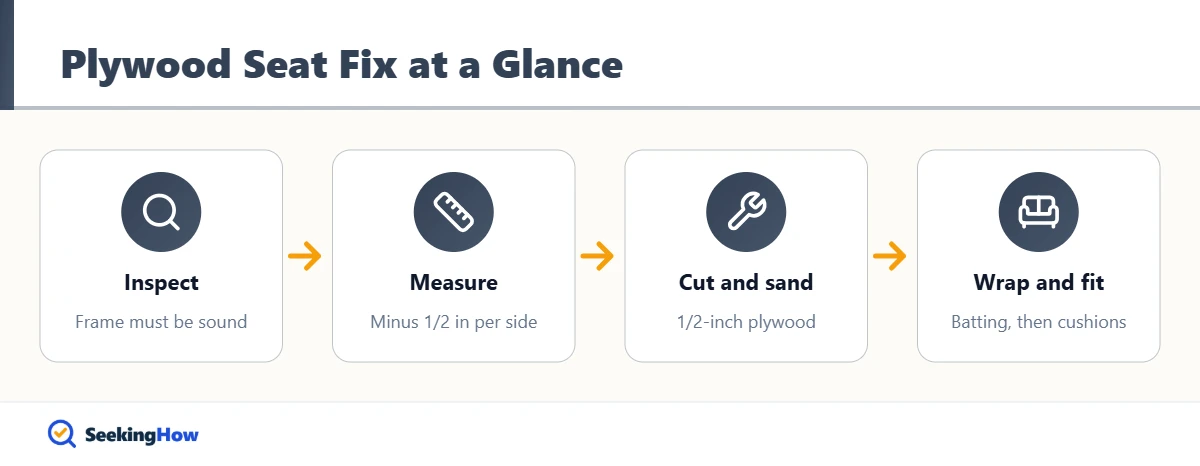
To fix a sagging couch seat with plywood, remove the cushions, measure the seat deck, and cut a 1/2-inch plywood board about 1/2 inch smaller on each side. Round the edges, wrap the board in batting or felt, and slide it under the cushions. The fix takes about an hour. Repair broken frame rails first; plywood will not fix a cracked frame.
Key Takeaways
- A 1/2-inch plywood board under the cushions spreads weight across sagging springs and firms up the seat.
- Cut the board about 1/2 inch smaller than the deck on each side so it does not rub the arms or fabric.
- Wrapping plywood in batting or felt stops squeaks and keeps cushions from sliding.
- Cut separate boards for each seat section so you can lift them for cleaning.
- Plywood makes the seat noticeably firmer; worn cushion foam may still need replacing.
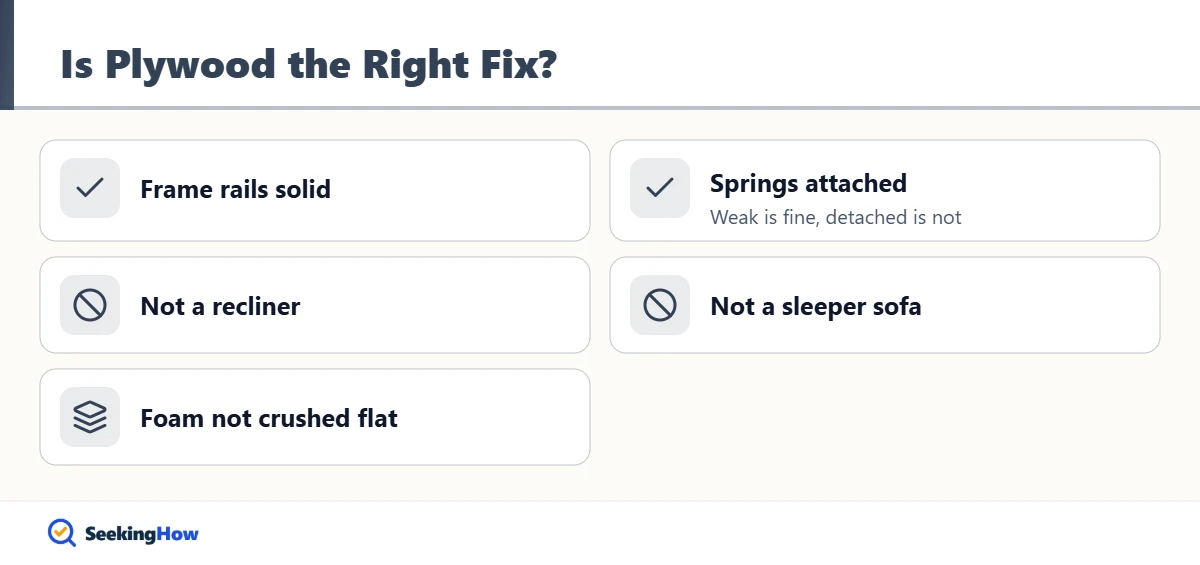
- A cracked frame rail or detached springs need a proper repair before adding plywood.
Sagging seats happen when sinuous springs stretch, webbing loosens, or cushion foam breaks down, leaving a hollow where you always sit. Adding plywood is the cheapest durable fix. This guide shows how to fix a sagging couch seat with plywood, how to tell when plywood is the wrong fix, and how to keep the result comfortable.
What You’ll Need
- 1/2-inch plywood (sanded birch or BC grade); 3/4-inch for very weak decks or heavy users
- Tape measure, straightedge, and pencil
- Circular saw or jigsaw (or have the store cut the panel)
- Sandpaper (120 grit) or a sanding block
- Upholstery batting, felt, or an old blanket
- Staple gun with 1/4- to 3/8-inch staples
- Non-slip rug pad (optional)
- Drill with a 1-inch spade bit for ventilation holes (optional)
- Safety glasses and dust mask
How To Fix a Sagging Couch Seat With Plywood: Step-by-Step
Step 1: Remove the cushions and inspect
Take off all seat cushions and press down on the deck in several spots. Springs that feel soft but intact, or loose webbing, are ideal for a plywood fix. If you hear cracking, feel a broken rail, or see springs detached from the frame, repair those first, because plywood resting on a broken frame will tilt and fail.
Step 2: Measure the seat deck
Measure the width between the arms and the depth from the front rail to the back cushion, at the level where the cushion sits. Subtract about 1/2 inch from each side so the board slips in easily without scuffing upholstery. For sofas with separate seat cushions, measure each section individually.
Step 3: Cut the plywood
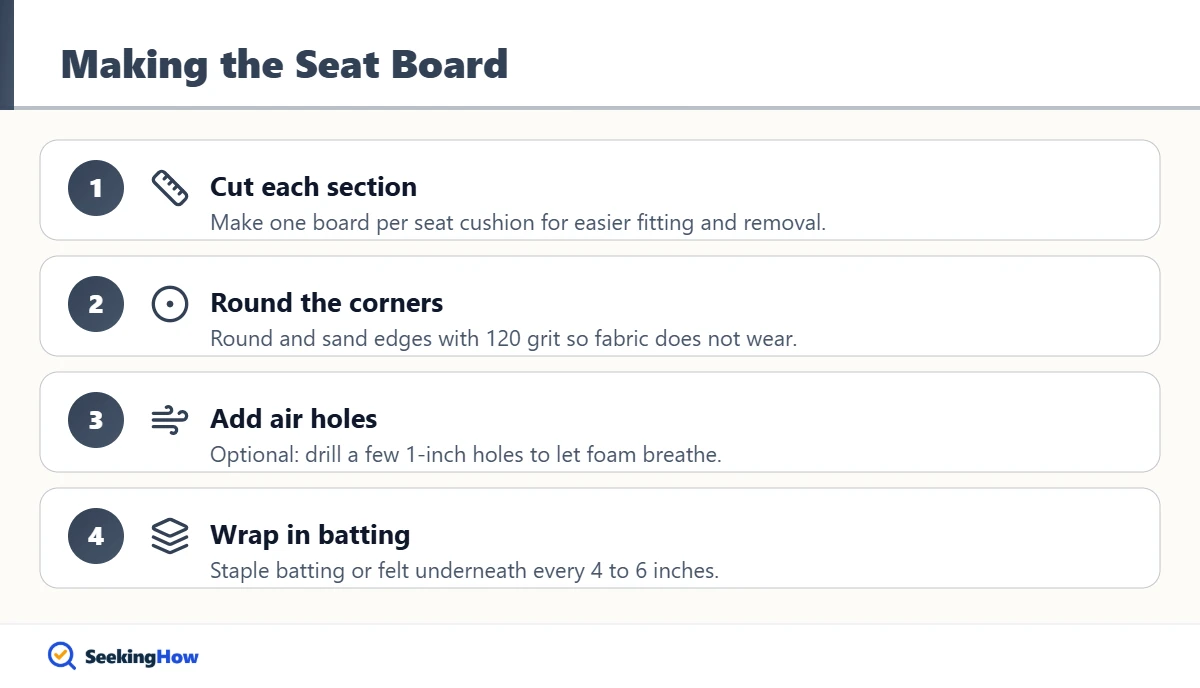
Cut the plywood to size with a circular saw or jigsaw using a straightedge guide. Many home centers will make straight cuts for you, which also makes the sheet easier to transport. Cutting one long board for a three-seat sofa is the most common mistake; separate boards are easier to fit and remove.
Step 4: Round and sand the edges
Round the corners with a jigsaw or sander and sand all edges with 120-grit paper. Sharp edges can cut through deck fabric and cushion covers over time. Optionally, drill a few 1-inch holes across the board to let air move through the foam.
Step 5: Wrap the board in batting
Lay batting or felt over the board, fold it around the edges, and staple it on the underside every 4 to 6 inches. The padding prevents squeaks against springs and softens the feel. In practice, most people find a layer of non-slip rug pad on top keeps cushions from sliding forward.
Step 6: Install and test
Slide the board onto the deck under the cushions, centered with even gaps at each side. Replace the cushions and sit in several spots. If the seat now feels too firm, add a 1- to 2-inch foam topper inside the cushion cover or plan to replace worn foam.
Bottom line: Use 1/2-inch plywood under the cushions when springs are weak but the frame is sound; fix the frame first if anything is cracked.
When Plywood Is Not the Right Fix
- Broken frame rail: Glue and sister the cracked rail with a hardwood strip, similar to fixing a broken bed slat.
- Springs popped off clips: Reattach sinuous springs with new spring clips screwed into the frame.
- Flat, crushed cushions: Replace foam with high-density foam; plywood under soft foam still feels hollow.
- Sleeper sofas and recliners: Mechanisms move under the seat, so a rigid board can jam them.
If That Didn’t Work
Problem: The seat still dips in one spot. Cause: Cushion foam collapsed. Fix: Replace the foam insert or add a high-density topper.
Problem: The board squeaks. Cause: Bare wood rubbing on springs. Fix: Add another layer of felt underneath or staple carpet scrap to the bottom.
Problem: Cushions slide forward. Cause: Smooth fabric on smooth batting. Fix: Add a rug pad or hook-and-loop strips; see how to stop couch cushions from sliding.
Problem: The board rocks or tilts. Cause: One section of springs much weaker, or a broken rail. Fix: Inspect the frame underneath and repair before reinstalling.
| Fix | Cost | Time | Best for |
|---|---|---|---|
| 1/2-inch plywood board | Low | About 1 hour | Weak springs or webbing |
| New spring clips | Low | 1 hour | Springs detached from frame |
| Replace webbing | Low to moderate | 2 to 3 hours | Stretched elastic webbing |
| Replace cushion foam | Moderate | 1 to 2 hours | Flattened cushions |
| Professional reupholstery | High | Days | Frame damage, quality sofas |
Safety and When To Call a Pro
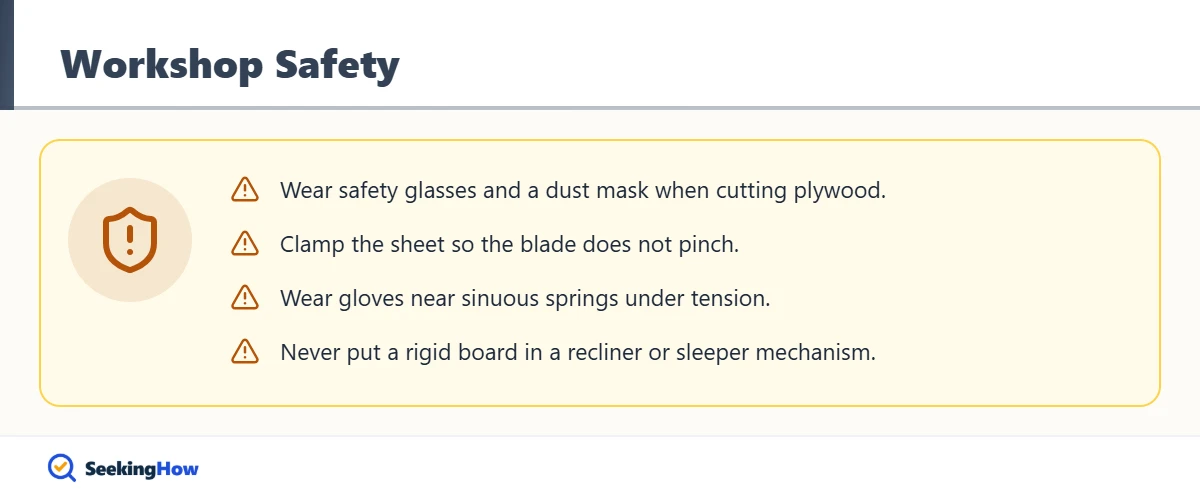
Wear safety glasses and a dust mask when cutting plywood, and clamp the sheet so it does not pinch the blade. When inspecting springs, wear gloves; sinuous springs are under tension and can snap back if a clip fails.
Call an upholsterer if the frame is cracked in more than one place, the joints are loose, the sofa is an heirloom or high-end piece with eight-way hand-tied springs, or the damage is in a reclining or sleeper mechanism. These need proper rebuilding rather than a board.
Prevention Tips
- Rotate and flip seat cushions every few weeks to spread wear.
- Avoid sitting on the front edge or arms, which stresses rails.
- Do not let kids jump on the seats; impacts stretch springs fast.
- Fluff and air cushions regularly to keep foam resilient.
Related Guides
- How to stop couch cushions from sliding
- How to fix a broken bed slat
- How to make a box spring out of plywood
- How to disinfect a fabric couch
Sources
- APA – The Engineered Wood Association: plywood grades and panel selection
- OSHA: power saw and hand tool safety
Frequently Asked Questions
What thickness plywood should I use under couch cushions?
Use 1/2-inch plywood under couch cushions for most sofas. It is stiff enough to bridge weak springs without adding much weight or height. Choose 3/4-inch plywood only if the deck is very weak or the seat gets heavy use, since it raises the seat slightly and is heavier to lift.
Does putting plywood under couch cushions work?
Yes, plywood under the cushions works well when the springs or webbing are weak but the frame is sound. It spreads weight across the whole deck, eliminating the dip. It will not fix collapsed foam or a broken frame, which need their own repairs.
Will plywood make my couch uncomfortable?
Plywood makes the seat firmer, which most people find comfortable if the cushion foam is in good shape. Wrapping the board in batting softens the feel. If it feels too hard, add a 1- to 2-inch foam topper inside the cushion cover or replace worn foam.
Should the plywood go under or over the springs?
For a simple fix, put the plywood over the springs, directly under the cushions. Installing it under the springs means removing the dust cover and reworking the frame, which is a bigger job. Placing it on top is reversible and gives the same support for most sofas.
Why is only one side of my couch sagging?
One side usually sags because it gets more use, which stretches springs and compresses foam faster there. A detached spring clip or cracked rail under that seat can also cause it. Check the frame underneath before adding plywood so you fix the actual cause.
Can I use MDF instead of plywood under couch cushions?
MDF is not a good choice. It is much heavier than plywood, sags over time under load, and swells if it gets damp from spills. Plywood is lighter, stiffer for its weight, and more durable, making it the better material for a seat board.
How do I know if my couch frame is broken?
Signs of a broken couch frame include a cracking sound when you sit, one corner sitting lower, visible gaps at joints, or a rail that moves when pressed. Remove the cushions and dust cover to inspect the wood directly. Repair or replace broken rails before adding plywood.