Quick Answer
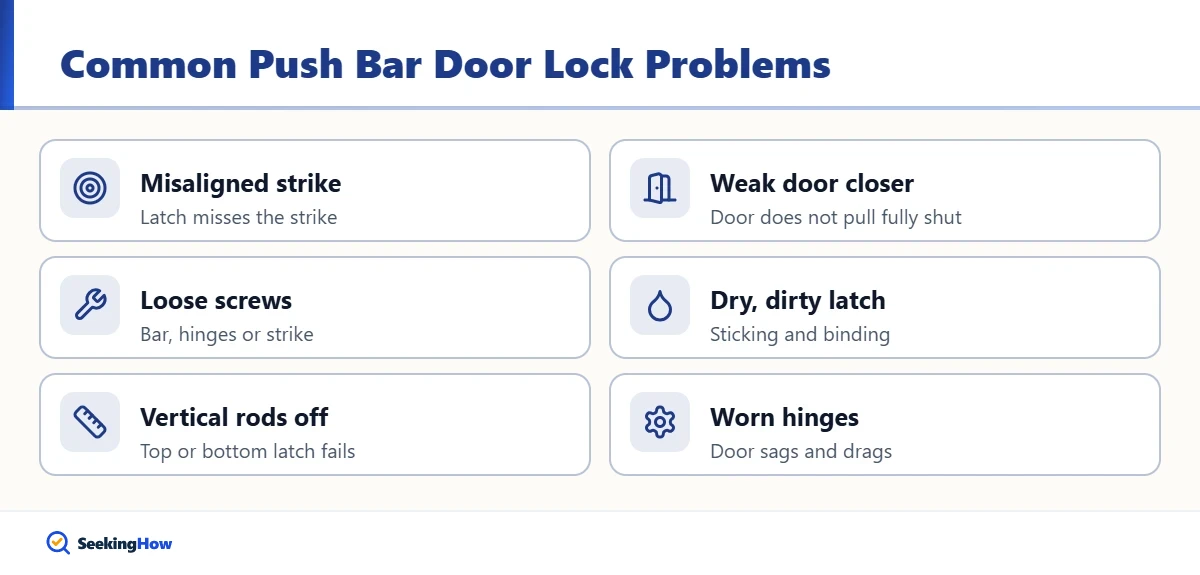
Most push bar door lock problems come from a misaligned strike, a door closer that does not pull the door shut, loose mounting screws or a dry, dirty latch. As the property owner, tighten the device and hinge screws, adjust the closer and strike so the latch catches, and lubricate per the manufacturer’s manual. Call a commercial locksmith for broken parts, vertical rods or fire-rated doors.
Key Takeaways
- A door that will not latch is usually a closer or strike alignment problem, not a broken panic bar.
- Loose screws on the bar, hinges or strike cause many sticking and binding issues.
- Use the lubricant the manufacturer recommends; oily sprays attract grit in latch mechanisms.
- Vertical rod devices and electrified hardware are best adjusted by a commercial door technician.
- Fire-rated doors must keep listed hardware; never remove parts or add holes without guidance.
Panic bars take constant abuse, and a door that will not latch or lock leaves a building insecure. This guide is for building owners, property managers and maintenance staff fixing their own push bar doors.
What Causes a Push Bar Door Lock To Fail?
| Symptom | Likely Cause | Fix |
|---|---|---|
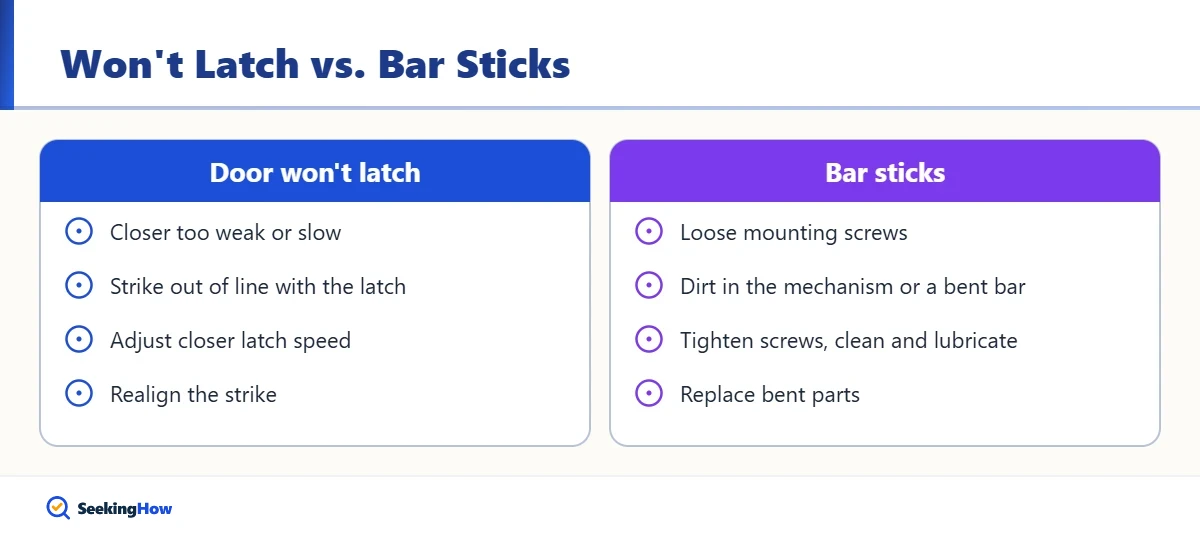
| Door does not latch when it closes | Closer too weak or slow; strike misaligned | Adjust closer speed and latch; realign strike |
| Bar sticks or is hard to push | Loose mounting screws, dirt, bent bar | Tighten screws, clean, lubricate, replace bent parts |
| Latch stays retracted | Device dogged or dogging worn | Undog; repair dogging mechanism |
| Key will not lock outside trim | Worn cylinder, wrong cam, debris | Clean and lube cylinder; replace cam or cylinder |
| Top or bottom latch not engaging | Vertical rod out of adjustment | Adjust rods (often a pro job) |
| Door sags and drags | Loose or worn hinges | Tighten or replace hinges |
How Do You Fix a Push Bar Door That Won’t Latch?
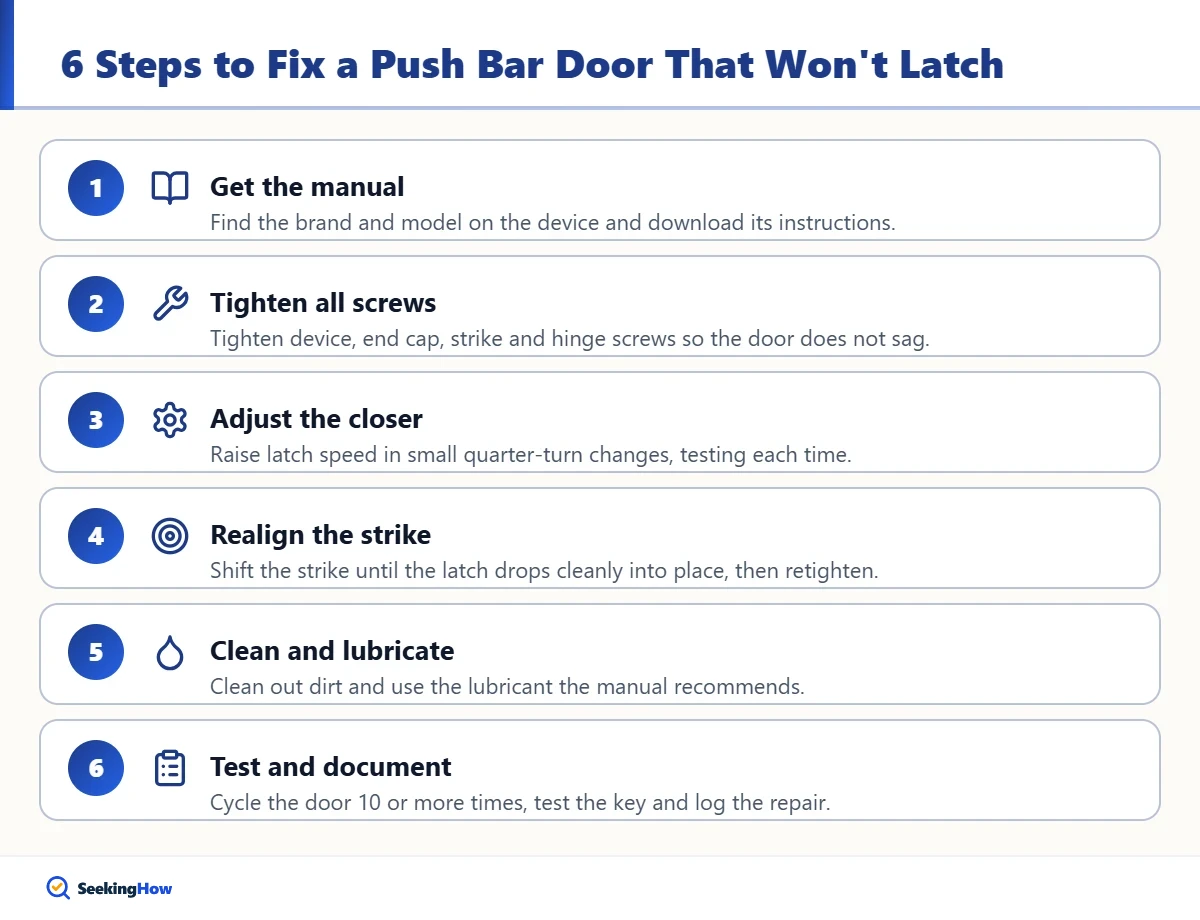
Step 1: Identify the Device and Get the Manual
Find the brand and model on the device or end cap, such as Von Duprin 98/99, Sargent 80 Series, Detex or Precision. Download the installation instructions; they list screw sizes, adjustment points and recommended lubricants.
Step 2: Tighten All Mounting and Hinge Screws
Tighten the device, end cap, strike and hinge screws. A sagging door shifts the latch out of line with the strike. Use through-bolts or sex bolts where specified on doors that keep loosening.
Step 3: Adjust the Door Closer
Most closers have separate valves for sweep speed and latch speed. Slightly increase latch speed so the door has enough momentum to latch, making small quarter-turn changes and testing each time. Do not over-speed the closer; slamming doors are a safety hazard.
Step 4: Realign the Strike
Close the door slowly and watch where the latch hits. Loosen the strike and shift it up, down or in until the latch drops cleanly into place, then retighten.
Step 5: Clean and Lubricate the Latch
Remove the end cap or cover as the manual directs, clean out dirt, and apply the recommended lubricant to pivot points and the latch. Wipe off excess.
Step 6: Test, Lock and Document
Open and close the door 10 or more times from different angles, test the outside key or reader, and confirm the door latches every time. Log the repair date and what you adjusted.
Tip: If someone needs to check the device is not dogged, look for the hex dogging hole on the bar and confirm the latch extends when the bar is released.
When Should You Call a Commercial Locksmith?
- Vertical rod or concealed rod devices are out of adjustment.
- The bar, latch or chassis is cracked or bent.
- Electrified latch retraction, request-to-exit switches or alarmed exit devices are involved.
- The door is a labeled fire door and you need replacement hardware.
- The outside cylinder needs rekeying or a new keyway.
Code compliance: Panic hardware must allow free egress at all times. Never padlock, chain or disable a push bar, and keep replacement parts listed for the door’s fire rating.
Preventive Maintenance Checklist
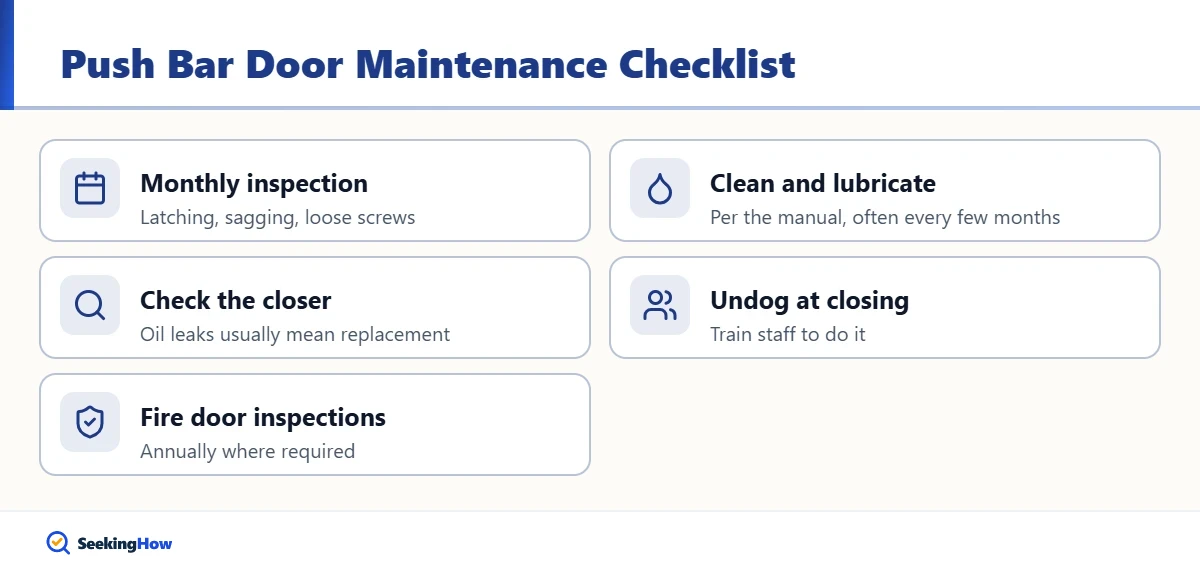
- Inspect doors monthly for latching, sagging and loose screws.
- Clean and lubricate per the manual, often every few months in high-traffic doors.
- Check closers for oil leaks; a leaking closer usually needs replacement.
- Train staff to undog doors at closing.
- Schedule annual inspections on fire-rated doors where required.
For authorized outside entry setups such as key trim or card readers, see how push bar doors open from the outside. Stripped screws in a wood door? Try removing a stripped screw from wood, or for hex fasteners, removing a stripped Allen screw.
Repair or Replace?
Repair makes sense when the device is a quality commercial brand and the problem is adjustment, screws or a single part. Replace when the device is cracked, discontinued with no parts, repeatedly fails, or you are upgrading to electrified hardware or a different outside trim. Match the new device to the door width, door type and fire rating.
Frequently Asked Questions
Why won’t my push bar door close and latch?
The most common causes are a door closer set too slow or weak, a misaligned strike, or a sagging door from loose hinge screws. Adjust the closer latch speed, realign the strike and tighten hinges, testing after each change.
What lubricant should I use on a panic bar?
Use the lubricant listed in the manufacturer instructions for your device. Many recommend a light lubricant on pivots and latches; avoid heavy oily sprays that collect dirt. Clean old grime out before applying.
How do I undog a push bar door?
Insert the hex or cylinder dogging key in the bar and turn it opposite to the dogging direction until the bar springs out and the latch extends. Then close the door and confirm it latches and locks.
Can I replace a push bar myself?
Simple surface-mounted rim devices on non-rated doors are within reach for experienced maintenance staff using the manual. Vertical rod, electrified and fire-rated door hardware should be installed by a commercial locksmith or door hardware professional.