Quick Answer
To fish a wacky rig, hook a 4-5 inch soft-plastic stick worm through its middle (ideally through an O-ring) on a size 1 to 2/0 wacky hook. Cast on a medium-light spinning rod with 6-10 lb fluorocarbon, let the worm sink on slack line while watching for a twitch, then lift and drop it with small rod pops. Reel tight and sweep to set the hook.
Key Takeaways
- Most wacky rig bites happen as the worm falls, so watch your line rather than just feeling for bites.
- A stick worm hooked in the middle shimmies both ends as it sinks, a slow action that pressured bass struggle to ignore.
- O-rings or tubing save soft, salt-impregnated worms from tearing off the hook.
- Spinning gear with light fluorocarbon is the standard setup; add a nail weight or jig head for deeper water or wind.
- The rig shines around docks, laydowns, grass edges and spawning flats in clear to slightly stained water.
The wacky rig is one of the simplest and most effective ways to catch largemouth, smallmouth and spotted bass. It is just a hook through the middle of a soft-plastic worm, yet that weightless, horizontal fall draws strikes from fish that ignore faster lures. Here is how to tie it, rig it and work it.
What Is a Wacky Rig?
A wacky rig is a soft-plastic stick bait, such as a Senko-style worm, hooked once through its center so both ends hang free. As it sinks, the ends flutter and the whole bait shimmies with no added action from you. Because it falls slowly and looks natural, it is especially good when bass are inactive, pressured after a front, or guarding beds.
What Gear Do You Need for a Wacky Rig?
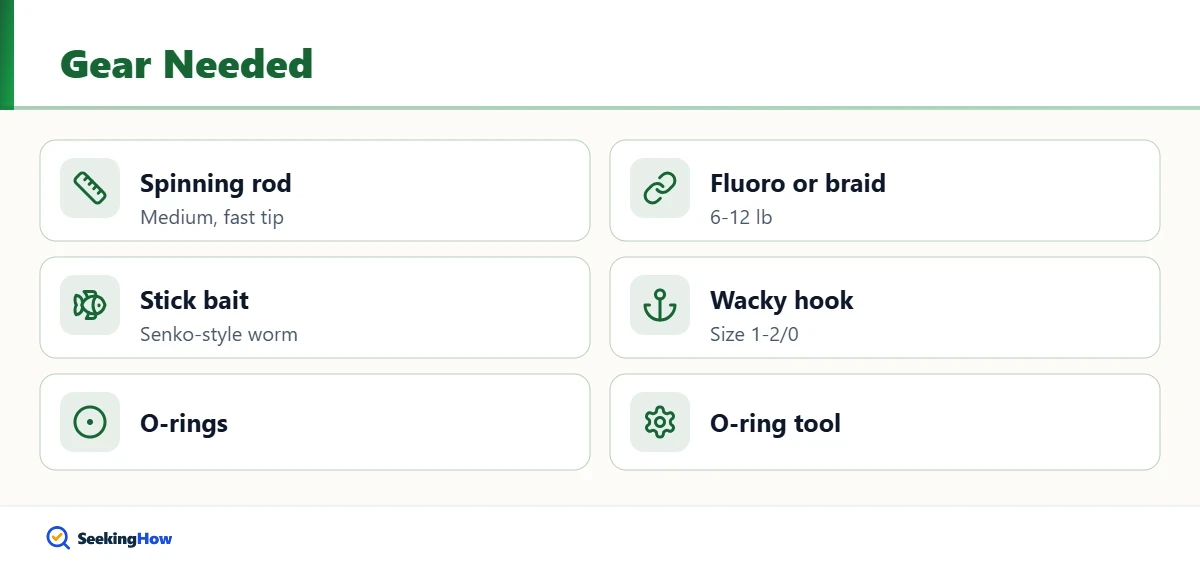
| Item | Recommended choice | Why it matters |
|---|---|---|
| Rod | 6 ft 6 in to 7 ft 3 in spinning, medium-light to medium, fast tip | Casts light baits; tip shows bites |
| Reel | 2500-size spinning reel | Manages light line smoothly |
| Line | 6-10 lb fluorocarbon, or 10-15 lb braid with a fluoro leader | Low visibility, sensitivity |
| Hook | Size 1 to 2/0 wacky, octopus or weedless wacky hook | Matches 4-5 inch worms |
| Bait | 4-5 inch soft-plastic stick worm | The classic wacky profile |
| O-rings and tool | Rubber or silicone O-rings sized to the worm | Bait lasts much longer |
| Optional weight | Nail weight or 1/16 to 1/8 oz wacky jig head | Faster fall, deeper water, wind |
Natural colors such as green pumpkin, watermelon and brown work well in clear water, while darker colors like black and blue or junebug show up better in stained water and low light.
How Do You Rig and Fish a Wacky Rig?
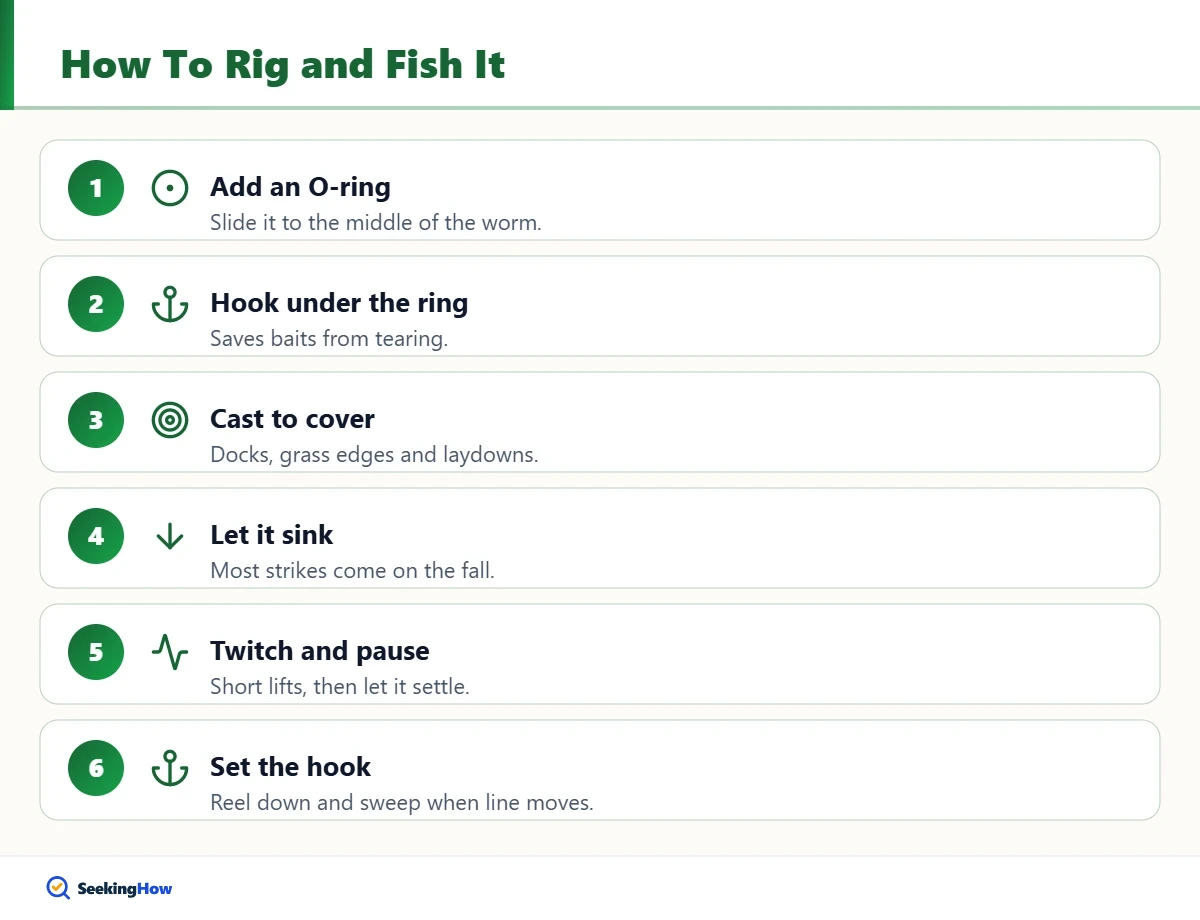
Step 1: Tie On the Hook
Tie the wacky hook directly to your fluorocarbon line or leader with a strong knot such as a Palomar or improved clinch. Moisten the knot before cinching it tight and trim the tag end close.
Step 2: Add an O-Ring to the Worm
Slide an O-ring onto an O-ring tool, push the worm into the tool, and roll the ring off onto the exact middle of the worm. If you do not have rings, a short piece of heat-shrink tubing or simply hooking through the worm works too, though baits tear faster.
Step 3: Hook the Worm
Slip the hook point under the O-ring, perpendicular to the worm, so the point faces up toward the line tie. If hooking directly, push the hook through the center of the worm just once, leaving the point exposed. Weedless hooks have a small wire guard for fishing around cover.
Step 4: Cast to Cover
Cast past or alongside a target, such as a dock post, laydown log, grass edge, or shade line. Skipping the bait under docks with a low sidearm cast reaches fish that other lures cannot.
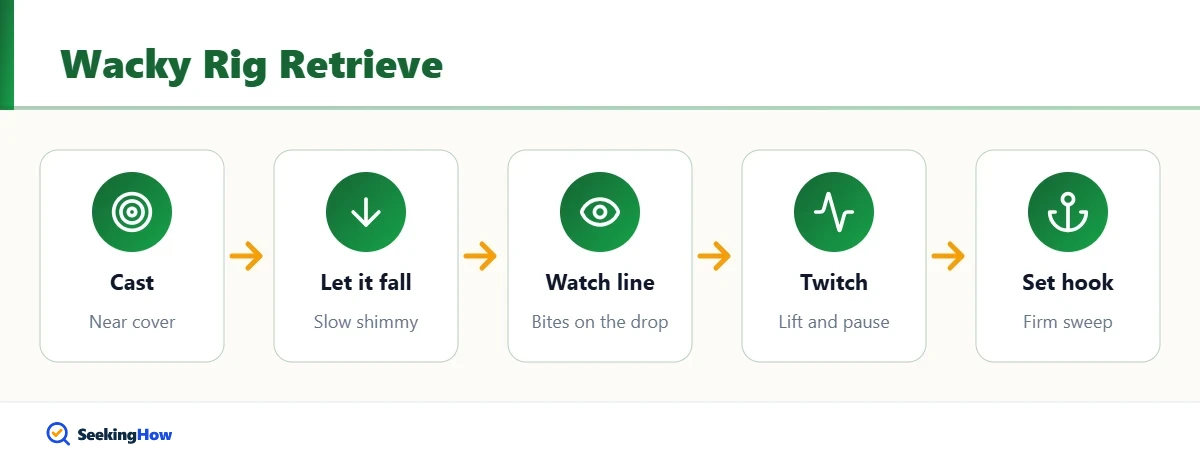
Step 5: Let It Fall on Slack Line
Leave a little slack so the worm sinks naturally, and watch where your line enters the water. A sudden jump, sideways swim or line that stops sinking early is a bite. This fall is where most strikes happen.
Step 6: Twitch and Drop
Once the worm reaches bottom or has sunk well past the strike zone, lift the rod tip with two or three light twitches to raise it, then let it fall again on slack line. Reel up excess slack between moves and repeat back to the boat or bank.
Step 7: Set the Hook With a Sweep
When you see or feel a bite, reel down until the line is tight and sweep the rod sideways firmly rather than jerking straight up. A smooth sweep buries the light wire hook in the corner of the mouth without tearing through the plastic.
Tip: If you keep missing bites, wait a beat after the line jumps so the fish can turn with the bait, and make sure you are using the hook size the worm needs; a hook that is too small is often the cause.
Which Hook Works Best for a Wacky Rig?
Hook choice affects both hookups and how often you snag. Match the hook to the worm thickness and the cover you are fishing.
- Wacky or octopus-style hooks: short shank and wide gap, ideal for open water and sparse cover. Size 1 suits 4-inch worms; 1/0 to 2/0 suits 5-inch worms.
- Weedless wacky hooks: include a fine wire guard that deflects branches and dock posts. Press the guard down slightly if you miss bites.
- Circle-style wacky hooks: designed to slide to the corner of the mouth as the fish swims off. Do not sweep hard with these; simply reel steadily until the rod loads.
- Light wire vs. heavy wire: light wire penetrates easily on spinning gear, while heavier wire holds up better when you pull fish out of thick cover with stronger braid.
Keep a hook sharpener or spare hooks in your tackle box. A dull point is a common, overlooked reason for fish that come unbuttoned halfway to the boat.
When and Where Does the Wacky Rig Work Best?
- Spring spawn and post-spawn: a slow-falling worm near beds and shallow flats triggers protective and lethargic bass.
- Docks and boathouses: skip it into shade where bass hold in summer.
- Laydowns and brush: use a weedless wacky hook to avoid snags.
- Grass edges: fish the outside edge and pockets of submerged vegetation.
- After cold fronts: when fish are tight-lipped, its slow action often still draws bites.
- Clear water: light fluorocarbon and natural colors excel when fish can see well.
What Are the Main Wacky Rig Variations?
| Variation | How it is rigged | Best use |
|---|---|---|
| Classic wacky | Weightless hook in the middle | Shallow water, slow fall, beds |
| Weighted wacky jig head | 1/16-1/8 oz head through the middle | Deeper water, wind, faster fall |
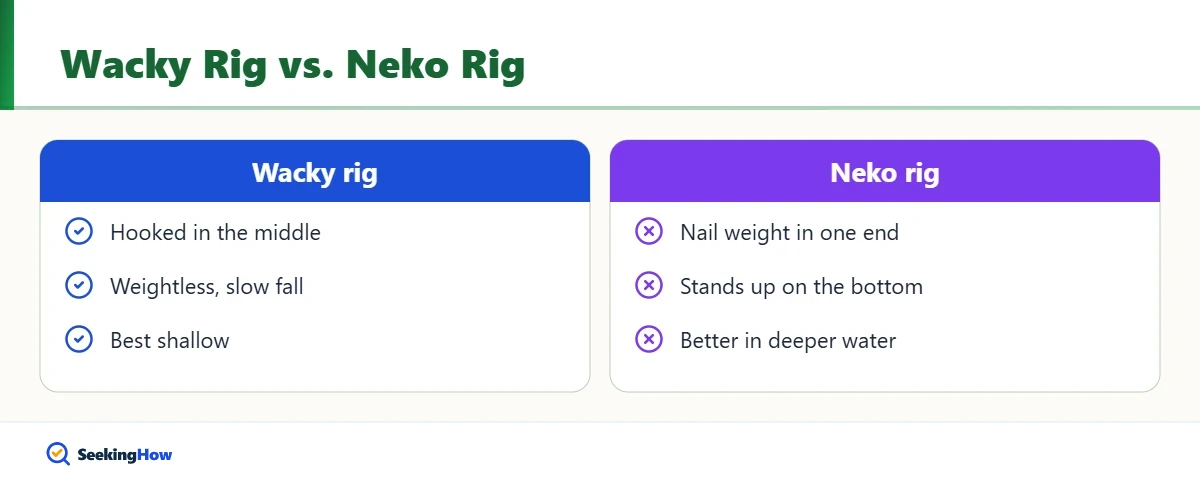
| Neko rig | Nail weight in one end, hook in middle | Bottom contact, deeper fish, rocky banks |
| Weedless wacky | Hook with wire weed guard | Brush, docks, grass |
For a neko rig, insert a small nail weight into the head of the worm and hook it closer to the weighted end. It stands the tail up off the bottom and works well on rock and gravel. If you pour your own weights, our guide to making fishing weights covers safe methods.
What Mistakes Should You Avoid With a Wacky Rig?
- Fishing it too fast; this is a finesse technique, so let the bait sink and pause.
- Keeping the line tight during the fall, which kills the shimmy and pulls the bait toward you.
- Ignoring line watching and missing bites that come on the drop.
- Using heavy baitcasting gear and thick line, which make light baits hard to cast.
- Jerking hard on the hook set, which tears through soft plastic.
- Throwing away worms after one fish instead of using O-rings.
How Do You Make Your Worms Last Longer?
Salt-impregnated stick worms are soft and sink well but tear easily. O-rings protect them, and positioning the ring slightly off center can extend life further by giving the hook a fresh spot. Store worms in their original packages, out of direct sun, and keep different plastics separate; some soft-plastic formulas react with each other and melt when stored together.
What Else Should You Know Before You Go?
Check your state’s fishing regulations and license requirements before heading out, and handle bass gently for release: wet hands, minimal air time, and support the fish’s body horizontally. If you fish from a kayak, a sonar unit helps you find the drop-offs and cover that hold bass; see how to install a fish finder on a kayak. Want to branch out from spinning gear? Our guide on how to practice fly fishing is a good next step.
Frequently Asked Questions
What size hook do you use for a wacky rig?
For a 4-inch stick worm, a size 1 wacky or octopus hook works well. For 5-inch worms, step up to a 1/0 or 2/0. Use a weedless wacky hook with a wire guard around brush and docks, and match hook wire strength to your line.
Do you need a weight for a wacky rig?
No. The classic wacky rig is weightless, which gives it a slow, natural fall. Add a small nail weight or a 1/16 to 1/8 ounce wacky jig head when fishing deeper water, in wind or current, or when you want the bait to reach bottom faster.
What is the best color worm for a wacky rig?
Green pumpkin and watermelon are reliable all-around colors in clear water because they look natural. In stained or muddy water and on cloudy days, darker colors such as black and blue or junebug are easier for bass to see.
Can you fish a wacky rig with a baitcaster?
You can, especially with weighted wacky jig heads or when fishing heavy cover with braid. Weightless wacky rigs are much easier to cast and skip on spinning gear, which handles light baits and thin line without backlashes.
Why do I keep missing bites on a wacky rig?
Common reasons include setting the hook too fast, too much slack line, a hook that is too small, or a dull point. Reel down until you feel weight, then sweep firmly. With circle-style wacky hooks, simply reel steadily rather than jerking.