Quick Answer
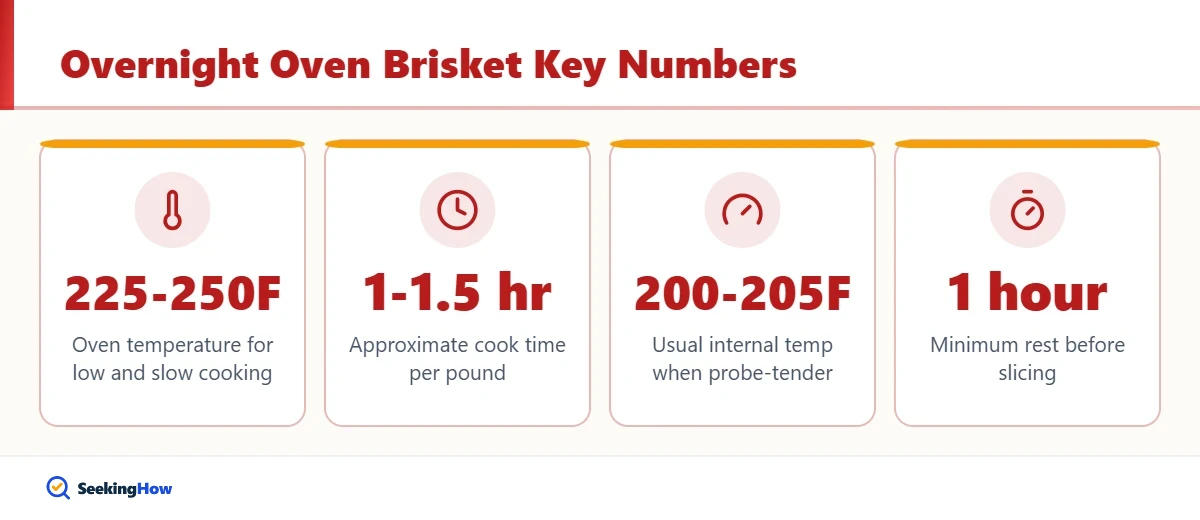
To cook brisket in the oven overnight, trim the fat cap to about 1/4 inch, season it, wrap it tightly in foil in a roasting pan, and bake at 225 to 250 degrees F for roughly 1 to 1.5 hours per pound. It is done when the thickest part reaches about 200 to 205 degrees F and a probe slides in easily. Rest it at least 1 hour before slicing against the grain.
Key Takeaways
- Low heat (225 to 250 degrees F) for many hours breaks down the tough connective tissue in brisket; high heat makes it dry and chewy.
- Cook to tenderness, not time: most brisket is ready between 195 and 205 degrees F internal.
- A leave-in probe thermometer with an alarm lets you sleep while it cooks; check that your oven does not shut off automatically after 12 hours.
- Resting for 1 to 2 hours and slicing against the grain matter as much as the cook itself.
You do not need a smoker to make tender, juicy brisket. A slow overnight bake in a home oven turns this tough cut into sliceable, pull-apart beef while you sleep. This guide covers choosing the cut, seasoning, timing by weight, the overnight setup and how to slice it correctly.
Which Brisket Cut Should You Buy?
A whole brisket, called a packer, has two muscles: the lean, rectangular flat and the fattier, thicker point. Supermarkets often sell just the flat, usually 3 to 6 pounds, while whole packers commonly run 10 to 16 pounds. For a home oven, a flat or a smaller packer fits more easily in a roasting pan.
| Cut | Typical weight | Fat level | Best use |
|---|---|---|---|
| Flat (first cut) | 3 to 6 lb | Lean with a fat cap | Neat slices; easy oven fit |
| Point (second cut) | 2 to 5 lb | Heavily marbled | Juicy slices, chopped brisket, burnt ends |
| Whole packer | 10 to 16 lb | Both muscles | Large gatherings; needs a big pan |
Look for a flat with even thickness and a fat cap that covers one side. Thin ends dry out first, so a uniform piece cooks more evenly.
What Do You Need for Overnight Oven Brisket?
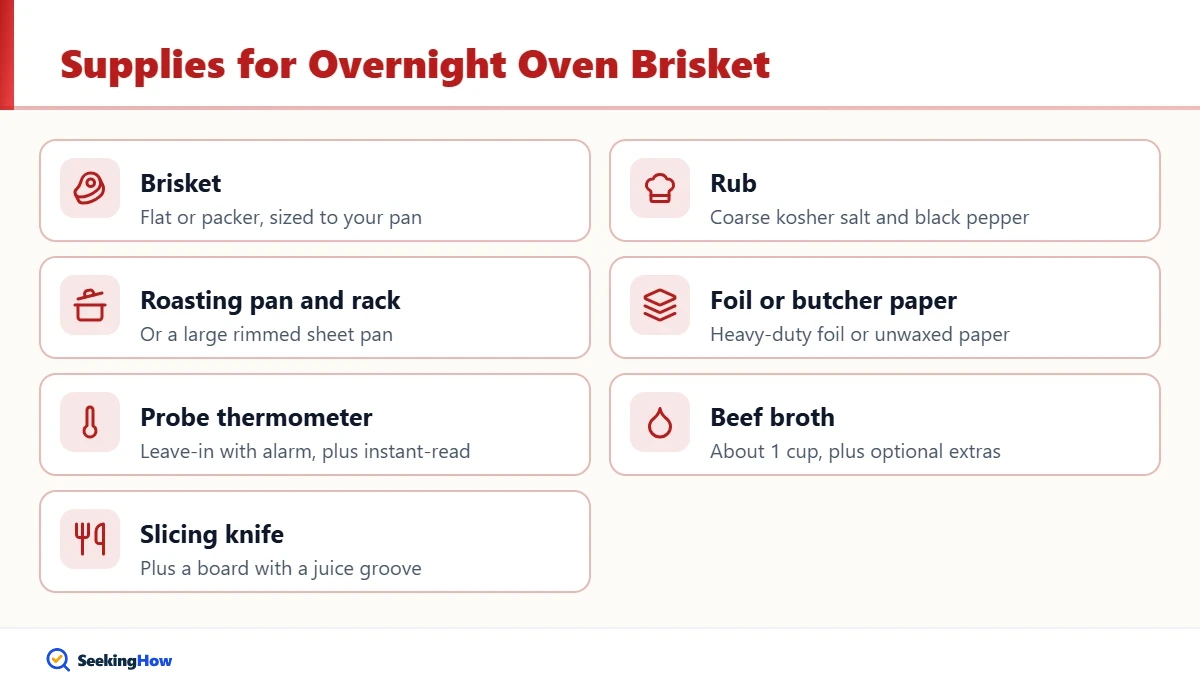
- Brisket: flat or packer, sized to fit your pan.
- Rub: coarse kosher salt and coarse black pepper at minimum, plus optional garlic powder, onion powder, paprika and brown sugar.
- Roasting pan with a rack or a large rimmed sheet pan.
- Heavy-duty aluminum foil or unwaxed butcher paper.
- Leave-in probe thermometer with an alarm, plus an instant-read thermometer.
- Liquid: about 1 cup of beef broth, plus optional Worcestershire sauce or a few drops of liquid smoke.
- Sharp slicing knife and a large cutting board with a juice groove.
How Do You Cook a Brisket in the Oven Overnight?
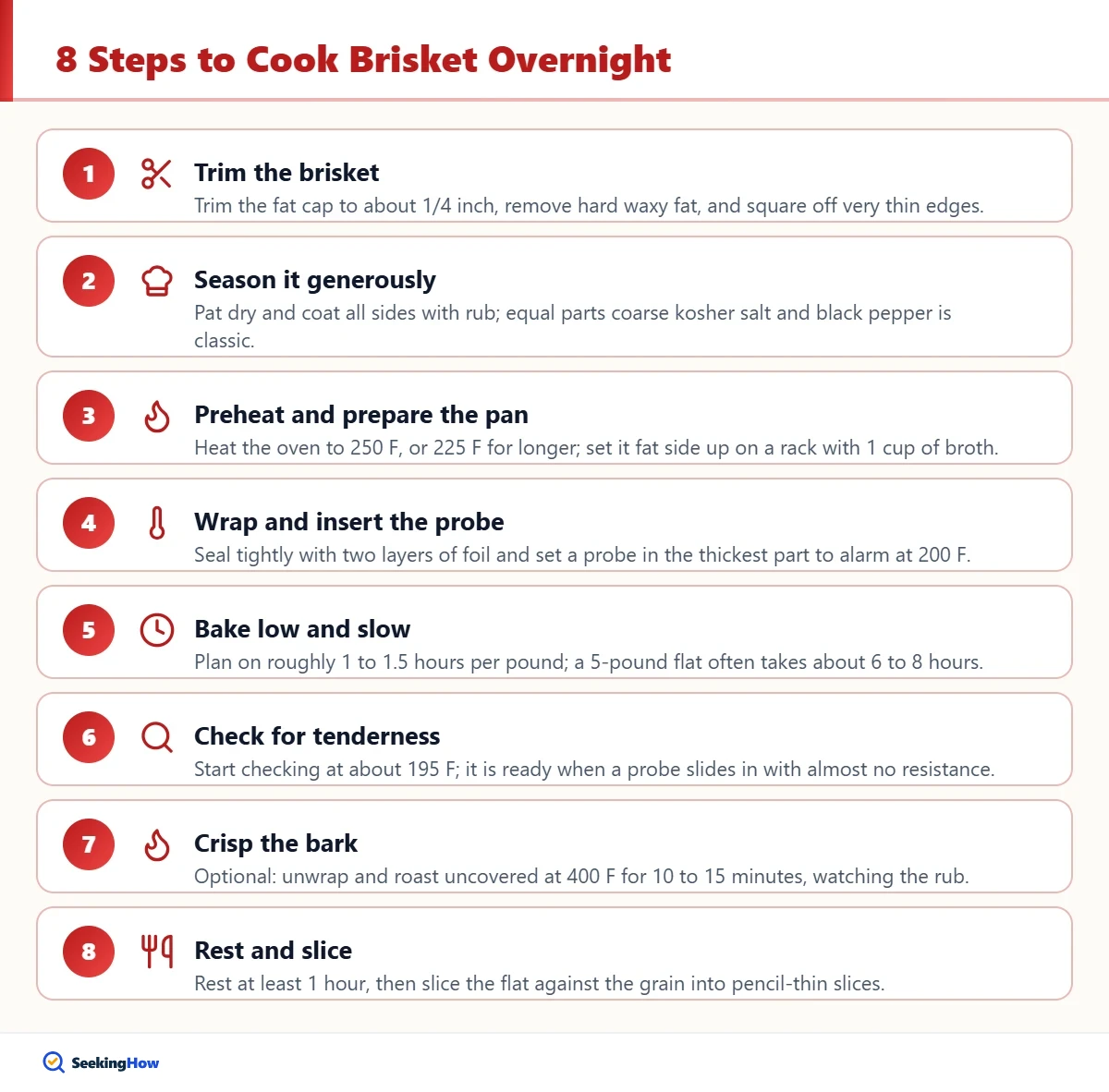
Step 1: Trim the Brisket
Trim the thick fat cap down to about 1/4 inch and remove any hard, waxy fat that will not render. Square off very thin edges so they do not burn. Leave some fat; it bastes the meat as it cooks.
Step 2: Season It Generously
Pat the brisket dry and coat all sides with your rub. A classic Texas-style rub is equal parts coarse kosher salt and coarse black pepper by volume. For deeper flavor, season it the afternoon before and refrigerate it uncovered.
Step 3: Preheat and Prepare the Pan
Heat the oven to 250 degrees F for a faster overnight cook, or 225 degrees F if you want it to go longer. Set the brisket fat side up on a rack in the roasting pan. Pour about 1 cup of beef broth into the pan, adding Worcestershire or liquid smoke if you like a smoky note.
Step 4: Wrap and Insert the Probe
Cover the pan tightly with two layers of heavy-duty foil, or wrap the brisket itself in foil or butcher paper. Insert a leave-in probe into the thickest part of the flat and set the alarm for 200 degrees F. A tight seal traps moisture and prevents drying overnight.
Step 5: Bake Low and Slow Overnight
Put the pan in the oven and let it cook. Plan on roughly 1 to 1.5 hours per pound at 225 to 250 degrees F; a 5-pound flat often takes about 6 to 8 hours and a 12-pound packer can take 12 hours or more. The temperature may stall for a few hours in the 150s and 160s F, which is normal.
Step 6: Check for Tenderness
Start checking when the probe reads about 195 degrees F. The brisket is ready when a probe or skewer slides into the thickest part with almost no resistance, usually between 200 and 205 degrees F. If it still feels tight, keep cooking and check every 30 minutes.
Step 7: Crisp the Bark (Optional)
For a darker crust, unwrap the brisket, raise the oven to 400 degrees F and roast it uncovered for 10 to 15 minutes, watching that the rub does not burn. Save the pan juices for serving.
Step 8: Rest and Slice Against the Grain
Wrap the brisket loosely in foil and rest it for at least 1 hour, or hold it wrapped in a towel inside a dry cooler for 2 to 3 hours. Slice the flat against the grain into pencil-thin slices. The point’s grain runs in a different direction, so separate the two muscles and rotate the point before slicing it.
How Long Does Brisket Take in the Oven?
Time depends on weight, thickness, oven accuracy and whether you wrap. Use these as planning estimates and rely on tenderness and internal temperature to decide when it is done.
| Brisket weight | At 250 F (wrapped) | At 225 F (wrapped) |
|---|---|---|
| 3 lb flat | About 3.5 to 4.5 hours | About 4 to 5 hours |
| 5 lb flat | About 5 to 7 hours | About 6 to 8 hours |
| 8 lb | About 8 to 10 hours | About 9 to 12 hours |
| 12 lb packer | About 11 to 14 hours | About 12 to 16 hours |
If the brisket finishes early in the morning, it can hold safely in a 150 to 170 degree F oven or a towel-lined cooler for a few hours, as long as it stays above 140 degrees F.
Safety: Many home ovens shut off automatically after about 12 hours unless you use a Sabbath or extended-bake mode, so check your oven manual before a long cook. Keep the area around the oven clear, make sure your smoke alarm works, and never leave a gas oven running if you notice a gas smell.
Common Brisket Mistakes to Avoid
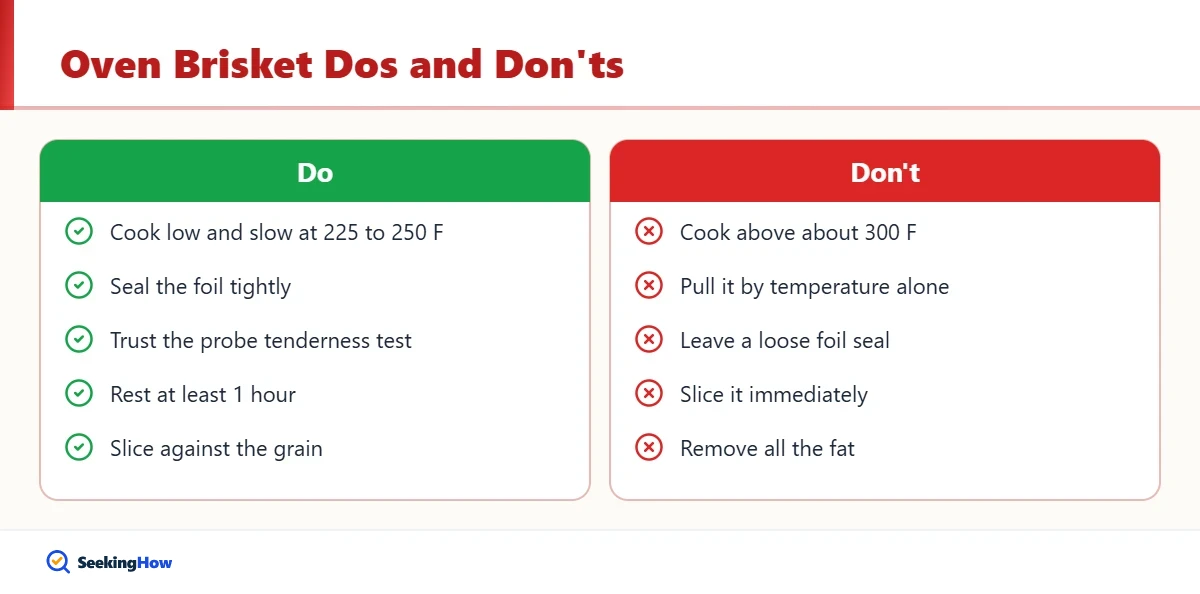
- Cooking too hot. Above about 300 degrees F, brisket tightens and dries before the collagen breaks down.
- Pulling it by temperature alone. Two briskets at 203 degrees F can feel different; trust the probe test.
- A loose foil seal. Steam escapes overnight and the edges dry out.
- Skipping the rest. Slicing immediately spills juices onto the board.
- Slicing with the grain. This makes even tender brisket stringy and chewy.
- Removing all the fat. A thin layer keeps the meat moist.
Oven vs. Smoker: What Is the Difference?
A smoker adds wood smoke and a thick bark, while the oven gives you control, convenience and a reliable overnight cook without tending a fire. You can get closer to smoked flavor with smoked paprika in the rub or a small amount of liquid smoke in the pan. If you eventually move to a propane smoker, our guide on cleaning a propane tank for a smoker covers the maintenance side.
How Do You Store and Reheat Leftover Brisket?
Refrigerate leftovers within 2 hours in a covered container with some of the pan juices, and use them within 3 to 4 days, or freeze them for longer storage. Reheat slices covered with foil and a splash of broth in a 300 degree F oven until hot, which keeps them moist. Leftover brisket is excellent in sandwiches, tacos or over rice; see how to use an Aroma rice cooker for an easy side.
Want a faster beef dinner on a weeknight? Try cooking steak in the oven, which takes about 20 minutes.
Frequently Asked Questions
Is it safe to leave brisket in the oven overnight?
Generally yes, if your oven works properly and holds a steady low temperature. Use a probe thermometer with an alarm, keep the area clear, confirm your smoke detector works, and check whether your oven shuts off automatically after 12 hours. Do not run a gas oven with any gas smell.
Should brisket be covered in the oven?
Yes, for an overnight oven cook. A tight foil cover or wrap traps steam and keeps the brisket moist through the long cook. You can unwrap it for the last 10 to 15 minutes at a higher temperature if you want a firmer, darker crust.
Do you cook brisket fat side up or down in the oven?
Fat side up is the common choice in an oven because the rendering fat bastes the meat as it cooks. In a covered pan the difference is small. Either way, trim the fat to about 1/4 inch so it renders rather than staying thick and chewy.
Why is my oven brisket tough?
Tough brisket is usually undercooked, not overcooked. The connective tissue needs time at low heat to break down. If a probe meets resistance, wrap it back up and keep cooking. Slicing with the grain can also make tender brisket seem chewy.
What is the brisket stall?
The stall is when the internal temperature levels off for hours, often in the 150s to 160s F, as moisture evaporates from the surface and cools the meat. Wrapping in foil shortens it. Keep the oven steady and be patient; it will start rising again.