Quick Answer
To clean a Swiffer WetJet pad to reuse it, shake off loose debris, hand-wash the pad gently in warm water with a drop of dish soap, squeeze (never wring) it out and air-dry it flat for several hours. Expect one or two extra uses at most, because WetJet pads are built as disposables. A washable microfiber replacement pad is the better long-term fix.
Key Takeaways
- Swiffer sells WetJet pads as single-use, so washed pads lose absorbency and start to shred quickly.
- Hand-washing in warm, soapy water is the only method that keeps a disposable pad intact.
- Machine washing and wringing tear the nonwoven layers and release the absorbent core.
- Reuse a lightly soiled pad only; pads used on bathroom floors or pet messes belong in the trash.
- Washable microfiber pads made to fit the WetJet last for dozens or hundreds of washes.
A WetJet pad that only picked up a little kitchen dust feels wasteful to toss. If you want to know how to clean a Swiffer WetJet pad to reuse it, the honest answer is that you can stretch a pad by a use or two with gentle hand-washing, and you can stop buying pads entirely by switching to a reusable cover. This guide covers both.
What You’ll Need
- Lightly used Swiffer WetJet pad
- Sink or small basin with warm water (not hot)
- Mild liquid dish soap
- Old towel for pressing out water
- Drying rack or clean flat surface
- Washable microfiber WetJet-compatible pads (optional, for long-term reuse)
How To Clean a Swiffer WetJet Pad To Reuse It: Step-by-Step
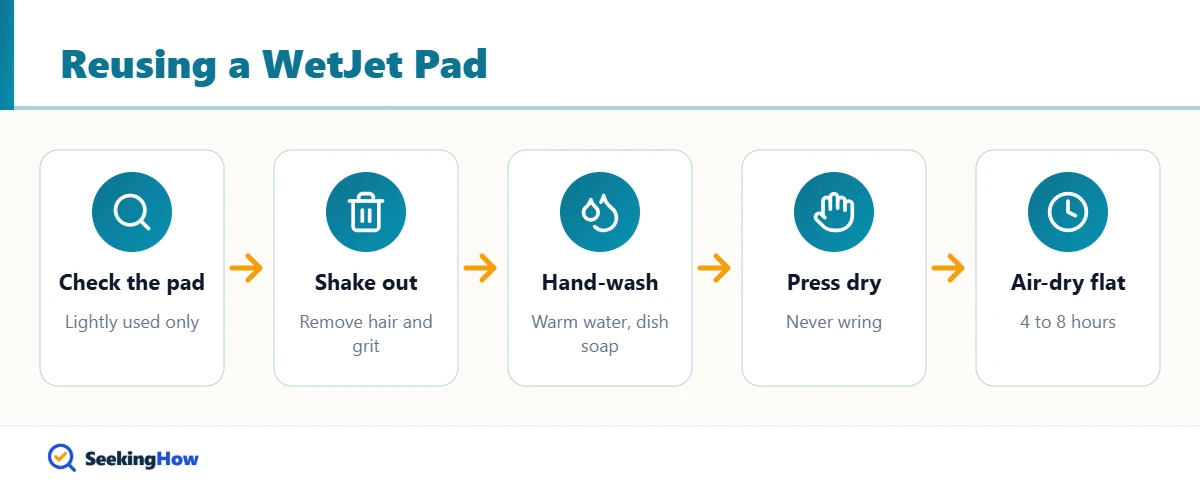
Step 1: Decide if the Pad Is Worth Saving
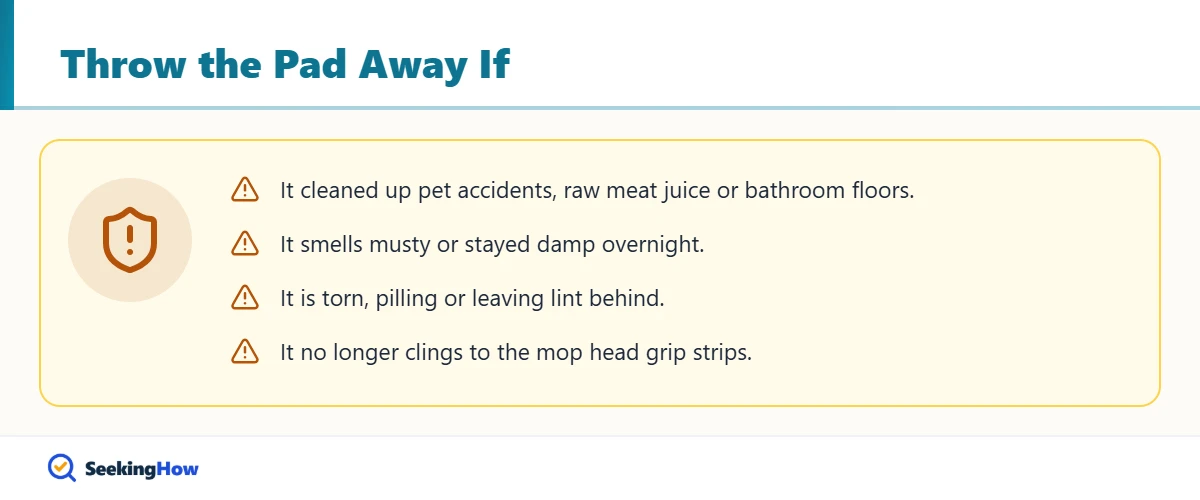
Reuse only pads that cleaned general floor dust and light spills. Pads that wiped up raw meat juice, pet accidents or bathroom floors can harbor germs that a gentle hand wash will not remove. Also skip pads that are already pilling or torn.
Step 2: Remove Loose Debris
Peel the pad off the mop head and shake it over a trash can outdoors. Pick out hair and crumbs caught in the scrubbing strips by hand. This keeps grit from grinding into the fibers during washing.
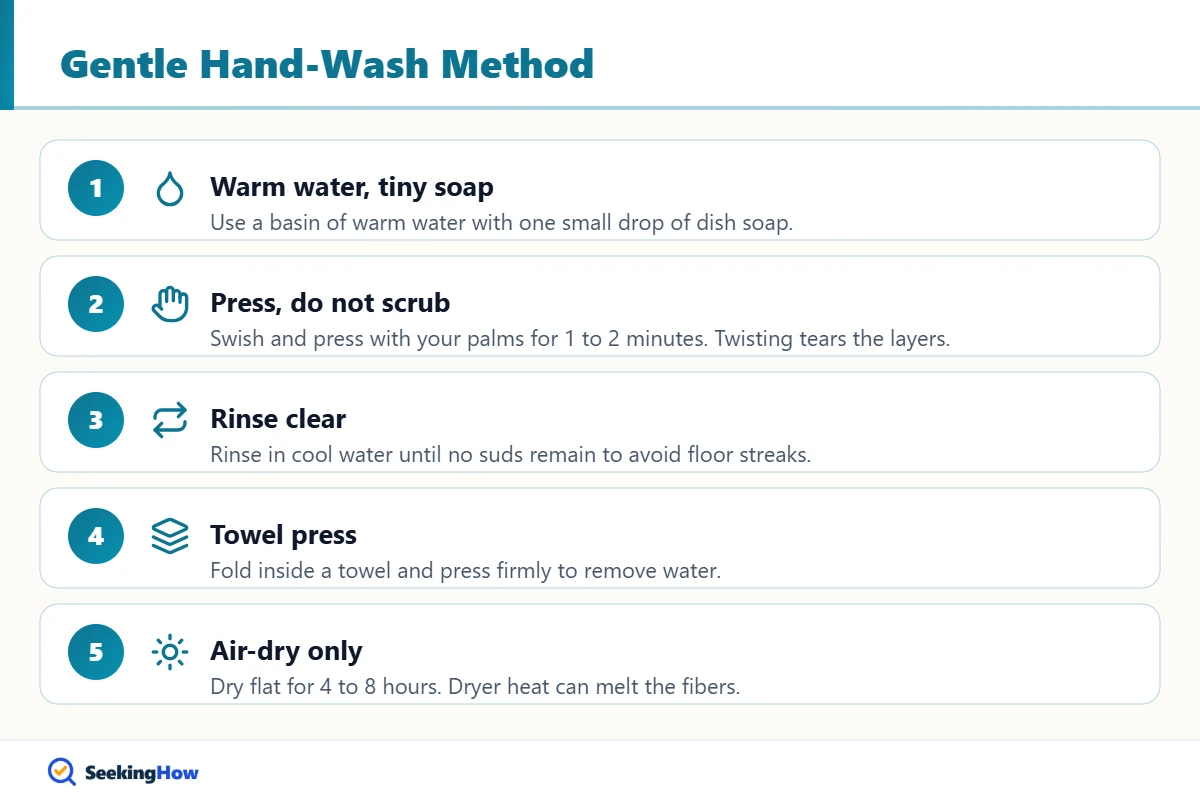
Step 3: Hand-Wash in Warm, Soapy Water
Fill a basin with warm water and add a small drop of dish soap. Swish the pad and gently press it with your palms for 1 to 2 minutes. Do not scrub, rub or twist, which breaks the bonded fibers apart.
Step 4: Rinse Until the Water Runs Clear
Rinse under cool running water while pressing the pad flat with your hands. Leftover soap creates streaks and a sticky film on hard floors. Most people find two or three rinses are needed.
Step 5: Press Out Water and Air-Dry Flat
Lay the pad on a towel, fold the towel over and press down firmly. Then lay it flat or drape it over a rack to air-dry for 4 to 8 hours. Never put it in the dryer; heat can melt the synthetic fibers.
Step 6: Reattach and Test
Press the dry pad back onto the WetJet’s grip strips and mop a small area. If it streaks, leaves lint or no longer clings, it has reached the end of its life.
Bottom line: hand-wash a lightly used pad once if you like, but for real savings switch to washable microfiber pads.
The Better Option: Washable Microfiber Pads
Reusable microfiber pads shaped to fit the Swiffer WetJet head are widely sold online and in big-box stores. They attach with the same hook-style grip strips or wrap around the head, and they can be machine-washed many times. Wash them in warm water with regular detergent, skip fabric softener and bleach, and air-dry or tumble dry on low. The routine is similar to how you clean an O-Cedar microfiber mop head.
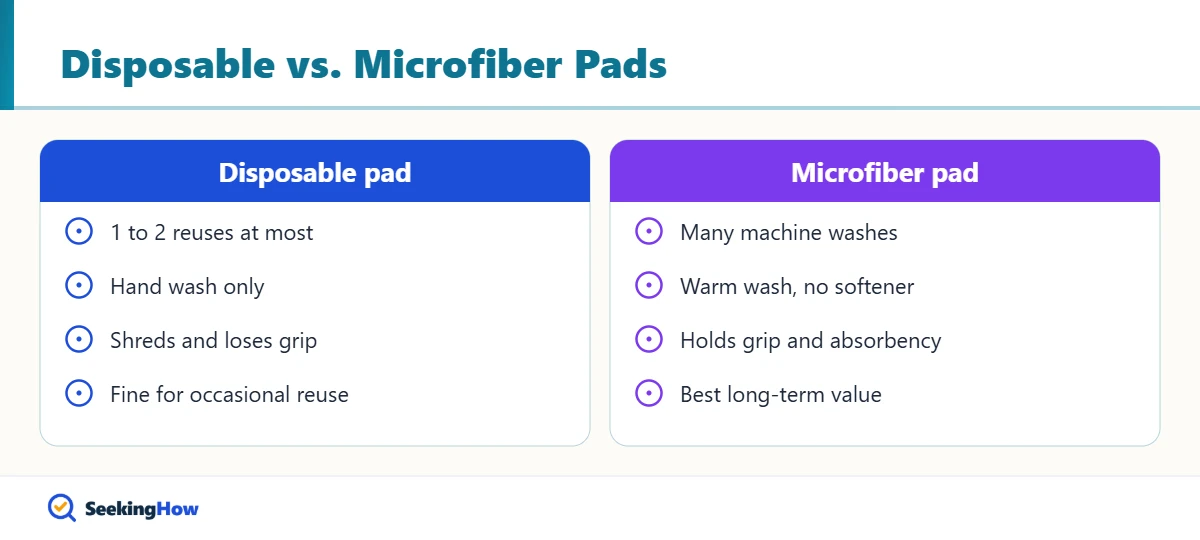
| Pad type | Reuses | How to wash | Best for |
|---|---|---|---|
| Disposable WetJet pad | 1 to 2 at most | Gentle hand wash only | Occasional light reuse |
| Washable microfiber pad | Many washes | Machine wash warm, no softener | Everyday mopping, lower cost |
| Microfiber pad with scrub strip | Many washes | Machine wash, air-dry | Sticky kitchen spills |
If That Didn’t Work
Problem: The pad falls apart in the water. Cause: The nonwoven layers are bonded only for single use. Fix: Throw it out and switch to a microfiber pad.
Problem: Floors look streaky after mopping. Cause: Soap residue left in the pad. Fix: Rinse again in plain water until no suds appear when squeezed.
Problem: The pad smells musty. Cause: It stayed damp too long before drying. Fix: Discard it; bacteria grow in the absorbent core and the odor transfers to floors.
Problem: The washed pad will not stick to the mop head. Cause: The fibers on the back flattened. Fix: Fluff the back with your fingers, or use a microfiber pad designed for the WetJet head.
Safety and When To Replace
Replace any pad used on a toilet area, pet accident, raw meat drip or mold, because hand-washing does not sanitize it. Never mix WetJet solution with bleach-based cleaners while rinsing pads, and wear gloves if you handle a pad that touched cleaners with warning labels. Wood floor makers often limit how much moisture their finishes can take, so wring reusable pads well before using them on hardwood.
Prevention Tips
- Vacuum or dry-sweep before wet mopping so pads clog less. Keep your broom and dustpan clean so they do not redeposit grit.
- Rotate two or three microfiber pads so each one dries completely between uses.
- Wash microfiber separately from cotton towels to avoid lint transfer.
Related Guides
- How to clean an O-Cedar EasyWring microfiber mop head
- How to clean a broom and dustpan
- Vinegar uses around the house
- How to use Lysol disinfectant spray
Sources
- Swiffer: WetJet product information and usage instructions (swiffer.com)
- U.S. EPA: reducing household waste with reusable products (epa.gov)
- American Cleaning Institute: floor care and cleaning product safety (cleaninginstitute.org)
Frequently Asked Questions
Can you wash Swiffer WetJet pads in the washing machine?
No, disposable WetJet pads usually fall apart in a washing machine. The agitation tears the nonwoven layers and can release the absorbent core into your washer. Hand-wash gently instead, or switch to washable microfiber pads, which are designed to go through the machine many times.
How many times can you reuse a Swiffer WetJet pad?
Most disposable WetJet pads survive only one or two gentle hand washes before they lose absorbency, shred or stop gripping the mop. A pad that was barely soiled lasts longest. If you want true reuse, washable microfiber pads hold up for many cycles.
Do reusable pads work with the Swiffer WetJet?
Yes, many third-party washable microfiber pads are made to fit the WetJet head. They attach with the same grip strips or wrap around the head with elastic. They work with the WetJet spray system and cost less over time than buying disposable refills.
Is it sanitary to reuse a Swiffer pad?
Reusing a lightly soiled pad from a dusty kitchen floor is generally fine after a thorough hand wash and complete drying. Do not reuse pads that cleaned bathroom floors, pet accidents or raw meat drips, because a gentle hand wash does not remove or kill all germs.
Can I put a Swiffer WetJet pad in the dryer?
No, keep disposable WetJet pads out of the dryer. Dryer heat can melt or warp the synthetic fibers and the adhesive bonding. Air-dry them flat for several hours. Washable microfiber pads can usually go in the dryer on low, but check the package label.
Why does my reused Swiffer pad leave streaks?
Streaks almost always come from soap left in the pad or from a pad that has started to break down. Rinse it in plain water until no suds appear and press out the water thoroughly. If streaks continue, the fibers are worn and the pad should be replaced.