Quick Answer
To clean a broom and dustpan, shake and comb out loose debris outdoors, then soak the broom head for 20-30 minutes in a bucket of warm water with a squirt of dish soap (add 1 cup of white vinegar or a disinfectant for germs). Scrub the dustpan with the same solution, rinse both, and let the broom air-dry bristles-down or hanging for 24 hours.
Key Takeaways
- Remove hair and lint first with a wide-tooth comb or fork; washing does not remove tangled debris.
- Synthetic bristles handle soaking well; natural straw or corn brooms need a shorter, cooler soak.
- Dry the broom hanging or bristles-up so bristles do not bend or mildew.
- A quick monthly clean keeps brooms from spreading dust and germs around the floor you are cleaning.
A dirty broom pushes old dust, pet hair and bacteria right back onto your floors, and a grimy dustpan leaves a gray line every time you sweep. Cleaning both takes about 10 minutes of work plus soaking and drying time. Here is the method for synthetic and natural brooms.
What You Need To Clean a Broom and Dustpan
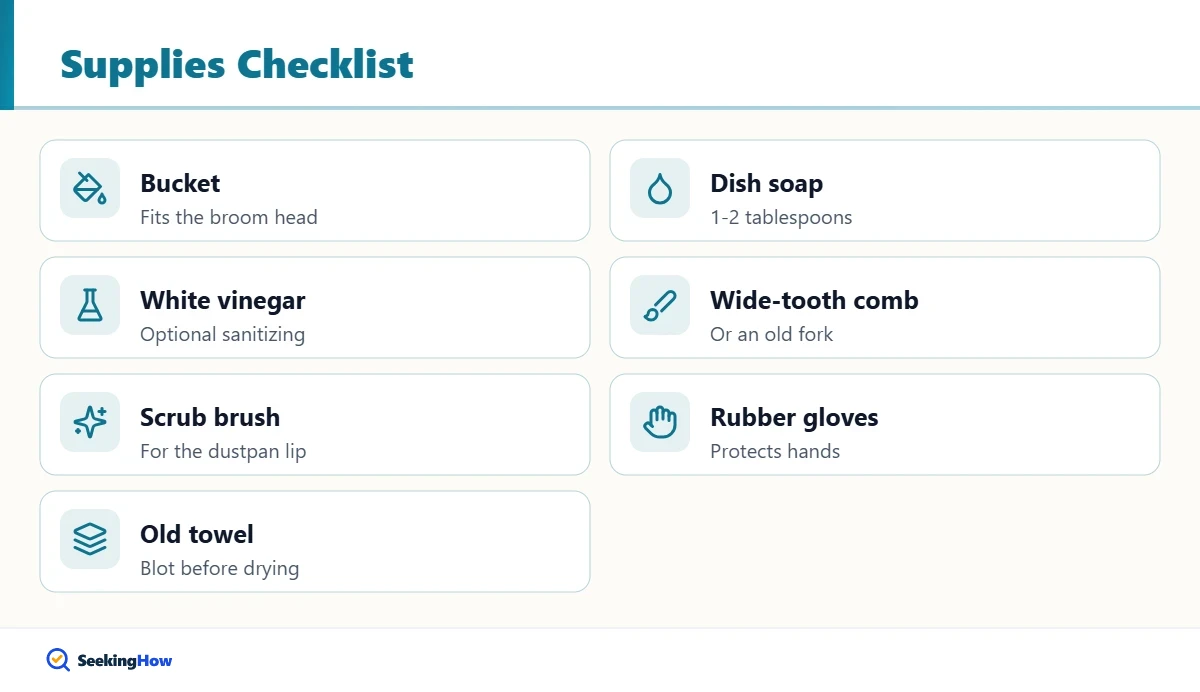
- Bucket or utility sink large enough for the broom head
- Warm water and liquid dish soap
- White vinegar or an EPA-registered disinfectant (optional, for sanitizing)
- Wide-tooth comb, old fork or a dedicated broom comb
- Scrub brush or old toothbrush
- Rubber gloves
- Old towel and a hook or clip for drying
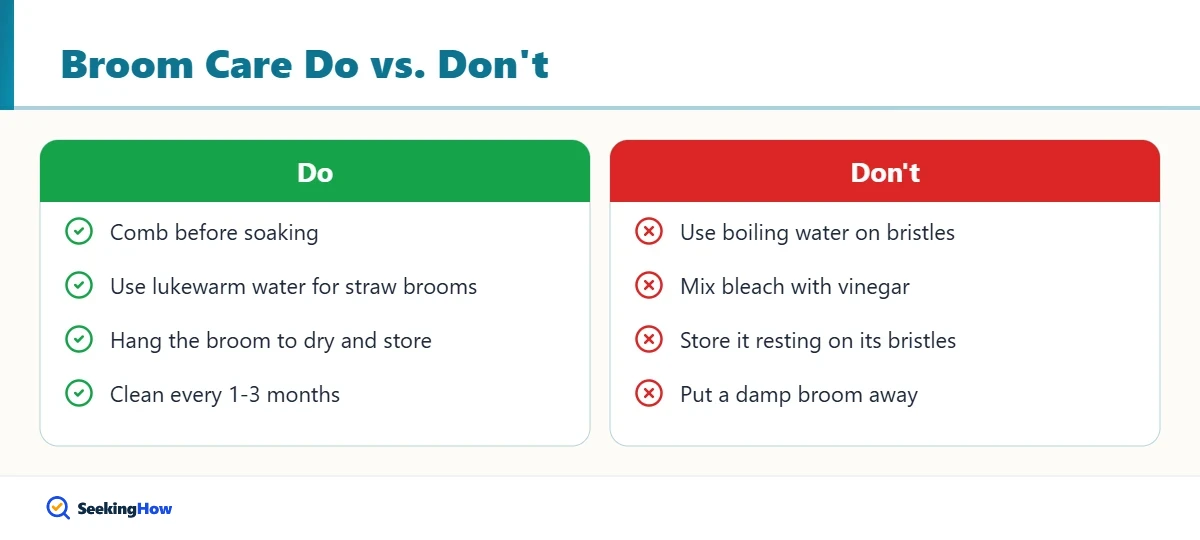
Safety: Never mix bleach with vinegar, ammonia or other cleaners; the combination releases toxic gases. If you use bleach, use it alone, diluted according to the label, in a ventilated area.
How To Clean a Broom and Dustpan, Step by Step
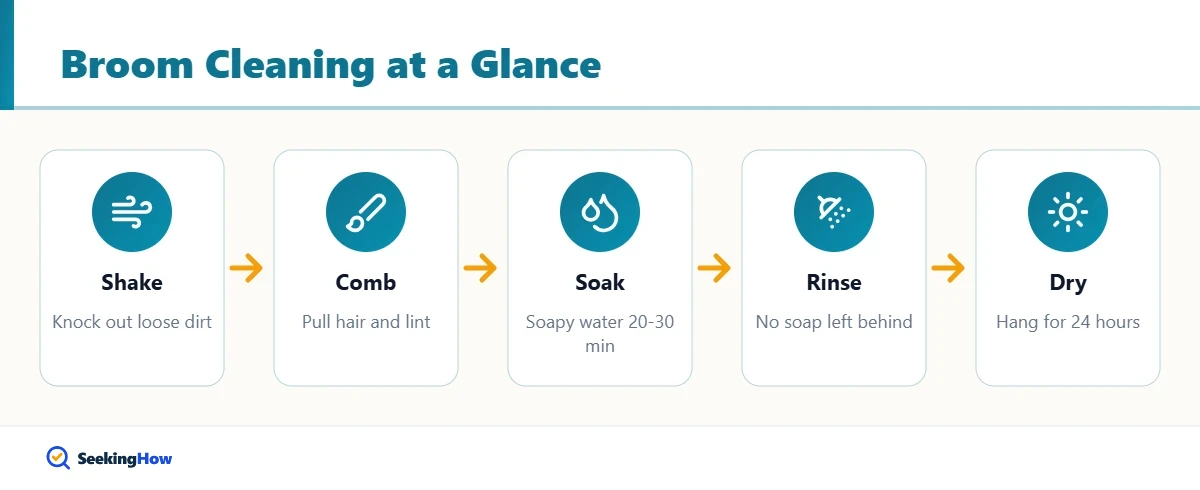
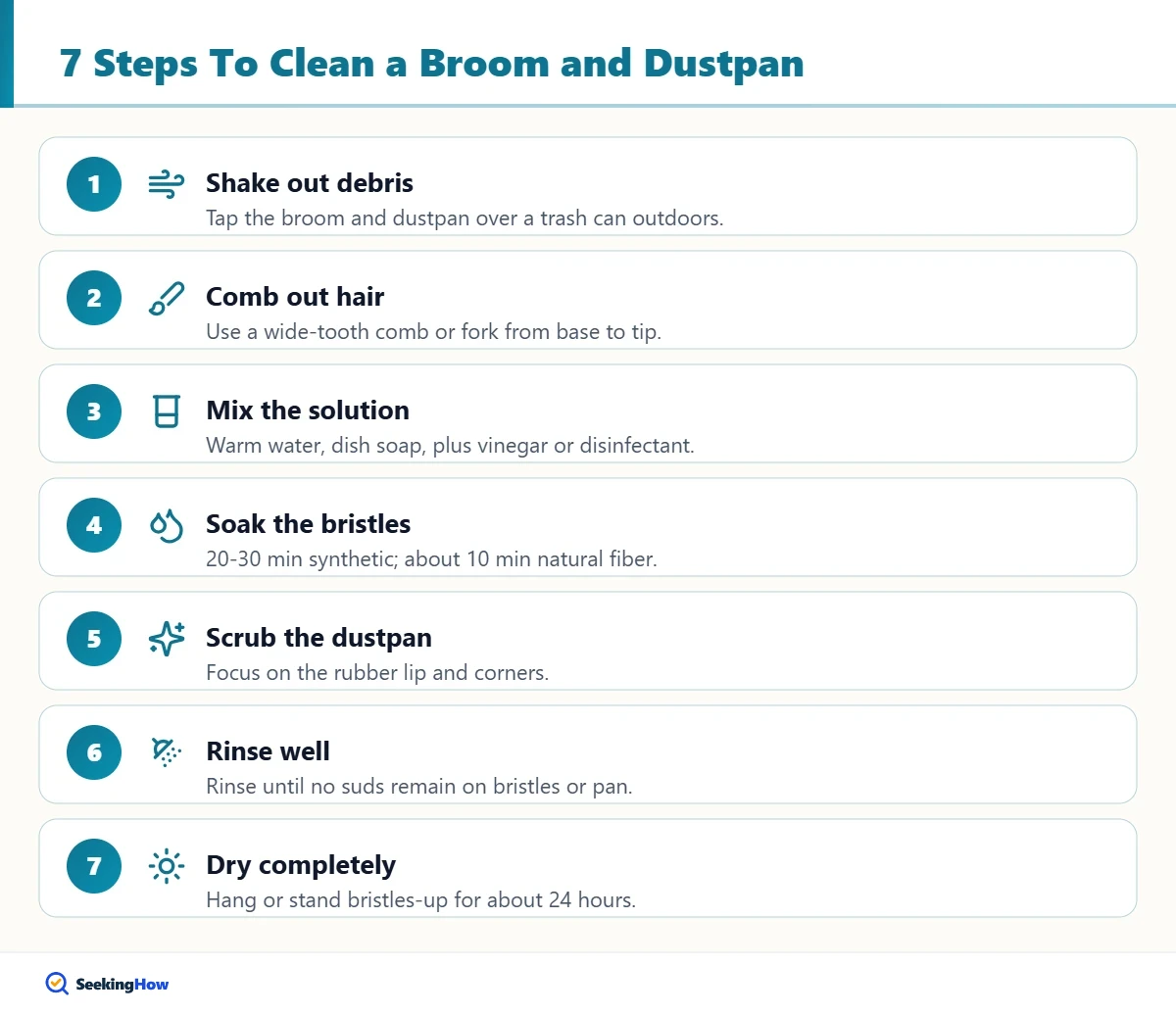
Step 1: Shake Out Loose Debris Outside
Take the broom and dustpan outdoors or over a trash can. Tap the broom handle firmly against the edge of the can and knock the dustpan clean so loose dirt falls away instead of resettling in your home.
Step 2: Comb Out Hair and Lint
Run a wide-tooth comb or fork through the bristles from the base toward the tips to pull out hair, threads and dust bunnies. Wear gloves and work in sections. For heavily tangled hair, snip it carefully with scissors without cutting the bristles.
Step 3: Mix the Cleaning Solution
Fill a bucket with warm water and add a tablespoon or two of dish soap. For sanitizing, add about 1 cup of white vinegar per gallon, or use a disinfectant at the label dilution instead. Use lukewarm rather than hot water for natural straw or corn brooms.
Step 4: Soak the Broom Head
Submerge only the bristles, swish them around, and soak synthetic brooms for 20-30 minutes. Keep natural-fiber brooms to about 10 minutes, since longer soaks can loosen the stitching and soften the straw.
Step 5: Scrub the Dustpan
While the broom soaks, scrub the dustpan with the same solution, paying attention to the rubber lip and any corners where grime builds up. A toothbrush works well on the edge. Wipe the dustpan’s handle and the broom handle too.
Step 6: Rinse Thoroughly
Rinse the broom under running water or in a bucket of clean water until no suds remain. Rinse the dustpan too. Leftover soap attracts dust, so do not skip this.
Step 7: Dry Completely
Shake out excess water, blot with a towel, and hang the broom by its handle or stand it bristles-up in a well-ventilated spot for about 24 hours. Dry the dustpan with a towel or let it air-dry. Never store a damp broom resting on its bristles.
How Do You Clean Different Types of Brooms?
| Broom type | Best method | Soak time | Avoid |
|---|---|---|---|
| Synthetic (nylon, PET, polypropylene) | Soap and water soak, optional disinfectant | 20-30 minutes | Very hot water that can warp bristles |
| Natural corn or straw | Quick soap soak or wipe; dry well | About 10 minutes | Long soaks, bleach, storing damp |
| Angle broom with flagged tips | Comb first, then soak | 20-30 minutes | Harsh combing that removes the split tips |
| Rubber broom | Scrub and rinse; can disinfect | None needed | Solvents that degrade rubber |
| Push broom (outdoor) | Hose off, scrub with soapy water | Optional | Leaving it wet in a shed |
Tip: A dustpan with a built-in comb on the edge lets you scrape bristles clean after every use, which cuts deep cleaning down to once every month or two.
How Often Should You Clean Your Broom?
Comb out hair and lint weekly if you have pets or long-haired household members. Do a full wash every 1-3 months, and immediately after sweeping up spills, raw food, mud or anything from a sick room. Kitchen brooms usually need cleaning more often than bedroom brooms.
When Should You Replace a Broom?
- Bristles are permanently bent, splayed or worn down so they miss fine dust.
- The broom smells musty even after washing and drying.
- Natural bristles are shedding or the stitching is loose.
- The dustpan lip is cracked or curled, leaving a line of dirt behind.
Common Mistakes When Cleaning a Broom
- Soaking without combing first, which just turns hair and dust into wet clumps.
- Using boiling water on synthetic bristles.
- Drying or storing the broom resting on its bristles, which bends them permanently.
- Mixing cleaning chemicals to make a stronger solution.
- Forgetting the handle, which collects grime from hands.
How To Keep Your Broom and Dustpan Cleaner for Longer
Hang the broom on a wall clip so the bristles stay straight and off the floor. Sweep with smooth strokes toward you rather than flicking, which spreads dust. Use a separate broom for the garage or patio so outdoor grit and grease never reach indoor floors.
Round out your cleaning tools routine with our guides to cleaning an O-Cedar spin mop head, removing cobwebs from high ceilings, and using Lysol disinfectant spray correctly on hard surfaces.
Frequently Asked Questions
Can you wash a broom in the washing machine?
No. The rigid head and handle can damage the machine and the broom. Soak and swish the bristles in a bucket of warm, soapy water instead, then rinse and hang it to dry.
How do you disinfect a broom?
After washing, soak synthetic bristles in an EPA-registered disinfectant diluted according to the label, or add about a cup of white vinegar per gallon of soapy water. Rinse and dry fully. Never mix bleach with vinegar or ammonia.
How do you get hair out of a broom?
Comb the bristles from base to tip with a wide-tooth comb, an old fork or the comb edge of a dustpan. Wear gloves and work in sections. Snip tightly wrapped hair with scissors, taking care not to cut the bristles.
How long does a broom take to dry?
Plan on about 24 hours in a warm, ventilated spot with the broom hanging or standing bristles-up. Natural-fiber brooms may need longer. Make sure the base of the bristles is fully dry before storing to prevent mildew.
How often should you replace a broom?
Replace it when the bristles are bent, splayed or worn so they leave fine dust behind, or when it smells musty after washing. With regular cleaning, a quality broom often lasts a year or more of household use.