Quick Answer
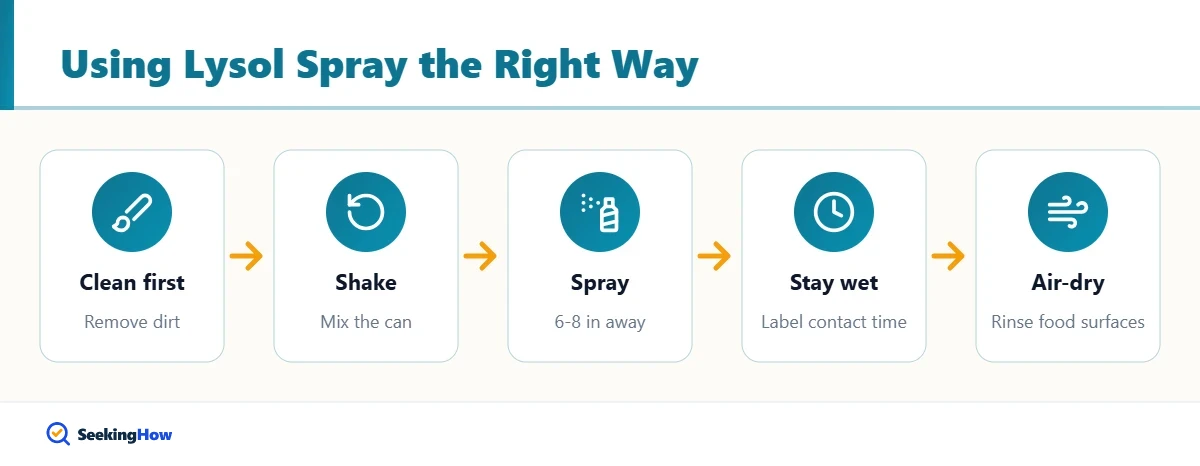
To use Lysol Disinfectant Spray properly, clean visible dirt off the surface first, shake the can, hold it upright 6-8 inches away and spray until the area is visibly wet. Leave it wet for the full contact time on your can’s label, then let it air-dry. Rinse food-contact surfaces and children’s toys with water afterward.
Key Takeaways
- Disinfectants work only on surfaces that are already clean, so wipe away grime first.
- The surface must stay visibly wet for the label’s full contact time; wiping early lets germs survive.
- Contact times differ by germ, so read the label for the organisms you are targeting.
- On fabrics and soft surfaces the spray sanitizes rather than fully disinfects.
- Never mix Lysol with bleach or other cleaners, and use it with good ventilation.
The “kills 99.9% of germs” claim on the can is true only when you follow the directions. Most people spray a quick puff and wipe it away, which leaves the surface fragrant but not disinfected. Here is how to use Lysol Disinfectant Spray the way the label intends, where it works best and where you should use something else.
What Is the Difference Between Cleaning, Sanitizing and Disinfecting?
These words mean different things on a product label, and the CDC and EPA use them consistently.
| Term | What It Does | Example |
|---|---|---|
| Cleaning | Removes dirt, grease and many germs physically | Soap and water, all-purpose cleaner |
| Sanitizing | Reduces bacteria to levels considered safe | Lysol spray on upholstery or fabric |
| Disinfecting | Kills the viruses and bacteria listed on the label | Lysol spray on hard, non-porous surfaces with full contact time |
Disinfecting is most useful for high-touch surfaces and when someone in your home is sick. For everyday dust and spills, plain cleaning is usually enough.
How Do You Use Lysol Disinfectant Spray on Hard Surfaces?
Use this method on non-porous surfaces such as doorknobs, light switches, countertops, toilet seats, faucet handles, trash cans and remote controls.
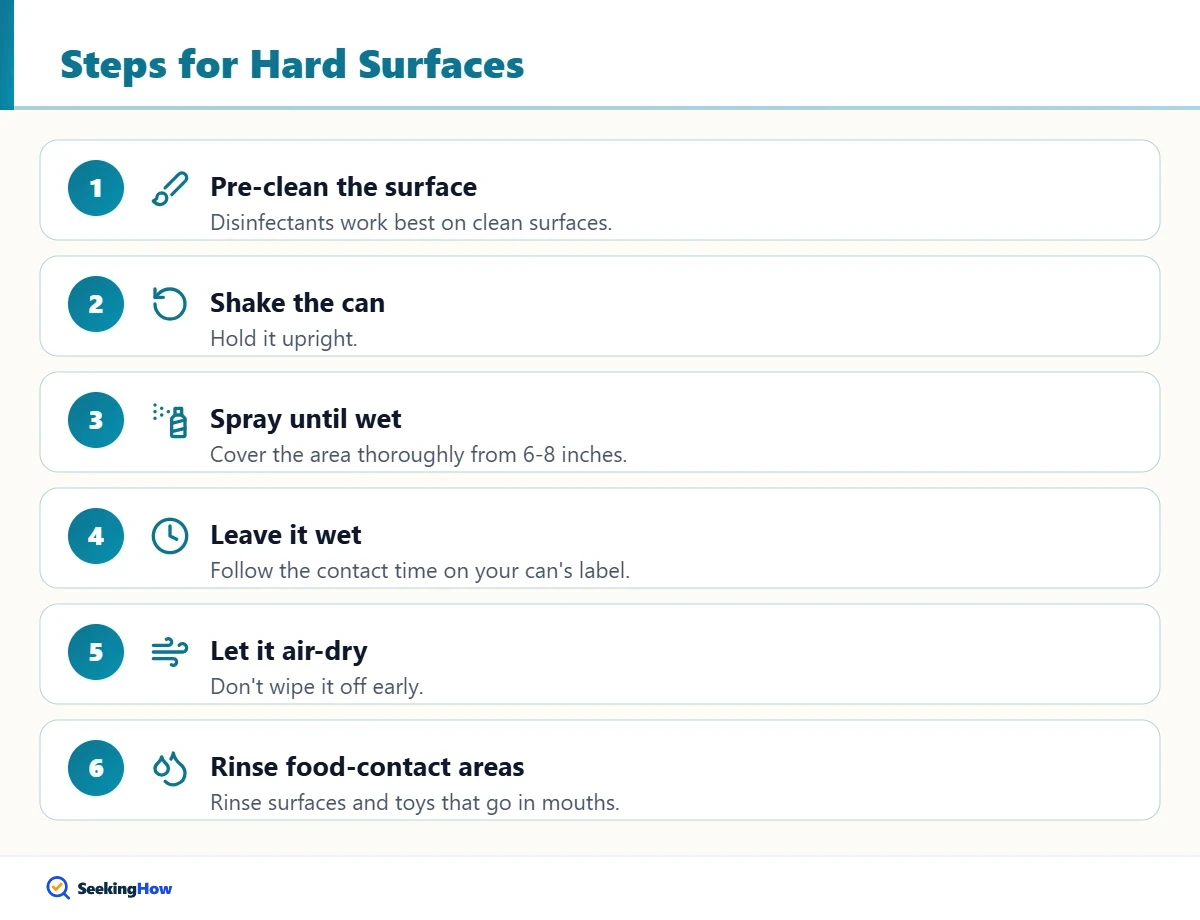
Step 1: Clean the Surface First
Wipe away crumbs, grease, sticky residue and visible dirt with soap and water or an all-purpose cleaner. Organic matter shields germs from the disinfectant, so skipping this step makes the spray far less effective.
Step 2: Ventilate and Read the Label
Open a window or run an exhaust fan. Check the label for the organisms you care about, their contact times and any surfaces to avoid; Lysol notes that the spray is not recommended on brass, copper or aluminum.
Step 3: Shake the Can and Hold It Upright
Shake the can well and hold it upright about 6-8 inches from the surface. Holding it too close causes drips and uneven coverage; too far, and the mist drifts before it lands.
Step 4: Spray Until Visibly Wet
Spray in a slow, sweeping motion until the whole area is covered with a visible wet film, typically a few seconds per small area. A light, dry-looking mist is not enough to disinfect.
Step 5: Leave It Wet for the Full Contact Time
Do not wipe it off. Contact times are listed by germ on the label: Lysol states that some common cold and flu viruses are killed in as little as 30 seconds, while other organisms need several minutes. Keep the surface wet for the longest time listed for the germs you are targeting, and re-spray if it starts drying early.
Step 6: Air-Dry and Rinse Food-Contact Surfaces
Let the surface air-dry. For countertops that touch food, high chairs, and plastic children’s toys, rinse with clean water afterward, as the label directs, before they are used again.
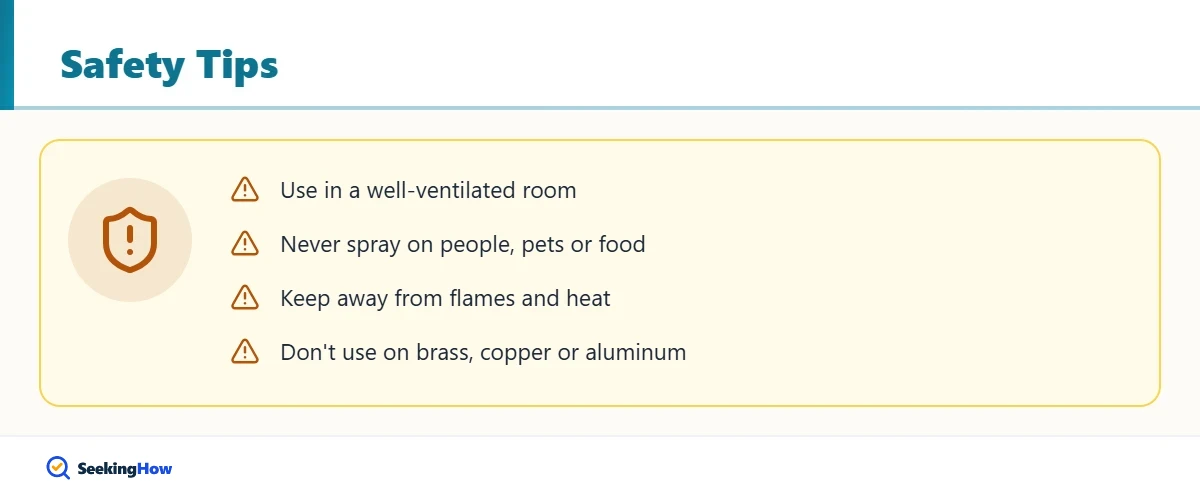
Safety: Never mix Lysol with bleach, ammonia or other cleaners, which can release harmful fumes. Spray away from your face, keep the can away from heat and open flames (aerosols are flammable), and store it out of reach of children and pets. Do not spray it on skin, people or animals.
Can You Use Lysol Spray on Fabrics and Soft Surfaces?
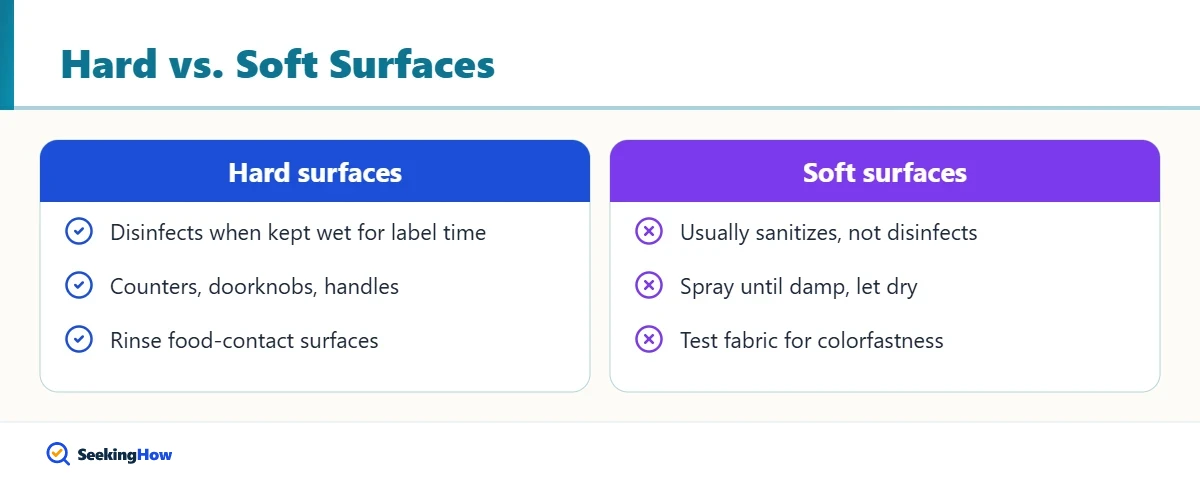
Yes, Lysol markets the spray for soft items such as upholstery, mattresses, pillows, curtains, pet beds and car seats, where it sanitizes and helps eliminate odor-causing bacteria. Soft, porous materials cannot be fully disinfected with a spray the way hard surfaces can, so treat it as a freshening and sanitizing step.
- Vacuum or brush off dust, hair and debris first.
- Test a hidden area for color change, especially on silk, leather, suede and delicate fabrics.
- Hold the can 6-8 inches away and spray until the fabric is damp, not soaked.
- Let it air-dry fully before anyone sits or lies on it, and keep pets off until dry.
Washable items such as pillowcases and throw blankets are better disinfected in the washing machine on the warmest setting the fabric allows.
Where Should You Use Lysol Spray Most?
- Bathroom: Toilet handle and seat, faucet handles, light switches and doorknobs. For drain and fixture maintenance, see how to unclog a bathtub drain.
- Kitchen: Refrigerator and cabinet handles, trash can lids and sink handles (rinse food-contact areas afterward).
- Entry and living areas: Doorknobs, railings, remote controls and game controllers (spray onto a cloth for electronics).
- Bedrooms during illness: Bedside tables, lamp switches and doorknobs.
- Cleaning tools: Broom handles, dustpans and the mop bucket after messy jobs. Our guides on cleaning a broom and dustpan and cleaning an O-Cedar spin mop head cover the rest of the routine.
Tip: For phones, keyboards and other electronics, do not spray directly. Lightly mist a microfiber cloth, wipe, and let the device air-dry, following the manufacturer’s cleaning guidance.
Common Mistakes That Make Lysol Less Effective
- Spraying dirty surfaces: Grime blocks the disinfectant from reaching germs.
- Wiping immediately: The most common mistake; the contact time is what does the killing.
- Using too little: A faint mist that dries in seconds will not meet the label’s wet-time requirement.
- Expecting it to clean: The spray disinfects but does not cut grease or lift stains.
- Spraying into the air as an air freshener and calling it disinfecting: Germs on surfaces need direct, wet contact.
- Skipping the rinse: Food-contact surfaces and toys need a water rinse after disinfecting.
Is Lysol Spray Safe Around Kids and Pets?
Used as directed, it is a common household disinfectant, but the active ingredients and propellants are not meant to be inhaled or ingested. Keep children and pets out of the room while you spray, ventilate well, let surfaces dry completely, and rinse toys and food-contact surfaces. If someone swallows it or gets it in their eyes, follow the first aid directions on the label and call Poison Control at 1-800-222-1222 in the US.
What Are Good Alternatives to Lysol Spray?
- Disinfecting wipes: Convenient for small, high-touch areas; they follow the same wet-contact-time rule.
- Diluted household bleach: Effective on many hard surfaces when mixed according to the bottle label; never combine with other cleaners.
- Hydrogen peroxide-based disinfectants: A lower-odor option on many surfaces.
- Any EPA-registered disinfectant: Check for an EPA registration number on the label, which shows the product’s germ-kill claims were reviewed.
Frequently Asked Questions
How long should Lysol sit before wiping?
Leave it wet for the full contact time listed on your can for the germs you want to kill. Lysol states some cold and flu viruses are killed in as little as 30 seconds, while other organisms on the label need several minutes. Letting it air-dry is the simplest approach.
Do you have to wipe off Lysol spray?
No. On most hard surfaces you can let it air-dry. The exception is food-contact surfaces and plastic children’s toys, which the label says to rinse with clean water after disinfecting and before use.
Can you spray Lysol on a mattress or couch?
Yes. Lysol markets the spray for soft surfaces such as mattresses, upholstery and pet beds, where it sanitizes and helps control odor-causing bacteria. Vacuum first, test a hidden spot, spray until damp rather than soaked, and let it dry completely before use.
Is it safe to breathe Lysol spray?
It is not meant to be inhaled. Use it in a ventilated room, spray away from your face, and keep people and pets out until it settles and surfaces dry. Short, normal household use as directed is common, but heavy spraying in closed spaces can irritate the eyes, nose and lungs.
Does Lysol spray kill mold?
Some Lysol spray labels list mildew and certain fungi and can help on hard, non-porous surfaces. It will not fix an active mold problem in drywall, wood or other porous materials, or the moisture causing it. Large or recurring mold growth should be assessed and removed properly.